Bonded Warehousing for Imported Chemical Totes and Tanks Under CBP 19 CFR Parts 19 and 144: Class 2 vs Class 3 Bonded Facility Selection, Customs Bond Sizing, In-Bond Movement Discipline, and Storage Tank Compatibility
An importer of bulk chemicals — sodium hypochlorite from Mexico, sulfuric acid from Latin America, specialty caustics from Europe or Asia — faces a customs-clearance question separate from the operational tank question: where does the imported chemical sit during the time between U.S. arrival and final customs entry. The default answer is "we pay the duty at the port and ship it onward immediately," and for many shipments that works. The alternative is a bonded warehouse, where the chemical sits under U.S. Customs and Border Protection (CBP) supervision with duties suspended until the importer formally enters the goods into U.S. commerce — or re-exports them duty-free. Bonded warehousing is the standard architecture for importers who want to defer duty payment, hold inventory for re-export, or stage product for time-sensitive distribution.
This article walks the bonded-warehouse framework as it applies to imported chemical totes and bulk-tank shipments. The references cited are 19 CFR Part 19 (warehouse and rewarehouse entries and withdrawals; CBP bonded-warehouse regulations), 19 CFR Part 144 (warehouse and rewarehouse entries; the procedural side), 19 CFR Part 113 (CBP bond requirements), 19 USC Chapter 4 Subchapter IV (the underlying statute), and CBP Customs Directive 3260-008B (warehouse compliance program). The article does not constitute legal or customs-broker advice; an importer should retain a licensed customs broker and a customs attorney for transaction-specific guidance.
1. The Bonded Warehouse Concept and Its Five Statutory Classes
A bonded warehouse is a facility approved by CBP under 19 CFR 19.2 to receive and hold imported merchandise without payment of duties or taxes until the merchandise is withdrawn for U.S. consumption (with duties paid at withdrawal), exported (with duties forgiven), destroyed under CBP supervision (with duties forgiven), or transferred to another bonded facility. The bonded warehouse operator posts a bond with CBP to secure the duties owed on the merchandise on premises.
19 CFR 19.1 defines eight classes of bonded warehouses. The classes most relevant to chemical-tote and bulk-tank importers:
- Class 2 (private bonded warehouse): a facility owned or leased by the importer and used exclusively for that importer's merchandise. The chemical importer who ships large enough volume to justify a dedicated facility uses Class 2.
- Class 3 (public bonded warehouse): a facility operated by a third party and offered to multiple importers as a service. The third-party operator holds the bond and charges storage fees. The chemical importer with smaller or sporadic volume typically uses Class 3.
- Class 4 (bonded yards or sheds): outdoor or partially enclosed bonded storage. Used for bulk merchandise unsuitable for indoor warehousing — relevant for some bulk chemical totes when the chemistry is non-hazardous and weather-tolerant.
- Class 6 (manufacturing in bond): a bonded facility where imported merchandise is manufactured into different merchandise before withdrawal. Used by chemical processors who import raw material in bond, manufacture, and re-export.
- Class 8 (bonded smelting and refining): a specialized class for metal-bearing merchandise. Generally not relevant to chemical-tank operations.
The class selection drives the regulatory burden, the bond amount, the storage fee structure, and the operational flexibility. Class 2 is the standard choice for an importer with sustained volume; Class 3 is the standard choice for an importer with intermittent volume or for an importer who lacks the operational scale to justify dedicated facilities and CBP supervision overhead.
2. Class 2 Private Bonded Warehouse: When the Math Works
The Class 2 facility makes economic sense when annual import volume and average dwell time produce duty deferral that exceeds the operating cost of the bonded facility plus the bond cost. The math:
- Annual duty deferred: annual duty paid times average dwell time as a fraction of year. For an importer paying $500,000 per year in duties on chemicals with 90-day average dwell, the deferred duty is roughly $125,000 carrying cost equivalent.
- Carrying cost benefit: deferred duty times the importer's cost of capital. At 8 percent annual cost of capital, the $125,000 deferred duty saves roughly $10,000 per year in carrying cost.
- Class 2 facility operating cost: CBP supervision fees, security, recordkeeping system, periodic CBP audits, customs-broker monthly retention. Typical $25,000-$75,000 per year incremental over a non-bonded warehouse.
The straightforward math says Class 2 needs annual duty in the $1-3 million range to clear the operating-cost hurdle on duty deferral alone. The math becomes more favorable when re-export volume is significant (re-exported merchandise pays no duty at all from the bonded warehouse) or when the importer needs operational flexibility (delayed entry, manipulation under bond, sampling and quality testing before formal entry).
The Class 2 facility approval process: the importer files a CBP Form 5106 (manufacturer/shipper identification) plus an application package including facility plans, security plan, bond instrument, recordkeeping system description, and operational procedures. CBP inspects the facility, approves or rejects, and issues a bonded warehouse number. The application-to-approval cycle is typically 60-180 days.
3. Class 3 Public Bonded Warehouse: The Standard Path for Most Importers
The Class 3 facility is operated by a third-party logistics provider with an existing CBP bonded warehouse approval. The chemical importer rents space, pays storage fees, and operates under the third-party's bond. The importer does not need to file a Class 3 facility application; the third party has already done that work.
The Class 3 economic structure:
- Storage fees: typically $1.50-$5.00 per pallet per month, or per-square-foot rates for floor space. Bulk-tote storage is usually billed by pallet position.
- Handling fees: per receipt, per pick, per shipment-out. Typical $5-$25 per transaction.
- Compliance fees: per entry document, per withdrawal document. Typical $50-$150 per transaction.
- Bond rider charges: the third-party operator may require a per-shipment bond rider for high-value or hazardous chemistry; typical $25-$100 per rider.
The Class 3 facility is the default architecture for: importers with annual duty under $1 million, importers with sporadic shipments, importers who lack operational scale for dedicated facility staffing, and importers who need a port-of-entry presence without owning real estate at the port. The trade-off is reduced operational flexibility (the third-party schedules receipts and shipments per its own operating cadence) and the cost overhead of arms-length transaction fees on every movement.
4. Customs Bond Sizing and the 19 CFR 113 Discipline
The CBP bond is the financial instrument that secures the duties owed on bonded merchandise. Bond sizing is governed by 19 CFR 113 and CBP's Bond Centralization program.
The standard bond architectures:
- Single-transaction bond (STB): covers a single import transaction. Typical face amount is total entered value plus duties plus taxes plus 10 percent margin. Used for importers with infrequent shipments.
- Continuous bond: covers all of an importer's transactions for a 12-month period. Face amount is calculated as 10 percent of duties, taxes, and fees paid in the prior 12 months, with a $50,000 minimum. The standard architecture for any importer with sustained volume.
- Custodial bond: covers a bonded warehouse operator's responsibility for the merchandise in their custody. Sized to total duty value of merchandise on premises at any time.
The bond is purchased from a surety company licensed by the U.S. Treasury Department. Annual bond premium is typically 0.5-2 percent of the bond face amount, depending on the importer's credit profile and shipment risk profile. CBP can demand bond increases if the importer's volume grows beyond the original sizing or if CBP identifies elevated compliance risk.
Bond default — failure to pay duties owed on withdrawal or failure to deliver merchandise as required — triggers CBP claims against the surety. The surety pays CBP and pursues the importer for indemnification under the bond agreement. Bond defaults are recorded in the importer's CBP risk profile and elevate future bond costs and inspection scrutiny.
5. In-Bond Movement Between Ports and Between Bonded Facilities
Imported merchandise can move between bonded facilities or from port-of-arrival to inland port-of-entry under 19 CFR 18 (in-bond merchandise transportation) without paying duty at any intermediate point. The chemical importer who lands product at Houston but operates from a bonded warehouse in Chicago routes the in-bond movement under a transportation-in-bond (T&E or IT) entry.
The in-bond movement discipline:
- T&E (transportation and exportation): the merchandise moves from port-of-arrival to port-of-export without ever entering U.S. commerce. Duty is forgiven at export. Used for transshipment and re-export businesses.
- IT (immediate transportation): the merchandise moves from port-of-arrival to inland port-of-entry where the importer files the consumption entry. Duty is paid at the inland port. The standard architecture for importers using inland bonded warehouses.
- WDT (withdrawal for transportation): the merchandise moves from one bonded warehouse to another, remaining under bond. Used for inventory rebalancing.
Each in-bond movement is filed electronically (CBP ACE system), the carrier transports under bond with a CBP seal on the trailer or container, and the receiving facility files an arrival notice. The seal-to-seal chain of custody is the regulatory basis for trusting that no merchandise was diverted in transit. A broken seal or a missing arrival filing triggers a CBP investigation.
6. Tank Selection for Receiving In-Bond and Bonded-Warehouse Withdrawals
An importer drawing chemistry out of a bonded warehouse into operational use needs receiving and storage tanks at the use point. The 5-brand polyethylene catalog includes products commonly paired with bonded-warehouse withdrawals:
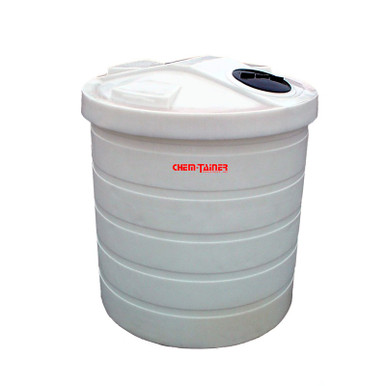
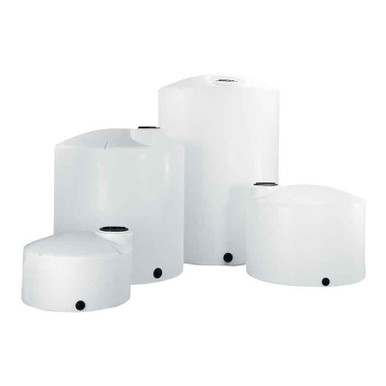
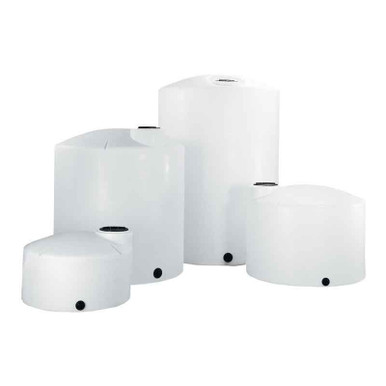
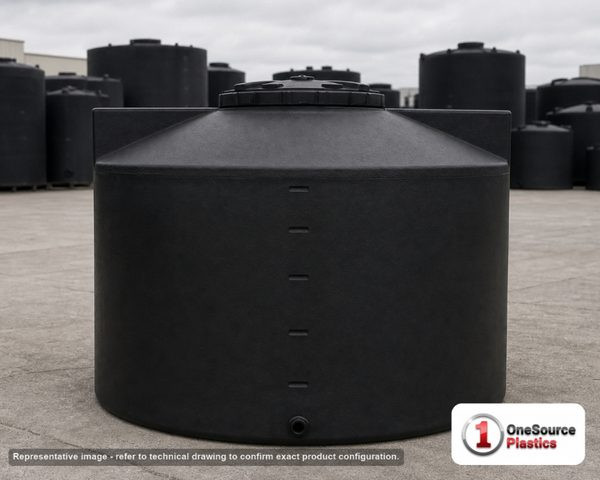
- Norwesco vertical bulk storage: the standard bulk storage tank for product withdrawn from bonded warehousing into operational service. Reference N-40146 1,500 gallon for moderate-volume operations and N-40164 5,000 gallon for higher-volume drum-park or chemical-feed applications. The tank receives chemistry at the use facility after the importer files the consumption entry and pays duty.
- Snyder Captor double-wall: SPCC-compliant containment for hazardous chemistry. Reference SII-5990102N42 1,000 gallon and SII-5490000N42 1,550 gallon; the double-wall geometry meets 40 CFR 112 secondary-containment requirements without external berming, which simplifies indoor or under-roof storage at use facilities.
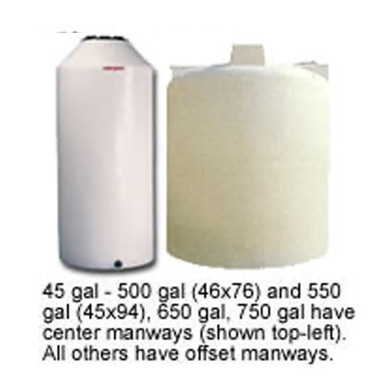
- Norwesco cone-bottom: when the chemistry sees periodic complete drawdown for batch processing or for blending operations. Reference N-43852 1,000 gallon 45-degree cone.
The bonded warehouse itself does not typically use polyethylene tanks for in-bond storage; the bonded merchandise sits in its imported packaging (drums, IBC totes, ISO containers) until withdrawal. The tank role begins at the use facility after withdrawal and consumption entry. The tank specification at that point is identical to the specification for any chemical-storage tank in that service — the bonded-warehouse path of arrival does not change the tank requirements.
7. Recordkeeping and CBP Audit Discipline
Bonded warehouse operators (Class 2 importers and Class 3 third-party operators) must maintain records that allow CBP to reconstruct the inventory, the entries, the withdrawals, and the duty calculations for any given period. 19 CFR 19.12 specifies the recordkeeping requirements:
- Receipt records for every entry into the warehouse, with reference to the warehouse entry document and CBP entry number.
- Withdrawal records for every removal, with reference to the withdrawal type (consumption, exportation, destruction, transfer to another bonded facility) and the corresponding CBP document.
- Inventory records reconciled at least annually, with documented overage, shortage, or damage findings.
- Manipulation records if any sorting, repacking, or sampling occurs under the bonded conditions.
- Operator reports filed with CBP at the cadence specified in the facility's approval letter (typically annually for Class 2 and quarterly for high-volume Class 3 operators).
CBP conducts periodic audits of bonded warehouses under the Compliance Assessment program. The audit examines a sampled set of entries, withdrawals, and movements; reconciles the records; and identifies discrepancies. Findings range from minor recordkeeping corrections to bond-default claims to facility approval revocation depending on severity. The standard practice is monthly internal reconciliation against CBP ACE records; importers who skip this reconciliation typically discover gaps during the audit, by which time the corrective burden is much higher.
8. Hazardous-Chemistry Considerations in Bonded Warehousing
Imported chemical merchandise is regulated by multiple agencies beyond CBP, and the bonded warehouse must comply with all applicable rules:
- EPA TSCA: Toxic Substances Control Act applies to imported chemicals; the importer files a TSCA section 13 import certification and the bonded warehouse cannot release for consumption without the certification.
- DOT 49 CFR: hazardous-material packaging and labeling requirements. The bonded warehouse must store hazardous chemistry in compliance with 49 CFR Subchapter C regardless of bonded status; the bond does not exempt the merchandise from DOT requirements.
- OSHA HazCom 29 CFR 1910.1200: Safety Data Sheets required at the workplace including bonded warehouses.
- FDA, EPA pesticide registration, USDA quarantine: import-clearance requirements that operate in parallel with CBP. Some of these agencies require a "release" certificate before CBP releases the merchandise from bonded status.
The practical effect is that bonded warehousing of hazardous chemistry requires a facility designed for hazardous-material storage (NFPA 30, NFPA 400, OSHA process-safety management if applicable) and operating personnel trained for the specific chemistry. The bonded status does not relax any of these requirements; it adds a customs-supervision layer on top of them.
9. The Operational Decision Framework for Importers
The bonded-warehouse decision is a function of import volume, dwell time, re-export fraction, and operational complexity:
- Low volume, short dwell, all consumption: pay duty at port-of-arrival; no bonded warehousing; the simplest architecture and the lowest overhead.
- Moderate volume, moderate dwell, mostly consumption: use a Class 3 third-party bonded warehouse for duty deferral; the third-party absorbs the facility-operating overhead.
- High volume, long dwell, significant re-export: evaluate Class 2 private bonded warehouse; the operating cost of dedicated facility is justified by duty deferral and re-export savings.
- Manufacturing in bond: Class 6 facility for importers who manufacture into export goods; specialized application with significant ROI when applicable.
OneSource Plastics ships polyethylene chemical-storage tanks across all 5 brands to importers receiving chemistry from bonded-warehouse withdrawals into operational use, and our engineering team supports tank specification consultation for the receiving and storage configurations downstream of bonded-warehouse withdrawal. List pricing by SKU is published on each product page; LTL freight to your ZIP is quoted separately via the freight estimator or by phone at 866-418-1777. For broader compliance-architecture context see EPA SPCC walkthrough and RCRA secondary containment.
Recommended Tanks for This Guide
Live pricing, updated automatically · estimate freight to your ZIP.