Mobile Tote Versus Stationary Tank Decision Matrix for Low-Volume Chemical Inventory: Total Cost, Regulatory Burden, and Operational Tradeoff Analysis
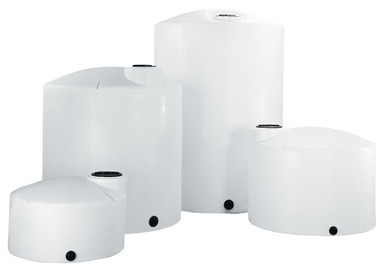
Operators who handle chemical inventory below 1,500 gallons face a recurring decision that has long-term cost and regulatory consequences: stage the chemistry in mobile totes (typically 275 to 330 gallon IBCs or smaller portable utility tanks) or commit to a stationary tank installation. The decision is not just an equipment cost comparison. It is a multi-dimensional trade across capital cost, freight cost, regulatory burden under SPCC and state environmental rules, operational labor for fill and transfer cycles, contamination risk from container reuse, and end-of-life disposal cost. The right answer differs for a small farm using 200 gallons of water-based fertilizer per season, for an industrial site using 5,000 gallons per month of process chemistry, and for a remote oilfield site using diesel and brine in rotating fleets. This article walks the decision matrix that converts the operational profile into the right inventory architecture.
References cited: 40 CFR 112 SPCC rules (governing oil storage threshold); 40 CFR 264/265 RCRA hazardous waste storage rules (governing accumulation thresholds and container management); 49 CFR 173 DOT packaging rules (governing the transport-rated containers that mobile totes commonly are); manufacturer published cut sheets for portable utility tanks from Norwesco, Snyder, Enduraplas, and Chem-Tainer; and the consolidated industry data on IBC reuse, refurbishment, and disposal economics. The cost comparisons below use mid-2026 list pricing and operational labor assumptions; site-specific economics will differ.
1. The Two Architectures: What "Mobile Tote" and "Stationary Tank" Actually Mean
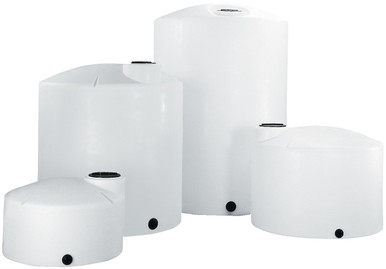
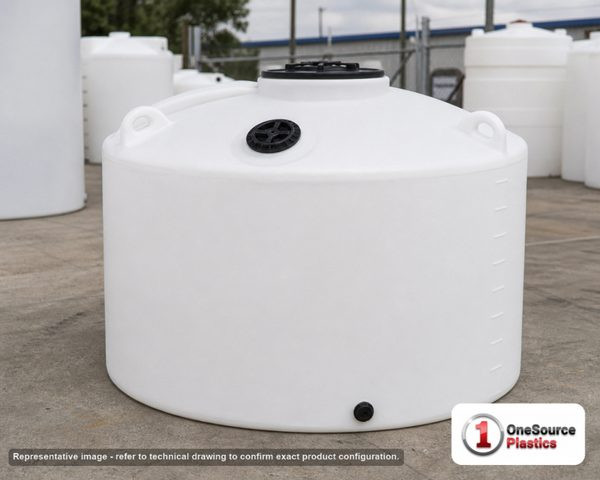
Mobile tote is shorthand for any portable container that the operator can move from site to site or rotate through a fill cycle: an IBC tote (typically 275 or 330 gallons in a steel cage with a polyethylene inner bottle), a portable utility tank (a single-piece polyethylene container with integrated handles or skid features, typically 100-525 gallons), or a tote-and-pump skid that integrates the container with a transfer pump for direct-dispense use. The defining characteristic is portability: the container is designed to be picked up, moved, and refilled at a different location.
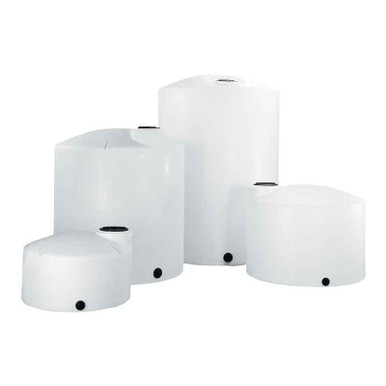
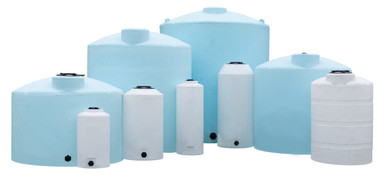
Stationary tank is shorthand for any container that is permanently installed at a single site, typically with a poured concrete pad, a tie-down hardware kit, and piped connections to the upstream and downstream process. The defining characteristic is permanence: moving the tank is a major undertaking that requires drain-down, disconnection, lifting equipment, and reinstallation at the new location. Stationary tanks span the size range from 100 gallons (small-volume process chemistry) to 50,000 gallons or more (bulk water and fuel).
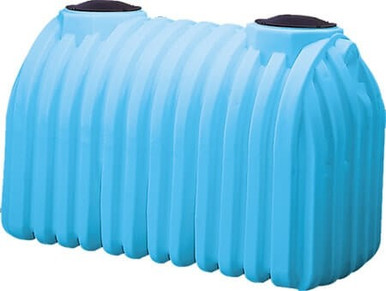
The boundary between the two architectures is fuzzy in the 100-500 gallon range. A 275-gallon polyethylene utility tank can be installed stationary on a concrete pad with piped connections, or it can be skid-mounted and rotated through a fill cycle. A 525-gallon Snyder portable can be either, depending on operator choice. Norwesco utility tanks like the N-44800 100-gallon doorway water tank and the N-45345 100-gallon portable loaf utility tank are designed for portability but are commonly installed semi-permanently on rural water service applications.
2. Capital Cost Comparison Across the Volume Range
List pricing for polyethylene container hardware in the 100-1,500 gallon range (mid-2026 reference pricing, before LTL freight which is quoted separately to your ZIP):
- 100-gallon utility tote (single): 200-400 dollars depending on configuration. Reference: N-44800 doorway water tank at 370 dollars list, N-45345 portable loaf.
- 275-gallon IBC tote (new, foodgrade): 500-700 dollars new; reconditioned IBCs in non-foodgrade reuse run 100-200 dollars but carry chemistry-traceability uncertainty.
- 330-gallon IBC tote (new): 600-800 dollars new.
- 500-gallon portable utility tank: 800-1,400 dollars depending on configuration.
- 1,000-gallon stationary vertical: 1,000-1,800 dollars list. Reference: Norwesco N-41500 1,000-gallon water tank.
- 1,500-gallon stationary vertical: 1,500-2,500 dollars list. Reference: N-40146 1,500-gallon vertical.
- 1,000-gallon double-wall XLPE for aggressive chemistry: 4,000-7,000 dollars list. Reference: Snyder SII-5990102N42.
- 1,550-gallon double-wall XLPE: 5,000-9,000 dollars list. Reference: Snyder SII-5490000N42.
The cost comparison at the 1,000-gallon equivalent: four 275-gallon IBC totes (one delivery cycle stocking 1,100 gallons total) costs roughly 2,000-2,800 dollars in new totes, versus 1,000-1,800 dollars in a single stationary 1,000-gallon vertical tank. The stationary tank wins on raw container cost. The reverse becomes true when ancillary costs are added: pad construction, piping, bunding (secondary containment), permitting, and field engineering for the stationary install. A small-volume operator handling 1,000 gallons of dilute fertilizer might spend 2,000 dollars on totes plus zero on installation, versus 1,500 dollars on the tank plus 3,000-5,000 dollars on pad and connection work for the stationary configuration.
3. Freight and Logistics Cost Patterns
Freight cost is structurally different between the two architectures. Stationary tanks ship one-time at install with a high LTL freight cost reflecting the size and weight; the freight cost amortizes over years of service. Mobile totes ship every fill cycle with a lower per-cycle freight cost but a recurring expense that accumulates.
Reference numbers (LTL or truckload, mid-2026 ranges, quoted per ZIP via the OneSource freight estimator):
- Single 1,000-1,500 gallon stationary tank LTL freight: 400-1,200 dollars depending on origin-to-destination distance and accessorial requirements (residential delivery, lift gate, etc.).
- Truckload of 16-24 IBC totes pre-filled with chemistry: 800-2,500 dollars depending on distance and load.
- Mobile dispensing utility tank (single, 100-500 gallon): 200-600 dollars LTL.
The freight cost for a stationary tank is typically a one-time event amortized over the tank service life (15-25 years for polyethylene at non-aggressive chemistry, 10-15 years for aggressive chemistry). The freight cost for a mobile tote architecture is recurring and scales with annual chemistry consumption. For a low-consumption application (under 200 gallons per year), the stationary tank's high one-time freight may not amortize favorably; for high-consumption applications (over 5,000 gallons per year), the recurring tote freight quickly exceeds the stationary install cost.
OneSource Plastics quotes LTL freight to specific ZIP codes via the freight estimator or by phone at 866-418-1777; the estimator gives current pricing for the destination of interest and helps quantify the freight component of the architecture decision.
4. Regulatory Burden Differences
The regulatory framework that applies to each architecture differs in ways that have direct cost impact.
Stationary tanks above the 1,320 gallon site-aggregate threshold for petroleum trigger SPCC compliance under 40 CFR 112. Below the threshold, no SPCC plan is required; above the threshold, a self-certified or PE-certified plan is required, secondary containment for stationary tanks is mandatory, inspection cadence is documented, and reporting is required. The cost of SPCC compliance for a small site is typically 2,000-5,000 dollars one-time for plan preparation plus ongoing inspection labor. The threshold is per-site aggregate, so multiple smaller stationary tanks can also trigger the requirement.
Mobile totes for petroleum service above 55 gallons per container with site aggregate above 1,320 gallons also trigger SPCC. The myth that "totes are not regulated under SPCC" is false; the rule applies to all bulk storage containers above 55 gallons. The advantage of mobile totes is that the containers themselves are typically DOT-rated (UN-31HA1 for the IBC standard), so they don't require additional secondary containment under SPCC if the container itself is designed for the service. The pad they sit on, however, may require containment.
Hazardous waste accumulation under RCRA 40 CFR 262/264/265 has stricter container rules. Generators of hazardous waste accumulating in tanks (regardless of stationary or mobile) must comply with Subpart J for tanks or Subpart I for containers. Mobile totes may be classified as containers (less stringent), stationary tanks are tanks (more stringent), and the regulatory cost differs by the operational accumulation pattern.
State environmental and right-to-know rules add layers above the federal floor. California Proposition 65, Texas Tier II reporting, New York SARA Title III reporting, and similar state programs interact with both architectures but apply different thresholds depending on substance and concentration. The compliance burden has to be evaluated for the specific state and chemistry rather than assumed.
5. Operational Labor for Fill and Transfer Cycles
Mobile tote architecture requires recurring fill cycles: order chemistry from a supplier in totes, receive the totes, transfer chemistry from the totes into process equipment, return or dispose of empty totes. Each cycle has labor cost. Stationary tank architecture requires one-time fill events at much longer intervals: order bulk chemistry, receive a bulk delivery, the chemistry transfers into the tank in a single operation, the tank then dispenses to process over a long period.
Labor estimates per fill cycle:
- Mobile tote (275 gal) fill cycle: receive 4 hours, deploy and connect 1 hour, dispense over service period (variable), pickup empty 0.5 hour. Total per cycle: 5-6 hours of labor.
- Stationary tank fill cycle (truckload bulk delivery): receive 1-2 hours, transfer 0.5-1 hour, paperwork 0.5 hour. Total per cycle: 2-4 hours.
For a 5,000-gallon-per-year operation:
- Mobile tote architecture: 18-19 fill cycles per year (at 275 gal each) = 90-114 hours of labor.
- Stationary 1,500-gallon tank architecture: 3-4 fill cycles per year = 6-16 hours of labor.
The labor differential at moderate-to-high consumption rates is substantial and tilts strongly toward stationary architecture. At low consumption rates (under 1,000 gal/year), the labor differential is small and other factors dominate.
6. Contamination, Cross-Use, and Reuse Risk
Mobile totes used in chemical service introduce contamination risk that stationary tanks rarely face. The risks:
Reused IBC totes from refurbished suppliers may have residual contamination. The international refurbished IBC market includes containers that originally held chemistries different from the current service. Cleaning protocols vary; "rinsed" totes are not "cleaned" totes. For chemistry-sensitive service (food contact, pharmaceutical, water treatment), reused IBCs are not appropriate. New IBCs or UN-rated foodgrade IBCs are the right answer.
Cross-use of totes within an operation creates contamination risk. A tote used last month for sodium hypochlorite contains residual hypochlorite even after rinsing; using it next month for ammonia-based chemistry creates a chlorine-ammonia reaction that liberates toxic chloramine. Operational discipline requires either dedicated totes per chemistry (which adds container cost) or rigorous cleanout protocol with documentation.
Stationary tanks have a chemistry history that is typically simpler. A tank installed for one chemistry is usually retained for that chemistry over its service life, eliminating cross-contamination risk. Change-over to a different chemistry requires a dedicated cleanout protocol but is a planned event, not a recurring risk.
The contamination risk is highest in mobile tote architecture for chemistry classes where small contamination has high consequence: pharmaceutical APIs, food-grade ingredients, sensitive process chemistries, water treatment for potable supply. In these classes, stationary tank architecture or single-use mobile containers are typically the right answer.
7. The Decision Matrix
The decision matrix that converts operational profile into architecture recommendation:
Annual consumption volume.
- Under 500 gal/yr: mobile totes typically optimal. Stationary tank capital does not amortize.
- 500-2,000 gal/yr: depends on other factors. Both architectures viable.
- 2,000-10,000 gal/yr: stationary tank typically optimal. Labor savings dominate.
- Over 10,000 gal/yr: stationary tank required for economic operation; mobile tote logistics become impractical.
Site type.
- Permanent industrial site with infrastructure: stationary tank fits operational pattern.
- Construction site, project site, seasonal operation: mobile tote fits operational pattern (movable inventory, short-term commitment).
- Remote site without truck access for bulk delivery: mobile tote may be the only practical option.
Chemistry sensitivity.
- Standard industrial chemistry, low contamination consequence: either architecture acceptable.
- Food-grade, pharmaceutical, water-treatment-for-potable: stationary tank or single-use containers; refurbished IBC reuse not acceptable.
- Hazardous waste accumulation: stationary tank with RCRA Subpart J or container with Subpart I; the decision affects the regulatory framework.
Regulatory threshold sensitivity.
- Aggregate at site below SPCC threshold: either architecture; regulatory burden is light.
- Aggregate at site near or above SPCC threshold: stationary tank with engineered secondary containment is typically simpler to permit than tote-based architecture.
Operator labor cost.
- Low labor cost (under 30 dollars/hour fully loaded): mobile tote labor differential matters less.
- Moderate-to-high labor cost (over 50 dollars/hour fully loaded): stationary tank labor savings dominate.
Operational stability.
- Stable operation, predictable consumption: stationary tank optimal.
- Variable consumption, intermittent campaigns: mobile tote provides flexibility to scale up and down.
8. Hybrid Architectures: Tote-Plus-Tank Combinations
Many operations resolve the decision by combining the two architectures: a stationary tank for the bulk of consumption plus mobile totes for surge capacity, for off-spec chemistry that requires segregation, or for portable point-of-use dispensing. Common hybrid patterns:
Stationary base + tote surge. A 1,500-gallon stationary tank holds the standard chemistry; an IBC tote covers seasonal or campaign-driven surge above the stationary capacity. The base tank handles steady-state economics; the tote handles short-term variability without committing to a larger base tank.
Stationary feed + tote dispense. A 1,500 to 5,000-gallon stationary tank holds the bulk; mobile totes are filled from the bulk tank and used at point-of-use throughout the site. The bulk economics drive the chemistry cost; the mobile tote logistics drive the dispensing convenience.
Stationary primary + tote secondary. A 1,500-gallon stationary tank holds the primary chemistry; a 275-gallon tote holds a secondary chemistry that does not justify its own stationary installation. Common pattern where the operation uses one high-volume chemistry and several low-volume support chemistries.
Tote fleet for rotating service. A small fleet of 100-330 gallon mobile totes rotates through fill and dispense cycles. No stationary tank. Common in spray operations (pesticide application), in concrete construction (admixtures), and in oilfield service (small chemistry batches at remote wells). The Norwesco utility tank line including the N-42064 15-gallon 57-degree inductor serves this pattern at the small-volume end.
9. Recommendations by Application Profile
- Small farm with seasonal water and dilute fertilizer service, under 1,000 gal/yr: mobile totes plus a stationary water reserve. The water reserve handles steady consumption; totes handle fertilizer and crop-protection chemistry by season. Reference: Norwesco N-41500 1,000-gallon water tank for water reserve.
- Light industrial site with moderate process chemistry, 2,000-5,000 gal/yr: stationary 1,500-gallon vertical for the primary chemistry; totes for support chemistries. Reference: N-40146 1,500-gallon vertical.
- Industrial site with aggressive chemistry, 5,000-15,000 gal/yr: stationary 1,000-1,550 gallon Snyder Captor double-wall XLPE for primary; totes for surge or secondary chemistry. References: SII-5990102N42 1,000 gallon, SII-5490000N42 1,550 gallon.
- Used motor oil collection at automotive service center: stationary 275-gallon double-wall tank with integrated containment. Reference: Snyder SII-5740102N95703.
- Industrial water service at moderate volume: Enduraplas 2,500-gallon vertical or Chem-Tainer 500-gallon vertical depending on capacity match. References: EP-THV02500FG, TC6446IA.
- Agricultural water reserve, rural site: Bushman 1,500-gallon water tank. Reference: BM-WW-1500-GL-NAT.
- Spray applicator with seasonal use: mobile totes plus a small stationary fill-and-rinse station. Reference: N-42064 inductor tank for chemistry inductor.
- Remote oilfield, intermittent chemistry, no truck access for bulk: mobile totes only. Stationary architecture impractical without infrastructure.
OneSource Plastics carries both stationary and portable polyethylene tanks across the 100-15,000 gallon range. List pricing on each SKU is published on the corresponding PDP; LTL freight is quoted to your ZIP via the freight estimator or by phone at 866-418-1777. For operations weighing the architecture decision, OneSource offers a sizing-and-architecture consultation matched to your annual consumption profile, site geometry, and regulatory framework.
For complementary reading, see our tank foundation guide for the pad considerations on stationary installs and our SPCC secondary containment for the regulatory framework that affects the architecture choice.
Recommended Tanks for This Guide
Live pricing, updated automatically · estimate freight to your ZIP.