OSHA Hazard Communication Standard 2024 Final Rule Implications for Polyethylene Tank Labeling: GHS Revision 7 Alignment, New Pictogram and Hazard-Class Requirements, Workplace Label Conformance Deadlines, and the Field Update Strategy
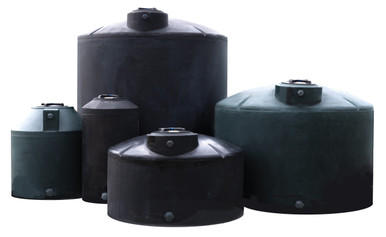
OSHA published the Hazard Communication Standard final rule in May 2024, the first major update since the 2012 GHS alignment. The rule aligns the federal regulation with GHS Revision 7 (the United Nations Globally Harmonized System publication), introduces new hazard classifications, refines existing classifications, and changes specific labeling requirements with phased compliance deadlines extending through 2026 and 2027. For sites operating polyethylene bulk storage tanks the rule creates a labeling-update obligation that requires planning, materials acquisition, operator training, and documentation. This article walks the rule's relevant changes, the deadlines, the practical labeling implications for tank installations, and the field update strategy that minimizes disruption and audit exposure.
The discussion is grounded in 29 CFR 1910.1200 as amended in 2024, OSHA's preamble guidance, GHS Rev 7, and field practice across the 5-brand polyethylene tank catalog (Norwesco, Snyder, Chem-Tainer, Enduraplas, Bushman). List pricing on each tank product page; LTL freight quoted to your ZIP via the freight estimator or by phone at 866-418-1777. This article is general guidance; the customer is responsible for confirming the specific application of the rule to their site and chemistry inventory.
1. The 2024 Final Rule in Context
The Hazard Communication Standard has evolved across multiple revisions since the original 1983 publication. The 2024 update sits in a specific historical context:
- The 1983 original HazCom standard. The original rule established the hazard-communication framework: chemical manufacturers must classify hazards, communicate the classifications via labels and safety data sheets (then called material safety data sheets, MSDS), and downstream employers must train workers on the hazards of chemicals in the workplace. The rule was performance-based with significant flexibility on label format and content.
- The 2012 HazCom 2012 update. The 2012 update aligned the federal rule with GHS Revision 3, harmonized the classification criteria with international standards, replaced the MSDS with the 16-section Safety Data Sheet (SDS), introduced the standardized GHS pictograms (the red-bordered diamonds), and prescribed label content elements. The 2012 update was the largest change to HazCom since 1983 and required significant industry effort to comply.
- The 2024 update content. The 2024 update aligns the rule with GHS Revision 7 (the most recent UN publication at the time of OSHA rulemaking). The update refines hazard classifications, introduces new hazard categories within existing classes, updates the precautionary statement library, addresses small-package labeling, refines labeling for bulk shipments, and clarifies several operational requirements.
- The compliance phase-in schedule. The rule provides phased compliance deadlines. Chemical manufacturers and importers must classify chemistry and update SDS and labels by January 19, 2026. Distributors must transmit updated SDS and labels for shipments by July 19, 2026. Employers in workplaces must update workplace labels and training to reflect the new SDS information by July 19, 2027.
- The state-plan state divergence. States with OSHA-approved state plans must adopt rules at least as effective as the federal rule. Some state plans adopt the federal rule by reference; others publish a state-specific rule that may have different deadlines. Sites operating in state-plan states should verify their specific state deadlines and any state-specific provisions.
- The DOT and EPA parallel rules. The OSHA rule applies to workplace labeling. DOT 49 CFR governs labeling for transport. EPA TSCA, FIFRA, and RCRA labeling rules apply to specific chemistry classes. The 2024 OSHA update does not modify the DOT or EPA rules directly, though all four regimes touch the same chemistry inventory and the labels must satisfy each applicable regime simultaneously.
The 2024 update is a significant but incremental change. The framework established in 2012 remains in place; the 2024 update refines the framework. Sites that achieved 2012 compliance well are positioned to absorb the 2024 update with manageable effort.
2. The New and Refined Hazard Classifications
The 2024 update introduces several new hazard classifications and refines existing ones. The classifications most relevant to polyethylene tank chemistry are:
- Aerosols sub-categorization. The aerosol hazard class is sub-divided more finely with specific criteria for aerosols versus chemicals under pressure. Most polyethylene tank chemistry is not aerosol but the distinction matters for chemistry stored under pressure (very rare in atmospheric polyethylene tanks but possible in pressure-rated rotomolded vessels).
- Desensitized explosives as a hazard class. The 2024 rule introduces desensitized explosives as a specific hazard class. The category covers chemistry that is explosive in pure form but desensitized by addition of water, alcohol, or other phlegmatizer to reduce the explosion hazard. Some specialty oxidizers and peroxides fall into this class; tank installations storing these materials must update their labels.
- Pyrophoric gases as a hazard class. The 2024 rule introduces pyrophoric gases (gases that ignite spontaneously in air at or below 54 C). Most polyethylene tank chemistry is liquid not gas, so this class typically does not apply, but tanks integrated into systems with pyrophoric-gas blanketing may have indirect implications.
- Refined respiratory and skin sensitization criteria. The criteria for sensitization (chemistry that causes allergic reaction on repeated exposure) are refined with sub-categories based on potency. Many tank chemistries (epoxy precursors, isocyanate-functional materials, certain biocides) fall into the refined sensitization classes; the labels and SDS must reflect the updated classification.
- Refined acute toxicity criteria. The acute-toxicity classification thresholds are refined. Some chemistry that was classified at one acute-toxicity category under the 2012 rule may move to a different category under the 2024 rule based on the refined criteria. The label signal word (Danger versus Warning) and the specific hazard statement may change accordingly.
- Updated flammable liquid criteria. The flammable liquid classification criteria are aligned with the GHS Rev 7 framework and now match the DOT and international transport classification more closely. The result is generally a small number of chemistries moving between flammable categories with corresponding label changes.
Sites should request from their suppliers an updated SDS reflecting the 2024 classifications and review the resulting changes. Many chemistries will see no change at all; some will see refined sub-category assignments; a small number will see meaningful classification changes.
3. Label Content Element Changes
The label content elements (the printed information on the container or tank label) see specific refinements in the 2024 rule:
- The product identifier requirement. The product identifier on the label must match the SDS product identifier. This was a 2012 requirement; the 2024 rule clarifies the matching expectation and provides specific guidance on multi-component product identifiers. Tank labels that historically used a generic chemistry name (e.g., "sodium hypochlorite") may need to use the supplier-specific product identifier (e.g., "Acme HypoChlor 12.5 Sanitizing Solution") to match the SDS.
- The signal word and pictogram requirements. Signal word (Danger or Warning) and pictogram requirements are updated to reflect the 2024 classification refinements. Where a chemistry classification changes, the corresponding signal word or pictogram set may change.
- The hazard statement library. The hazard-statement standardized phrases (the H-codes) are updated to reflect new and refined hazard classes. Some H-codes are reworded; some new H-codes are added; a small number are deleted.
- The precautionary statement library. The precautionary-statement standardized phrases (the P-codes) are updated more substantially. Many P-codes are reworded for clarity; some new P-codes are added; the hierarchy of which P-codes apply to which classifications is refined.
- The supplier identification. The supplier identification (name, address, telephone) requirement is unchanged but the rule clarifies that the supplier information must be the entity legally responsible for the product, not necessarily the brand owner or distributor.
- Reference 5000 gallon tank for the labeling scope. Reference N-40164 5000 gallon Norwesco vertical as the typical industrial tank where the full label-update analysis applies. The bulk-storage tank label is the workplace label that the workers see; it must reflect the updated classification.
The label content updates are mechanical once the underlying classification is established. Sites should establish a workflow: receive updated SDS from supplier, parse the new classification and label elements, generate updated tank labels, and apply the labels in the field.
4. Workplace Label Versus Shipped-Container Label Distinction
The HazCom rule distinguishes between the manufacturer-applied label on the shipped container and the workplace label that the employer applies in the workplace. The distinction is significant for tank installations:
- The shipped-container label requirement. The chemical manufacturer or importer applies the label to the shipped container (drum, tote, tank truck, rail car). The label complies with the full HazCom content requirements. The shipped-container label is the responsibility of the supplier under the rule.
- The workplace label flexibility. Where the chemistry is transferred from the shipped container into a workplace storage container (a polyethylene bulk tank), the employer applies a workplace label. The workplace label may use alternative formats (HMIS, NFPA 704, plain-text descriptions) provided the workplace label conveys the hazard information adequately to the trained workers. The workplace label is the responsibility of the employer.
- The full HazCom workplace-label option. Many sites apply full HazCom-compliant labels to the polyethylene tanks, treating the tank as if it were a shipped container. The advantage is that the workplace label matches the SDS exactly, the operator training is simpler, and the audit position is stronger. The disadvantage is that updating tank labels every time the supplier ships a new lot becomes an operational burden.
- The hybrid label approach. Many sites use a hybrid: a permanent placard on the tank with the chemistry identity, NFPA 704 hazard diamond, and supplier identification, paired with a separate posting in the work area of the current SDS and the supplier-specific label elements. The hybrid approach satisfies the rule, reduces the field-label maintenance burden, and provides the workers the information they need.
- The training requirement linkage. Whichever workplace-label approach the site selects, the operator training must align. Workers must understand how to read the label, where to find the SDS, and how to recognize the hazards. The training documentation is part of the audit package.
- Reference 1000 gallon tank for the workplace-label decision. Reference N-40152 1000 gallon Norwesco vertical as a mid-volume tank where the workplace-label approach decision applies. The same decision logic scales across all tank sizes.
The workplace-label decision is one of the central operational choices for HazCom compliance on tank installations. The 2024 rule does not change the underlying flexibility but does require that whichever approach is selected reflects the updated 2024 classifications.
5. Compliance Deadline Planning
The phased compliance deadlines require site-level planning to meet the obligations without gaps:
- The January 2026 supplier deadline. Chemical manufacturers and importers must classify chemistry per the updated rule and provide updated SDS and labels by January 19, 2026. Sites should expect to receive updated SDS through 2025 as suppliers complete their reclassification work. Some suppliers will move early; some will wait until the deadline.
- The July 2026 distributor deadline. Distributors must transmit updated SDS and labels with shipments by July 19, 2026. The rule allows distributors a six-month buffer after the manufacturer deadline to transition. Sites that buy through distributors may see updated documentation later than sites that buy direct from manufacturers.
- The July 2027 workplace deadline. Employers must update workplace labels and training by July 19, 2027. The 18-month buffer after the distributor deadline allows time to receive the updated documentation, plan the labeling updates, generate the new labels, apply them in the field, and update the training. The buffer is generous on paper but the workflow must start before the buffer is consumed.
- The recommended workflow timing. A practical workflow: through 2025, request and review updated SDS from suppliers as they become available. By mid-2026, identify the chemistries with classification changes and scope the labeling-update workload. Through late 2026 and early 2027, generate and apply updated workplace labels. By Q2 2027, complete operator training updates and document the training. Reserve Q3 2027 for any remaining cleanup before the deadline.
- The incremental versus campaign approach. Sites can either update labels incrementally as updated SDS arrives or run a single labeling campaign once all updated SDS are in hand. The incremental approach spreads the workload but produces inconsistent label states for a transition period. The campaign approach produces a clean transition but loads the workload at the end. Most sites land somewhere between, updating labels for chemistry classes as the SDS-receipt is complete for that class.
- The audit position during transition. During the transition period, the audit position is acceptable if the site can demonstrate awareness of the new rule, a documented compliance plan with timeline, evidence of progress against the plan, and updated training as labels are updated. Auditors do not expect 100 percent compliance on day 1 of the deadline window; they expect documented plan and progress.
The compliance-deadline planning converts the rule from a panicked deadline into a manageable project. Sites that start the work in 2025 and 2026 finish comfortably ahead of the 2027 workplace deadline.
6. Field Update Strategy for Tank Labels
The mechanical work of updating tank labels in the field requires planning around durability, operator safety, and tank operation:
- The label material selection. Tank labels exposed to outdoor weather, sunlight, chemistry vapor, and occasional washdown require durable materials. Common selections include UV-stable polyester laminate over a chemistry-resistant adhesive, photo-anodized aluminum plates with mechanical fastening, or polycarbonate plates with chemical-resistant printing. The selection depends on the tank service life, the chemistry exposure, and the visual durability requirement.
- The label placement geometry. Labels should be placed at eye level for the workers who interact with the tank, on the side most visible from the normal work approach, away from drainage paths that wash the label, and clear of any insulation or tracing equipment. Multiple labels (one on each side of a tank that workers can approach from multiple directions) are typical.
- The operator-safety considerations during field application. Workers applying labels to tanks may need to climb, work near vent lines, work in proximity to operating tank chemistry, and work outdoors in weather. The work plan should include the appropriate fall protection, respiratory protection if vent emissions are present, lock-out of any equipment that could cycle during the work, and weather-window planning.
- The tank-out-of-service consideration. Some labeling updates can occur with the tank in service; some require the tank out of service. Updating an external decal on the side of an in-service tank is straightforward. Updating any label that requires drilling, mechanical fastening, or proximity to vent or fill connections may require the tank out of service. The work plan distinguishes the two cases.
- Reference 100 gallon tank for the small-tank labeling. Reference N-44800 100 gallon Norwesco doorway tank as the smallest-scale labeling case. Small tanks have less surface area for labeling and may use a single consolidated label rather than the multi-label approach typical for larger tanks.
- The documentation and acceptance. After field application, the labeling work is documented (date, operator, label content, photo of installed label). The documentation feeds the compliance file and supports the audit position. A supervisor or quality reviewer accepts the work and signs the documentation.
The field-update mechanics are straightforward when planned. Most sites complete the field work in days to weeks across the tank inventory; the planning and documentation work consumes more time than the actual labeling.
7. Training Update Requirements
The HazCom rule requires worker training on the chemicals in the workplace and on the labeling and SDS systems. The 2024 update imposes specific training updates:
- The worker training scope. Workers must be trained on the hazards of chemicals in their work area, the labels and SDS used to communicate the hazards, the protective measures, and the procedures for emergency response. The training is initially on hire and updated when new chemicals enter the work area or when the labeling and SDS systems change.
- The 2024 update training trigger. The 2024 rule changes the labeling and SDS systems (new pictograms, refined hazard classes, updated H and P codes). The change triggers a training update for all workers who interact with the affected chemistry.
- The training content for the update. The training covers the new and refined hazard classes (with examples relevant to the site's chemistry inventory), the updated pictograms (the desensitized-explosives pictogram and any other new ones), the refined H and P codes that workers will see on labels and SDS, and the timeline for the workplace label updates.
- The training documentation. The training is documented with attendance, content, instructor, and date. The documentation is retained per the records-retention requirement and presented during audits.
- The training format options. Training can be in-person, classroom-based, or computer-based. The rule does not prescribe the format; the rule prescribes that the training be effective and comprehensible to the workers. Sites with a multilingual workforce often deliver the training in multiple languages.
- The supervisor and quality involvement. Supervisors who review tank records and quality reviewers who release tank chemistry into production also need the training update. Their interaction with the labels and SDS is different from line workers but the training need is the same.
The training update is the human-side complement to the field-label update. Both must be complete by the workplace deadline.
8. Procurement Implications and Tank Selection
The 2024 HazCom update has implications for tank procurement decisions:
- Factory-applied identification labels. The tank manufacturer applies a factory identification label (manufacturer name, date code, capacity, model) to the tank. This factory label is not the chemistry workplace label; the workplace label is added after delivery and chemistry filling. The factory label is unaffected by the 2024 update.
- Surface preparation for workplace labels. The tank surface receiving the workplace label should be smooth, clean, and dry at time of label application. Some tank surfaces (textured or weathered surfaces) may not bond well with adhesive labels; mechanical labels with fasteners may be required. The procurement specification can request a smooth labeling area on the tank wall if the supplier offers the option.
- Tank color selection for label visibility. Light-colored tanks (natural-white) provide good contrast for dark-printed labels; dark-colored tanks (black) require labels with contrasting backgrounds. Both work; the procurement decision should consider the labeling visibility along with the other color-selection factors (vapor pressure response, biological growth, aesthetics).
- Reference 2500 gallon tank for the labeling-area discussion. Reference N-41524 2500 gallon Norwesco vertical as a typical mid-volume tank where the labeling-area and visibility discussion applies directly. The cylindrical wall provides ample surface for multiple labels at the appropriate placement.
- Documentation package as deliverable. The tank procurement package can include reference material (sample labels, label-placement guidance, recommended label vendors) that supports the customer's compliance work. The package adds value at no incremental cost to OneSource and supports the customer's transition planning.
- Long-term replacement cycle alignment. Tanks approaching end of service life around the 2027 deadline can be replaced with new tanks already prepared for the updated labeling. The replacement timing aligns the capital cycle with the regulatory cycle.
The procurement implications are modest but real. Tanks specified with smooth labeling areas and selected for color contrast simplify the workplace-label work that follows.
9. The HazCom 2024 Update Engineering Conclusion
The 2024 HazCom final rule is the first major update since 2012. The rule aligns federal regulations with GHS Rev 7, refines hazard classifications, updates label content elements, and imposes phased compliance deadlines through 2026 and 2027. For polyethylene tank installations the rule creates a labeling-update obligation that requires planning, materials acquisition, field application, and operator training. Sites that begin the work in 2025 and 2026 finish comfortably ahead of the 2027 workplace deadline; sites that delay the work into 2027 risk compressed schedules and audit exposure.
OneSource Plastics ships polyethylene tanks across the 5-brand catalog (Norwesco, Snyder, Chem-Tainer, Enduraplas, Bushman) with surface preparation and accessory configurations matched to the labeling and identification requirements. Tank specification for any specific application is performed by the customer site engineer with reference to the chemistry, the regulatory regime, and the site labeling standard. List pricing on each product page; LTL freight to your ZIP via the freight estimator or by phone at 866-418-1777. For related compliance content see tank label and signage compliance.
Recommended Tanks for This Guide
Live pricing, updated automatically · estimate freight to your ZIP.