Tank Chemistry Log Discipline and Electronic Batch-Record Integration: How Paper Logs, Tablet Forms, MES Workflows, and 21 CFR Part 11 Compliant Audit Trails Connect a Polyethylene Storage Tank to the Quality System That Releases the Finished Product
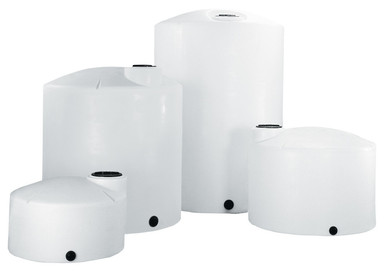
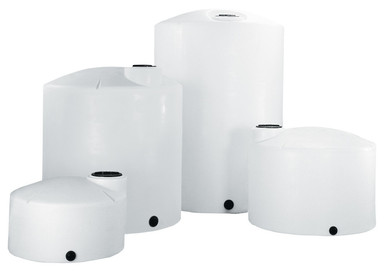
The polyethylene tank in the chemical-receiving yard is a regulated unit operation. The chemistry contained inside is part of the quality system of the finished product manufactured downstream, and the records that document what arrived, when it arrived, what concentration it was, what lot it came from, and what it was eventually consumed into are the legal evidence that the finished product was made from the correct ingredients in the correct sequence. The discipline of chemistry log keeping is the connective tissue between the storage tank and the batch record; the electronic integration of that discipline into a Manufacturing Execution System (MES) or Laboratory Information Management System (LIMS) is the modern operational expectation. This article walks the regulatory framework, the paper-to-electronic transition, the data fields that matter, the audit-trail requirements, and the integration architecture that ties the storage tank into the quality system.
The discussion is grounded in 21 CFR Part 11, ICH Q7, ISO 9001 quality system practice, and field experience across the 5-brand polyethylene tank catalog (Norwesco, Snyder, Chem-Tainer, Enduraplas, Bushman). List pricing on each tank product page; LTL freight quoted to your ZIP via the freight estimator or by phone at 866-418-1777.
1. The Regulatory Framework for Chemistry Records on Storage Tanks
Multiple regulatory regimes touch the storage-tank chemistry record, and each imposes specific requirements:
- 21 CFR Part 211 for pharmaceutical manufacturing. The Current Good Manufacturing Practice (cGMP) regulations require that each component used in pharmaceutical manufacturing be identified, that the identity be verified upon receipt, that the component be quarantined until released by quality, and that the consumption of the component into a batch be recorded with traceability to the originating lot. The storage tank that holds the bulk component sits inside this framework: each tank load is a sub-lot of the supplier lot, each draw from the tank into a batch is a consumption event that must be recorded.
- 21 CFR Part 11 for electronic records. Where the chemistry records are kept electronically, Part 11 imposes requirements on the system: validated electronic signatures, audit trails that capture who changed what when, system access controls, and record retention. The MES or LIMS that holds the tank record must satisfy Part 11 if the records it holds are GMP-relevant.
- 21 CFR 117 for food-grade manufacturing. The Preventive Controls for Human Food rule requires identity verification of food-contact ingredients, lot traceability, and supplier-controls program records. Storage tanks holding food-grade chemistry (acidulants, sweeteners, oils, food-grade caustic) sit inside this regime with similar (though less prescriptive than pharmaceutical) record requirements.
- EPA 40 CFR 264 for hazardous-waste manifesting. Where the storage tank holds chemistry that becomes a hazardous waste at end of life (off-spec material, decommissioning residuals), the manifesting framework requires records identifying the material, the source, the disposal facility, and the dates. The tank record connects the receipt history to the eventual disposal manifest.
- OSHA 29 CFR 1910.119 process safety management. For tanks above the PSM threshold quantity for the specific chemistry, the PSM standard requires process safety information (PSI) including the chemistry composition, the maximum intended inventory, and the safe upper and lower limits. The tank record feeds the PSI documentation.
- State environmental and tax records. Many states require monthly inventory reporting on tanks holding materials subject to state environmental fees (volatile organic chemistry, hazardous chemistry) or tax-relevant fluids (motor fuels, agricultural chemistry under state aid programs). The tank record is the source for the regulatory filings.
The chemistry log is the single source of truth that satisfies multiple regulatory regimes simultaneously. The discipline of keeping it well makes the regulatory audit a clerical exercise rather than a forensic reconstruction.
2. Paper Logs and Their Limitations
Many sites still keep tank chemistry records on paper; the historical evolution and the limitations are worth understanding before designing the electronic replacement:
- The paper logbook tradition. A bound logbook with sequentially numbered pages was the standard chemistry record format for most of the twentieth century. The operator wrote each receipt with date, time, supplier, lot, certificate-of-analysis (COA) number, quantity, and operator initials. Each consumption was recorded with date, time, quantity drawn, batch consumed into, and operator initials. The bound format prevented page substitution; the sequential numbering exposed gaps; the ink entries created a physically permanent record.
- The bound-book audit advantage. A bound logbook with proper entries is admissible evidence. The auditor can examine the entries, verify the sequential numbering, identify gaps, and form a judgment about the discipline of the operation. The auditor does not need to validate any electronic system to accept the records.
- The paper transcription error. Paper logs require manual transcription of supplier-provided information (lot number, COA number, quantity received) onto the page. Transcription errors are common: digit transpositions, lot-number errors, quantity errors. The transcription error becomes embedded in the record and propagates downstream into the batch record where the same lot identifier is referenced.
- The paper retrieval cost. Retrieving a specific entry from a paper logbook requires manual scanning of the pages for the date or lot of interest. For a ten-year-old record across multiple logbooks the retrieval can take hours. The retrieval cost is paid every time the record is referenced (recall investigation, customer complaint, regulatory inquiry, internal trending).
- The paper analytics limit. Trending across years of paper logs requires manual extraction of the data into a spreadsheet, which is itself a transcription operation with its own error rate. The trending that would expose a slow drift in supplier quality, a creeping inventory accuracy problem, or a temperature pattern is rarely performed because the cost is too high.
- The paper backup limit. A paper logbook is one physical artifact. Fire, flood, theft, or simple loss eliminates the record permanently. Some sites photocopy the logbook periodically and store the copy off-site, but the practice is rarely consistent and the copy is always behind the live record.
Paper logs satisfied the regulatory expectation in the era they were designed for; the modern expectation is electronic with audit trail, search, and trending capability. The transition from paper to electronic is the central design challenge for most existing tank installations.
3. Tablet-Based Forms as the Transitional Architecture
Many sites take an intermediate step from paper to full MES integration: a tablet-based electronic form that the operator fills at the tank. The tablet form has both advantages and limitations:
- The tablet-form advantage on data capture. A tablet form with structured fields (lot number, quantity, COA number, supplier, date, time, operator) prevents many of the transcription errors of paper. Drop-down lists for supplier and chemistry name eliminate spelling variants. Required-field validation prevents incomplete entries. Barcode scanning of supplier paperwork captures the lot number and COA without manual entry.
- The tablet-form advantage on photo capture. The tablet camera captures the supplier paperwork (bill of lading, COA, manifest) at the point of receipt and attaches the image to the record. The image becomes part of the record and survives if the paper is later misfiled. The image also captures the operator-witnessed seal numbers, tank-truck markings, and similar visual evidence.
- The tablet-form advantage on time stamps. The tablet records the system clock at the moment of entry. Operators cannot back-date or forward-date entries. The time stamp is the foundation of the audit trail.
- The tablet-form limitation on integration. A tablet form that writes to a local database without integration to the MES or ERP is an island. The data is captured but does not flow into the batch record automatically. Operators in production must still manually enter the lot number into the batch record; the dual-entry creates new transcription errors at the second step.
- The tablet-form limitation on audit-trail rigor. A simple tablet form may not satisfy 21 CFR Part 11 if the audit-trail logging is incomplete. Part 11 requires the audit trail to capture every change to the record (initial entry, edits, deletions) with the user identity, the time stamp, and the reason for change. A simple form that stores only the final state of the record is not Part 11 compliant.
- Reference tank for the tablet methodology. Reference N-41524 2500 gallon Norwesco vertical as a typical mid-volume tank where the tablet-based receipt-recording workflow applies. The receiving operator uses the tablet at the tank manifold to record the unloading event with all required fields and photo attachments.
The tablet form is a useful interim step for sites moving from paper. The next step is integration into the production MES so the tank record flows into the batch record without dual entry.
4. The Required Data Fields for a Compliant Tank Record
The data fields that a compliant tank record must capture span receipt, custody, and consumption:
- Receipt-event fields. Date and time of receipt, supplier name and identifier, supplier lot or batch number, supplier COA number, supplier bill-of-lading or shipping document number, quantity received (with units), quantity verified by tank-level measurement after unloading, receiving operator identifier, receiving inspector identifier (if separate from operator), seal numbers verified at receipt, vehicle identification, and any identity-verification testing performed at receipt (specific gravity, pH, conductivity, refractive index spot-check).
- Quarantine and release fields. Quarantine status applied at receipt, sample identifier sent to quality lab for full analysis, lab result identifier and disposition (accept, reject, conditional accept), quality-release date and signature, release operator identifier, and any deviations from specification with the disposition documentation.
- Custody fields during storage. Tank identifier and physical location, current inventory level (calculated from receipt minus consumption), tank temperature log entries, periodic stability sampling identifiers and results, any in-tank events (mixing, recirculation, transfer between tanks, addition of stabilizer, dilution).
- Consumption-event fields. Date and time of consumption, quantity drawn (with units), batch number into which the chemistry was consumed, drawing operator identifier, and the calculated tank inventory after the draw.
- End-of-life fields. Final inventory at tank decommissioning, disposition of the residual material (transferred to another tank, drained to waste, recovered for off-site disposal), waste manifest number if applicable, decommissioning date and operator.
- Audit-trail fields. Every record entry, edit, or deletion captured with user identity, time stamp, the previous value (for edits), the new value, and a reason for change (for non-routine edits). The audit trail is appended to but never modified or deleted; it is the legal evidence of record integrity.
The data-fields list scopes the database design and the form workflow. Sites that omit fields create gaps that surface during audits or recalls; sites that include extraneous fields burden the operators with paperwork that adds no value.
5. The MES and LIMS Integration Architecture
Full integration of the tank record into the production environment requires architecture that connects the tank to the upstream supplier interface and the downstream batch-record system:
- The supplier EDI interface. Modern suppliers transmit the COA and shipping documents electronically via EDI 856 (advance ship notice) and EDI 824 (application advice with COA data) or via a portal-based PDF download. The receiving system parses the electronic document and pre-populates the receipt record before the truck arrives. The receiving operator confirms the physical reality (truck arrived, seal intact, quantity matches) rather than re-entering the data.
- The tank-side data acquisition. Tank level sensors (radar, ultrasonic, hydrostatic), temperature sensors, and any in-line measurement devices feed data into the tank historian or SCADA system. The historian provides the receipt-quantity verification and the inventory-tracking data without operator entry.
- The MES batch-record connection. When a production batch consumes from the tank, the MES recipe step calls the tank inventory and decrements the inventory automatically. The lot number from the tank record propagates into the batch record automatically. The operator at the production line does not enter the lot number; the system enforces the linkage.
- The LIMS quality-release connection. The lab analyzes the receipt sample and releases the result through the LIMS. The release notification flows to the MES which then permits the tank inventory to be consumed by production. Quarantined inventory cannot be drawn into a production batch; the system enforces the quality discipline.
- The ERP financial connection. The receipt event triggers the accounts-payable workflow in the ERP. The consumption events trigger the cost-of-goods-sold accounting. The inventory revaluation flows automatically. Finance does not require separate operator data entry.
- Reference 5000 gallon tank for the integration architecture. Reference N-40164 5000 gallon Norwesco vertical as the typical industrial tank where the full MES-LIMS-ERP integration applies. The integration cost is justified by the operator-time savings, the audit-trail rigor, and the elimination of dual-entry errors.
The integration architecture transforms the tank from a passive container into an active node in the digital production environment. The operator burden drops, the audit-trail rigor rises, and the analytics capability becomes available for trending and continuous improvement.
6. Audit-Trail Requirements Under 21 CFR Part 11
Where the records are GMP-relevant, the audit-trail design must satisfy 21 CFR Part 11. The requirements are specific and the design implications are significant:
- The "who" requirement. Every record action (creation, edit, deletion, view) is logged with the user identity. The user identity is established by the system access control: a unique user account, a password (or multi-factor authentication for higher-risk environments), and a session record that ties the actions to the user. Shared accounts are prohibited; group operator IDs are prohibited.
- The "when" requirement. Every record action is logged with a time stamp from a controlled time source. The time source must be synchronized to a reliable reference (NTP server, GPS clock); the synchronization must itself be auditable. The operator cannot adjust the system clock to back-date or forward-date entries.
- The "what" requirement. The audit trail captures the previous value and the new value for every change. A simple "field X was edited" log is insufficient; the actual data change must be reconstructable from the audit trail.
- The "why" requirement. For non-routine edits the audit trail captures a reason for change selected from a controlled list or entered as free text. Routine entries do not require a reason; corrections, late entries, and out-of-tolerance values do require a reason.
- The audit-trail integrity. The audit trail itself cannot be edited or deleted. The system enforces append-only access to the audit-trail table. Database administrator access is controlled and logged.
- The audit-trail retention. The retention period for the audit trail matches the retention for the underlying record, which is typically the longer of regulatory minimum (varies by industry) or the product expiration date plus a margin. Pharmaceutical records typically retain for the lot expiration plus 1 year minimum; food-grade records retain 2 years minimum; some specialty applications require 7 to 30 year retention.
The Part 11 audit-trail requirements drive significant architecture decisions in any system that touches GMP-relevant tank records. Sites that buy off-the-shelf MES or LIMS systems should verify the Part 11 compliance position from the vendor before commitment.
7. The Operational Discipline Around the System
The technology is necessary but not sufficient. The operational discipline around the system determines whether the records are actually trustworthy:
- The standard operating procedure (SOP) for receipt. A written SOP defines who performs each step at receipt, what records are made at each step, and what is verified by a second party. The SOP is the training reference for new operators and the audit reference for routine review.
- The training and qualification record. Each operator who creates tank records is trained on the SOP, demonstrates competence, and is documented as qualified. Periodic requalification (annual, bi-annual) confirms the operator continues to meet the standard.
- The double-check witness requirement. Critical fields (lot number, COA number, quantity) are entered by one operator and verified by a second. The witness verification is recorded; both signatures are captured. The double-check catches transcription errors before they propagate downstream.
- The exception-handling protocol. When something goes wrong (off-spec material, paperwork mismatch, unexpected tank level) the operator follows a defined exception-handling protocol. The protocol includes notification, hold disposition, investigation, and root-cause analysis. The exception itself is recorded with the response.
- The routine record review. A supervisor or quality reviewer examines the tank records on a defined cadence (weekly, monthly) for completeness, consistency, and exceptions. The review identifies systemic issues before they accumulate into audit findings.
- Reference 1000 gallon tank for SOP scoping. Reference N-40152 1000 gallon Norwesco vertical as a smaller-scale tank where the same SOP framework applies with proportional rigor. The discipline scales from the smallest tote-fed tank to the largest bulk-receiving tank.
The operational discipline is the human side of the system. The records are only as good as the discipline that creates them.
8. Procurement Implications and Tank Selection
The chemistry log discipline informs procurement at the tank-specification stage:
- Tank fitting specifications for sensor integration. The tank quote should specify the fitting locations and sizes for the level sensor, the temperature sensor, and any in-line analytical instruments. Adding a sensor port after the tank is fielded requires hot-tap or full drain-and-cut work; specifying it correctly at quote stage is much cheaper.
- Sample-port placement for routine sampling. The tank quote should specify a dedicated sample port at a defined elevation for routine quality sampling. The port should be easily accessible to the operator without requiring confined-space entry or ladder climbing. The port hardware should be specified to allow representative sampling without contamination from previous samples.
- Manway placement for inspection access. The tank quote should specify a manway sized and positioned for inspection access. The manway should be accessible without requiring tank movement or major site disruption. The manway gasket and bolting should be specified for the operating temperature and chemistry.
- Identification labeling at procurement. The tank quote should include any factory-applied labels (tank identifier, capacity rating, manufacturer information, date code). Field-applied labels are added after delivery; factory labels are more durable and survive chemistry exposure better.
- Reference 100 gallon tank for small-scale procurement. Reference N-44800 100 gallon Norwesco doorway tank as the smallest-scale procurement where the same fitting and labeling specification applies. The decision matrix scales identically across all tank sizes.
- Documentation package as deliverable. The tank quote should identify the documentation package delivered with the tank: capacity certification, material certification, hydrostatic test report, fitting installation drawings. The documentation feeds the tank-record system as the founding documentation of the tank itself.
The procurement discipline supports the operational discipline. Tanks that are specified to integrate cleanly with the chemistry-log system produce installations that perform better at lower lifetime cost.
9. The Chemistry Log Engineering Conclusion
The chemistry log is the connective tissue between a polyethylene storage tank and the quality system that releases the finished product. The transition from paper logs through tablet forms to fully integrated MES-LIMS-ERP architecture represents three decades of operational practice converging on a digital expectation. The 21 CFR Part 11 audit-trail framework, the Part 211 traceability framework, and the parallel food-grade and environmental frameworks all converge on the same set of data fields and the same operational disciplines. Tanks specified at procurement to integrate cleanly with the chemistry-log system produce installations that minimize operator burden, maximize audit-trail rigor, and support analytics for continuous improvement.
OneSource Plastics ships polyethylene tanks across the 5-brand catalog (Norwesco, Snyder, Chem-Tainer, Enduraplas, Bushman) with fitting and accessory configurations matched to the integration requirements. Tank specification for any specific application is performed by the customer site engineer with reference to the chemistry, the regulatory regime, and the site MES architecture. List pricing on each product page; LTL freight to your ZIP via the freight estimator or by phone at 866-418-1777.
Recommended Tanks for This Guide
Live pricing, updated automatically · estimate freight to your ZIP.