Tank Cleanout Chemistry by Service Residue Type: Selecting Alkaline Degreasers, Acid Descalers, Oxidative Sanitizers, and Solvent Rinses for Polyethylene Tank Turnover Between Chemistries
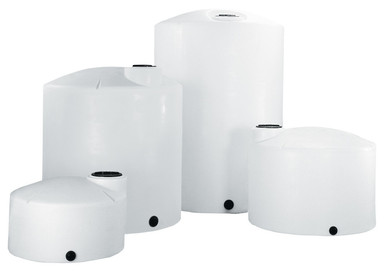
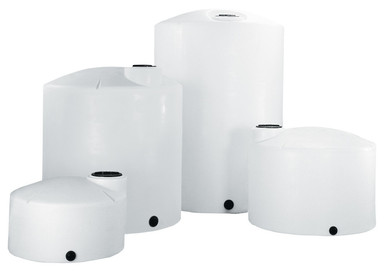
Tank cleanout is not a single procedure. It is a chemistry-dependent matching exercise where the residue type determines the cleaner type, and the cleaner type determines the rinse, and the rinse determines what the next chemistry sees on first fill. Operators who run a single default cleanout protocol across all chemistries either over-clean (wasting chemistry, generating excess wastewater) or under-clean (leaving residue that contaminates the next product, causes off-spec downstream, or accelerates degradation of the receiving chemistry).
This article walks the chemistry-to-cleaner matching framework, the four primary cleaner classes and their target residues, the rinse architecture between cleaning steps, the polyethylene compatibility considerations for each cleaner class, and the documentation discipline that converts a cleanout into a defensible change-over record. References cited: ASTM D5179 standard guide for measuring adhesion of pipe-coating systems (residue context); 3-A Sanitary Standards for food-grade cleaning protocols; FDA 21 CFR 110 current Good Manufacturing Practice (cleaning validation context); EPA Method 1664 (oil and grease residue measurement); and chemical-supplier published technical bulletins for the major industrial cleaners (Ecolab, Diversey, ChemTreat, and similar).
1. Residue Classification: What Is Actually on the Wetted Wall
The cleaner has to match the residue. Residue classification on a polyethylene tank wall is a function of the chemistry that was last stored, the storage duration, the storage temperature, and any concentration changes during the hold. The four primary residue classes:
Class A: organic film and grease. Includes hydrocarbon products (diesel, gasoline, oils), fatty acids and triglycerides (vegetable oils, animal fats), surfactant residues, and corrosion-inhibitor films. These are non-polar or weakly polar and partition onto polyethylene's wetted wall through adsorption. They build up over multi-month service and are difficult to displace with water rinse alone. Visual signature: yellow-to-brown discoloration on the dry-band-to-wet-band interface; tactile signature: oily film on a clean cloth wipe.
Class B: mineral scale and inorganic precipitate. Calcium carbonate, calcium sulfate, magnesium hydroxide, iron oxides, and similar inorganic deposits that precipitate at the wall when concentration, temperature, or pH changes drive supersaturation. Common in hard-water service, cooling-water concentrate, brine storage, and any chemistry where evaporation concentrates dissolved solids. Visual signature: white-to-tan crystalline buildup at the wetted wall; tactile signature: gritty or hard surface deposit.
Class C: oxidant decomposition products and metallic salts. Sodium chloride from sodium hypochlorite decomposition, iron and manganese oxides from oxidant-catalyzed corrosion of fittings, sodium chlorate from photolysis. These are water-soluble at room temperature and readily rinsed if approached promptly; if allowed to dry and crystallize, they require acid dissolution before rinse. Visual signature: white-to-yellow crystalline residue on the wetted wall; common pattern after long-hold oxidant storage.
Class D: biofilm and microbial residue. Bacterial films from water service (especially fire-water or stagnant potable storage), algae from sunlit translucent tanks, sulfate-reducing bacteria in anaerobic conditions, and the biofilm matrix (polysaccharides) that anchors them. Visual signature: green or brown slimy film, sometimes with biological odor; not a hard deposit but adheres tightly to polyethylene through electrostatic and weak-bond interactions.
A long-service tank often has more than one residue class present. The cleaning sequence has to address each class in the order that does not interfere with the next; running an acid descaler before removing organic film will leave a film-coated mineral substrate that the acid cannot reach.
2. Alkaline Degreaser Selection for Class A Residue
Alkaline cleaners (pH 9-13) are the workhorse for organic film and grease residue. The mechanism is saponification of fats and emulsification of oils, driven by hydroxide ion attacking the ester linkage and surfactant micellization carrying the broken-down organic away from the wall.
Common cleaner types and their use windows:
- Sodium hydroxide (caustic) at 1-3 percent: the strongest alkaline cleaner; suitable for heavy organic deposits and oil-storage tank turnover. Polyethylene is fully compatible up to 50 percent at room temperature; below 5 percent at any temperature is very safe. Effective at ambient or mildly heated (100-130 degrees F).
- Potassium hydroxide at 1-3 percent: similar to sodium hydroxide but more soluble and slightly more aggressive on petroleum residues. Used in heavy-vehicle and industrial fleet wash applications.
- Builder-formulated alkaline detergents (commercial brand-name products): blends of carbonate, silicate, phosphate (or phosphate substitute), and surfactant. pH typically 10-12. Better penetration into film deposits than straight caustic; lower handling hazard. Standard choice for moderate-deposit cleanout.
- Aminated alkaline cleaners: blends of amine builders with surfactants. Effective on cooked-on or polymerized organic residues (e.g., plastisol residue, polymer-curing residue). Higher cost; specialty use.
The cleaning protocol for Class A residue: fill tank to 80 percent with cleaner solution at design concentration; recirculate or agitate for 2-4 hours at design temperature; drain to disposal; rinse with clean water until pH at the discharge equals the rinse-water pH within 0.2 units (typically 3-5 rinse cycles for tanks above 1,000 gallons). Verification: visual inspection for residual film, optional swab test for hydrocarbon residue per EPA Method 1664.
Polyethylene compatibility note: alkaline cleaners are well-tolerated by HDPE, MDPE, and XLPE at concentrations and temperatures used for cleaning. The ESC (environmental stress crack) risk on polyethylene is from surfactants and aromatic solvents in some commercial cleaner blends, not from the alkalinity itself. Verify the cleaner SDS for surfactant content if the tank is under wind or seismic stress during cleaning.
3. Acid Descaler Selection for Class B Residue
Acid cleaners (pH 1-4) dissolve mineral scale and metallic precipitate. The mechanism is protonation of carbonate (releasing CO2) and complexation or dissolution of cations (calcium, magnesium, iron) into soluble salts.
Common acid cleaners:
- Hydrochloric acid (muriatic) at 5-10 percent: aggressive scale dissolver; effective on calcium carbonate, iron oxide, and most mineral deposits. Polyethylene is compatible at concentrations up to 35 percent at room temperature. Generates hydrogen chloride vapor; ventilation is required. Standard for heavy-scale industrial descaling.
- Phosphoric acid at 5-15 percent: milder than HCl; converts iron oxide to soluble iron phosphate; passivates the cleaned surface against re-oxidation. Polyethylene compatible. Common in cooling-water and food-grade cleaning where chloride contamination has to be avoided.
- Citric acid at 2-8 percent: chelating organic acid; dissolves calcium and iron through complexation rather than strong protonation. Lower handling hazard; food-grade compatible; biodegradable. Slower than mineral acids but suitable for routine maintenance descale.
- Sulfamic acid at 3-8 percent: stronger than citric, milder than HCl; effective on calcium carbonate and iron stains. Often blended with surfactants for combined scale-and-soil removal. Standard cleaner for food-grade descaling and consumer-grade tank cleaners.
The cleaning protocol for Class B residue: fill tank to wet the deposit zone (often partial fill if scale is concentrated at one elevation); circulate or recirculate for 1-3 hours; observe gas evolution (CO2 release indicates active descale); drain at completion; rinse to neutral pH. Acid cleaners can leave a slightly acidic residue that the next chemistry sees on first fill; if the next chemistry is alkaline or oxidative, the rinse has to be thorough enough to neutralize.
Polyethylene compatibility note: HCl, phosphoric, sulfamic, and citric acids are all fully compatible with HDPE/MDPE/XLPE at the concentrations used for cleaning. Sulfuric acid is also compatible at low concentrations but generates significant heat on dilution and is rarely used for tank cleaning in favor of HCl or phosphoric.
4. Oxidative Sanitizer Selection for Class D Residue
Biofilm removal requires both physical disruption and chemical oxidation of the organic matrix. The oxidative sanitizer step kills the microbial population and breaks down the biofilm polysaccharide matrix; a subsequent rinse removes the residue.
Common oxidative sanitizers:
- Sodium hypochlorite at 200-500 ppm available chlorine: standard sanitizer for water-system and food-grade cleanout. Effective at ambient temperature with 30-60 minute contact time. Polyethylene is fully compatible at this dilution. Generates chlorine offgas; vented operation only.
- Hydrogen peroxide at 1-5 percent: alternative to hypochlorite where chloride must be avoided (pharmaceutical, electronics-grade water). Decomposes to water and oxygen; no chemical residue if rinsed properly. Polyethylene compatible at this concentration.
- Peracetic acid (PAA) at 0.1-0.5 percent: blended peroxide and acetic acid; sporicidal where hypochlorite is only bactericidal. Used in pharmaceutical, biotech, and food-processing CIP (clean-in-place) cycles. Polyethylene compatible at use concentrations.
- Quaternary ammonium compounds at 200-1,000 ppm: non-oxidative biocide; works by membrane disruption. Used where oxidant chemistry would damage downstream equipment. Lower-spectrum efficacy than oxidants but useful for routine sanitation.
The cleaning protocol for Class D residue: typically follows an alkaline degreasing step that has already loosened the biofilm matrix. Fill with sanitizer at use concentration; recirculate or hold for the contact time; drain; potable-water rinse for water-service tanks; verification by swab culture or ATP assay if regulatory documentation is required.
5. Solvent Rinse for Class A Residue with Halogenated or Aromatic Carryover
For tanks that held halogenated or aromatic solvents (chlorinated solvents, benzene-ring aromatics), an alkaline degreaser is not enough — the solvent residue is partitioned into the polyethylene wall surface and has to be displaced with a chemically-similar but more volatile solvent. The rinse architecture differs from the alkaline cleanout.
Common solvent-rinse choices:
- Isopropyl alcohol (IPA) at 70-99 percent: displaces residual hydrocarbons; volatilizes cleanly; polyethylene compatible at room temperature for short contact time (less than 4 hours).
- Acetone: aggressive solvent for polymer residues and crystalline contaminants. Polyethylene tolerance is short-term (less than 1 hour at use concentration) due to swelling; not for repeated or extended exposure.
- Mineral spirits or kerosene: for displacing heavy hydrocarbons from petroleum-service tanks; long polyethylene tolerance (continuous service is acceptable).
The polyethylene compatibility caveat for solvent rinse: aromatic solvents (toluene, xylene), chlorinated solvents (methylene chloride, trichloroethylene), and ketones (MEK) at full strength swell polyethylene significantly. Limit contact to 1-2 hours, single-cycle, then immediately rinse with water. Repeated solvent-rinse cycles on the same tank degrade the wall integrity over multiple turnovers; specify a different cleaning approach for a tank that is in regular solvent-service turnover.
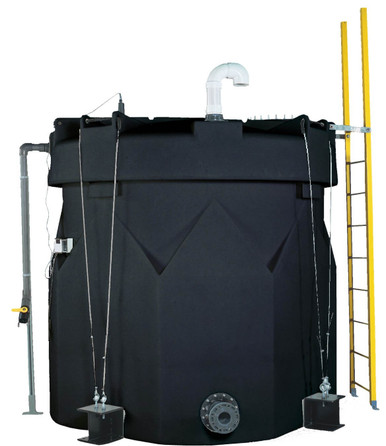
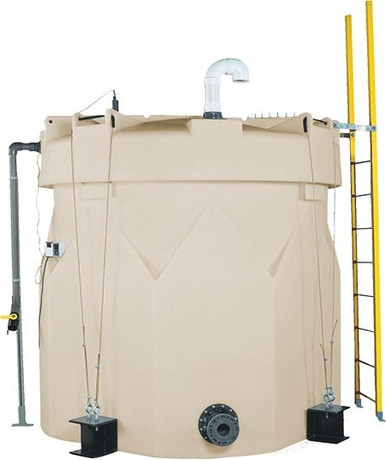
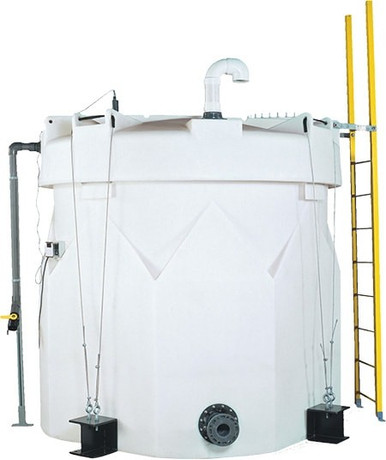
For chemistry-aggressive service that cannot tolerate alkaline-acid-sanitizer cleaning sequences, a Snyder Captor double-wall XLPE tank dedicated to a single chemistry avoids the cleanout problem entirely. Reference SII-5990102N42 1,000 gallon Captor and SII-5490000N42 1,550 gallon Captor as dedicated-service alternatives to multi-chemistry rotation.
6. Cleanout Sequence Architecture for Multi-Class Residue
Tanks with combined Class A and Class B residue (organic film over mineral scale, common in cooling-water service) require sequenced cleaning. The wrong sequence wastes chemistry; the right sequence delivers a clean wall at minimum cost.
Sequence for Class A then Class B:
- Empty and pre-rinse with potable water. Drain to disposal. Removes loose surface residue, reduces cleaner load.
- Alkaline cleaner cycle: fill to 80 percent, recirculate 2-4 hours at 100-130 degrees F if the cleaner formulation supports heating. Drain.
- Intermediate water rinse: fill to 80 percent with potable water, drain. Repeat until rinse water pH is within 0.5 units of source water (typically 2-3 rinse cycles).
- Acid descaler cycle: fill to wet the deposit zone, recirculate 1-3 hours, drain. Observe CO2 release for active descale indication.
- Final water rinse: fill to 80 percent with potable water, drain. Repeat until rinse pH is within 0.2 units of source water (typically 3-5 rinse cycles).
- Optional sanitizer cycle: fill with hypochlorite or peracetic acid at use concentration, hold contact time, drain, rinse to undetectable residual.
Why this order: alkaline first dissolves the organic film that would otherwise shield the mineral scale from the acid; acid second descales the now-exposed mineral; sanitizer last addresses any residual biofilm and verifies the final surface is microbially clean.
Total cleanout time for a 5,000-gallon tank with this sequence: typically 12-24 hours including circulation, drain, and rinse cycles. Smaller tanks (under 1,500 gallons) can complete in 6-10 hours.
7. Polyethylene Wall Considerations Across Cleaning Cycles
Polyethylene tanks tolerate cleaning chemistries well but are not invulnerable. The cumulative effects to monitor:
- Antioxidant package depletion: repeated oxidant exposure (hypochlorite sanitizer cycles) consumes the polymer's antioxidant package faster than dedicated oxidant service. Tanks that see 6-12 hypochlorite cleanouts per year develop the wetted-wall band degradation pattern at 1.5-2x the rate of dedicated water-service tanks.
- Heat exposure during cleaning: hot alkaline cleaning at 130 degrees F is acceptable for short cycles; cumulative thermal exposure above 140 degrees F shortens tank life.
- Mechanical agitation during recirculation: high-velocity flow at the recirculation return can erode the wetted-wall surface near the impingement point. Spray-ball or directed-jet cleanout systems should distribute the flow to avoid concentrated impingement.
- ESC (environmental stress cracking): some commercial cleaner blends include surfactants that aggressively wet polyethylene and can drive ESC at stress concentrations. Verify cleaner SDS does not list polyethylene as an excluded substrate.
The five-brand catalog supports varied service profiles. Norwesco N-40146 1,500 gallon verticals tolerate the alkaline-acid-sanitizer sequence well in standard MDPE; Snyder Captor SII-5990102N42 XLPE has higher ESC resistance and tolerates more aggressive cleaning cycles; Chem-Tainer TC6446IA 500 gallon HDPE handles high-frequency turnover in moderate-aggressive cleaning.
8. Wastewater Disposition and Regulatory Framework
Cleaning generates wastewater that has to go somewhere defensibly. The disposition framework:
- Discharge to publicly owned treatment works (POTW): permissible for most alkaline and acid cleanout wastewater after pH neutralization and within local pretreatment limits. Discharge requires a discharge permit and pH-neutralization tankage.
- On-site neutralization and surface discharge: permissible under some state water-quality permits if pH-neutralized to within 6.0-9.0 and BOD/COD within permit limits. Documentation of pre- and post-treatment chemistry required.
- Hazardous waste manifesting: required if the cleanout wastewater contains residue from a RCRA-listed chemistry above threshold (40 CFR 261). Solvent-rinse waste from chlorinated-solvent service is typically RCRA-listed; alkaline cleanout from food-grade service typically is not.
- SPCC reporting: 40 CFR 112 requires reporting of any release that reaches navigable water; on-site cleanout that drains to disposal under control is not a reportable release.
The wastewater disposition has to be planned before the cleanout starts; running a cleanout and then discovering the discharge has nowhere to go is a common operational failure. Document the disposition plan in the cleanout SOP and in the change-over record.
9. Documentation Package for Cleanout Acceptance
The cleanout record converts the procedure into a defensible change-over event. Standard documentation:
- Tank ID, last-stored chemistry, last-storage duration, observed residue class.
- Cleanout SOP referenced; cleaner products by name and concentration.
- Cleaning cycle data: start time, finish time, recirculation flow rate, temperature, observed gas evolution or color change.
- Rinse cycle data: rinse cycle count, rinse-effluent pH measurements.
- Sanitizer cycle data (if applicable): contact concentration, contact time, post-cycle ATP or culture verification.
- Final acceptance disposition: cleaner verification by visual inspection plus optional swab/wipe test result.
- Wastewater disposition: discharged to (POTW with permit number, on-site treatment, hazardous-waste manifest with manifest number).
- Operator and supervisor signatures.
The documentation typically takes 4-8 hours of operator time over the cleanout duration and becomes the regulatory baseline for the next chemistry's first-fill record. For pharmaceutical, food-grade, or NSF 61 service, the documentation is required by 21 CFR 110, 3-A standards, and AWWA certification respectively; for industrial chemical service, the documentation is best practice rather than mandatory but is the difference between a defensible change-over and a contamination liability.
OneSource Plastics ships polyethylene tanks across all 5 brands with manufacturer compatibility tables and chemistry-class guidance. List pricing by SKU is published on each product page; LTL freight to your ZIP is quoted separately via the freight estimator or by phone at 866-418-1777. For complementary reading on cleaning chemistry by service and discipline see our cleaning protocols by service article and Captor sloped-bottom evacuation protocol. For the complete maintenance schedule cadence see tank cleaning maintenance schedule.
Recommended Tanks for This Guide
Live pricing, updated automatically · estimate freight to your ZIP.