Tank Delivery Crane Rigging for 5,000-Plus Gallon Polyethylene Tanks: ASME B30.5 Hand Signal Standards, Sling Angle and Load-Spread Math, Critical Lift Planning, and Field Coordination Between Driver, Signal Person, and Operator
The arrival of a 5,000-gallon polyethylene tank on a flatbed trailer is a 2,000-pound dry weight piece of cargo that has to be transferred from the trailer to a final pad position with zero damage to the tank shell, the trailer, the pad, or the people working around the lift. The tank itself is non-fragile — polyethylene has high impact resistance — but the lifting operation involves a crane, multiple riggers, and a coordinated communication chain that fails on routine lifts because the signal protocol breaks down or the rigging geometry was wrong from the start. This article walks the engineering discipline behind tank-delivery rigging — the ASME B30.5 hand-signal standard that the lift operator and signal person must share, the sling-angle and load-spread math that determines the rigging configuration, and the field coordination protocol between truck driver, signal person, and crane operator that converts a routine delivery from "successful" to "predictably successful."
The references cited are ASME B30.5 (mobile and locomotive cranes — operations and signaling), ASME B30.9 (slings — wire rope, chain, synthetic web), ASME B30.10 (hooks), OSHA 29 CFR 1926 Subpart CC (cranes and derricks in construction), OSHA 1910.180 (crawler, locomotive, and truck cranes — general industry), and the tank manufacturer rigging instructions specific to lifting-eye locations and load ratings. The intent is the field coordination decision, not the crane-operator certification curriculum.
1. Pre-Lift Site Assessment
The lift planning starts before the crane arrives. The site assessment must verify:
- Crane setup pad. The crane requires firm, level ground for outrigger placement. Soft ground, asphalt that may rut under outrigger pads, or sloped surfaces require crane-mat staging or alternate setup locations. Outrigger ground-bearing pressure for a 50-ton crane lifting a 5,000-gallon tank may exceed 2,000 PSF, which compacted gravel and concrete handle but soft asphalt or wet clay will not.
- Lift radius. The horizontal distance from the crane center to the load determines the crane's load chart capacity. A 50-ton crane at 20-foot radius may have 30,000 pounds capacity; at 35-foot radius the capacity may drop to 12,000 pounds. The setup location must allow the lift radius for the heaviest part of the lift cycle.
- Overhead clearance. Power lines, tree canopies, building eaves. OSHA 1926.1408 requires minimum clearance of 10 feet from energized lines under 50 kV (greater for higher voltages). Power-line clearance is the most common reason a planned lift cannot proceed at the originally specified setup location.
- Final pad approach. The path from the crane setup to the tank's final pad position must be unobstructed for the load swing. The signal person walks this path before the lift starts to identify and clear obstructions.
- Wind conditions. Sustained wind above 20 mph or gusts above 30 mph typically suspend lift operations per the crane operator's judgment. Polyethylene tanks have large surface area and act as sails; even moderate wind can swing a suspended tank dangerously.
The site assessment is documented in a written lift plan that the crane operator, signal person, and project supervisor all sign before the lift commences. For a tank delivery this is typically a one-page document; for a critical lift (defined by OSHA in some jurisdictions and by company policy in others) the lift plan is more detailed.
2. Tank Lifting Eye and Manufacturer Specifications
Every polyethylene tank rated for crane delivery has manufacturer-specified lifting points. The specification varies by tank size, geometry, and brand:
- Top-shell molded-in lifting lugs. Standard for most rotomolded vertical tanks. The lugs are typically two or four molded-in eyes near the tank top, rated by the manufacturer for the tank's full empty weight plus a 4:1 safety factor.
- Top-fitting lift via threaded inserts. Smaller tanks may use the manway threaded inserts as lifting attachment points. The insert load rating is published by the manufacturer; typical 6-inch threaded insert is rated for 1,500-3,000 pounds direct vertical load, suitable for tanks up to roughly 1,500 gallons empty weight.
- Strap-around bottom slings. For tanks without top lifting lugs, a strap-around configuration places synthetic web slings around the tank circumference at the base and lifts via four-leg bridle. This distributes the load through the tank base rather than concentrating it at the top.
- Cradle or sling-bag systems. Specialty rigging where the tank rides in a fitted cradle that the crane lifts. Used for fragile or unusually shaped tanks.
The manufacturer's instructions are not optional. Lifting a tank by an unrated point — for example by a sidewall fitting that is rated for piping load only — can break the tank or exceed the fitting's load rating, releasing the load mid-lift. The first call before any lift is to read the manufacturer's lifting instructions, document the lift point ratings, and configure rigging that respects them.
3. Sling Angle and Load-Spread Math
The angle of the slings to vertical determines the actual load on each sling. The math is critical because it is non-intuitive: as the angle from vertical increases, the load on each sling increases dramatically, even though the lifted weight is constant.
For a four-leg bridle lifting a horizontal load:
- Vertical (0 degrees from vertical): each leg carries 25 percent of the load (for a balanced lift on a four-leg bridle).
- 30 degrees from vertical: each leg carries 28.9 percent of the load. Tension is 1.155 times vertical.
- 45 degrees from vertical: each leg carries 35.4 percent. Tension is 1.414 times vertical.
- 60 degrees from vertical: each leg carries 50 percent. Tension is 2.0 times vertical.
- 75 degrees from vertical: each leg carries 96.6 percent. Tension is 3.86 times vertical.
The 60-degree limit is industry standard. ASME B30.9 specifies sling rating based on the angle, and most riggers apply a 60-degree-from-vertical maximum to keep the tension multiplier at 2.0 or below.
For a 5,000-pound tank empty weight on a four-leg bridle at 60 degrees from vertical, each sling carries 2,500 pounds of tension. Each sling must be rated for that tension plus a safety margin (typically 5:1 working load limit, so the sling rating must be 12,500 pounds or higher). Synthetic web slings, wire rope slings, and chain slings have different ratings for the same nominal size; the rigger must select based on the actual rating, not the apparent size.
The horizontal spread of the slings at the tank top is a function of sling length and angle. A four-leg bridle on a tank with lifting lugs 8 feet apart (corner-to-corner diagonal of the bridle attachment) at 60 degrees from vertical requires sling legs of 11.5 feet measured from the lifting eye to the master link.
4. Slack-and-Tension Lift Sequencing
A successful lift follows a deliberate sequence to verify the rigging before the load leaves the trailer. The sequence:
- Initial slack-line attachment. All slings attached to lifting points and to the master link, with sufficient slack that no tension is on any leg.
- Pre-tension visual check. Crane raises the boom slowly to take up the slack. As the slings come taut, each sling is visually inspected for proper engagement (hook seated, chain link not twisted, web sling not pinched). Signal person verifies all four legs are engaging evenly.
- Load test lift to 6 inches. Load is lifted just enough that the trailer or stand it sits on no longer carries weight. The crane operator and signal person observe the rigging behavior. Any sling that is not loading evenly, any tank tilt that suggests a center-of-gravity offset, any rigging shift — all are caught here.
- Hold and verify. Load is held at 6 inches for 30 seconds. Stable behavior verified. If any concern is identified, the load is set back down and rigging adjusted.
- Lift to clearance height. Load is raised to the height needed to clear obstacles in the swing path.
- Swing to final position. Slow controlled swing, signal person guiding the operator with continuous communication.
- Set down. Load is lowered onto the final pad, with signal person guiding final positioning. Load is set down completely before any rigging is removed.
- Rigging removal. Slings detached one at a time, with the load secure and not at risk of shifting.
The 6-inch test lift is the most consequential single step in the sequence. It catches rigging errors, center-of-gravity miscalculation, and weight estimation errors before they become full-height failures. A rigging crew that skips the test lift is operating on assumption rather than verification.
5. ASME B30.5 Hand Signals
The crane operator typically cannot see the load or the final pad position; the signal person stands where they can see both and communicates with the operator via standardized hand signals or radio. The hand-signal vocabulary is defined in ASME B30.5 and is mandatory for non-radio communication:
- Hoist (raise the load): forearm vertical, forefinger pointing up, hand moving in small horizontal circles.
- Lower (lower the load): arm extended downward, forefinger pointing down, hand moving in small horizontal circles.
- Use main hoist: tap fist on head, then use regular signals.
- Use whip line (auxiliary hoist): tap elbow with hand, then use regular signals.
- Raise the boom: arm extended horizontally, fingers closed, thumb pointing up.
- Lower the boom: arm extended horizontally, fingers closed, thumb pointing down.
- Move slowly (used in conjunction with other signals): hand placed motionless in front of and slightly above the signaling hand giving the motion signal.
- Raise the boom and lower the load: arm extended horizontally, fingers extended, thumb pointing up; flex fingers in and out as long as load movement is desired.
- Lower the boom and raise the load: arm extended horizontally, fingers extended, thumb pointing down; flex fingers in and out.
- Swing: arm extended in direction of swing, forefinger pointing in the direction.
- Stop: arm extended, palm down, hand swung back and forth horizontally.
- Emergency stop: both arms extended, palms down, both arms swung back and forth horizontally. This signal overrides all others — operator stops immediately regardless of context.
- Travel: arm extended forward, hand open and slightly raised, making pushing motion in direction of travel.
- Dog everything: hands held together at waist level. Operator engages dogs (locks the hoist) and the lift is held position.
The signals are standard across the industry, but operator and signal person should run through them before the lift starts to confirm both speak the same vocabulary. Signal person has full authority to stop the lift; operator must respond to a stop signal regardless of who gives it.
6. Radio Communication Protocol
Modern lift operations often supplement or replace hand signals with radio communication. The protocol is more precise than hand signals but requires its own discipline:
- Single-channel discipline. Crane operator and signal person are on the same radio channel, with no other personnel transmitting on it during the lift. Cross-talk on a lift channel is the most common radio-protocol failure.
- Standardized vocabulary. "Hoist up at 12 inches per minute" is a clear command. "Bring it up a bit" is not. Numerical specificity prevents misinterpretation.
- Acknowledge-and-execute. Operator repeats back the command before executing. "Hoist up 12 inches per minute, copy." This catches mishearing before the wrong action.
- Redundant emergency stop. The radio "stop" command is supplemented by visible hand signal capability. If radio fails mid-lift, hand signals must work.
- End-of-lift confirmation. "Load set, rigging clear, lift complete" is the standard end-of-lift transmission. Operator does not move the boom or rotate until this is confirmed.
The radio protocol benefits over hand signals are precision and the ability to communicate around obstructions. The trade-off is the dependency on equipment that can fail; most operations therefore train for and maintain hand-signal capability as a backup.
7. Critical Lift Designation and Documentation
Some tank deliveries qualify as critical lifts under OSHA, ASME, or company policy. Triggers include:
- Lift exceeds 75 percent of the crane's rated capacity at the lift radius.
- Lift involves more than one crane (tandem lift).
- Lift requires equipment to be in motion during the lift.
- Personnel are present in or under the load path.
- The load involves potential injury or environmental damage on failure (a chemical-carrying tank may qualify).
- Company-specific criteria such as load value above a dollar threshold or schedule criticality.
A critical lift requires written lift plan, supervisor pre-approval, equipment certification within 12 months, operator certification verification, signal-person certification, rigger qualification, and post-lift documentation. Most tank deliveries to industrial sites do not meet critical-lift criteria, but the larger tanks (5,000+ gallons) lifted by smaller cranes at extended radius can cross the 75-percent capacity threshold and qualify.
8. Tank Delivery Selection by Size and Site
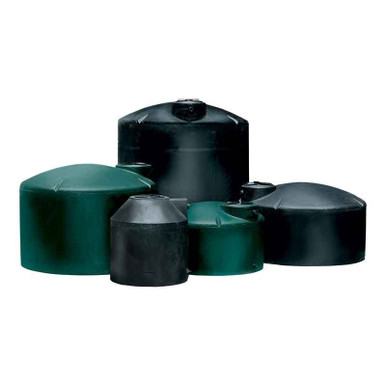
The 5-brand polyethylene catalog includes tanks sized for routine and critical-lift delivery scenarios:
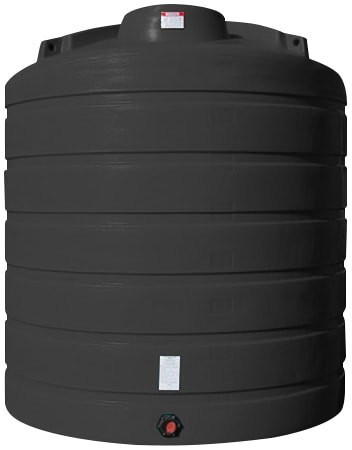
- Norwesco vertical bulk in 5,000-10,000 gallon range: the largest tanks routinely shipped on standard flatbed trailers, with manufacturer-specified top-mounted lifting lugs. Reference N-40164 5,000 gallon (typical empty weight 1,800-2,200 pounds, requires 30-50 ton crane at typical site geometry) and N-43128 10,000 gallon (empty weight 3,800-4,500 pounds, may require 60-80 ton crane or specialty oversize-load delivery).
- Norwesco mid-volume: 1,000-2,500 gallon tanks deliverable by smaller cranes or in some cases boom-truck delivery. Reference N-41500 1,000 gallon (typical empty weight 250-350 pounds) and N-40051 2,500 gallon (empty weight 800-1,100 pounds, deliverable by 20-30 ton crane or boom truck).
- Snyder Captor double-wall: heavier per gallon than single-wall due to the secondary containment shell. Reference SII-5990102N42 1,000 gallon; the metal banding provides certified rigging attachment points and the dual-shell weight requires upsized crane capacity vs single-wall equivalent.
- Norwesco cone-bottom: the cone bottom changes the center-of-gravity and requires different sling configuration than vertical flat-bottom tanks. Reference N-43852 1,000 gallon 45-degree cone; lift planning includes the support stand if it ships pre-assembled to the tank.
The lift planning is upstream of the delivery scheduling; specifying tank empty weight and lifting-point geometry to the freight carrier and crane company before the delivery date avoids on-site surprises.
9. Post-Lift Verification and Final Setting
After the tank is set on the final pad, several verification steps complete the delivery:
- Pad contact verification. Tank base sits flush against the pad with no rocking, no edge lift, and no visible gap. The pad surface should support the tank base evenly per the manufacturer's foundation requirements.
- Tank plumbness. Vertical tank must be plumb to within roughly 0.5 degree of vertical. A level on the tank shell at multiple points around the circumference verifies this. A non-plumb tank stresses the tank wall non-uniformly during fill and may shorten service life.
- Fitting orientation. Outlet, vent, and manway orientation should match the planned plumbing connections. Catching this before the rigging comes off allows rotation while the crane is still hooked up.
- Tank shell inspection. Walk-around of the tank shell looking for any damage from the lift — scratches from sling contact, fitting damage, or shell deformation. Rare on properly rigged lifts but caught here if it occurred.
- Documentation. Delivery ticket signed, lift photos taken, any concerns documented in writing. The post-lift documentation supports warranty claims if subsequent problems arise.
The tank is then ready for plumbing tie-in, fill testing, and service. The lift portion of the installation is complete.
10. The Rigging Discipline That Makes Delivery Routine
Tank delivery rigging is engineering work disguised as logistics work. The math (sling angles, capacity, load distribution) and the procedure (test lift, signal protocol, post-lift verification) are not optional. The crew that runs the engineering discipline consistently delivers tanks without damage; the crew that improvises by-feel succeeds 95 percent of the time and damages tanks the other 5 percent.
OneSource Plastics ships polyethylene tanks across all 5 brands with manufacturer-published lifting specifications, empty weights, and rigging guidance available before delivery. Our logistics team coordinates with the freight carrier and the customer's crane company on the lift plan including tank empty weight, lifting-point geometry, and any specialty rigging requirements. List pricing by SKU is published on each product page; LTL freight to your ZIP is quoted separately via the freight estimator or by phone at 866-418-1777. For related delivery and site content see loading dock and receiving site design and crane vs forklift vs slide-off logistics tradeoffs.
Recommended Tanks for This Guide
Live pricing, updated automatically · estimate freight to your ZIP.