Tank Fire Suppression Auto-Shutoff: Thermal Fuse vs Eutectic Link vs Smart Sensor
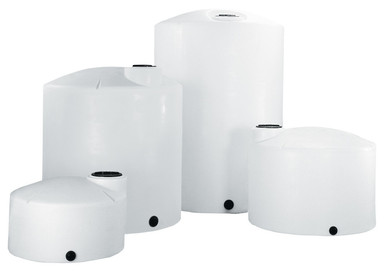
An aboveground polyethylene tank holding flammable or combustible liquid has exactly one job during a fire event: stop adding fuel to the fire. Auto-shutoff hardware on the tank's fill, vent, and discharge stack is the single device that turns a contained tank fire (survivable, manageable by responding fire department) into a catastrophic vapor cloud explosion (BLEVE-class, fatal, multi-million-dollar loss). NFPA 30 Section 21.4 makes auto-shutoff mandatory for the vent and discharge of any aboveground tank in flammable / combustible service; NFPA 30A makes the same requirement explicit for motor-fuel dispensing facilities; NFPA 17 and NFPA 17A govern the fixed wet- and dry-chemical extinguishing systems that pair with auto-shutoff hardware. This pillar walks the three dominant auto-shutoff technologies — thermal fuse, eutectic link, and smart sensor — with the trade-off matrix engineers need to spec the right one.
The reference codes are NFPA 30 Chapter 21 (Aboveground Tank Storage), NFPA 30A (Motor Fuel Dispensing Facilities and Repair Garages), NFPA 17 (Standard for Dry Chemical Extinguishing Systems), NFPA 17A (Standard for Wet Chemical Extinguishing Systems), NFPA 11 (Standard for Low-, Medium-, and High-Expansion Foam), NFPA 70 Article 500 series (electrical hazardous classification), UL 842 (Valves for Flammable Fluids), UL 1709 (Rapid Rise Fire Tests of Protection Materials for Structural Steel), and UL 199 (Automatic Sprinklers for Fire-Protection Service). The Underwriters Laboratories listings are the binding spec for any device installed under an authority-having-jurisdiction (AHJ) review.
Why Auto-Shutoff Matters: The BLEVE Pathway
A boiling liquid expanding vapor explosion (BLEVE) is the failure mode every flammable-liquid tank designer fears. The pathway is well-understood: external fire heats the tank shell, the contained liquid vaporizes faster than the vent can relieve, internal pressure exceeds tank yield strength, the shell fails catastrophically, and the released liquid flashes to vapor in milliseconds. The fireball radius for a 1,000-gallon propane tank is approximately 200 feet; a 10,000-gallon ethanol tank, 400 feet.
Auto-shutoff hardware interrupts the pathway at three control points:
- Fill-line shutoff isolates the tank from the supply pipe, preventing additional product from joining the fire.
- Discharge-line shutoff isolates the tank from the demand pipe, preventing the fire from propagating into downstream piping.
- Emergency vent activation opens a large-area relief path that prevents pressure-rupture even when the atmospheric vent is overwhelmed.
NFPA 30 Section 21.4.3 explicitly requires emergency vent capacity sized to relieve fire-exposure pressurization. UL 142 (and the listed equivalent UL 2085 for protected aboveground tanks) certifies the combined system.
Technology #1 — Thermal Fuse Valve
A thermal fuse valve uses a wax or polymer plug calibrated to melt at a specific temperature (typically 165 F for low-temp service, 212 F for standard, 286 F for high-temp). When the plug melts, an internal spring closes the valve and isolates the line. The valve cannot be reopened — it is a one-shot device that requires replacement after activation.
Field characteristics
- Activation temperature accuracy: typically plus or minus 6 F at the listed setpoint.
- Response time: 30 to 90 seconds at sustained activation temperature; faster on direct flame impingement.
- Pressure rating: commonly 150 psi (Class 150) bronze body, 300 psi (Class 300) steel body.
- Service life: indefinite while not activated; mandatory replacement after any activation event.
- Cost: approximately $80-$250 per valve in 1- to 2-inch sizes.
- Installation: threaded NPT inline; orient per manufacturer (some are gravity-direction-sensitive).
Where it wins
Thermal fuse valves are the default for diesel and Class III combustible service where the chemistry has high flash point but the surrounding environment (warehouse, garage, fueling island) presents external-fire risk. NFPA 30A Section 6.4.4 explicitly lists thermal-actuated valves as the acceptable shutoff for motor-fuel dispenser hose connections.
Where it loses
Thermal fuse activation is a one-way trip. A false trip from a hot summer day on an unshaded tank-yard line, a paint-drying heater placed too close, or a transient external heat event becomes a $200 valve replacement plus the operational downtime. For mission-critical chemistry feeds (water-treatment plant chlorine, food-process caustic), the false-trip risk is often unacceptable.
Technology #2 — Eutectic Link (Fusible Link)
A eutectic link is a metal alloy strap calibrated to part at a specific temperature, releasing the spring tension on a separate mechanical valve or damper. The link is the trigger; the valve or damper is the actuator. Standard eutectic temperatures per UL 199 are 135 F (rare), 165 F (most common for ambient indoor), 212 F (kitchen / outdoor), 286 F (high-bay industrial), 360 F (oven / dryer), 500 F (industrial process), 600 F (high-temperature process).
Field characteristics
- Activation temperature accuracy: plus or minus 5 F per UL 199.
- Response time: 30 to 60 seconds at sustained temperature; slower than thermal fuse on slow-rise events because the link mass requires heat-soak.
- Pressure rating: set by the actuator valve; the link itself is independent of pressure.
- Service life: indefinite; replacement after activation; some designs allow link-only replacement without valve replacement.
- Cost: link itself $15-$40, complete valve assembly $200-$800.
- Installation: link is mounted on a cable or pivot mechanism remote from the valve, allowing the temperature sensing point to be located precisely where the heat-detection priority is highest (typically directly above the tank vent, at the vapor-space terminus, or at the most likely external-fire ignition point).
Where it wins
Eutectic links are the standard for restaurant kitchen hood-suppression systems, paint-booth shutoff, and any application where the heat-detection point and the actuator valve need to be physically separated. NFPA 17A Section 5.3 mandates fusible-link detection for wet-chemical kitchen suppression. The remote-detection geometry also allows multiple sensing points feeding a single actuator (zoned protection on a large tank yard).
Where it loses
The mechanical cable / pulley system requires periodic inspection (NFPA 17A 5.4.2 — semiannual at minimum) to verify the cable is not corroded, kinked, or fouled. The mechanical complexity is the failure mode — outdoor-mounted cables seize after a few seasons of UV and freeze-thaw if not protected. For exposed tank-yard use, the cable run must be in a stainless-steel conduit with weatherproof termination.
Technology #3 — Smart Sensor (Electronic Heat Detection + Actuated Valve)
A smart-sensor system uses a thermistor, RTD, fiber-optic distributed temperature sensor (DTS), or infrared point detector to monitor temperature continuously, compare against programmed thresholds, and actuate an electric or pneumatic shutoff valve when criteria are met. The intelligence allows multi-criteria triggering (rate-of-rise plus absolute temperature, multiple zones in coincidence, integration with flame detector or hydrocarbon sensor).
Field characteristics
- Detection accuracy: plus or minus 1 F for thermistor / RTD; sub-degree for DTS.
- Response time: sub-second for direct-flame infrared; 5-30 seconds for thermistor depending on thermal mass.
- Pressure rating: set by the actuated valve; valves available to 600 psi steam-rated.
- Service life: indefinite for the sensor; reset after activation rather than replacement; battery / power backup required.
- Cost: $1,500-$8,000 per protection point including controller, sensor, and actuated valve. Order of magnitude higher than passive devices.
- Installation: requires power, signal wiring, controller panel, and (for hazardous-location service) hazardous-rated enclosures per NEC Article 500. Often integrated with site SCADA or fire alarm control panel (FACP) per NFPA 72.
Where it wins
Smart sensors are the right answer for high-value, mission-critical, or extreme-hazard tank installations: rail-loading racks, large-bulk petroleum terminals, anhydrous ammonia storage, lithium-battery-electrolyte storage. The ability to discriminate between false-trip events (sun heating, transient nearby work) and real fire events through multi-criteria logic eliminates the operational nuisance of one-shot devices. Integration with the FACP allows simultaneous notification to the fire department, automatic isolation, and automatic emergency-vent actuation.
NFPA 72 (National Fire Alarm and Signaling Code) governs the supervised circuits, signal logic, and notification appliance interface. NFPA 30 Section 21.7 references NFPA 72 for any monitored auto-shutoff system at a tank installation.
Where it loses
Cost is the dominant barrier. For a small-bulk chemistry feed tank ($3,000 tank, $500 plumbing), spending $8,000 on smart-sensor protection is overkill. Power dependency is the second concern — every smart-sensor installation needs UPS backup sized for at least 24 hours of standby per NFPA 72 Section 10.6.7. Cybersecurity is the emerging third concern — networked fire-alarm systems are now in scope for NIST 800-82 industrial control system security guidance.
Comparison Matrix
| Criterion | Thermal Fuse | Eutectic Link | Smart Sensor |
|---|---|---|---|
| Cost per point | $80-$250 | $200-$800 | $1,500-$8,000 |
| Response time | 30-90 sec | 30-60 sec | Sub-second to 30 sec |
| Detection accuracy | Plus/minus 6 F | Plus/minus 5 F | Plus/minus 1 F or better |
| False-trip resistance | Low (one-shot) | Low (one-shot) | High (multi-criteria) |
| Resettable | No (replace) | No (replace link) | Yes (electronic reset) |
| Power required | No | No | Yes + UPS |
| Remote sensing | No | Yes (cable) | Yes (wired or wireless) |
| FACP integration | No | Optional | Native |
| Best fit | Small bulk diesel, motor fuel dispensers | Kitchen suppression, paint booth, mid-bulk | Large bulk, terminals, mission-critical |
Selecting the Activation Temperature
The activation setpoint must be high enough to clear normal operating temperature with a margin, low enough to actuate before tank rupture. NFPA 30 Section 21.4.3.2 indirectly establishes the upper bound through the emergency-vent sizing requirement; UL 199 and UL 842 establish the listed setpoint options.
| Service | Recommended Setpoint | Rationale |
|---|---|---|
| Indoor diesel / heating oil | 165 F | Standard motor-fuel dispenser per NFPA 30A 6.4.4 |
| Outdoor tank-yard general service | 212 F | Clears summer ambient + solar heating margin |
| Hot-water / heat-traced service | 286 F | Above maximum heat-trace setpoint |
| Process / industrial high-bay | 360 F | Above peak normal operation, below hydrocarbon autoignition |
| Asphalt / hot oil / molten | 500 F or 600 F | Above process operating window, below ignition |
Where to Place the Auto-Shutoff Hardware
Fill-line shutoff
Install at the closest practical point to the tank inlet, on the tank side of the supply isolation valve. NFPA 30A Section 6.4.4.1 requires the shutoff to be located so that it cannot be defeated by simply closing a downstream valve.
Discharge-line shutoff
Install at the tank discharge bulkhead, before any branching to multiple downstream legs. For pumped systems, install on the discharge side of the pump as well to isolate the entire pump skid.
Emergency vent
Top of tank, separate from the atmospheric vent. The atmospheric vent handles normal fill / draw breathing; the emergency vent opens only on fire-exposure pressurization. NFPA 30 Section 21.4.3 requires emergency vent capacity calculated by the wetted-surface-area formula (cubic feet per hour of vent capacity equals 1,107 times square root of wetted area in square feet).
Heat-detection sensor (smart-sensor systems)
Place at the highest fire-risk point — typically directly above the vent termination, at the bulkhead-fitting cluster, or at the pump-skid penetration point. For multi-zone systems, divide the protected area into zones not exceeding 900 square feet per detector per NFPA 72 Section 17.6.
Integration with Suppression: Foam, Dry Chem, Water Spray
Auto-shutoff is necessary but not sufficient. The complete suppression stack pairs auto-shutoff with active suppression:
- Foam suppression (NFPA 11): Aqueous Film-Forming Foam (AFFF) or Alcohol-Resistant AFFF (AR-AFFF) for hydrocarbon and polar-solvent fires. Required for fixed-roof tanks larger than 21 feet diameter per NFPA 11 Chapter 5.
- Dry chemical (NFPA 17): Sodium bicarbonate, potassium bicarbonate, or potassium chloride dry chemical for Class B fire knockdown. Often paired with thermal-fuse activation for unattended dispensing islands per NFPA 30A 6.4.
- Wet chemical (NFPA 17A): Potassium-acetate-based agent for kitchen suppression; not commonly used on bulk tank service.
- Water spray (NFPA 15): Cooling spray for adjacent tank exposure protection. Density per NFPA 15 Chapter 7 (typically 0.10-0.25 gpm per square foot of wetted shell area).
- Clean agent (NFPA 2001): FM-200, Novec 1230, or Inergen for enclosed tank rooms where water damage is unacceptable. Concentrations per agent listing.
For an outdoor 5,000-gallon ethanol tank with secondary containment dike, the typical engineered suppression stack is: thermal-fuse valves on fill and discharge, emergency vent on top of tank, foam-injection nozzles at four perimeter points, water-spray cooling rings on adjacent tanks within 50 feet, and a manual pull-station tied to the FACP. Estimated turnkey installed cost: $25,000-$60,000 depending on AHJ requirements.
Inspection, Testing, Maintenance (ITM)
NFPA 25 (Standard for the Inspection, Testing, and Maintenance of Water-Based Fire Protection Systems) governs the wet portions; NFPA 17 Chapter 11 and NFPA 17A Chapter 7 govern the dry / wet chemical portions. Auto-shutoff devices specifically:
- Thermal fuse valves: visual inspection annually; verify the wax plug is intact, the body is not corroded, and the inlet / outlet are unobstructed. Bench-test sample valves per NFPA 17 5.4.5 every 12 years.
- Eutectic links: visual inspection semiannually; replace links every 5 years per NFPA 17A 7.4.5; test the cable / pulley actuation by physical pull-test annually.
- Smart sensors: functional test quarterly per NFPA 72 Table 14.4.5; verify signal at the FACP, verify actuator response, verify supervisory power. Annual full system test per NFPA 72 14.4.
Document all ITM activity in the site fire-protection records book; AHJ inspectors universally request 5 years of documented ITM at insurance renewal or building-permit renewal.
Common Auto-Shutoff Mistakes
Mistake 1 — Specifying thermal fuse on a heat-traced line
The heat-trace operating temperature can be 130-180 F on freeze-protection service. A 165 F fuse trips during normal operation. Specify 286 F or higher for any heat-traced installation.
Mistake 2 — Cable run on outdoor eutectic link without conduit
Bare cable rusts and seizes within 18 months of outdoor exposure. Run the entire cable in stainless-steel jacket or rigid conduit with weatherproof termination.
Mistake 3 — Smart sensor without UPS
NFPA 72 10.6.7 requires 24-hour standby. Battery-backed UPS sized for the full controller and actuator load. Verify with annual load-bank test.
Mistake 4 — Auto-shutoff installed only on fill, not discharge
A fire that propagates back through the discharge line ignites downstream piping and any product in the demand network. Both fill AND discharge require shutoff per NFPA 30 Section 21.7.
Mistake 5 — Skipping the emergency vent because the atmospheric vent is "big enough"
Atmospheric vents are sized for normal fill / draw rates. Fire-exposure pressurization is 10-100 times higher. The emergency vent is a separate device; do not conflate the two. NFPA 30 21.4.3 is unambiguous.
Mistake 6 — No annual ITM documentation
Insurance carriers and AHJs require evidence of testing. A documented ITM record book is the single cheapest investment in defense-in-depth — and the absence of one is the single fastest way to lose a coverage claim after an incident.
Mistake 7 — Using a non-listed device because it was cheaper
UL-listed or FM-approved devices are required by NFPA 30 Section 21.7.1. Off-listing components void the system listing AND the property insurance.
Internal Resources
- Tank Vent Engineering Sizing Math
- Tank Spill Response Playbook
- Tank Plumbing System Design Walkthrough
- Tank Failure Mode Analysis
- Secondary Containment Volume Math
- Tank Inspection SOP
- Chemical Compatibility Database
- Freight Cost Estimator
Source Citations
- NFPA 30 — Flammable and Combustible Liquids Code, Chapter 21 (Aboveground Tank Storage), Section 21.4 (Venting), Section 21.7 (Sources of Ignition)
- NFPA 30A — Code for Motor Fuel Dispensing Facilities and Repair Garages, Section 6.4 (Emergency Power Cutoff)
- NFPA 11 — Standard for Low-, Medium-, and High-Expansion Foam, Chapter 5
- NFPA 15 — Standard for Water Spray Fixed Systems for Fire Protection, Chapter 7
- NFPA 17 — Standard for Dry Chemical Extinguishing Systems, Chapter 11 (ITM)
- NFPA 17A — Standard for Wet Chemical Extinguishing Systems, Chapter 7 (ITM)
- NFPA 25 — Inspection, Testing, and Maintenance of Water-Based Fire Protection Systems
- NFPA 72 — National Fire Alarm and Signaling Code, Section 10.6.7 (Standby Power), Chapter 14 (Inspection, Testing, Maintenance)
- NFPA 2001 — Standard on Clean Agent Fire Extinguishing Systems
- UL 199 — Automatic Sprinklers for Fire-Protection Service
- UL 842 — Valves for Flammable Fluids
- UL 1709 — Rapid Rise Fire Tests of Protection Materials for Structural Steel
- UL 142 — Steel Aboveground Tanks for Flammable and Combustible Liquids
- UL 2085 — Protected Aboveground Tanks for Flammable and Combustible Liquids
Recommended Tanks for This Guide
Live pricing, updated automatically · estimate freight to your ZIP.