Tank Ladder Fall-Arrest Anchor Engineering for ANSI Z359.18 Compliance: Anchor-Point Load Math, Polyethylene-Tank Mounting Strategies That Do Not Compromise the Shell, and the Inspection Cadence That Keeps Workers Off the Ground
The fixed ladder welded or bolted to the side of a vertical bulk tank is one of the most ordinary-looking pieces of hardware on an industrial site, and one of the most under-engineered. The ladder itself is usually fine. The fall-arrest anchor at the top of the ladder, where a worker clipping a self-retracting lifeline expects 5,000 pounds of arrest capacity in any direction, is where the engineering gets sloppy. A polyethylene tank shell is not a structural anchor. A tank top fitting boss is not rated for arrest loads. The bracket bolted to the rim of the manway flange is almost never engineered to ANSI Z359.18 single-anchor capacity, and the worker clipping into it is taking on faith that someone calculated something that may never have been calculated.
This article walks the engineering of fall-arrest anchor points for tank-mounted ladders. The references are ANSI Z359.18-2017 (Safety Requirements for Anchorage Connectors for Active Fall Protection Systems), OSHA 29 CFR 1910.140 (personal fall protection systems), OSHA 29 CFR 1910.23 (fixed ladder requirements), the ASTM standards for polyethylene tank construction, and manufacturer technical bulletins from Norwesco, Snyder, Chem-Tainer, Enduraplas, and Bushman on shell and top-fitting load ratings. The objective is the field-installable anchor system that meets the 5,000-pound or twice-the-arrest-force criterion without using the polyethylene tank shell as the structural element.
1. Why Tank-Mounted Ladder Anchors Are a Compliance Gap
The typical industrial site has a fixed ladder rising up the side of a vertical polyethylene bulk tank, leading to a top platform or manway. The worker climbs the ladder for routine inspection, manway sampling, gauge reading, or maintenance. OSHA 29 CFR 1910.23(d)(10) requires a personal fall arrest system or ladder safety system on fixed ladders more than 24 feet above lower levels for ladders installed on or after November 19, 2018, with full retroactive compliance required by November 18, 2036. The fall arrest system requires an anchor point.
The anchor point is where the engineering gets thin. Common installations show the lifeline anchor as a stainless-steel D-ring bolted through the top edge of a manway flange, a structural eye-bolt threaded into a top-fitting boss, or a bracket fastened with self-tapping screws to the polyethylene shell itself. None of these configurations have load-rating documentation that would satisfy a Z359.18 single-anchor verification. The polyethylene shell is not designed for the 5,000-pound static load. The fitting boss is not designed for shock loading. The self-tapping screw connection has no published pull-out value and is highly variable with installation torque, polyethylene wall thickness, and material temperature.
The compliance gap appears only when something goes wrong. A worker falls, the anchor pulls free, and the post-incident investigation discovers no engineering documentation for the anchor point. The site is then in violation of both OSHA 1910.140 (anchor capacity) and Z359.18 (anchor verification), and the litigation that follows is unrecoverable. The remedy is to engineer the anchor before the site needs it, with documented load capacity that does not depend on the polyethylene tank as the structural element.
2. ANSI Z359.18 Anchor Capacity Criteria
Z359.18-2017 establishes three categories of anchorage connectors with progressively higher load criteria:
- Type A anchors (fixed): the most common category for tank-ladder applications. Type A anchors must be designed, installed, and used under the supervision of a qualified person and must support an applied load of 5,000 pounds in the direction of pull, OR be designed and installed as part of a complete personal fall arrest system maintaining a safety factor of at least 2 with the applied load not exceeding the rated capacity.
- Type T (transportable): portable anchors that can be moved between locations. These get a different verification path that includes pull-test certification by the manufacturer for the specific structural substrate.
- Type D (dimensional): horizontal lifeline systems and rigid rail systems with their own engineering envelope.
For a tank-mounted ladder anchor, Type A is the operative category. The 5,000-pound criterion applies. The direction-of-pull consideration is critical: the anchor must support the load in the direction the lanyard or lifeline will pull during an actual arrest event. A worker falling backward off a ladder pulls roughly straight down on the anchor; a worker swinging to the side pulls at an angle. The anchor mounting must accommodate the realistic envelope of pull directions, not just the most favorable.
The 2-times-arrest-force alternative criterion is sometimes invoked when the qualified person performs the engineering analysis. Maximum arrest force in a Z359-compliant fall arrest system is typically capped at 1,800 pounds (the MAF limit for an ANSI-compliant SRL or shock-absorbing lanyard). Twice that is 3,600 pounds, which is lower than the 5,000-pound default but still substantial. Either path requires documented engineering — not a guess at what looks strong enough.
3. Polyethylene Tank Shell Load Ratings
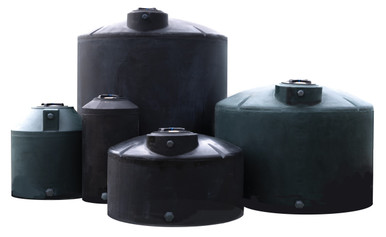
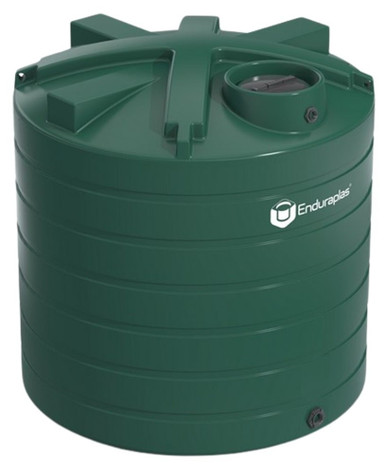
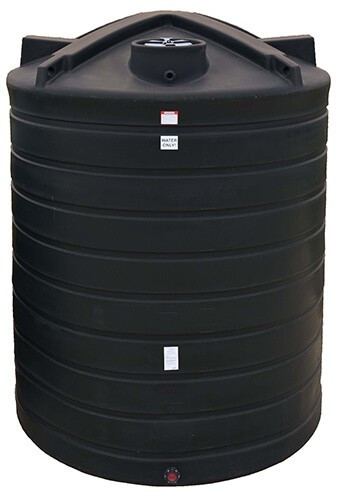
The crosslinked polyethylene (XLPE) and linear polyethylene (LDPE/LLDPE) tank shells used by Norwesco, Snyder, Chem-Tainer, Enduraplas, and Bushman have published wall thickness and rotational-molding tolerances that govern static fluid load and freeze-recovery margins. They do not have published anchor-point load ratings because they are not structural anchors. The polyethylene shell is a containment vessel, not a steel column.
The pull-out resistance of a self-tapping screw or through-bolt in a 0.300 to 0.500-inch polyethylene wall is highly variable. Test data from various sources puts the static pull-out of a #14 self-tapping screw in 0.400-inch HDPE between roughly 350 and 600 pounds at room temperature. At elevated material temperature (above 100 F summer-sun condition), the pull-out drops 30-50 percent. Under impact or shock loading, the polyethylene yields rather than failing brittle, but the displacement before yield is enough to fail a fall-arrest event.
The conclusion: the polyethylene shell cannot be the load path for a Type A fall-arrest anchor. The anchor must transfer load through the shell to an independent structural element — typically a steel ladder framework, a freestanding catwalk structure, or a concrete-anchored standoff post — that can carry the 5,000-pound load without relying on the tank wall.
4. The Independent Steel-Frame Ladder Approach
The cleanest engineering solution for tank-side ladder fall-arrest anchorage is a freestanding steel ladder frame that does not structurally rely on the tank. The ladder rails are anchored to a concrete pad foundation independent of the tank. Lateral standoff brackets connect the ladder frame to the tank shell only as a stability tie, not as a structural support. The fall-arrest anchor is mounted at the top of the steel frame at a point that is structurally above the worker's head when standing on the top platform.
The engineering of this approach:
- Ladder rails sized per OSHA 1910.23 dimensional requirements: 16-inch minimum width between rails, 12 inches between rungs, 7-inch minimum perpendicular distance from the rung to the nearest fixed object behind the ladder.
- Side rails of 2-inch by 2-inch by 1/4-inch steel angle or equivalent at minimum, with detailed engineering for ladder heights above 24 feet that includes wind-load contribution from ASCE 7-16 and consideration of ladder cage requirements for older installations.
- Anchor base plates with at least four 1/2-inch grade-5 anchor bolts set in a concrete pad rated for 4,000 psi minimum compressive strength, with embedment depth per the bolt manufacturer's pull-out specification.
- Top-of-ladder anchor extension rising 42 inches above the climbing surface (per OSHA 1910.23(b)(11)) with the fall-arrest anchor mounted in the upper 12 inches of the extension. The extension serves as both the climbing handhold and the anchor support post.
- Structural verification by a licensed professional engineer showing the 5,000-pound anchor load is transferred through the ladder structure to the concrete foundation with all members and connections carrying the load with the appropriate safety factor.
This approach is materially more expensive than mounting the ladder directly to the tank shell. It is also the only configuration that survives a Z359.18 verification without engineering gymnastics.
5. The Concrete-Anchored Standoff-Post Approach
An alternative when the tank already has a working ladder mounted directly to the shell (and removing it would be impractical) is the addition of an independent fall-arrest post anchored separately to the concrete foundation. The standoff post stands adjacent to the ladder, rises higher than the ladder top, and provides the Z359.18-rated anchor without requiring the ladder itself to be re-engineered.
The engineering elements:
- Steel post of HSS 4x4x1/4 (hollow structural section) or equivalent: sized per the bending moment from a 5,000-pound load applied at the top of the post with the base fixed at the foundation.
- Base-plate anchor pattern with four 5/8-inch or larger expansion or epoxy-set anchor bolts: at sufficient embedment depth in 4,000-psi-minimum concrete to develop the anchor capacity. The detailed calculation must include the concrete breakout, pull-out, and combined-loading checks per ACI 318 Appendix D (anchorage to concrete).
- Post height to position the anchor 6-12 inches above the top of the worker's head when standing on the top platform: typically 42-54 inches above the platform climbing surface.
- Lateral stability against wind load: ASCE 7-16 wind pressure applied to the projected area of the post, with the post designed to deflect within service-limits at design wind even when the worker is not present.
- Compatibility check with the existing ladder geometry: the post must be positioned so the anchor is reachable from the climbing position without requiring the worker to lean off the ladder, and must not interfere with the climbing path or the platform working area.
The standoff post is the retrofit-friendly approach. It works on existing tank installations where the original ladder is already in place and the operator does not want to remove and replace it. It also keeps the structural anchor entirely off the polyethylene tank.
6. The Mistakes That Show Up in Site Audits
The common compliance failures in tank-ladder fall-arrest anchorage:
- D-ring bolted through the manway flange. The flange is a polyethylene molded feature with through-bolts that pull out at relatively modest load. Test data on through-bolt pull-out in molded polyethylene flanges puts the failure between roughly 800 and 1,500 pounds depending on bolt size, flange thickness, and material temperature. Below the 5,000-pound criterion in every realistic case.
- Eye-bolt threaded into a top-fitting boss. The boss is designed for a vent fitting or a sensor port. The thread depth and the surrounding wall thickness are not designed for cantilevered shock loading. Failure typically occurs by the boss tearing out of the tank top under arrest load.
- Self-tapping screw bracket on the shell. Even when the bracket itself is engineered, the screw-to-polyethylene connection limits the system. A 4-screw pattern in 0.400-inch HDPE provides a few thousand pounds of static pull-out at room temperature and noticeably less under shock loading or at elevated material temperature.
- Banding or strapping around the tank circumference. A stainless-steel band tensioned around the tank does not provide the constrained anchor a fall-arrest system requires. The band can rotate around the tank, slip vertically, or distort the tank shell in tension. Z359.18 explicitly requires a fixed anchorage; a band-mounted anchor does not qualify.
- "It's good enough" verbal certification. The site supervisor who insists the existing anchor is fine without documentation is not satisfying the Z359.18 verification requirement. The verification must be in writing, by a qualified person, with the engineering basis documented and retained on file.
The audit finding for these configurations is uniformly the same: the anchor is not Z359.18-compliant, the worker using it is not protected to OSHA 1910.140, and the site has an open compliance issue that grows in cost the longer it remains unresolved.
7. The Tank Selection That Simplifies the Anchorage Problem
The fall-arrest anchor problem is materially easier when the tank is specified for the application with structural ladder integration in mind. The engineering brief should include the planned ladder configuration, the platform layout, and the anchor strategy at the design stage so the tank model and the ladder structure can be selected together.
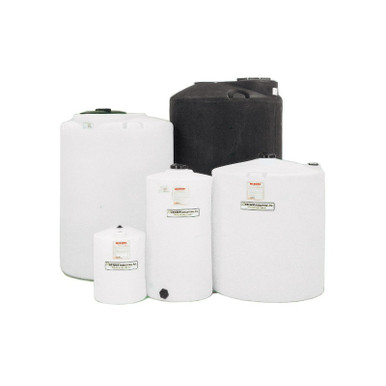
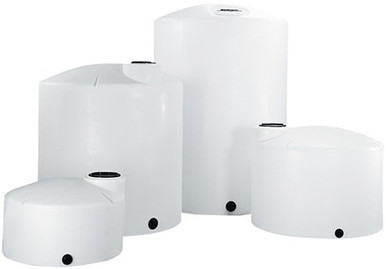
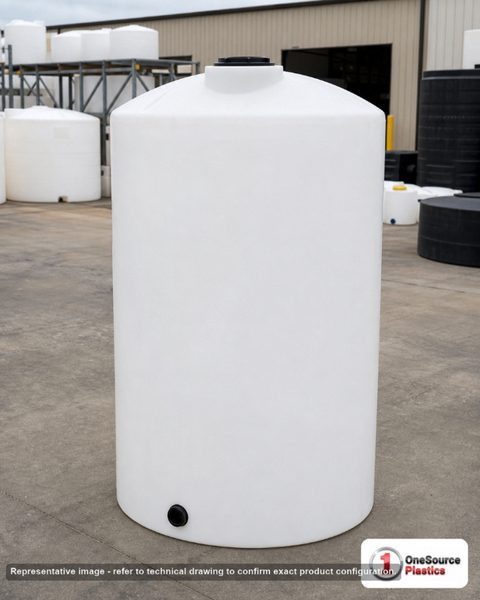
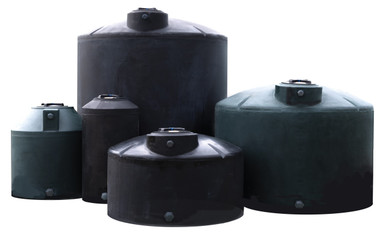
- Vertical bulk tanks with full-height ladder access already engineered into the supplier offering. Reference N-40164 5,000 gallon Norwesco vertical and N-43128 10,000 gallon Norwesco vertical, both XLPE construction at heights that put the manway above the 24-foot threshold for full fall-arrest requirements.
- Snyder Industries vertical tanks with engineered ladder-and-platform packages: the manufacturer provides sizing and mounting guidance that the structural engineer can incorporate into the freestanding ladder design. Reference the SII-1006600N42 10,000 gallon XLPE Captor as a representative double-wall unit with full documentation.
- Smaller vertical tanks where ladder access may not be required. Reference N-41867 25 gallon for the laboratory and small-batch end of the catalog where the access concern reduces to step-stool reach. Sizing the tank to the access strategy is a legitimate engineering decision.
The procurement conversation should include the freight estimator step and the access-engineering step at the same time. List pricing on the BC product page is the starting point; LTL freight and the field installation cost — which includes the engineered ladder and anchor system — are separate quotes that the application engineer prepares as a package.
8. The Inspection Cadence for Fall-Arrest Anchor Systems
OSHA 1910.140(c)(18) requires that personal fall arrest systems be inspected before each use for mildew, wear, damage, and other deterioration, and that defective components be removed from service. The structural anchor at the top of the ladder is part of the system that must be inspected, not a free-rider on the lanyard inspection.
- Pre-use visual inspection by the worker. Verify the anchor connector is in place, the connection to the ladder or post is intact, the anchor is not visibly bent or distorted, and any fasteners or pins are fully engaged.
- Annual qualified-person inspection. A documented annual inspection by a competent person per OSHA 1910.140 reviews the anchor structure, the foundation anchorage, the connecting hardware, and any environmental degradation (corrosion, UV, impact damage). The inspection report is retained in the site file.
- Post-event inspection after any arrest event. A worker who falls and is caught by the system has loaded the anchor near its rated capacity. The anchor must be inspected by a qualified person and may need to be replaced; many anchor manufacturers require replacement after any arrest event regardless of visible damage.
- Periodic structural verification at five-year intervals or per the qualified person's specification. The detailed inspection includes pull-test sampling on epoxy-set concrete anchors (where accessible), torque verification on critical fasteners, and corrosion mapping on steel structural members. Issues identified are remediated under the original engineering envelope.
The maintenance philosophy: the anchor that works during the arrest event is the anchor that has been inspected and maintained. The anchor that has been ignored since installation is the anchor that fails. The cost of the inspection regime is trivial relative to the cost of an unprotected fall.
9. The Engineering Discipline Conclusion
Tank-mounted ladder fall-arrest anchorage is a structural-engineering problem that has been treated as a hardware-shopping problem. The ladder gets bought, the lanyard gets bought, the worker gets trained, and the anchor — the single point of system failure — gets selected by whoever was on site that day with a drill in hand. The compliance gap between this configuration and the ANSI Z359.18 requirement is structural and unrecoverable when something goes wrong.
The engineering remedy is not exotic. A freestanding steel ladder frame anchored to a concrete pad, or a standoff post anchored to a concrete pad with the existing ladder retained for climbing, both provide the structural load path that Z359.18 requires. The polyethylene tank stays in its actual role as a containment vessel. The fall-arrest anchor stays in its actual role as a structural element. The worker stays alive when something unexpected happens.
OneSource Plastics ships the polyethylene tanks that are the foundation of these installations across all 5 brands — Norwesco, Snyder, Chem-Tainer, Enduraplas, Bushman — with shell construction documentation, fitting load ratings, and dimensional drawings that the structural engineer needs to design the ladder and anchor system around. List pricing by SKU is on the product page; LTL freight to your ZIP is quoted separately via the freight estimator or by phone at 866-418-1777. For related installation engineering see tank piping support engineering and tank ladder and manway access engineering.
Recommended Tanks for This Guide
Live pricing, updated automatically · estimate freight to your ZIP.