Tank Refurbishment Decision: Recoat vs Reline vs Replace Cost-Per-Year Engineering
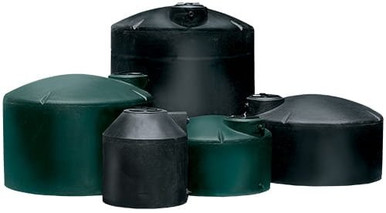
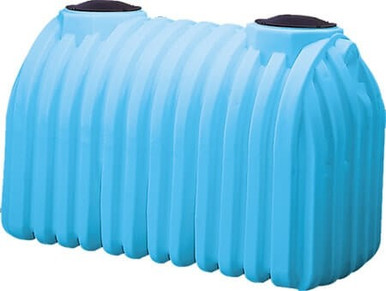
A 25-year-old steel water tank is leaking at the floor seam. A 12-year-old polyethylene chemical tank is chalking, brittle on the upper third, and the operator has noticed faint hairline crazing around the manway. A 30-year-old fiberglass underground tank passed last year's tightness test but the inspector flagged osmotic blistering on the interior dome. In each case the operator faces the same engineering decision: spend money to extend the existing asset's life, or replace it. The wrong call costs five to ten times more than the right one over a 20-year horizon.
This guide walks the four decision factors that govern recoat vs reline vs replace, the cost-per-year math that translates them into dollars, the real test methods that determine whether an asset is a candidate for refurbishment versus a candidate for retirement, and the catalog options for replacement when refurbishment is not viable. The math is governed by NACE SP0294 (above-ground tank inspection), API 653 (above-ground steel tank inspection and repair), AWWA D101 (steel tank inspection), AWWA D102 (steel tank coating), SSPC-PA 2 (dry film thickness measurement), and ASTM D1998 (polyethylene tank specification) — citations are real and verified.
The Four Decision Factors
Refurbishment-vs-replacement is not a feel decision. It is a four-axis evaluation:
- Substrate condition — is the tank shell mechanically sound, or is it past the point where any coating system can compensate for substrate loss?
- Service environment — what does the next 10-20 years of contents and exposure look like? Coating service life is a function of contents chemistry and weathering, not just years on the wall.
- Cost of downtime during refurbishment — recoating a tank in service typically requires 2-6 weeks offline. Replacement may require longer, but with a temporary frac tank and a single cutover the operational interruption can be controlled.
- Regulatory posture — some assets cannot be recoated under current code. AST that is not current with API 653 baseline must be brought into compliance during any major repair. UST that does not have current cathodic protection plus interior lining cannot be relined and put back in service in many states; it must be replaced or permanently closed.
Substrate Condition Evaluation
Steel Tanks: Floor and Shell Inspection
API 653 governs the periodic inspection and repair of welded above-ground storage tanks. The standard requires:
- External visual inspection — every 5 years minimum, on a documented schedule, looking for shell distortion, weld defects, foundation settlement, anchor-bolt corrosion, and coating breakdown.
- Internal inspection — typically every 10-20 years depending on contents and corrosion rate, performed with the tank out of service. Floor scan with magnetic flux leakage (MFL) per API 653 Section 6.4.2 documents floor-plate thickness loss; ultrasonic thickness (UT) per ASTM E797 documents shell-plate thickness at fixed grids.
- Out-of-service intervals — the next-inspection-due date is calculated from corrosion rate per API 653 Section 6.4.4. If shell corrosion rate exceeds 5 mils/year (0.005 in/yr) or floor corrosion rate exceeds 10 mils/year and the projected remaining life is less than 10 years, the tank is a recoat or replacement candidate.
For steel water tanks under AWWA D101, the corresponding inspection interval is 3-5 years external and 5-10 years internal, with disinfection per AWWA C652 after any out-of-service work.
Polyethylene Tanks: Visual + Specific-Gravity Verification
Polyethylene tanks are not coated and cannot be relined. The substrate is the structural material. Refurbishment is binary: tank passes inspection (continue service) or tank fails inspection (replace).
Inspection criteria for HDPE tanks (per ASTM D1998 and Norwesco/Snyder service literature):
- Visual chalking — a chalk layer on the outside surface within 2-4 years is normal weathering. Chalking that exposes underlying resin (visible color change in cross-section) indicates UV stabilizer depletion. The wall section behind the chalk is the diagnostic.
- Hairline crazing around fittings, manways, dome flanges — crazing is the signature of environmental stress crack initiation per ASTM D1693. Once crazing is visible, replacement is the only safe path.
- Wall-thickness measurement — ultrasonic thickness gauges work on HDPE with the correct velocity setting (~2400 m/s for HDPE vs ~5900 m/s for steel). Wall thickness less than 75% of original-spec value is the retirement threshold.
- Specific gravity verification — the original tank was rated for a specific gravity. If contents have shifted (e.g., owner started storing 50% sodium hydroxide at SG 1.53 in a tank rated SG 1.5), the wall is overstressed continuously and structural margin is compromised regardless of cosmetic condition.
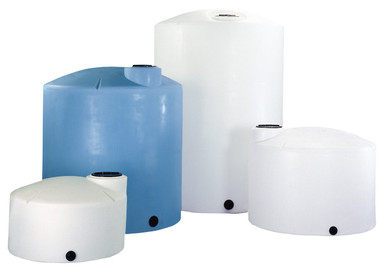
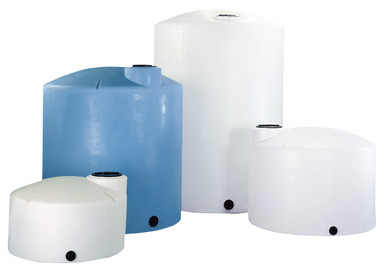
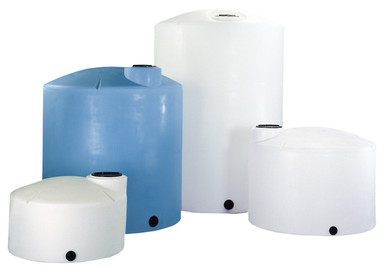
For polyethylene tank refurbishment, the answer is almost always replace. Real catalog candidates for HDPE chemical-storage replacements include the Norwesco MPN 47564 (2,000-gallon vertical blue, SG 1.9), Norwesco MPN 45246 (3,000-gallon vertical white), and Norwesco MPN 47620 (6,502-gallon vertical blue, SG 1.5).
Fiberglass Tanks: Osmotic Blistering and Resin Hydrolysis
FRP tanks fail through different mechanisms than steel or HDPE. The dominant failure modes are:
- Osmotic blistering — water permeates the interior gel coat, encounters voids in the laminate, hydrolyzes residual resin and styrene, and the resulting fluid pressure pushes a blister outward. ASTM D2563 governs visual evaluation of FRP laminate defects.
- Resin hydrolysis — bisphenol-A epoxy and isophthalic polyester resins lose mechanical strength after 20-30 years in continuous water service. ASTM C581 (chemical resistance test for thermosetting reinforced plastic laminates) is the reference test method for laminate-resin retention.
- Glass-fiber bloom — at the laminate exterior, glass fibers becoming visible indicates surface-resin loss and is the signature of UV-driven hydrolysis on the outer wall.
FRP tanks are recoat candidates if the structural laminate is intact. Interior gel-coat repair plus a vinyl-ester barrier coat can extend service life 10-15 years. If glass bloom is visible on the laminate or osmotic blistering exceeds 5% of the interior surface area, the tank is a replacement candidate.
Cost-Per-Year Math
Option A: Recoat the Existing Tank
Coating a 5,000-gallon steel water tank exterior, including SSPC-SP 6 commercial blast cleaning per SSPC-PA 1, application of a three-coat zinc-epoxy-polyurethane system per AWWA D102 ICS-1, and SSPC-PA 2 dry-film thickness verification, runs $3-6 per square foot of surface area. A 5,000-gallon vertical steel tank has roughly 800 sq ft of exterior surface — call it $3,200-$4,800 for a quality recoat.
Service life of a quality three-coat exterior system per AWWA D102 is 12-20 years before the next major recoat. Cost-per-year: $200-$400 for the exterior coating only.
Interior recoating is more expensive. NSF 61-listed potable-water linings (epoxy or polyurethane) run $8-15 per square foot installed including SSPC-SP 10 near-white blast and proper dehumidified curing. A 5,000-gallon vertical steel interior is roughly 1,000 sq ft of wetted surface — $8,000-$15,000 for the interior. Service life 15-25 years if properly applied. Cost-per-year: $400-$1,000 for interior only.
Total recoat cost for a 5,000-gallon steel water tank inside-and-out: $11,000-$20,000. Cost-per-year over 15-year service: $750-$1,300.
Option B: Reline the Existing Tank
Relining (interior structural reinforcement, not just coating) applies to steel and FRP tanks where the substrate has lost mechanical capacity. Common reline systems:
- Geotextile-reinforced epoxy — applied at 60-120 mils dry film with a fiberglass cloth interlayer. Adds about 0.1 in of structural thickness and seals corrosion-affected steel. $15-25 per square foot installed.
- Cured-in-place fiberglass (FRP overlay) — a full structural laminate applied to the interior. Adds 0.2-0.4 in of structural thickness. $25-40 per square foot installed.
- HDPE drop-in liner — a fabricated polyethylene shell installed inside the steel host. The host becomes secondary containment; the HDPE is the primary contact surface. Most expensive per square foot but converts a steel tank into a chemical-storage asset rated for incompatible chemistries.
For a 5,000-gallon steel tank reline (1,000 sq ft interior), expect $15,000-$40,000 depending on system. Service life 20-30 years for FRP overlay and HDPE drop-in. Cost-per-year: $500-$2,000.
Option C: Replace
Replacement of a 5,000-gallon water tank with a polyethylene equivalent runs $5,000-$8,000 for the tank itself. The Norwesco 5,000-gallon vertical white (Norwesco MPN 47636 family) is in this band. With foundation work, plumbing, and electrical at $5,000-$10,000 and a 25-30 year service life on a stabilized HDPE asset, the cost-per-year math is $400-$700 — competitive with or better than recoating an old steel tank.
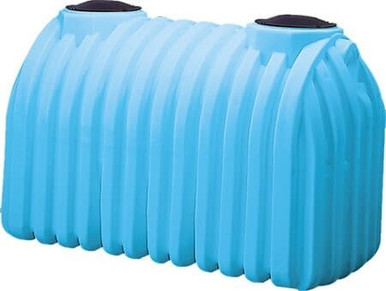
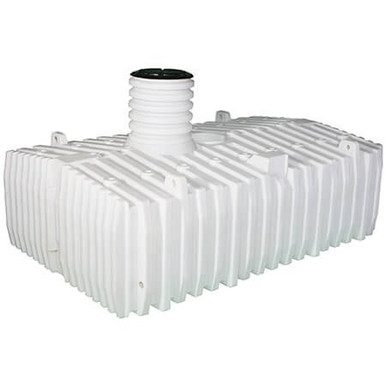
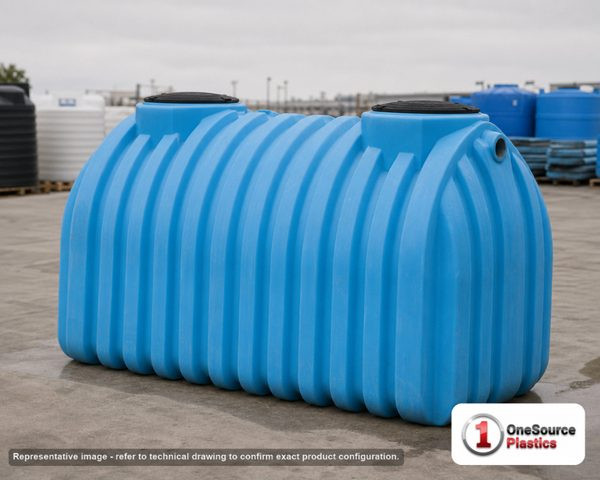
For underground replacement, the Norwesco MPN 44876 (5,025-gallon underground cistern) at list price plus excavation runs $20,000-$30,000 installed with a 30-50 year service life. Cost-per-year $400-$700 — replacement is the clear winner over relining a 30-year-old fiberglass UST in most cases.
Decision Tree
| Condition | Recoat | Reline | Replace |
|---|---|---|---|
| Steel AST, <5 mils/yr corrosion, coating breakdown only | YES (preferred) | no | defer 10-15 yrs |
| Steel AST, 5-10 mils/yr corrosion, >75% original wall thickness | marginal | YES (preferred) | defer 5-10 yrs |
| Steel AST, >10 mils/yr corrosion or <75% wall | NO | marginal | YES (preferred) |
| HDPE tank, chalking only, >15 yrs | n/a | n/a | monitor; replace if crazing appears |
| HDPE tank, hairline crazing visible | n/a | n/a | YES (immediate) |
| FRP tank, <5% blistering, structural laminate intact | YES (interior gel coat + barrier) | marginal | defer 10-15 yrs |
| FRP tank, >5% blistering or glass bloom on exterior | NO | NO | YES (preferred) |
| Steel UST, no current CP, no interior lining | n/a | YES (if state allows) | often required |
Replacement Candidate Catalog
If the decision is replace, OneSource catalog options for like-for-like replacement at the 1,000-10,000 gallon range include:
- Above-ground vertical, water service, white — Norwesco MPN 45246 (3,000-gallon vertical white), Norwesco MPN 43140 (3,000-gallon vertical green).
- Above-ground vertical, chemical service, blue (SG-rated) — Norwesco MPN 47564 (2,000-gallon SG 1.9), Norwesco MPN 42380 (3,000-gallon blue), Norwesco MPN 47620 (6,502-gallon blue), Norwesco MPN 47638 (10,500-gallon vertical white).
- Above-ground horizontal leg tank, transport-rated — Norwesco MPN 40775 (2,035-gallon black), Norwesco MPN 41294 (2,635-gallon black).
- Cone-bottom (gravity-drain process tank) — Norwesco MPN 43852 (1,000-gallon 45-deg), Norwesco MPN 40813 (1,600-gallon 30-deg with stand).
- Septic / underground — Norwesco MPN 41718 (1,000-gallon septic, IAPMO), Norwesco MPN 44876 (5,025-gallon underground cistern).
List prices are quoted before LTL freight. The OneSource Freight Cost Estimator returns delivered pricing to a specific ZIP for any catalog SKU; the Tank Sizing Calculator validates capacity and footprint for the replacement asset; the Chemical Tank Recommender selects materials and SG ratings for chemistry-service replacements.
Regulatory Drivers That Force Replacement
Several conditions remove refurbishment from the option table:
- UST without current cathodic protection — 40 CFR 280.21 requires CP for any steel UST in service after 1998. A bare-steel UST that does not have current CP cannot be relined and returned to service in most states; it must be replaced or permanently closed per 40 CFR 280.71.
- Tank serving public water system, NSF 61 lining required — AWWA C652 requires that any disinfection and return-to-service of a public-water-system tank uses NSF 61-listed coatings, materials, and processes. Many older interior coatings are not NSF 61 listed and cannot be repaired in kind.
- API 653 baseline inspection past due — for AST built before API 653 publication, the first major repair triggers a baseline inspection requirement. The cost of the inspection plus required repairs often exceeds replacement cost.
- State septic-tank certification (IAPMO, NSF 41) — older site-built septic tanks that fail tightness test cannot always be relined back to a certified condition. Replacement with an IAPMO-listed unit is often the path of least resistance. State-by-state septic regulations document the specifics.
Refurbishment Schedule Math
The cost-per-year framework simplifies to a single comparison:
(Refurbishment cost) / (years of service life gained) versus (replacement cost) / (replacement service life).
Worked example, 5,000-gallon steel water tank, 25 years old:
- Recoat option: $14,000 / 15 years = $933/year
- Reline option: $30,000 / 25 years = $1,200/year
- Replace option (HDPE): $25,000 / 30 years = $833/year
In this scenario, replacement is the lowest cost-per-year. The recoat option is competitive but only if the underlying steel can carry another 15 years without further structural work.
The math flips if downtime cost is high (>$5,000/day) and replacement requires a 30-day cutover versus a 14-day recoat. Operations cost can swing the decision either direction.
Internal References
- State Regulations Hub — UST closure rules, septic certification, AST inspection requirements by state
- Chemical Compatibility Reference — verify replacement-tank material matches contents
- Freight Cost Estimator — LTL pricing for replacement-tank delivery to ZIP
- Tank Sizing Calculator — validate capacity and footprint for replacement
- Chemical Tank Recommender — material and SG selection for chemistry-service replacement
- Specialty & Metal Fabrication Hub — when replacement requires custom geometry or alloy steel
- Certified Steel Fabrication — replacement of legacy steel ASTs with API 650 / API 653-compliant new builds
Source Citations
- API 653 — Tank Inspection, Repair, Alteration, and Reconstruction (above-ground welded steel tanks)
- API 650 — Welded Tanks for Oil Storage (new-build above-ground tanks)
- NACE SP0294 — Design, Fabrication, and Inspection of Tanks for the Storage of Petroleum Refining and Petrochemical Service Liquids
- AWWA D101 — Inspecting and Repairing Steel Water Tanks, Standpipes, Reservoirs, and Elevated Tanks
- AWWA D102 — Coating Steel Water-Storage Tanks (Inside Coating Systems 1-5; Outside Coating Systems 1-4)
- AWWA C652 — Disinfection of Water-Storage Facilities
- SSPC-PA 1 — Shop, Field, and Maintenance Painting of Steel
- SSPC-PA 2 — Procedure for Determining Conformance to Dry Coating Thickness Requirements
- SSPC-SP 6 — Commercial Blast Cleaning
- SSPC-SP 10 — Near-White Metal Blast Cleaning
- ASTM E797 — Standard Practice for Measuring Thickness by Manual Ultrasonic Pulse-Echo Contact Method
- ASTM D1693 — Standard Test Method for Environmental Stress-Cracking of Ethylene Plastics
- ASTM D1998 — Standard Specification for Polyethylene Upright Storage Tanks
- ASTM D2563 — Standard Practice for Classifying Visual Defects in Glass-Reinforced Plastic Laminate Parts
- ASTM C581 — Standard Practice for Determining Chemical Resistance of Thermosetting Resins
- NSF/ANSI 61 — Drinking Water System Components: Health Effects
- 40 CFR 280 (Subpart B, D, G) — Underground Storage Tank requirements (cathodic protection, release detection, closure)
- OneSource Plastics master catalog data, dated 2026-03-26 snapshot (9,419 products across Norwesco, Snyder, Chem-Tainer, Enduraplas, Bushman)
Recommended Tanks for This Guide
Live pricing, updated automatically · estimate freight to your ZIP.