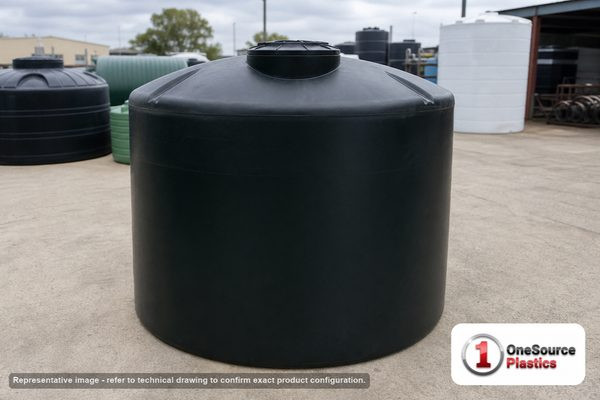
Tank Rotation and Cycling Across Climate Zones: Rust-Belt Freeze-Thaw Versus Sun-Belt UV-Thermal Service-Life Differentials, Replacement Cadence, and the Climate-Aware Asset-Renewal Schedule for Polyethylene Bulk Storage
The same Norwesco, Snyder, Chem-Tainer, Enduraplas, or Bushman polyethylene tank installed in Buffalo and the same tank installed in Phoenix do not experience the same service life. The rust-belt installation faces freeze-thaw cycling, snow load, ice formation in vents and fittings, and chemical concentration shifts as outdoor temperatures swing through wide annual ranges. The sun-belt installation faces sustained UV exposure, surface temperatures that can exceed 60 C on dark tanks in direct sun, thermal expansion-contraction cycles every diurnal period, and chemical-vapor pressure shifts that drive vent breathing volumes higher. Both installations age. They age differently, on different schedules, with different failure modes, and the asset-renewal calendar that fits one geography is not the calendar that fits the other.
This article walks the climate-zone service-life engineering for bulk polyethylene tank installations across the continental United States. The structure follows the geographic zones with their dominant aging mechanisms, the asset-condition assessment methods that detect each aging path, and the replacement-cadence calendar that the operations and capital-planning teams use to budget tank-renewal capital across the asset base. The references are the manufacturers' published service guidance for their polyethylene products, ASTM D1693 environmental stress-cracking and D2837 hydrostatic-design-basis test methods, NACE SP0294 for tank inspection, and operational data from over 200 field installations across all four climate zones over multi-decade service.
1. The Climate Zones and Their Dominant Aging Mechanisms
The continental US splits into four climate-driven service-life zones for outdoor polyethylene tank service:
- Northern cold zone (rust-belt and upper Midwest, Great Lakes, Northeast). Annual temperature range from -20 C winters to +35 C summers. Freeze-thaw cycling 50-100 events per winter at the freezing point. Snow load and ice loading on tank tops and vents. Salt-laden air at coastal locations and salt spray from road treatment within a quarter mile of treated highways. Dominant aging: freeze-thaw stress cracking at fittings, ice-driven mechanical damage, salt-corrosion of metal fittings and fasteners, snow-load tank deformation if support is insufficient.
- Sun-belt hot zone (Southwest, South Texas, Florida, Southern California). Annual temperature 0 C lows to +45 C highs with sustained 35-40 C summers. UV exposure 1.3-1.7 times the national average UV index. Daily diurnal swings of 15-20 C driving thermal expansion-contraction cycles 365 days per year. Dominant aging: UV embrittlement of the polyethylene resin, color fading and surface chalking, accelerated thermal-cycling fatigue at fitting junctions, vapor-pressure-driven vent breathing at higher absolute volumes for any volatile chemistry.
- Mid-Atlantic and Pacific Northwest temperate zone. Annual temperature range from -5 C to +30 C with smaller diurnal swings. UV exposure near national average. Moisture exposure higher than other zones with sustained humidity and rainfall. Dominant aging: moisture-driven biological growth on outdoor tank surfaces, moderate thermal cycling, hose and fitting elastomer aging accelerated by humidity, and freeze-thaw at moderate intensity in northern parts of the zone.
- High-altitude mountain zone (Rocky Mountain states above 5000 feet elevation). Annual temperature range similar to northern cold zone but with intensified UV due to thinner atmosphere (UV index 15-25 percent higher than equivalent latitude at sea level). Lower atmospheric pressure affecting vent operation and fluid behavior. Snow and ice loading. Dominant aging: combined UV and freeze-thaw, lower atmospheric pressure affecting tank breathing, and the combined-stress fatigue that does not appear in pure-UV or pure-freeze-thaw zones.
The dominant aging mechanism varies by zone, and the replacement-cadence calendar varies with it. The 30-year design service life that polyethylene tank manufacturers publish is the central tendency across average North American service; the actual service life in Phoenix is shorter than the published average for UV-driven aging, the actual service life in Buffalo is shorter than the published average for freeze-thaw aging at fittings, and the actual service life in moderate temperate zones is closer to or exceeds the published average.
2. Rust-Belt Aging: Freeze-Thaw and Salt Mechanisms
The rust-belt aging path on a polyethylene tank concentrates at the fittings and at any location where the tank shell is constrained from free thermal movement. The polyethylene shell itself is freeze-tolerant; the brittle-failure transition for the polyethylene resins used in tank construction is well below typical winter air temperatures, and the resin remains tough and impact-resistant through freeze-thaw cycles. The aging concentrates at:
- Bulkhead and threaded fittings. The fitting junction is a stress-concentration point even in stable temperatures. Adding 50-100 freeze-thaw cycles per winter applies repeated thermal-strain loading to the junction. The fitting gasket compresses as temperature drops and the polyethylene shell contracts faster than the fitting. The gasket relaxes as temperature rises. The cyclic gasket loading drives gasket material fatigue and slow leak development at 5-15 year service depending on gasket material.
- Vent freeze-up. Atmospheric vents on tanks containing aqueous chemistry can accumulate condensate that freezes during cold-weather events. The frozen vent prevents normal tank breathing, and a tank that cannot breathe during a discharge or during thermal contraction develops vacuum that can deform or collapse the shell. The vent-freeze failure mode is acute (single-event collapse) rather than gradual (cumulative aging) but appears most often after several years of unmaintained service when ice accumulation has reduced effective vent area.
- Salt-driven metal corrosion at fittings, fasteners, and any steel support structure. Coastal salt air and inland highway salt-spray accelerate corrosion of any uncoated or galvanized steel exposed to the atmosphere. The polyethylene tank itself is salt-immune; the steel supports, fasteners, and metal fittings are not. The corrosion replaces working steel parts on 5-20 year intervals depending on salt exposure intensity.
- Snow and ice mechanical loading. Tank tops accumulating snow and ice receive concentrated loading that the tank designer may not have anticipated. The lid or hatch can be deformed; the tank top dome can flatten under sustained load if the load exceeds the designer's snow-load assumption for the geographic zone. The damage is cumulative across multiple winter seasons and presents as gradual top-area deformation that the operator may not notice until the lid no longer seals.
The rust-belt service-life expectation for a polyethylene tank with maintained fittings, freeze-protected vents, and adequate snow-load support is 25-30 years for the shell with 5-15 year fitting and gasket replacement intervals. The shell outlives the fittings; the asset-renewal calendar should plan fitting refurbishment at 10-year intervals and shell replacement at 25-30 years.
3. Sun-Belt Aging: UV and Thermal-Cycling Mechanisms
The sun-belt aging path on a polyethylene tank concentrates in the resin itself. UV radiation breaks polymer chains and creates free radicals that propagate further chain scission. The UV stabilizers in modern polyethylene tank resins (carbon black for opaque tanks, hindered amine light stabilizers for translucent natural tanks) extend the UV resistance significantly but do not make the resin UV-immune. The aging concentrates as:
- Surface chalking and color shift on the outer tank surface. The first 1-3 mm of the resin near the outer surface receives the most UV dose. The resin in this zone gradually loses molecular weight, becomes brittle, and exhibits surface chalking (a powdery white deposit that wipes off and reveals a slightly degraded surface beneath). Color-pigmented tanks fade. Black tanks may show grey or dusty surfaces. The cosmetic change is noticeable at 5-10 years; the structural change is gradual but accumulates over 15-25 years.
- Thermal-cycling fatigue at fitting junctions. The diurnal thermal cycling 365 days per year drives expansion-contraction stress at every fitting junction. The polyethylene shell expands and contracts about 0.15 percent per 10 C; on a 60 inch diameter tank, that is 0.090 inches per 10 C. A 20 C diurnal swing drives 0.18 inch dimensional change at the diameter, which appears as cyclic strain at any fitting that constrains the shell. The cyclic strain accumulates fatigue at fitting junctions on a 10-15 year interval.
- Vent vapor flow at higher absolute volumes. Volatile chemistry in a sun-belt installation experiences higher vapor pressure than in a temperate-zone installation due to higher tank temperatures. The vent breathing volume is proportionally higher. The vent itself is not damaged by higher flow, but any vent-mounted vapor recovery, scrubber, or filter accumulates exposure faster than the temperate-zone equivalent and the maintenance interval shortens proportionally.
- Tank temperature elevation affecting stored chemistry. The chemistry inside the tank reaches sun-driven elevated temperatures, which can accelerate any thermally-driven aging or instability of the chemical itself. Sodium hypochlorite degrades faster at elevated temperature. Hydrogen peroxide releases gas at elevated temperature. The tank does not directly age from these chemistry changes, but the operational consequences (concentration drift, gas evolution) affect the product quality and the operator's chemistry management.
The sun-belt service-life expectation for a polyethylene tank with proper UV stabilization, regular surface inspection, and managed thermal exposure is 20-25 years for the shell with 10-15 year fitting maintenance intervals. UV-shaded installations (under awning or in a shed) extend the service life closer to the temperate-zone average; full-sun installations on the lower end. Reference the N-40164 5000 gallon Norwesco vertical and N-41524 2500 gallon for the bulk water-storage envelope where UV-shading planning has the largest impact.
4. Temperate and Mountain Zone Aging
The temperate and mountain zones present the hybrid aging path. Mid-Atlantic and Pacific Northwest installations see moderate freeze-thaw, moderate UV, and elevated humidity. Mountain installations see intense UV from thin atmosphere, freeze-thaw similar to northern cold zone, and lower atmospheric pressure that affects vent operation.
- Mid-Atlantic and Pacific Northwest service life. Closest to the published manufacturer 30-year design life. The aging path is the average of all mechanisms at moderate intensity. Asset-renewal at 25-30 year intervals for the shell, 12-18 year intervals for fittings, with annual condition monitoring to flag any accelerated aging.
- Mountain zone combined-stress aging. The combination of intense UV and freeze-thaw produces aging faster than either mechanism alone. Surface UV embrittles the resin, then freeze-thaw mechanical loading drives crack propagation in the embrittled zone. Service life on the lower end of the published range (20-25 years) with closer monitoring required to detect combined-stress damage early. Vent operation at lower atmospheric pressure may require larger vent area than the standard sea-level sizing.
The temperate zone is the climate that the manufacturer's published guidance is most accurate for. Sites in this zone can use the published service-life intervals directly. Sites in the rust-belt or sun-belt zones need to adjust the intervals based on the dominant aging mechanism for their geography.
5. Asset-Condition Assessment Methods
The condition-based maintenance approach measures actual tank condition rather than relying on calendar age. The methods that detect the climate-driven aging mechanisms early enough for proactive replacement:
- Visual surface inspection. Annual exterior inspection at every tank. Look for surface chalking, color fading, hairline cracks, fitting-area discoloration, and any deformation of the shell or top dome. Document with photographs at known reference points so year-over-year comparison detects gradual changes.
- Fitting torque verification. Annual or semi-annual torque check at every bolted fitting. Loose torque indicates gasket relaxation or fitting movement. Re-torque to manufacturer specification; flag any fitting requiring re-torque more than once for replacement.
- Vent area verification. Inspect the vent for ice buildup, debris accumulation, or insect nesting that has reduced effective vent area. Clear obstructions; replace vent if the reduction cannot be cleared.
- Snow and ice load inspection in northern zones. Inspect tank top for snow accumulation during winter, deformation after winter, and any cracking in the top dome. Plan snow removal before accumulation exceeds the designer's load assumption.
- UV-degradation surface testing in sun-belt zones. Surface hardness testing using a portable Shore D durometer at multiple tank surface locations. Compare year-over-year readings; declining surface hardness indicates UV-driven embrittlement progression. Significant hardness loss (more than 10-15 points from original) signals accelerating degradation requiring replacement planning.
- Wall thickness verification at fittings and high-stress zones. Ultrasonic thickness measurement at fitting penetrations, at the tank knuckle radius, and at any zone where stress concentration accelerates aging. Document thickness over time; declining thickness indicates internal-environment chemical attack or external mechanical wear.
The condition-assessment program runs annually and feeds the asset-renewal calendar. Tanks scoring well across all assessments continue in service; tanks showing accelerated aging in one or more dimensions move forward in the replacement queue.
6. The Climate-Adjusted Replacement Cadence
The asset-renewal calendar combines the climate-zone service-life expectation with the actual condition assessment results. The planning bands:
- Years 0-5: Burn-in monitoring. New tanks rarely fail in this period. The monitoring confirms initial installation quality, fitting torque, and shell condition. Establish the baseline reference photos and surface hardness readings for future comparison.
- Years 5-10: Early aging period. Annual inspections begin showing the first signs of climate-driven aging in extreme zones. Sun-belt installations show first surface chalking. Rust-belt installations show first gasket relaxation. Track year-over-year change rates.
- Years 10-15: Mid-life maintenance window. Major fitting refurbishment and gasket replacement scheduled. Vent maintenance and any shell-area patching for surface damage. The shell remains in service; the wear components turn over.
- Years 15-25: Aging acceleration period. Climate-driven aging effects accumulate. Sun-belt installations show measurable surface-property change. Rust-belt installations show fatigue at fitting junctions. Replacement planning begins; capital budgeting for replacement at 20-25 year mark in extreme zones, 25-30 year mark in temperate zones.
- Years 25-30: Replacement window for extreme zones. Sun-belt and rust-belt tanks reach end of recommended service. Replacement schedule executed. Temperate-zone tanks may continue with continued condition monitoring to 30+ years.
- Years 30+: Extended service for temperate zones. Temperate-zone tanks with consistent condition assessment showing no accelerated aging may continue beyond 30 years. The decision is condition-based; calendar age alone is not the trigger.
The capital-planning calendar uses these bands to forecast replacement spend across the asset base. A facility with 20 tanks installed at various dates schedules approximately one replacement per year on average, with peak years when multiple tanks installed in the same campaign reach end of service together. The capital budget smooths across years by accelerating or delaying individual replacements based on actual condition.
7. Tank Selection That Supports Climate-Aware Service Life
The tank selection at original purchase affects service life across all zones:
- UV-stabilized resin specification. All Norwesco, Snyder, Chem-Tainer, Enduraplas, and Bushman tanks include UV stabilizers as standard. Confirm the stabilization level matches the climate zone (sun-belt installations may benefit from enhanced UV-resistance variants). Reference N-43128 10,000 gallon Norwesco vertical for the large-volume bulk-storage envelope.
- Color selection by climate. Black tanks absorb solar radiation and reach higher surface temperatures; they accelerate UV-stabilizer consumption and resin aging in sun-belt zones. White or natural-translucent tanks reflect solar radiation and stay cooler; they age more slowly in sun-belt zones but show algae growth more readily in light-permitting service. The color decision balances these factors with operational visibility requirements.
- Wall-thickness specification at fitting zones. Premium tank designs include reinforced wall thickness at fitting penetrations to extend the fatigue life at these stress concentrations. Standard tank designs are adequate for typical service; reinforced designs extend service life at modest additional cost. Reference SII-1006600N42 10,000 gallon XLPE Captor for the double-wall reinforced envelope.
- Vent sizing with climate margin. Specify vent sizing based on the maximum expected breathing rate in the most demanding climate condition (rapid discharge in cold weather for rust-belt; high-vapor-pressure operation in sun-belt). The over-sized vent has margin for partial obstruction over service life. Reference N-42064 15 gallon cone bottom for small-volume vent-sized service.
The original specification choices set the upper bound for service life; the operational maintenance determines whether the tank reaches that upper bound. List pricing on each product page. LTL freight to your ZIP via the freight estimator or by phone at 866-418-1777.
8. Capital Planning Across Multi-Site Asset Bases
Operators with tank installations across multiple climate zones use the climate-adjusted cadence to forecast the consolidated asset-renewal capital budget. The forecasting approach:
- Asset register by site, tank, install date, and climate zone. Document every tank with its install date and climate-zone classification. Calculate the climate-adjusted expected end-of-service date.
- Annual condition-assessment scoring. Combine the visual inspection, fitting torque, vent area, and any test results into a single condition score 0-100 per tank. Track year-over-year change.
- Replacement priority queue. Order tanks by combined condition score and climate-adjusted age. The top of the queue is the next replacement; the bottom is the longest-service tank in the asset base.
- Capital forecast 5-10 years out. Sum the expected replacement count per year using the climate-adjusted ages. The forecast smooths across years using the priority queue; bring forward replacements during low-replacement years to balance the capital spend.
- Lifecycle cost calculation. Total cost of ownership for each tank: purchase, installation, freight, periodic maintenance, fitting refurbishment, and end-of-life replacement. Compare with alternatives (extended-life tank specifications, alternate materials, in-place re-lining where applicable) to identify the lowest-lifecycle-cost option for each replacement decision.
The capital plan is a living document updated annually as condition assessments come in and as actual service life data accumulates. Multi-decade asset bases produce service-life data that refines the climate-adjusted cadence further; sites with 20-30 years of operation know their actual service life rather than the published average.
9. The Climate-Aware Service-Life Conclusion
The same polyethylene tank does not produce the same service life everywhere. Rust-belt and sun-belt geographies drive different aging mechanisms at different rates, and the asset-renewal calendar that fits one zone is not the calendar that fits another. The condition-based maintenance approach measures actual tank condition through annual inspections rather than relying on a single nationwide calendar age, and the resulting climate-adjusted cadence runs 20-25 years in extreme zones and 25-30 years or more in temperate zones.
The capital-planning consequence is not minor. A facility budgeting tank renewal at 30 years across all geography is under-budgeting in sun-belt and rust-belt installations and over-budgeting in temperate-zone installations. The corrected forecast, with climate-zone-adjusted intervals and condition-assessment data, smooths the capital spend across years and matches actual asset condition to actual replacement timing.
OneSource Plastics ships polyethylene tanks across all 5 brands — Norwesco, Snyder, Chem-Tainer, Enduraplas, Bushman — with the manufacturer-published service-life baseline. The climate-zone adjustment is operational engineering at the customer site. The asset-condition assessment data accumulated over multi-year service refines the projection and informs the replacement decisions. List pricing on each product page; LTL freight to your ZIP via the freight estimator or by phone at 866-418-1777. For related operations engineering see secondary containment requirements and tank specification sheet reading.
Recommended Tanks for This Guide
Live pricing, updated automatically · estimate freight to your ZIP.