150 Gallon Vertical Liquid Storage Tank - Natural White (30" x 56") #41859: Complete Buyer's Guide
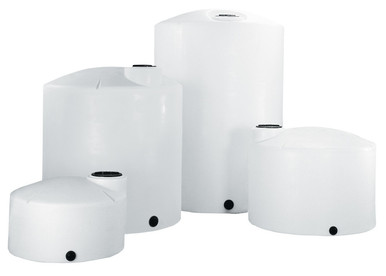
150-gallon white liquid storage tank built for agricultural chemical and fertilizer storage. Manufactured by Norwesco from virgin linear polyethylene (HDPE) rated to handle liquids up to 12.5 pounds per gallon. FDA approved for contact with potable water, ensuring safe storage for drinking water and food-grade liquids.
Specifications at a Glance
Every figure below is pulled straight from the live product record for this exact tank — the same data on the product page, so what you read here and what you buy never disagree.
Standards & Materials
- ASTM D1998 — Standard Specification for Polyethylene Upright Storage Tanks. Governs wall-thickness and hydrostatic design for vertical rotomolded poly tanks of this class.
- FDA 21 CFR 177.1520 — Olefin polymers. The food-contact regulation the FDA-grade resin in this tank is compounded to meet.
- Specific gravity rating 1.5 — the tank is engineered for liquids up to 1.5× the density of water (water is about 8.34 lb/gal). Confirm your fluid’s SG before storage.
Product Overview
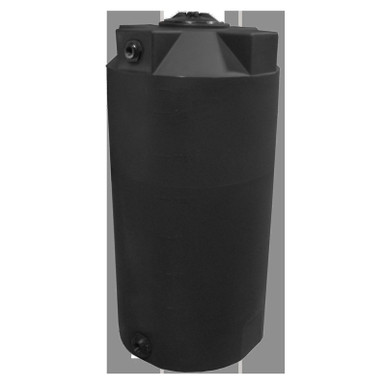
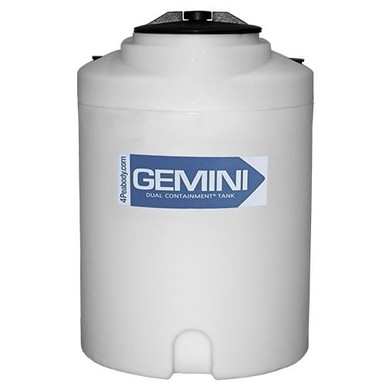
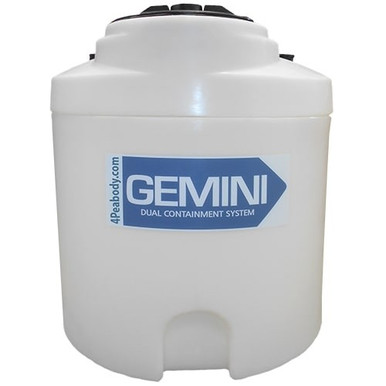
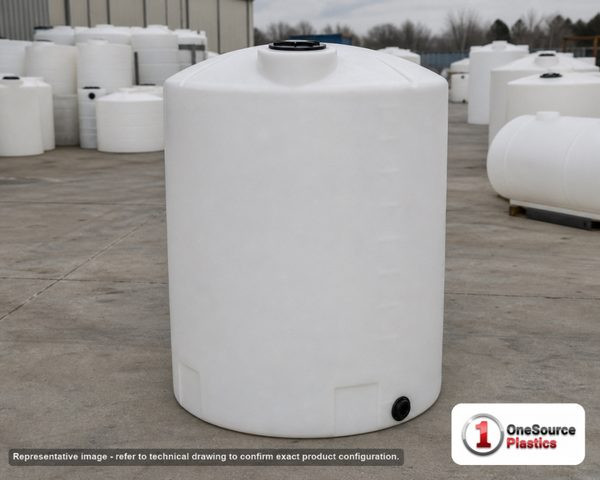
The 150 Gallon Vertical Liquid Storage Tank, part number 41859, is a compact chemical and fertilizer tank in translucent white, holding 150 gallons in a 56-inch body on a 30-inch base. It is a practical size for a day tank, a metering reserve, or a tidy spot in a multi-tank chemical layout.
One continuous rotomolded shell of virgin linear polyethylene, rated 1.5 specific gravity, handles dense agricultural and industrial liquids up to 12.5 pounds per gallon. The translucent white wall shows the level at ground level and reflects sun to hold the stored chemical's temperature down.
Empty, the tank weighs just 49 pounds; filled with a 1.5-SG liquid it puts roughly 1,926 pounds onto its 4.9-square-foot footprint. Discharge runs through a factory 2-inch NPT outlet, and an 8-inch lid opens the top for access. With no factory inlet, you place a bulkhead at the spot your plumbing requires.
Key Features and Specifications
- 150-gallon capacity — sized for agricultural chemical and fertilizer storage
- Constructed from virgin linear polyethylene (HDPE) with 1.5 specific gravity rating — handles liquids up to 12.5 lbs/gal
- 56" tall x 30" diameter — compact vertical footprint
- 49 lbs empty, approximately 1,926 lbs when full at rated specific gravity
- 1.25 NPT outlet fitting — factory installed and leak-tested
- 8" lid opening for fill, venting, and interior access
- FDA approved for potable water and food-grade liquid contact
- 3 Year Warranty from Norwesco against manufacturing defects
- Translucent white walls allow visual level monitoring without opening the tank and reflect sunlight to keep contents cooler
- Rated for continuous service up to 120 F / 48 C
- Seamless one-piece rotational molding — no seams, no welds, no leak points
- Manufactured by Norwesco — a leading name in rotomolded polyethylene tanks
- Place on a firm, level surface free of rocks or sharp objects that could damage the tank bottom. Ensure adequate ventilation if stored chemicals produce vapors
- Ships via LTL freight on a pallet — residential delivery with lift gate available
Installation and Setup Guide
Tank 41859 holds 150 gallons in a 56-inch body on a 30-inch base — a moderate height that keeps the full 1.5-SG load of about 1,926 pounds reasonably manageable while still putting it through a compact footprint. The proportion is less extreme than the tall 250-gallon columns, so while a flat base remains essential, the tipping and lean concerns are milder.
Site Preparation
Set it on a level four-inch concrete pad or a compacted stone bed sized past the 30-inch base, leveled to a quarter inch. A column that stands true loads its lower wall evenly; one that leans drives the chemical head onto a single edge. Where the tank could be bumped by carts or equipment, a simple strap to a wall keeps a light tank from being shifted.
Placement and Connections
Take the discharge off the factory 2-inch outlet and break it with a chemically compatible flexible coupling so the tank's movement never loads the bulkhead. With the inlet left to you, install a compatible bulkhead at the height your fill line dictates. Use chemical-rated plumbing, keep the run short, and hand-tighten the poly threads a quarter turn past snug.
Venting
Even 150 gallons of chemical must breathe as it cycles. Keep the 8-inch lid's vent open, and for volatile chemistries fit a pressure/vacuum relief vent rated to the chemical. A blocked vent can pull a vacuum that dimples the wall during a brisk draw-down, so confirm the vent and match its rating to the stored liquid.
Maintenance and Long-Term Care
A 150-gallon chemical tank is serviced for chemical duty, not potable use, and the translucent wall reduces most inspection to a quick visual. The routine below covers the essentials for a compact chemical column: a level base, compatible fittings, and a correctly rated vent.
Quarterly Inspection Checklist
- Body read: Use the translucent wall to scan the 56-inch body for bulging, stress whitening, or any lean signaling base settlement.
- Outlet and bulkhead check: Inspect the 2-inch outlet and the inlet you drilled in for any weeping, and ensure both stay compatible with the contents.
- Base level: Confirm the 4.9-square-foot pad is level and has not settled after weather.
- Vent verification: Ensure the 8-inch lid's vent or pressure/vacuum relief stays clear and matched to the chemical in use.
Cleaning
Follow the chemical manufacturer's decontamination procedure on every product change; rinsing does not clear residue when chemistries differ. Draining is through the 2-inch outlet, with the 8-inch lid providing inspection access under chemical-handling precautions. The tank is built for chemical storage, not for any potable-water role.
UV and Weather Protection
Sunlight reflects off the translucent white wall to moderate the chemical's temperature, and with UV stabilizer in the resin, an annual chalking check of the sunny side is all it asks. At this modest size the tank is also easy to site under cover, which moderates the chemical's temperature further.
Alternatives and Comparisons
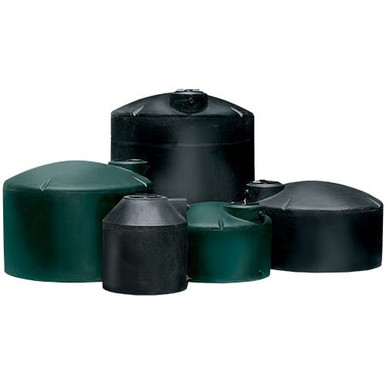
This 150-gallon column (tank 41859) suits compact chemical storage and day-tank duty, where the 100- and 75-gallon verticals handle smaller volumes and the 200- and 250-gallon tanks step up. Choose by the volume of chemical you cycle and the footprint your pad allows.
Vertical vs. Horizontal: Vertical tanks use less floor space for the same capacity but require more overhead clearance. If you have height restrictions, consider a horizontal or low-profile tank. Vertical tanks also drain more completely due to gravity — the liquid column above the outlet creates positive pressure all the way to the last few gallons.
Other 150-Gallon Options
Frequently Asked Questions
How long will the 150 Gallon Vertical Liquid Storage Tank - Natural White (30" x 56") #41859 last?
On a flat base, within its 1.5 SG rating, and serviced for the chemicals it holds, this 150-gallon tank (41859) runs well past fifteen years. The seamless wall has no weld to part; an incompatible chemical or a settled base is what ends a tank early, not the polyethylene.
What chemicals can I store in this tank?
At 1.5 specific gravity it accommodates agricultural chemicals, liquid fertilizers, and most industrial solutions up to 12.5 pounds per gallon, provided you first verify the chemical on a polyethylene compatibility chart. No fuels, solvents, or flammables belong in this vessel, which is for chemical duty and not for potable water.
What kind of foundation does a 150-gallon tank need?
For a 150-gallon tank loading roughly 1,926 pounds through a 30-inch base, a flat, firm four-inch concrete pad or a well-compacted stone bed, level to a quarter inch, is plenty. Keep it level so the body sits true under the chemical head.
Does this tank come with a warranty?
Yes — Norwesco's 3-year warranty covers manufacturing defects under normal use: factory faults, not overloading past 1.5 SG, a poor install, chemical attack, or impact. Retain the receipt and a snapshot of the finished install.
Can I install this tank underground?
No. An above-ground tank by design, its flat wall would buckle under soil pressure if buried, and the warranty would be void. Pick a ribbed underground tank, engineered for burial, for below-grade duty.
Buying Considerations
Confirm the footprint and overhead clearance, that the base can be brought level, and that your chemical is compatible with polyethylene before dedicating the tank to it. Its light weight makes it easy to position and to relocate later if your layout changes.
Related Products You May Need
Questions? Call (866) 418-1777 — our team knows these products inside and out and can help you select the right tank for your application.
Recommended Tanks for This Guide
Live pricing, updated automatically · estimate freight to your ZIP.