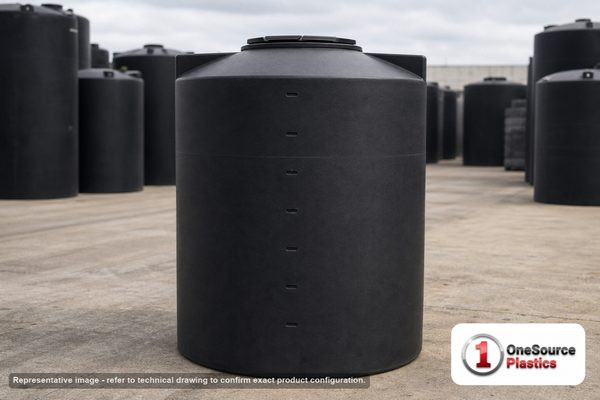
Tank Custom Color + Pigment Specification: ASTM D2244 / Pantone-Match Reality Check
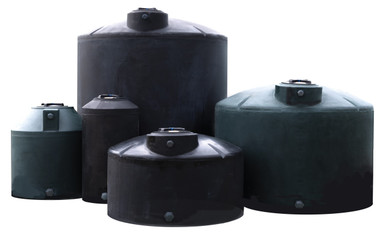
Every few months a buyer asks if we can match a specific Pantone code on a 1,500-gallon polyethylene tank. The honest answer is: sort of, but you should understand what "match" really means before placing the order. Polyethylene rotomolding is not the same color-control process as ABS injection molding, paint mixing, or coil-coated steel. The pigment goes in as a dry colorant blended with virgin resin, then it's heated to 600 F, tumbled inside a steel mold for 12-25 minutes, cooled, and demolded. Color shifts at every stage. The "match" you see on the manufacturer's color chip is the average expectation across a production run, not a guarantee on any given tank.
This guide walks the real engineering of color in commodity polyethylene tank manufacturing. We cover ASTM D2244 (the standardized color difference measurement that defines what "match" means quantitatively), how to read a Pantone spec versus a CIE Lab spec, what custom color costs (minimum order quantities, color-change setup fees, pigment lot variation), and how UV exposure shifts every color over time. The buyer who understands the standards walks into the spec conversation knowing what to ask for and what to accept; the one who doesn't ends up either disappointed or paying a premium for a guarantee no honest manufacturer can deliver.
How Color Works in Rotomolded Polyethylene
Pigment is added to virgin polyethylene resin in one of three ways. Each has different cost, color consistency, and minimum-order implications:
Method 1: Dry-blended pigment
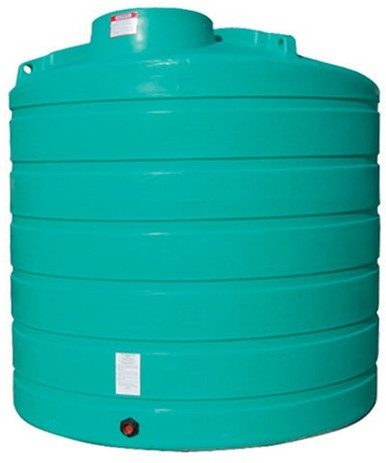
The pigment is a fine powder mixed with the polyethylene resin pellets in a tumbler before charging the mold. This is the lowest-cost method and the one that produces the OEM color charts buyers see (Norwesco "white", "black", "green", "blue", "natural"). Dry-blend has the highest visual variation lot-to-lot — pigment density, resin lot moisture, and tumbler efficiency all influence the final shade. Color difference (delta E) of 2-4 between production runs is normal.
Method 2: Compound color (pre-pigmented resin)
The resin manufacturer pre-extrudes the resin with pigment fully dispersed. The resulting pellets are uniform color before they hit the mold. This produces the most consistent color (delta E 1-2 between lots) but adds 15-30 percent to resin cost. Custom-spec tanks for chemistry plant identification, military, and pharmaceutical applications use compound color almost exclusively.
Method 3: Masterbatch concentrate
A high-pigment-load concentrate (typically 20-40 percent pigment in a polyethylene carrier) is metered into the natural resin at a specific letdown ratio (commonly 2-5 percent masterbatch in 95-98 percent natural resin). Color consistency is between dry-blend and compound. Most "custom color" tank quotes use this method because it allows the rotomolder to keep one inventory of natural resin and add color on demand.
What ASTM D2244 Actually Measures
ASTM D2244 is the Standard Practice for Calculation of Color Tolerances and Color Differences from Instrumentally Measured Color Coordinates. It defines how to compute color difference between a target and a sample using CIE 1976 L*a*b* (CIELAB) coordinates. The single most important number it produces is delta E (delta E*ab), which is a numeric scalar describing how visually different two colors are.
| Delta E value | Visual perception | Industry meaning |
|---|---|---|
| 0.0 - 1.0 | Imperceptible to trained eye | Lab-grade match (compound color) |
| 1.0 - 2.0 | Perceptible side-by-side | Tight commercial spec |
| 2.0 - 3.5 | Perceptible across room | Standard commodity rotomold spec |
| 3.5 - 5.0 | Clearly different to untrained observer | Field-acceptable, commodity |
| 5.0+ | Obviously different colors | Out of spec; reject |
For a customer specifying a custom color on a rotomolded tank, the realistic spec is delta E ≤ 2.5 with masterbatch color, or delta E ≤ 1.5 with compound color. Anything tighter requires injection-molding-grade pigment dispersion that rotomolding cannot deliver. Quoting "delta E ≤ 1.0" on a commodity rotomolded tank is a marketing claim, not a manufacturing capability.
Pantone Match: What It Really Means
Pantone Matching System (PMS) is the printing-industry color-reference standard. Each Pantone code (like "PMS 286 C") corresponds to a specific spectrophotometric reflectance curve, originally for printing on coated paper. Pantone codes are NOT directly translatable to CIE Lab values because Pantone defines the color via a printed swatch (substrate-and-ink dependent), while CIE Lab is a substrate-independent measurement.
When a customer says "we want PMS 286 C blue", the rotomolder converts that Pantone code to its closest CIE Lab match (typically using Pantone-published Lab equivalents), then formulates a pigment package targeting that Lab value. The realistic outcome is delta E 2-4 from the printed Pantone reference. The reasons:
- Substrate effect: printed paper reflects light differently than 0.25-inch HDPE wall.
- Translucency: HDPE at 0.25 to 0.50 inch wall thickness is partially translucent and the back-side environment (light vs dark) affects perceived front-side color.
- Texture: rotomolded surface has slight orange-peel texture that scatters light vs the flat print swatch.
- UV stabilizer interaction: the HALS / carbon black package required for outdoor service slightly shifts the chroma toward darker / less saturated.
The honest manufacturer quote on "Pantone-match" is: "we'll target the published Lab equivalent of that Pantone code, expect delta E 2-4 vs the printed reference, and provide first-article approval before production run." If a manufacturer claims tighter than that on rotomolded HDPE without compound color, ask what the contractual remedy is for out-of-spec batches.
Pigment Cost Structure
| Pigment class | Cost adder vs natural | UV stability | Notes |
|---|---|---|---|
| Carbon black (black) | $0.05-$0.10/lb | Excellent (best UV) | Standard 2-3% loading; the gold-standard outdoor pigment |
| Titanium dioxide (white) | $0.15-$0.30/lb | Good | High loading required for opacity (5-8%) |
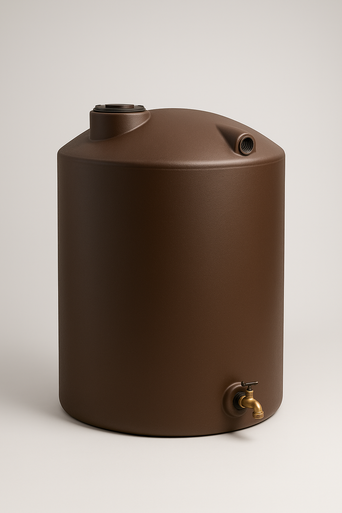
| Iron oxide (red, brown, ochre) | $0.10-$0.25/lb | Excellent | Inorganic, very stable, limited shade range |
| Phthalocyanine blue / green | $0.40-$0.80/lb | Very good | Wide blue/green shade range; chemistry-tank standard |
| Quinacridone red / magenta | $1.50-$3.50/lb | Very good | Bright reds, expensive |
| Cadmium yellow / orange / red | $5-$15/lb | Excellent | RoHS-restricted; rarely specified now |
| Fluorescent / day-glo | $8-$20/lb | Poor (fades 12-36 mo) | Not recommended for outdoor tanks |
For a 1,500-gallon HDPE tank using approximately 600 lb of resin, the pigment-cost adder ranges from $30 (carbon black) to $300 (custom phthalo blue at 3% loading) to $1,800+ (specialty fluorescent or cadmium). The cost differential rarely exceeds 5 percent of total tank cost for standard commercial colors and 10-25 percent for specialty.
Custom-Color Order Economics
Setup fees
Most rotomolders charge a one-time color-development fee for any color outside their standard chart. Typical 2026 ranges:
- Color development + first-article approval: $400-$1,500 (covers spectrophotometric formulation, sample mold, and lab plaque approval).
- Color-change setup per production run: $200-$600 (covers tumbler purge, sample-tank purge, mold-cleaning labor).
- Pigment minimum buy: typically 50-100 lb minimum from the masterbatch supplier; for low-volume custom colors this can mean buying 2-3 production runs of pigment for one tank order.
Minimum order quantities
For commodity vertical and horizontal tanks, custom color MOQs are typically:
- 1-3 tanks: custom color usually unavailable or carries 30-50 percent surcharge plus full setup fee.
- 4-10 tanks: standard custom color territory; setup fee amortized over the order.
- 10+ tanks: setup fee waived or significantly reduced; color-cost adder approaches the pigment-cost differential alone.
- 50+ tanks: compound color becomes economical; tightest delta E achievable.
Realistic pricing example
A buyer wants a 2,500-gallon HDPE vertical tank in PMS 286 C blue (corporate brand color):
- Single-tank order: $4,200 base + $700 setup + $250 color adder = $5,150 (vs $4,200 standard color). Delta E target 2.5 from PMS 286 C; first-article approval required before production.
- 10-tank order: $42,000 base + $700 setup + $1,200 color adder = $43,900 ($4,390/tank).
- 50-tank order: $210,000 base + $0 setup (waived) + $4,000 color adder = $214,000 ($4,280/tank); compound color available, delta E 1.5 target.
UV Aging: Color Doesn't Stay What You Spec'd
Every tank pigment fades or shifts under UV exposure. The rate depends on the pigment chemistry, the UV stabilizer package (HALS, UV absorbers per ASTM D4329), the climate zone (irradiance and temperature), and the tank wall thickness.
Fade rate guidance (ASTM D2565 / D4329 weatherometer + real-world correlations)
- Carbon black: negligible color shift over 25+ years. Stays black.
- Titanium dioxide white: slight yellowing over 10-15 years (delta E 1-3); whiteness retention depends on TiO2 grade (rutile better than anatase).
- Iron oxide reds and ochres: minimal fade; among most stable inorganic pigments.
- Phthalo blue and green: 5-10 percent fade over 10 years in sun-belt climates; delta E 2-4 by year 10.
- Organic reds (quinacridone, naphthol): 10-25 percent fade over 5-10 years; significant color shift in high-UV climates.
- Cadmium pigments: very stable, but largely deselected for environmental reasons.
- Fluorescent / day-glo: 50-70 percent fade in 1-3 years outdoor; not specified for permanent outdoor service.
For brand-color matching that needs to remain on-spec for 10+ years outdoors, the safest pigment choices are inorganic (iron oxide, TiO2) or carbon black. Phthalo blues and greens are acceptable for chemistry-coding (where exact match matters less than safety-color recognition). Avoid organic reds, oranges, and yellows for permanent outdoor identification.
Color Standards: ANSI Z535 Safety Colors and ISO Standards
For chemistry coding, fire-protection, and safety identification, the relevant standards are:
- ANSI Z535.1 - Safety Color Code: defines specific Munsell color references for hazard identification (red = danger; orange = warning; yellow = caution; green = safety/first-aid; blue = mandatory; purple = radiation).
- OSHA 29 CFR 1910.144 - Safety color code for marking physical hazards: codifies use of red and yellow.
- ISO 3864 / ISO 7010 - International standards for safety colors and signs (slightly different shades from ANSI; most US tanks use ANSI).
- ANSI A13.1 - Pipe identification (often referenced for tank-coding cohesion): defines color and lettering for piping which is often matched to tank.
If you're specifying a tank for chemistry-coding, reference the ANSI Z535.1 color (e.g., "ANSI Z535 Safety Yellow") rather than a Pantone equivalent. The manufacturer can target the Munsell reference directly using established pigment formulations and the result is more consistent across reorders.
Common Custom Color Mistakes
Mistake 1: Specifying a Pantone code without "or-equivalent" tolerance
"PMS 286 C exact" is essentially impossible on rotomolded HDPE. The realistic spec is "PMS 286 C target, delta E ≤ 2.5 acceptable, first-article approval required." Anyone who quotes the first language is either misunderstanding the process or planning to renegotiate after the fact.
Mistake 2: Approving a small color chip as the production reference
A 3 by 3 inch color chip and a 6-foot-tall tank in the same color look different. The chip shows the average chroma at viewing distance ~6 inches; the tank wall thickness, curvature, and surface texture all influence perceived color at typical viewing distance of 10-20 feet. Always require a sample plaque (8 by 8 inches minimum) molded at production wall thickness before approving.
Mistake 3: Not specifying a UV stabilizer package compatible with the pigment
Some HALS UV stabilizers interact with phthalo blue or organic red pigments and shift the color toward dark/dull within months. The pigment supplier should be specifying the compatible HALS grade; verify this in the spec conversation.
Mistake 4: Expecting color match between rotomolded tank and injection-molded fittings
The bulkhead fittings on the tank are usually injection-molded HDPE with their own pigment system. Even if both target the same color spec, rotomolded vs injection-molded surface texture and pigment dispersion produce visible color differentiation. Specify the pigment for fittings separately and accept the appearance difference, or use natural/black fittings as a contrasting accent.
Mistake 5: Not budgeting for first-article approval delay
First-article color approval typically adds 2-4 weeks to lead time. The sample plaque is molded, shipped to the customer, approved or rejected, and only then does production begin. Skipping this step on a custom color virtually guarantees a dispute on the first delivery.
Mistake 6: Ordering replacement tanks years later expecting exact color match
The original color batch is gone within 6-12 months of the original run. The replacement tank will be molded from a re-ordered pigment batch. Even with the original spec on file, expect delta E 2-4 between original and replacement. Plan for visible mismatch when staging tanks side-by-side; or order all tanks in the original PO if cohesion matters.
Mistake 7: Specifying fluorescent or day-glo for outdoor service
These pigments fade so fast (50% in 1-3 years) that the tank looks abandoned by year 5. Use only for indoor or short-service-life applications. For permanent outdoor high-visibility, specify ANSI Z535 safety yellow or orange (inorganic pigment based) instead.
Quick-Pick Reference
| Use case | Color recommendation | Realistic spec |
|---|---|---|
| General outdoor water | Black or white standard | Off-the-shelf OEM color |
| Chemistry coding (acid) | ANSI Z535 yellow | Munsell-spec, iron oxide based |
| Chemistry coding (base) | ANSI Z535 blue | Phthalo blue, masterbatch |
| Brand color, <10 tanks | Closest standard OEM color | Setup fee may not amortize |
| Brand color, 10-50 tanks | Custom masterbatch | PMS target, delta E ≤ 2.5 |
| Brand color, 50+ tanks | Compound (pre-pigmented) resin | Delta E ≤ 1.5 achievable |
| Translucent (level visible) | Natural HDPE | No pigment; UV-limited service |
| Maximum UV durability | Carbon black | 25-year color stability |
Internal Resources
- Tank Resin Color Cost & Performance
- UV-Resistant Color Selection by Latitude
- Tank Color Coding for Industrial Service
- Tank UV Stabilizer Loading
- Tank Color Selection by Use Case
- Tank Coating + Paint Specification
- UV Degradation Service Curve
- Contact OneSource
Source Citations
- ASTM D2244 - Standard Practice for Calculation of Color Tolerances and Color Differences from Instrumentally Measured Color Coordinates
- ASTM D2565 - Standard Practice for Xenon-Arc Exposure of Plastics Intended for Outdoor Applications
- ASTM D4329 - Standard Practice for Fluorescent UV Exposure of Plastics
- ASTM E308 - Standard Practice for Computing the Colors of Objects by Using the CIE System
- ASTM D1998 - Standard Specification for Polyethylene Upright Storage Tanks
- ANSI Z535.1 - Safety Colors
- ANSI A13.1 - Scheme for the Identification of Piping Systems
- OSHA 29 CFR 1910.144 - Safety Color Code for Marking Physical Hazards
- ISO 3864 - Graphical Symbols - Safety Colours and Safety Signs
- ISO 7010 - Graphical Symbols - Safety Colours and Safety Signs - Registered Safety Signs
- Pantone Matching System (PMS) - Pantone LLC publication, 2026 reference
- Munsell Color System - Color reference standard underlying ANSI Z535.1
Recommended Tanks for This Guide
Live pricing, updated automatically · estimate freight to your ZIP.