Tank Diameter to Capacity Math: Why a 102-inch vs 95-inch Tank Spec Difference Matters
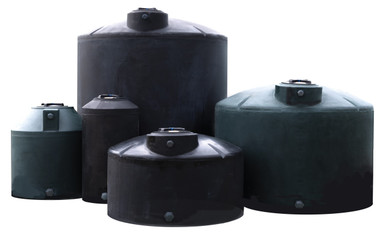
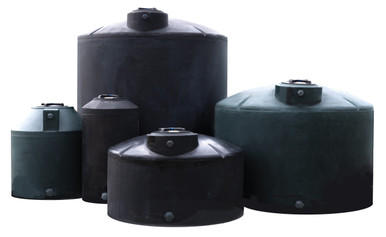
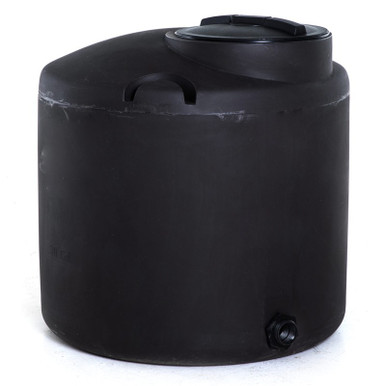
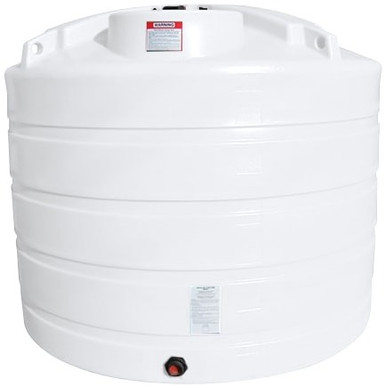
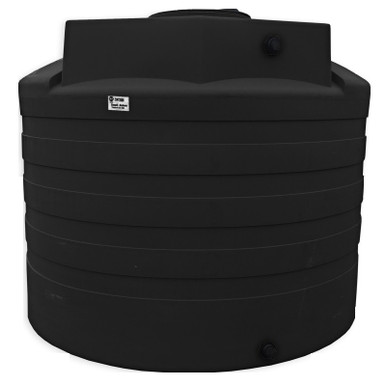
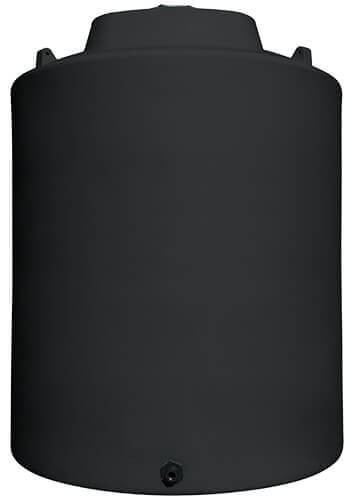
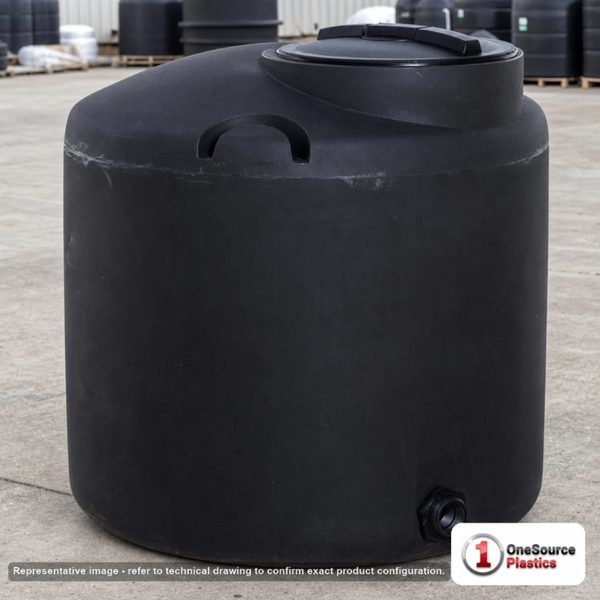
Two 2,500-gallon vertical storage tanks sit side-by-side on a yard pad. One measures 95 inches in diameter and 91 inches tall (Norwesco MPN 41524). The other measures 102 inches in diameter and 79 inches tall (Norwesco MPN 42040). Same nominal capacity. Same resin family. Different freight class envelope, different doorway clearance, different concrete-pad area, different lid-vent geometry, and a different price-per-gallon when freight gets quoted. Buyers who do not understand the cylinder-volume math behind those two numbers buy the wrong tank routinely. This guide walks the geometry so you can specify diameter intentionally instead of accidentally.
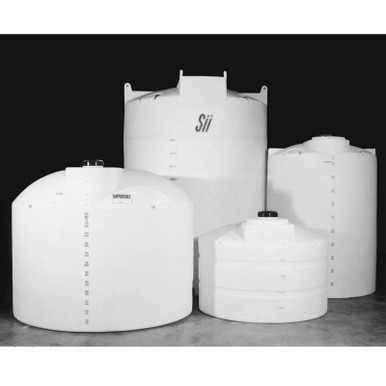
OneSource Plastics' commodity catalog includes both diameters because real installations have real constraints. A 95-inch-diameter tank fits through a standard 96-inch (8-foot) overhead doorway with the lid removed; a 102-inch tank does not. A 102-inch-diameter tank with a shorter sidewall draws lower wind moment than its taller 95-inch sister at the same gallons. A 102-inch tank delivers across an LTL flatbed with one fewer escort requirement than a 119-inch tank. None of these trade-offs appears in the gallon spec.
The Cylinder Volume Equation
A cylindrical vertical tank holds:
V (cubic inches) = pi * r^2 * h
where r is internal radius (half the diameter, minus wall thickness — typically 0.4 to 0.7 inches for HDPE rotomolded tanks per ASTM D1998 Section 6.4) and h is internal sidewall height. Convert cubic inches to U.S. liquid gallons by dividing by 231.
Two illustrative SKUs from the OneSource catalog:
- Norwesco MPN 41524: 2,500 gallon vertical, 95-inch outer diameter, 91-inch overall height, listed at $2,247.00. Shorter footprint, taller stack.
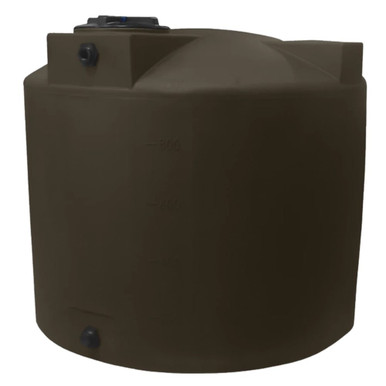
- Norwesco MPN 42040: 2,500 gallon vertical, 102-inch outer diameter, 79-inch overall height, listed at $1,990.00. Wider footprint, lower stack.
Both deliver 2,500 nominal gallons. The 102-inch wins on cost, on wind exposure, and on LTL shipping class. The 95-inch wins on pad area and on doorway fit. Same gallons, different engineering.
Diameter Drives Footprint and Pad Area
A 95-inch diameter tank requires a circular pad area of pi * (95/2)^2 = 7,088 square inches = 49.2 square feet. A 102-inch tank requires pi * (102/2)^2 = 8,171 square inches = 56.7 square feet. That is a 15% increase in pad area for the same nominal capacity.
For installations with limited pad space — utility yards, vault chambers, retrofit corners — the 95-inch SKU may be the only geometry that fits, even when the 102-inch is cheaper at list. ACI 318 (American Concrete Institute Building Code Requirements for Structural Concrete) governs the pad design; we cover this in detail in our tank foundation pad engineering pillar.
Diameter Drives Freight Class and Shipping Width
49 CFR 393.86 governs over-dimensional freight on U.S. interstates. Tanks under 102 inches outer diameter ride as standard freight on a 102-inch flatbed. Tanks above 102 inches require width-permit routing in most states, which adds 5-15 days to delivery and $400-1,500 in permit and escort costs.
This is the single biggest reason the U.S. plastic-tank industry standardized on 95-inch and 102-inch as the two dominant large-tank diameters: those are the maximum widths that ride without state permits or with minimal-permit routing on standard LTL. A 119-inch tank (5,000 gallons in some Norwesco and Snyder geometries) crosses into "wide load" territory in most jurisdictions.
For freight quoting, our Freight Cost Estimator walks the LTL ZIP-to-ZIP math; we cover the bulk-order freight breaks in our bulk-tank pricing pillar.
Diameter Drives Wind Load and Tie-Down Engineering
ASCE 7-22 (American Society of Civil Engineers Minimum Design Loads and Associated Criteria for Buildings and Other Structures) Chapter 29 governs wind loads on cylindrical tanks. The horizontal wind force scales with projected area (diameter * height) and the moment about the base scales with that force times half the height.
For a 2,500-gallon tank in a 130-mph design wind zone (most of coastal Florida, coastal Texas, coastal North Carolina):
- 95-inch diameter * 91-inch height = 8,645 square inches projected area
- 102-inch diameter * 79-inch height = 8,058 square inches projected area
The 102-inch tank presents 7% less wind area and a lower center of pressure (39.5 inches above pad vs 45.5 inches). In coastal hurricane zones, this translates to lower tie-down strap tension and smaller anchor bolts. We walk the calculations in our ASCE 7 wind-load engineering pillar and the hurricane-season prep in our hurricane tie-down pillar.
Diameter Drives Manhole and Operator-Access Geometry
A 16-inch lid (Norwesco MPN 63485, listed at $25.99) on a 95-inch tank gives an operator a 16-inch hole at the very top of a tank that is 91 inches tall. That is a 7-foot 7-inch reach down from the deck to the liquid surface at the bottom of an empty tank. A 22-inch lid on a 102-inch tank, where the tank is 12 inches shorter overall, gives a wider hole and shorter reach. For tanks that operators inspect or clean monthly, the wider/shorter geometry wins ergonomics. NFPA 350 (Guide for Safe Confined Space Entry and Work) defines the access requirements; we cover lid sizing in our decommissioning pillar and inspection cadence in our inspection SOP pillar.
Real-World Diameter Comparisons Across the Catalog
| Capacity | 95-inch SKU | 102-inch SKU | Geometry trade |
|---|---|---|---|
| 2,500 gal black | Norwesco 41524 ($2,247) 95"x91" | Norwesco 42040 ($1,990) 102"x79" | 102" saves $257; 7" lower profile |
| 2,500 gal white | Norwesco 40754W (95") | Norwesco 42382 ($2,700) 102"x79" | 102" wider footprint, shorter reach |
| 3,000 gal black | Norwesco 40635 ($2,375) 95" | Norwesco 42042 ($2,480) 102"x93" | 95" cheaper, taller silhouette |
| 3,000 gal white | Norwesco 40754 ($3,101) 95" | Norwesco 45246 ($2,910) 102"x93" | 102" $191 cheaper at this size |
| 3,000 gal cone-bottom HDPE | Snyder 8360000N43 ($5,299) 95" | Snyder 7410000N43 ($4,665) 102" | 102" $634 cheaper, cone same 30 deg |
| 5,000 gal black | Snyder 32382 ($5,707) 102"x159" | Norwesco 41375 ($4,899) 102"x152" | Both 102"; height differs 7" |
| 6,500 gal white | N/A at 95" | Norwesco 47618 ($9,699) 102"x196" | 102" max width before permit |
The pattern is consistent: at the 2,500-3,000 gallon class, the 102-inch SKU is usually $200-600 cheaper than the equivalent 95-inch tank because the lower aspect ratio (height/diameter) consumes less resin per gallon during rotomolding. The 95-inch SKU wins when doorway, pad area, or visual height limits force the trade.
Why Aspect Ratio Matters for Rotomolded Tank Cost
A rotomolded polyethylene tank is built by tumbling a hollow aluminum mold filled with PE pellets in a heated oven. Wall thickness must satisfy ASTM D1998 Section 6.4.1 design hoop stress (600 psi at 73F) plus a safety factor. Hoop stress is calculated as:
Sigma = (P * D) / (2 * t)
where P is hydrostatic pressure at the bottom (governed by liquid height and specific gravity), D is diameter, and t is wall thickness. Solving for t:
t = (P * D) / (2 * Sigma_allowable)
For a tall, narrow 95-inch tank holding 91 inches of water at 1.0 SG, bottom pressure is 91 * 0.0361 = 3.29 psi. For a short, wide 102-inch tank holding 79 inches of water at 1.0 SG, bottom pressure is only 79 * 0.0361 = 2.85 psi. The shorter tank has 13% lower bottom pressure, so wall thickness can be slightly thinner, so resin cost drops, so list price drops. This is why a wider/shorter tank often costs less than a narrower/taller tank at the same gallons.
For higher specific gravity service (urea, sulfuric acid, ferric chloride, calcium chloride brine), the bottom pressure scales linearly with SG and the wall thickness must increase proportionally. We cover this in our spec sheet engineering pillar and our specific gravity pillar.
Field-Fit Decision Framework
Run these four checks before you specify diameter:
1. Doorway and gate clearance
A 96-inch overhead doorway accepts a 95-inch tank with the lid removed (most lids add 6-12 inches to overall height but not width). A 102-inch tank requires a 108-inch (9-foot) doorway minimum. Most agricultural and industrial buildings are framed at 96, 108, 120, or 144 inches; field-measure before specifying.
2. Pad area and slab geometry
For new pad pours: 56.7 sq ft for a 102-inch tank vs 49.2 sq ft for a 95-inch. Add 6 inches of edge clearance on all sides (per ASTM D1998 Section 7 site recommendations) and the actual pad becomes 64-72 sq ft for a 102-inch tank vs 56-63 sq ft for a 95-inch. Concrete cost at $8-15 per square foot installed adds $80-150 difference per pad.
3. Wind zone and tie-down requirements
Per ASCE 7-22 Chapter 26-30, wind loads scale with projected area. In coastal hurricane zones (135 mph and above design wind speed), the lower-profile 102-inch tank reduces tie-down strap tension by 8-15% compared to the taller 95-inch sister at the same gallons. This translates to smaller anchor bolts and simpler engineered tie-down.
4. Doorway, ramp, and turn-radius routing for delivery
49 CFR 393.86 width regulation allows 102 inches without permit. Above that, state-by-state width-permit rules apply (Colorado RTD permits, Texas TxDOT oversize, California Caltrans transportation permits). The 102-inch SKU is the threshold at which interstate freight gets simple; we cover this in our loading dock and receiving site design pillar.
When the 95-inch Wins
The 95-inch diameter wins these scenarios:
- Standard 8-foot overhead doorway access required. 96-inch doorway will not accept a 102-inch tank.
- Existing concrete pad sized for ~50 sq ft tank. Cutting a wider pad is not in scope.
- Visual height not a constraint, but width is constrained by adjacent structure. Common in retrofit installations into existing buildings.
- Specific manufacturer / model required for parts compatibility with prior tanks, fittings, lids on site. Norwesco 40631 / 40635 / 41524 are dominant 95-inch installations going back 20+ years; replacement parts and lid rings stock match.
When the 102-inch Wins
- New pad pour, no width constraint. Lower aspect ratio drives lower cost per gallon.
- High-wind zone (above 130 mph design wind speed). Lower projected area, lower moment.
- Operator-access frequency high (monthly inspection, weekly cleaning). Shorter sidewall means shorter ladder and easier reach to bottom.
- Cone-bottom or chemical-feed-station configuration. Wider footprint accommodates the 30-degree cone geometry without excessive overall height.
The 119-inch and Beyond Question
For tanks above 6,500 gallons, the diameter typically jumps to 119 or 120 inches. This crosses the 102-inch CFR threshold and triggers oversize-load permitting. Norwesco MPN 47618 (6,502 gallon at 102-inch diameter, 196-inch height) is the largest 102-inch SKU in the commodity catalog; above that, you accept oversize freight or you go to multiple smaller tanks manifolded in parallel (covered in our multi-tank manifolding pillar).
Manufacturer Tolerance on Stated Diameter
Rotomolded tank diameter is not exact. ASTM D1998 Section 6.5 allows +/- 3% tolerance on outside diameter for tanks above 1,000 gallons. A "95-inch" tank may measure 92-98 inches in actual delivery; a "102-inch" tank may measure 99-105 inches. For doorway-clearance specifications, design with at least 6 inches of clearance margin to accommodate manufacturing tolerance and any imperfections in field measurement.
How OneSource Specifies
For inbound buyer questions on the 2,500-3,000 gallon vertical class, we quote the 102-inch SKU first because it is typically cheaper and more freight-friendly. We confirm doorway and pad geometry before final spec because the 95-inch SKU is non-substitutable when doorway clearance is the binding constraint. We never substitute one diameter for the other after order without explicit customer sign-off; the ergonomic and freight implications belong to the buyer.
Every list price quoted is BigCommerce list — LTL freight is quoted separately per ZIP via the Freight Estimator or by phone at 866-418-1777.
Internal Resources
- Spec Sheet Engineering Guide
- ASTM Specific Gravity Decoded
- Tank Foundation Pad Engineering
- ASCE 7 Wind Load Engineering
- Hurricane Season Tie-Down Engineering
- Loading Dock and Receiving Site Design
- Freight Cost Estimator
- Tank Sizing Calculator
Source Citations
- ASTM D1998 — Standard Specification for Polyethylene Upright Storage Tanks (Sections 6.4 design stress, 6.5 dimensional tolerance, 7 site recommendations)
- ASCE 7-22 — Minimum Design Loads and Associated Criteria for Buildings and Other Structures (Chapter 26-30 wind loads, Chapter 29 cylindrical structures)
- 49 CFR 393.86 — Federal Motor Carrier Safety Regulation, vehicle width
- ACI 318 — Building Code Requirements for Structural Concrete
- NFPA 350 — Guide for Safe Confined Space Entry and Work
- OneSource Plastics master catalog data, 2026-03-26 snapshot (9,419 products)
Recommended Tanks for This Guide
Live pricing, updated automatically · estimate freight to your ZIP.