Tank Procurement RFQ Template: 28-Item Spec Checklist for Industrial Buyers
The single biggest predictor of a smooth industrial tank purchase is not price, lead time, or vendor reputation. It is whether the buyer issued a complete request-for-quotation that pinned down all 28 specification dimensions before the supplier responded. RFQs that miss critical fields force suppliers into assumption-driven quoting; the gap between assumed and actual then surfaces at install, commissioning, or worse, at first chemistry charge. This guide gives you the field-tested 28-item checklist OneSource uses internally when we field RFQs from procurement teams, plus the standards citations that justify each line.
If you are procuring polyethylene rotomolded tanks (HDPE or XLPE) from any of the five major North American manufacturers we carry — Norwesco, Snyder Industries, Chem-Tainer, Enduraplas, or Bushman — this checklist applies as written. For steel, FRP, and stainless tank procurement the chemistry, temperature, and pressure fields still apply; the material-specific fields (resin SG rating, ASTM D1998 design hoop stress) get swapped for ASME, AWS, or filament-winding equivalents.
Why 28 Items, Not 10
The shorter checklists circulating online (capacity, material, color, fittings, freight) cover roughly 35% of the spec surface. The remaining 65% — the items that determine whether the tank survives 5 years vs 25 years in service — get assumed by suppliers. Those assumptions are inherited from the most common configuration in the supplier's order book. If you are not the most common configuration, the assumed spec is wrong for you.
Examples of failure modes traced to incomplete RFQs we have seen:
- Customer received 1.5 SG HDPE tank for 1.6 SG fertilizer service. Tank rated by ASTM D1998 design hoop stress envelope was stressed beyond 600 psi at 73F. Bulged within 14 months.
- Customer received natural-color (translucent white) HDPE tank for outdoor potable water. Algae bloom within 6 weeks. Dark or opaque tank required for outdoor potable.
- Customer received tank with 2-inch outlet for an application that required gravity drain in under 8 minutes. Drain time was 24 minutes; production schedule blown.
- Customer received tank shipped on common-carrier LTL when the application was a 60-mile final-mile delivery to a remote agricultural site with no forklift. Driver refused; restocking fees applied.
Every failure above maps to a missing RFQ line item. The 28-item template eliminates them all.
The 28-Item RFQ Spec Checklist
Block 1: Application Definition (Items 1-5)
- Stored medium (chemical name + concentration + temperature range): "12.5% sodium hypochlorite at 50-95F ambient." Not "bleach." Concentration drives chemistry-rated resin selection; temperature range drives thermal-derating math.
- Specific gravity (SG): Maximum SG of stored medium. ASTM D1998 design envelope is keyed to SG; 1.5 SG standard, 1.7 SG heavy-wall, 1.9 SG XLPE only. Do not let supplier guess.
- Application class: water, agricultural, fertilizer, light chemical, aggressive chemical, septic, hauling, fuel/petroleum, food-grade, pharmaceutical. Drives resin selection plus regulatory listing requirements (NSF/ANSI 61, 3-A, FDA).
- Indoor or outdoor: Outdoor mandates UV stabilization (ASTM D2565 / D4329). Indoor opens up natural / translucent for level visibility. Climate-zone data feeds insulation decisions; see our cold-climate engineering guide.
- Service life expectation: 5 years, 10 years, 20+ years. Drives choice between HDPE (lower capital, shorter life on aggressive chemistry) vs XLPE (higher capital, longer life on aggressive chemistry). 20-year TCO modeling covered in our material selection guide.
Block 2: Geometry and Capacity (Items 6-10)
- Nominal capacity (gallons or liters): The advertised gallonage. Norwesco MPN 41464 = 100 gallon. Norwesco MPN 44968 = 1295 gallon. Snyder MPN 7000000C37 = 6000 gallon HDPE vertical. Reference SKUs from our master catalog (9,419 products) anchor your spec.
- Working capacity (gallons or liters): Not the same as nominal. Working capacity excludes ullage / dead volume below outlet height. For agitator service, working capacity excludes the cone or rounded bottom.
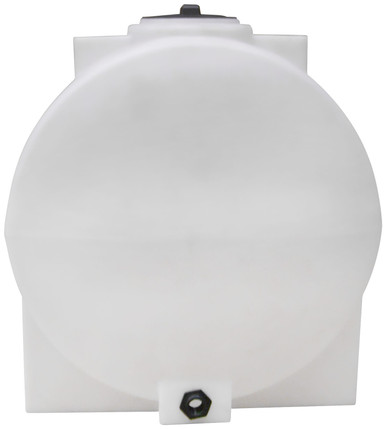
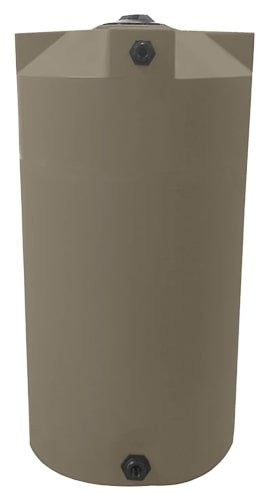
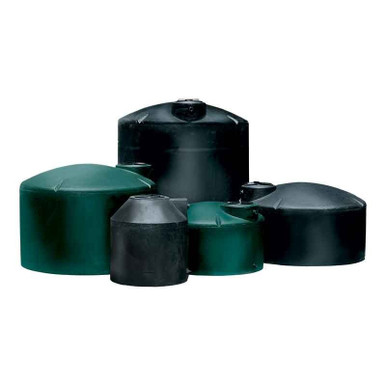
- Form factor: vertical, horizontal leg, doorway, cone bottom, dished bottom, low-profile, elliptical leg, double-wall containment. Each form factor has dimensional and freight implications.
- Maximum dimensions for site fit: diameter, height, doorway clearance. A 102-inch-diameter tank cannot enter a 96-inch doorway. Specify the doorway / overhead constraints in the RFQ; let the supplier match form factor.
- Cone or dish geometry (if applicable): 15, 30, 45, 60-degree cone bottom on cone tanks. Dish radius on dished bottoms. Drives drain geometry and stand requirement (see our cone stand decision tree).
Block 3: Material and Chemistry Envelope (Items 11-15)
- Resin family: HDPE (cost, recyclable, 100-120F max, 1.5-1.7 SG), XLPE (premium, 140F max, 1.9 SG, ESCR-rated per ASTM D1693), modified polyolefin specialty resins (Snyder 880046 sulfuric acid, etc.). See our resin decision tree.
- Color: black (UV plus visual privacy), white (potable, lowest internal-temperature gain), green (water-storage compliance in California per CA Health and Safety Code Section 116875 et seq. as referenced in CA Title 22), natural / translucent (level visibility, indoor only), beige (rainwater specialty), dark green (rainwater outdoor). Snyder MPN 1810000N30 ships in white; Norwesco MPN 43878 is California-compliant green.
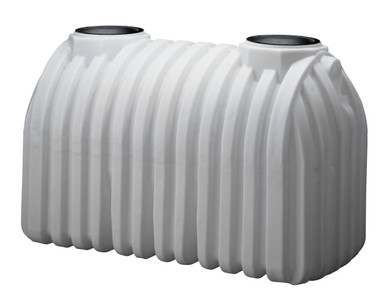
- Compliance / certifications required: NSF/ANSI 61 (potable water), NSF/ANSI 372 (lead-free), FDA 21 CFR 177.1520 (food contact polyolefin), 3-A Sanitary Standards (dairy), IAPMO listing (septic — Norwesco MPN 43511 / 43512 are IAPMO certified two-compartment septic tanks).
- Operating temperature range: minimum and maximum continuous, plus excursion limits. Polyethylene loses 50% of its design hoop stress at 140F; ASTM D1998 derating curves are non-negotiable.
- Aggressive-chemistry exposure history: if the tank is replacing a failed predecessor, supply the failure root-cause. Wrong specification beats the same specification 80% of the time on aggressive service.
Block 4: Fittings, Outlets, and Penetrations (Items 16-20)
- Inlet specification: size (typically 2-inch or 4-inch on rotomolded tanks), location (top, side), thread type (NPT, BSP), height above bottom on side inlets.
- Outlet specification: size, location, thread type, sealing class. Drain time is a function of outlet diameter and head; see our drain-time engineering guide. 1.5-inch vs 2-inch vs 3-inch outlet drives 4x to 9x drain-time differences on the same tank.
- Bulkhead fitting style: standard duty (Norwesco MPN 63481, 2-inch) vs heavy duty (Norwesco MPN 63683, 2-inch heavy-duty), gasket material (EPDM Norwesco MPN 34100053 4-inch PP threaded, Viton MPN 34700239 3-inch PVC SxT for chemistry compatibility). 3-inch bulkheads include MPN 62299 (3-inch poly), MPN TF300 (3-inch polypropylene), MPN F3BH (Ronco 3-inch).
- Vent specification: atmospheric vent, pressure-vacuum vent (for vapor-control service), goose-neck vent (rain protection), screened vent (insect protection). U-vent options include Snyder MPN 34700259 (EPDM gasket) and MPN 34700263 (Viton).
- Lid / manway specification: diameter (16-inch standard, 22-inch heavy access, 24-inch confined-space-entry compliant per OSHA 29 CFR 1910.146), gasket material, locking, vented or non-vented.
Block 5: Mechanical Loads and Site Conditions (Items 21-24)
- Wind load zone: ASCE 7-22 wind-speed map for site location. Drives anchor-bolt sizing and foundation pad design. coastal 150+ mph zones require engineered tie-down beyond standard bolting.
- Seismic zone: ASCE 7-22 seismic-design category. California, Pacific Northwest, and parts of Alaska require seismic anchor calculations.
- Snow load (for top-loaded sites): ASCE 7-22 snow-load map. Roof tank lids on tanks rated for snow service have higher dome thickness and reinforced manways.
- Foundation type: sand pad (per ASTM D1998 Section 7), compacted gravel, concrete pad, structural steel platform, elevated stand. Cone-bottom tanks always require a stand; see our foundation pad guide.
Block 6: Logistics and Documentation (Items 25-28)
- Delivery location: full street address, ZIP, dock or no-dock, forklift availability, access road constraints (LTL trailers are 53-foot; rural sites may need flatbed or hot-shot). Freight is quoted separately per ZIP via the Freight Estimator or by phone at 866-418-1777.
- Delivery method: common-carrier LTL, dedicated truck, flatbed, hot-shot, customer pickup. Larger tanks (above 1,500 gallons) often require flatbed.
- Documentation required at delivery: Material Test Report (MTR) on resin batch, NSF/ANSI 61 certificate, IAPMO certificate, third-party test reports for chemistry (ASTM D543 immersion data), warranty document. OEMs ship most documents on request — specify in RFQ.
- Lead-time and budget targets: required-on-site date, hard budget ceiling, payment terms (net-30, net-60, prepay-discount). Polyethylene rotomolded ships 2-4 weeks from regional warehouses; specialty fabrications 6-16 weeks.
RFQ Template: Copy / Paste / Send
| Item | Field | Your Spec |
|---|---|---|
| 1 | Stored medium (name + concentration + temp) | _______________ |
| 2 | Maximum specific gravity | _______________ |
| 3 | Application class | _______________ |
| 4 | Indoor / outdoor | _______________ |
| 5 | Service life expectation | _______________ |
| 6 | Nominal capacity | _______________ |
| 7 | Working capacity | _______________ |
| 8 | Form factor | _______________ |
| 9 | Site dimensional constraints | _______________ |
| 10 | Cone / dish geometry | _______________ |
| 11 | Resin family | _______________ |
| 12 | Color | _______________ |
| 13 | Compliance / certifications | _______________ |
| 14 | Operating temperature range | _______________ |
| 15 | Predecessor failure history | _______________ |
| 16 | Inlet (size, location, thread) | _______________ |
| 17 | Outlet (size, location, thread) | _______________ |
| 18 | Bulkhead style + gasket | _______________ |
| 19 | Vent specification | _______________ |
| 20 | Lid / manway | _______________ |
| 21 | Wind load zone (ASCE 7-22) | _______________ |
| 22 | Seismic zone | _______________ |
| 23 | Snow load | _______________ |
| 24 | Foundation type | _______________ |
| 25 | Delivery location | _______________ |
| 26 | Delivery method | _______________ |
| 27 | Documentation required | _______________ |
| 28 | Lead-time + budget | _______________ |
Worked RFQ Example: 1,500-Gallon Outdoor Sodium Hypochlorite Service
To show the template in action, here is a fully populated RFQ for a representative water-treatment plant procurement scenario.
- Item 1: 12.5% sodium hypochlorite, 35-105F ambient.
- Item 2: SG 1.18.
- Item 3: Aggressive chemical (oxidizer).
- Item 4: Outdoor.
- Item 5: 15-year minimum service life.
- Item 6: 1,500 gallons nominal.
- Item 7: 1,400 gallons working (5-inch ullage).
- Item 8: Vertical flat-bottom.
- Item 9: 96-inch diameter max, 144-inch height max.
- Item 10: N/A (flat bottom).
- Item 11: XLPE (cross-linked polyethylene). HDPE excluded by oxidizer service-life requirement.
- Item 12: Black (UV + algae prevention).
- Item 13: ASTM D1998 compliant; manufacturer warranty document.
- Item 14: 35-105F ambient, 95F service maximum.
- Item 15: Predecessor was 1.5 SG HDPE, 4-year life — replacing per scheduled refresh.
- Item 16: 2-inch top inlet, NPT female threaded, with PVC fill-pipe.
- Item 17: 2-inch side outlet at 6 inches from bottom, 2-inch bulkhead with Viton gasket (Norwesco MPN 63683 heavy-duty equivalent).
- Item 18: Heavy-duty bulkhead, Viton gasket. Reference Snyder MPN 34700239 3-inch PVC SxT Viton class.
- Item 19: 2-inch atmospheric vent, screened.
- Item 20: 16-inch hinged manway with EPDM gasket.
- Item 21: ASCE 7-22 wind zone 110 mph (inland Texas).
- Item 22: ASCE 7-22 SDC B (low seismic).
- Item 23: 5 psf design (low snow load).
- Item 24: 6-inch sand pad on compacted base per ASTM D1998 Section 7.
- Item 25: Site delivery to ZIP 78201, dock-high warehouse, forklift available.
- Item 26: Common-carrier LTL.
- Item 27: NSF/ANSI 61 certificate (carry-over from prior plant standard), MTR, manufacturer warranty.
- Item 28: Required on-site within 5 weeks. Budget ceiling $4,200 list (freight quoted separately).
This RFQ leaves zero ambiguity. The supplier can quote a specific SKU with exact freight per ZIP, lead time confirmed against current production schedule, and the customer can compare quotes apples-to-apples across Snyder, Norwesco, and Chem-Tainer.
What Changes for Specialty / Custom Fabrication
The 28-item template covers rotomolded polyethylene tanks comprehensively. For steel, FRP, stainless, or other specialty fabrications, additional items apply:
- Pressure rating (ASME Section VIII Division 1 if pressure-rated).
- Welding code compliance (AWS D1.1 carbon steel, AWS D1.6 stainless, ASME Section IX certified welder).
- Interior coating system (epoxy, phenolic, glass-flake, specialty linings).
- Hydro-test certification (ASME Section VIII paragraph UG-99 or equivalent).
- NDE / NDT requirements (radiographic, ultrasonic, dye penetrant per ASME Section V).
- Surface finish (Ra value for sanitary stainless per 3-A 63-04).
- Insulation system (R-value, jacketing material, vapor barrier).
For custom fabrication RFQs, route through our Specialty & Metal Fabrication hub. Our specialty team handles the additional spec sheets and qualified-vendor matching.
Common RFQ Pitfalls
Pitfall 1: "Just like the old one"
Pulling the part number from the predecessor and re-ordering. This re-buys the same wrong specification if the original was wrong, and ignores improvements in available product. Always re-spec from the application, even if the old part number is on hand.
Pitfall 2: Specifying brand instead of spec
"Quote a Norwesco 1500" lets the supplier pick the cheapest Norwesco variant that hits 1500 gallons. May or may not match your chemistry, color, fitting layout. Spec the application; let the supplier match the SKU.
Pitfall 3: Skipping the freight conversation
Freight on tanks 1,500-5,000 gallons can run 8-25% of tank cost. RFQs that omit delivery location and method get back ex-warehouse pricing — then the buyer is surprised by the freight quote at PO stage. Always include item 25-26.
Pitfall 4: Treating "lead time" as a single number
Lead time is two numbers: production lead time (manufacturer queue) and transit lead time (warehouse to site). On polyethylene the production queue is typically 1-3 weeks at major manufacturers; transit adds 3-10 days depending on origin and destination.
Pitfall 5: Ignoring documentation until delivery
If your plant requires NSF/ANSI 61, MTR, or other certifications at receiving, specify in the RFQ at item 27. Manufacturers can include the documentation packet at no extra charge; chasing it post-delivery causes 2-4 week delays in commissioning.
RFQ Cycle Time Optimization
Customers who use the 28-item template see the following cycle-time improvements vs ad-hoc RFQs:
- Time from RFQ issue to first quote: 2-3 days vs 5-10 days (suppliers respond faster when spec is complete).
- Quote revisions: 1-2 vs 4-6 (fewer back-and-forth clarification rounds).
- Apples-to-apples comparison: enabled vs requires normalization (suppliers quote the same scope when spec is complete).
- Change orders post-PO: under 5% vs 15-25% (assumed-spec mismatches surface during install).
How OneSource Handles Inbound RFQs
If your RFQ has fewer than 28 items, we send back a clarification questionnaire targeted at the missing fields before quoting. We do not assume our way past missing spec; the cost of an assumption mismatch on chemistry, SG, or freight class is paid by you, not us, and we are not in the business of making that trade.
If your RFQ has all 28 items, expect a same-day or next-business-day quote with specific SKU recommendation, list price (BC catalog), freight estimate to your ZIP via the Freight Estimator, lead time from current manufacturer schedule, and any compliance-document availability flags. List price is BigCommerce list — LTL freight is quoted separately per ZIP via the Freight Estimator or by phone at 866-418-1777.
Internal Resources
- Tank Material Selection: HDPE vs XLPE vs Steel vs FRP
- Polyethylene Resin Decision Tree
- Cone-Bottom Drain Time Engineering
- Foundation Pad Engineering
- Chemical Compatibility Database (309 chemicals)
- Specialty & Metal Fabrication Hub
- Freight Cost Estimator
Source Citations
- ASTM D1998 — Standard Specification for Polyethylene Upright Storage Tanks (Section 6.4.1 design hoop stress; Section 7 foundation requirements).
- ASTM D1693 — Standard Test Method for Environmental Stress-Cracking of Ethylene Plastics.
- ASTM D2565 — Standard Practice for Xenon-Arc Exposure of Plastics Intended for Outdoor Applications.
- ASTM D4329 — Standard Practice for Fluorescent Ultraviolet (UV) Lamp Apparatus Exposure of Plastics.
- ASTM D543 — Standard Practices for Evaluating the Resistance of Plastics to Chemical Reagents.
- NSF/ANSI 61 — Drinking Water System Components: Health Effects.
- NSF/ANSI 372 — Drinking Water System Components: Lead Content.
- FDA 21 CFR 177.1520 — Olefin polymers (food-contact polyolefin).
- 3-A Sanitary Standards 63-04 — Sanitary Fittings.
- ASCE 7-22 — Minimum Design Loads and Associated Criteria for Buildings and Other Structures.
- ASME Boiler and Pressure Vessel Code Section VIII Division 1; Section V (NDE); Section IX (Welding).
- AWS D1.1 (carbon steel) and AWS D1.6 (stainless steel) — Structural Welding Codes.
- OSHA 29 CFR 1910.146 — Permit-Required Confined Spaces.
- California Health and Safety Code Section 116875 (water tank coloration / lead-free plumbing reference framework).
- 49 CFR 178.500 — Non-bulk Performance-Oriented Packaging Standards (for portable transport).
- OneSource Plastics master catalog data, 2026-03-26 snapshot (9,419 products).
Recommended Tanks for This Guide
Live pricing, updated automatically · estimate freight to your ZIP.