
Lawn & Garden Tanks: Applicators, Rainwater Catchment, Fertilizer Mix
Lawn & Garden Tanks — Applicators, Rainwater Catchment, Fertilizer Mix
OneSource Plastics supplies the plastic tank inventory that landscape contractors, lawn-care operators, organic growers, and serious home gardeners use to mix, store, and apply liquid amendments. Five OEM brands — Norwesco, Snyder Industries, Chem-Tainer, Enduraplas, and Bushman — cover the saddle-tank applicators that ride in a service-truck bed, the slimline and low-profile rainwater catchment tanks that fit against a building wall, the cone-bottom inductor tanks that mix dry concentrate into solution, and the vertical water-storage tanks that buffer drip-irrigation systems through dry weeks.
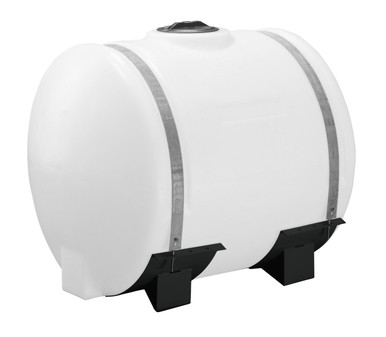
Featured: Norwesco 150 Gallon Plastic Applicator Saddle Tank in White — the 150-gallon saddle tank is the most-specified applicator for landscape lawn-care routes, fertigation pre-mix, and herbicide spot-treat work.
1. Lawn and garden tank applications — an overview
Liquid amendment is the operating core of any serious landscape, lawn-care, or production garden program. Liquid fertilizer (urea-ammonium-nitrate solution, calcium-nitrate plus potassium-thiosulfate fertigation blends, fish-emulsion and kelp-extract organic amendments) carries faster nutrient uptake than dry-spread granular and avoids the burning risk of over-application. Liquid herbicide (glyphosate, 2,4-D, dicamba per label) controls weeds inside ornamental beds and along fence lines without disturbing root zones. Liquid pesticide and fungicide rotation keeps turfgrass and high-value ornamentals on a preventive schedule. Captured rainwater from gutter downspouts feeds drip irrigation and reduces municipal-water demand by 30 to 60 percent through a typical growing season.
Each duty has a distinct tank choice. Applicator saddle tanks (50 to 300 gallons) sit in the bed of a service truck, plumbed to a 12-volt diaphragm pump and a hand-wand or boom. Cone-bottom inductor tanks (15 to 60 gallons) hold the concentrate-into-water dissolution step before transfer to the applicator. Slimline and low-profile rainwater catchment tanks (130 to 5,000 gallons) sit against a building wall or under a deck on a tight residential or commercial footprint. Vertical water-storage tanks (500 to 2,500 gallons) buffer the drip-irrigation supply through hot weeks and feed the daily fertigation cycle.
The pages below cover the spec discipline (applicator versus storage, indoor versus UV-rated outdoor, food-grade versus standard), the federal and state regulatory framework (USDA National Organic Program, EPA pesticide labeling, AAPFCO state fertilizer registration model, California Proposition 65), and the chemistry compatibility intelligence that keeps a polyethylene tank inside the manufacturer warranty envelope when it holds an aggressive liquid amendment.
2. Why OneSource for lawn and garden tanks
Five OEM brands, one catalog. Norwesco is the volume leader for applicator saddle tanks (50 to 300 gallons), free-standing skid tanks, and inductor tanks. Snyder Industries fills the vertical water-storage range and the slimline configurations. Chem-Tainer covers cone-bottom batch tanks and small open-top mixing vessels. Enduraplas adds the transport tank with integrated steel frame for landscape-fleet relocation between job sites. Bushman supplies the rainwater-harvesting and slimline tanks that fit against residential walls and on tight commercial footprints. We carry every geometry and walk the operator through the trade-offs before quoting.
UV-rated for outdoor service. Lawn and garden tanks live outdoors year-round in nearly every application. Polyethylene resin formulated with a UV stabilizer (every Norwesco, Snyder, and Bushman water-storage SKU on this catalog ships UV-stabilized) holds wall integrity through 10-plus years of direct sun exposure. Black tanks block UV and inhibit algae growth in stored water; dark green and mocha tanks blend into landscape beds and rain gardens; white and natural-translucent tanks allow the operator to gauge fill level visually but pass UV through the wall and accelerate biological growth in still water. Specifying the right color is part of the spec, not a cosmetic afterthought.
NSF/ANSI 61 potable rating where it matters. Tanks rated for potable water service (drinking water from rainwater catchment after appropriate disinfection treatment, residential water-storage tanks downstream of a well) are produced from FDA-compliant resin and carry the NSF/ANSI 61 designation. Tanks rated only for irrigation or non-potable storage are not labeled for drinking water. We label this distinction on every product page and decline to misrepresent a non-potable tank as potable to close a sale.
Pricing transparency. Every product page lists a current price before freight. LTL freight to the destination ZIP is quoted separately through the freight cost estimator or by phone at 866-418-1777. List prices on this site exclude freight; nothing on this catalog ships freight-included by default. Landscape-fleet accounts that order multiple applicator tanks at once benefit from quote-desk freight consolidation.
3. Tank solutions for lawn and garden
The product strip below pulls live inventory from our lawn-and-garden catalog — saddle-tank applicators in the 50- to 300-gallon range, cone-bottom inductor tanks for concentrate dissolution, slimline and low-profile rainwater catchment configurations, and the vertical water-storage tanks that buffer the drip-irrigation supply.
Need a specific size or fitting layout? Use our tank sizing calculator to translate seasonal water demand or fertigation cadence into the right capacity, or open a custom-fabrication request for non-stock geometries such as integrated boom mounts, dual-compartment applicator skids, or tight-footprint catchment vessels.
4. Chemical compatibility intelligence for lawn and garden chemistries
Most lawn and garden tanks hold water, dilute fertilizer solution, or labeled liquid pesticide at ambient temperature, well inside the polyethylene compatibility envelope. The chemistries below are the most common ones to spec a tank against. Each pillar covers the resin compatibility matrix, the application-rate context, and the OSHA / EPA hazard-communication framework that the licensed applicator works inside.
The full chemical compatibility database indexes 500+ chemistries; an organic operator running custom amendments or a turf manager rotating through a multi-product fungicide schedule should cross-check every chemistry on the chemistry pillar before refilling a polyethylene tank.
5. Regulatory considerations for lawn and garden tank use
Federal and state regulations governing liquid amendment storage and application rest on a defined set of rules. The licensed applicator and the certified landscape contractor should treat each rule as a checklist item during program design.
40 CFR 152 — EPA pesticide registration framework. Every pesticide product (herbicide, insecticide, fungicide, miticide) sold in the United States must be registered with EPA under FIFRA and carry an EPA registration number on the label. The label is the law: applicators must follow the application rate, the personal protective equipment, the re-entry interval, the buffer zone, and the storage requirements as written on the label. Storing the product in a tank not compatible with the formulation can void the manufacturer warranty and create label-violation liability.
40 CFR 156 — pesticide labeling requirements (worker protection). The Worker Protection Standard sets the personal protective equipment, the re-entry interval, and the application-equipment requirements for agricultural pesticide use. Landscape and turf-care applicators working on commercial sites should confirm whether the WPS applies to their operation and follow the appropriate equipment-cleaning protocol after each application; rinse water from a contaminated applicator tank is itself a pesticide-bearing waste and must be managed under the label.
7 CFR 205 — USDA National Organic Program. Operators marketing produce or landscape-services as organic must work from the National List of allowed substances (7 CFR 205.601 for crop production). Liquid amendments (fish emulsion, kelp extract, compost tea, plant-derived foliar feeds) must trace to a list-allowed formulation. Storing an organic input in a tank that previously held a synthetic chemistry can disqualify the input; segregating tanks by program (organic versus conventional) is the standard practice for any operator running both.
AAPFCO Model State Fertilizer Bill. Most states adopt the Association of American Plant Food Control Officials (AAPFCO) model bill in some form: liquid and dry fertilizers sold in the state must be registered with the state department of agriculture, the label must list the guaranteed analysis (N-P-K plus secondary and micronutrients), and the formulation must meet the registered label. Operators blending custom liquid fertilizer for sale must verify state registration; in-house blending for the operator's own use is typically exempt but should be confirmed against the state regulation. State-specific fertilizer rules are summarized on our state regulatory pages linked from the state regulations index.
California Proposition 65. Operators selling lawn and garden products into California or applying chemistries listed under Proposition 65 (a California state right-to-know rule, Cal. Health & Safety Code section 25249.5 et seq.) must provide a clear and reasonable warning about any listed chemical present at exposure levels above the safe-harbor threshold. Common Proposition 65 listings in the lawn and garden category include certain herbicide active ingredients and lead-bearing brass components; the California regulatory pillar in our state index covers the warning-label requirements and safe-harbor threshold framework for landscape and lawn-care operators serving California sites.
State and local stormwater overlays. Several states (California, Washington, Oregon, Maryland) impose container-rinsate management rules on commercial pesticide and fertilizer applicators that go beyond the federal label. The licensed applicator should confirm the state-specific rinsate-handling and tank-washing rules before commissioning a new applicator tank fleet.
6. Field handling and procurement for lawn and garden operators
Sizing the applicator fleet. Liquid lawn-care application typically runs at 1 to 4 gallons of finished spray per 1,000 square feet of turf, depending on the formulation and the equipment. A 50-stop residential lawn-care route at an average 8,000-square-foot lawn and 2 gallons per 1,000 square feet consumes roughly 800 gallons per route day — a 300-gallon saddle tank requires three refill stops, while a 525-gallon doorway-style tank or a pair of 300-gallon saddle tanks on a tandem service truck bed covers the day with one refill. Production landscape and athletic-field operations sizing a fertigation injection skid typically size the storage buffer at three to seven days of peak-season demand.
Cone-bottom inductors for clean dissolution. Dry concentrate (granular fertilizer, water-soluble powder formulations, dry herbicide concentrate) dissolves cleanly in a cone-bottom inductor tank: the cone geometry routes settled solids to the discharge fitting and prevents the heel-of-the-tank caking that dish-bottom and flat-bottom tanks accumulate over a season. The 15- to 60-gallon Norwesco inductor configurations are the right choice for daily concentrate-into-water dissolution; transfer pumps the finished solution to the applicator tank.
Rainwater catchment sizing. Captured rainwater volume from a roof equals approximately 0.62 gallons per square foot of roof per inch of rainfall. A 1,500-square-foot roof in a region averaging 36 inches of annual rainfall captures roughly 33,500 gallons per year — a 1,000- to 1,500-gallon Bushman vertical or slimline catchment tank with a first-flush diverter and a fine-mesh leaf screen sizes the buffer for typical residential or small-commercial drip irrigation. Site-specific rainfall data and roof area drive the right size.
Procurement cadence and pricing. Standard lawn and garden plastic tanks ship from manufacturer warehouses in two to four weeks for stock SKUs; specialty colors and the larger 5,000-gallon catchment configurations run four to eight weeks. List prices on this site reflect the current OEM published pricing before LTL freight; freight to the destination ZIP is quoted separately through the freight estimator or by phone. Landscape-fleet accounts ordering multiple applicator tanks at once benefit from quote-desk freight consolidation.
Five-brand discipline. Norwesco, Snyder Industries, Chem-Tainer, Enduraplas, and Bushman cover the full domestic lawn and garden tank market. We do not pad the catalog with off-brand imports or no-name secondary suppliers. The five-brand discipline keeps the spec conversation grounded in published technical-bulletin data and keeps the warranty and replacement-parts pipeline intact.
7. Custom fabrication when stock will not fit
Specialty lawn and garden geometries route through our specialty & metal fabrication network. Typical custom builds: integrated boom-mount applicator skids with engineered pump packages, dual-compartment tanks that segregate herbicide from fertilizer in a single footprint, custom rainwater catchment vessels for non-standard roof footprints, and below-grade or partially buried catchment tanks for sites that need invisible storage. Lead times run six to twelve weeks depending on complexity; the quote desk runs the spec dialogue with the fabricator and stays involved through commissioning.
8. Next steps for the lawn and garden operator
Quote the freight to the destination. Every product page lists a price before freight. Get the LTL freight quote to your ZIP through the freight cost estimator, or call 866-418-1777 for a phone quote with the SKU plus destination ZIP plus dock-or-residential delivery indication.
Match the chemistry to the resin. Use the chemical-to-tank recommender to filter by amendment chemistry plus capacity; the tool returns the ranked stock options with current pricing.
Open a custom request. If the spec falls outside the stock-tank envelope, the custom-fabrication request form routes the project to the right shop and the quote desk follows up the same business day.