
Pool & Aquatic Facility Tanks: Sanitizer Storage, Refill, Brine
Pool & Aquatic Facility Tanks — Sanitizer Bulk Storage, Refill Water, Brine
OneSource Plastics supplies the plastic tank inventory that commercial pool operators, aquatic-recreation facilities, hotel and HOA pools, and saltwater-pool installations use to handle the three liquid streams every pool runs through: sanitizer bulk storage (sodium hypochlorite at 12.5 percent or calcium hypochlorite slurry as the primary disinfection chemistry), refill water for evaporation makeup and seasonal fill, and salt brine for saltwater chlorine generators. Five OEM brands — Norwesco, Snyder Industries, Chem-Tainer, Enduraplas, and Bushman — cover the chlorine-rated double-wall vertical tanks, the bulk water-storage vessels, the brine tanks for saltwater systems, and the smaller day tanks for chlorine dosing skids.
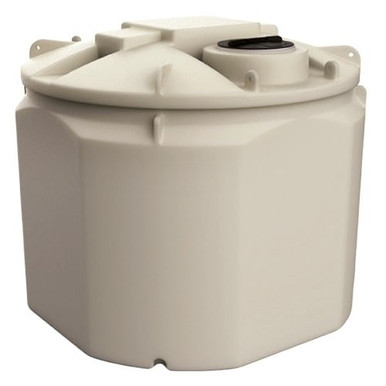
Featured: Snyder 1500 Gallon HDLPE Vertical Double Wall Opaque Sodium Hypochlorite Storage Tank — the 1,500-gallon double-wall opaque vertical configuration is engineered specifically for sodium-hypochlorite bulk storage at the typical commercial pool dosing skid.
1. Pool and aquatic facility tank applications — an overview
A modern commercial pool or aquatic-recreation facility relies on multiple plastic tanks running different duties at the same time. The sanitizer bulk tank holds 12.5 percent sodium hypochlorite (the standard commercial pool disinfectant in liquid form) at the dosing skid, sized for one to four weeks of consumption between deliveries to keep the chlorine residual stable through peak bather-load events. Where calcium hypochlorite slurry feed is the disinfection method, a smaller mixing-and-feed tank holds the slurry between additions. The pH adjustment tank holds carbon dioxide-injected water (where pH-down is the chemistry of choice) or muriatic-acid bulk for pH suppression. The salt brine tank, present at any saltwater-pool installation, holds saturated sodium-chloride brine that feeds the salt cell for in-line chlorine generation. The bulk refill water tank covers seasonal fill and evaporation makeup at facilities where the municipal-water connection cannot keep up with peak demand.
Each duty has a distinct tank choice. Sodium-hypochlorite storage tanks must carry the chlorine-rated UV-stabilized opaque-resin specification (the Snyder UV-stabilized HDLPE line and the Captor double-wall UV configurations are engineered for this duty); plain HDPE tanks degrade in chlorine service through both UV embrittlement and oxidative attack on the resin, and using a non-chlorine-rated tank for hypochlorite voids the warranty. Refill water tanks run as standard NSF/ANSI 61 vertical water storage. Brine tanks for saltwater systems handle clean food-grade salt brine in standard HDPE.
The pages below cover the spec discipline (chlorine-rated double-wall versus single-wall, NSF/ANSI 61 for refill water, opaque resin selection for sanitizer service), the federal and state regulatory framework (CDC Model Aquatic Health Code, EPA FIFRA registration of the sanitizer chemistries, state-level pool-safety acts), and the chemistry compatibility intelligence that keeps a polyethylene tank inside the manufacturer warranty envelope when it holds an oxidizing sanitizer.
2. Why OneSource for pool and aquatic facility tanks
Five OEM brands, one catalog. Snyder Industries fills the chlorine-rated double-wall and single-wall vertical tank range from 35 to 5,000 gallons; the UV-stabilized HDLPE and Captor double-wall lines are engineered specifically for sodium-hypochlorite service at commercial pool dosing skids. Norwesco covers the bulk water-storage vertical tanks for refill and evaporation makeup. Chem-Tainer fills the brine-tank configurations for saltwater-pool systems and smaller chemical day tanks. Enduraplas adds vertical water tanks for residential and small-commercial pool service. Bushman supplies vertical water-storage and rainwater-catchment tanks for facilities pursuing water-conservation credit. We carry every geometry and walk the operator through the trade-offs before quoting.
Chlorine-rated UV-stabilized opaque resin. Sodium-hypochlorite (the primary commercial pool sanitizer) attacks polyethylene through oxidative degradation accelerated by sunlight and elevated storage temperature. Tanks rated for hypochlorite service are produced from UV-stabilized opaque resin (HDLPE or XLPE depending on storage temperature and concentration) with a 1.9 specific-gravity rating; the Snyder Captor double-wall and the Snyder HDLPE 1.9SG opaque vertical lines carry the OEM hypochlorite-service rating. Plain water-storage HDPE tanks must not be substituted for chlorine service: the resin degrades within months and the tank fails. We label this distinction on every product page and decline to misrepresent a non-rated tank as chlorine-service to close a sale.
NSF/ANSI 61 for refill water. Bulk refill water tanks supplying a commercial pool through a fill line should carry the NSF/ANSI 61 designation, the consensus material standard for products in contact with drinking water. Every Snyder, Norwesco, and Bushman water-storage SKU on this catalog ships from FDA-compliant resin and the OEMs publish NSF/ANSI 61 certification on the product line.
Pricing transparency. Every product page lists a current price before freight. LTL freight to the destination ZIP is quoted separately through the freight cost estimator or by phone at 866-418-1777. List prices on this site exclude freight; nothing on this catalog ships freight-included by default. Aquatic-facility build-out orders coordinating multiple tanks at once benefit from quote-desk freight consolidation across SKUs.
3. Tank solutions for pool and aquatic facilities
The product strip below pulls live inventory from our pool and aquatic-facility catalog — UV-stabilized chlorine-rated double-wall vertical tanks for sodium-hypochlorite bulk storage, NSF/ANSI 61 vertical water-storage tanks for refill and evaporation makeup, brine tanks for saltwater systems, and the smaller chemical day tanks for dosing skid integration.
Need a specific size or fitting layout? Use our chemical-to-tank recommender to filter by chemistry plus capacity (sodium hypochlorite at 1.9 SG plus the desired storage volume), or open a custom-fabrication request for non-stock geometries such as integrated dosing-skid mounts or low-profile equipment-room configurations.
4. Chemical compatibility intelligence for pool and aquatic chemistries
Pool sanitation, pH control, and saltwater-system chemistries cover a defined set of formulations. The pillars below cover the chemistries that drive the largest share of aquatic-facility tank purchases. Each pillar covers the resin compatibility matrix, the working-concentration envelope, and the operator handling protocol.
- Sodium Hypochlorite (NaOCl, liquid chlorine)
- Calcium Hypochlorite (Ca(OCl)2)
- Cyanuric Acid (chlorine stabilizer)
- Sodium Bisulfite (chlorine neutralizer)
- Brine 23 percent saturated NaCl, food grade
The full chemical compatibility database indexes 500+ chemistries; an aquatic-facility operator running specialty chemistries (hydrogen-peroxide secondary sanitizer, UV-supplemented chlorine systems, ozone systems with peroxide quench) should cross-check every chemistry on the chemistry pillar before refilling a polyethylene tank.
5. Regulatory considerations for pool and aquatic facility tanks
Federal and state regulations governing public pool operation rest on a combination of EPA antimicrobial-pesticide registration, CDC model-code guidance, and state-by-state pool safety acts. The pool operator and the licensed aquatic facility operator should treat each rule as a checklist item during equipment-room design.
40 CFR 152 / FIFRA — EPA pesticide registration. Every disinfectant used in a public pool (sodium hypochlorite, calcium hypochlorite, lithium hypochlorite, dichlor, trichlor, brominating tablets, hydrogen peroxide for pool service) is registered with EPA as an antimicrobial pesticide under FIFRA and carries an EPA registration number on the label. The label is the law: the operator must follow the dose rate, the storage requirements, and the worker-protection requirements as written on the label. Storing the sanitizer in a tank not compatible with the formulation can void the manufacturer warranty and create label-violation liability.
CDC Model Aquatic Health Code (MAHC). The Model Aquatic Health Code is a science-based model code published by CDC to guide state and local pool codes. The MAHC covers facility design, operation, and disinfection chemistry; section 4.7.3 covers chemical storage and handling, including the requirement that incompatible chemistries (for example, calcium-hypochlorite and sodium-hypochlorite, or any oxidizer and any organic stabilizer) be stored in separate dikes with no shared overflow path. State-level adoption of the MAHC varies by jurisdiction; the operator should confirm whether the state pool code adopts MAHC by reference and which sections are mandatory in the operating jurisdiction.
ANSI/APSP/ICC-7 — Standard for Suction Entrapment Avoidance in Swimming Pools, Wading Pools, Spas, Hot Tubs, and Catch Basins. The barrier and main-drain standard published by the Pool and Hot Tub Alliance (formerly APSP) and adopted into many state pool codes covers the suction-entrapment hazard. The standard does not directly address chemical storage tanks but is referenced in the broader equipment-room design standards.
ANSI/APSP/ICC-9 — Standard for Aquatic Recreation Facilities. The companion standard for public aquatic facilities covers operating procedures, water quality, and facility maintenance. State-level pool codes typically reference ANSI/APSP/ICC-9 by section for public-pool operating practice.
21 CFR 184 — FDA GRAS (food-grade salt for saltwater systems). Salt brine for saltwater pool systems should use food-grade NaCl meeting the 21 CFR 184.1763 GRAS designation. Industrial-grade rock salt may contain insoluble residues, anti-caking agents, or trace contaminants that foul the salt-cell electrodes and shorten the cell service life.
State-level pool safety acts. State-level pool safety acts (where the state has adopted one) typically incorporate the federal Virginia Graeme Baker Pool and Spa Safety Act suction-entrapment requirements plus state-specific disinfection, lifeguard, and barrier requirements. State-specific rules are summarized on our state regulatory pages linked from the state regulations index.
6. Field handling and procurement for aquatic facility operators
Sizing the sanitizer storage tank. Sodium-hypochlorite consumption at a commercial pool depends on the bather load, the pool volume, the disinfection-byproduct exhaust rate, and the storage temperature (which drives the natural decomposition of the hypochlorite). A typical 25-meter rectangular competition pool consumes 5 to 15 gallons of 12.5 percent sodium hypochlorite per day; a busy waterpark consumes 50 to 200 gallons per day. Sizing the bulk tank for two to four weeks of consumption between deliveries gives the operator a buffer for delivery scheduling and prevents the storage-temperature decomposition cycle that erodes the active chlorine concentration in long-held inventory. Hypochlorite stored above 80 degrees Fahrenheit loses active chlorine measurably faster; the equipment room should keep the bulk tank as cool as practical and the operator should rotate inventory on a first-in-first-out cadence.
Double-wall versus single-wall. Sanitizer bulk tanks at any commercial aquatic facility should run as double-wall configurations (the Snyder Captor double-wall line is the standard choice). The double-wall design provides integral secondary containment that prevents an interior-tank breach from releasing the entire sanitizer inventory into the equipment room or the building drain, and satisfies the secondary-containment provisions in MAHC section 4.7.3 and most state-adopted pool codes.
Brine tank sizing for saltwater systems. Saltwater-pool systems run salt-cell chlorine generators that draw saturated brine through the cell. Brine-tank sizing depends on the cell output (typically 0.5 to 1.5 pounds of equivalent chlorine per day per cell) and the desired refill cadence; a typical 50,000-gallon residential or small-commercial saltwater pool runs a 100- to 250-gallon brine tank with weekly inspection and quarterly refill. Specifying food-grade NaCl meeting 21 CFR 184.1763 prevents the electrode-fouling problems that come with industrial-grade salt.
Procurement cadence and pricing. Standard pool and aquatic-facility plastic tanks ship from manufacturer warehouses in two to six weeks for stock SKUs; chlorine-rated double-wall configurations and the larger Captor sizes run six to twelve weeks. List prices on this site reflect the current OEM published pricing before LTL freight; freight to the destination ZIP is quoted separately through the freight estimator or by phone. Aquatic-facility build-out orders benefit from quote-desk freight consolidation.
Five-brand discipline. Norwesco, Snyder Industries, Chem-Tainer, Enduraplas, and Bushman cover the full domestic pool and aquatic-facility tank market. We do not pad the catalog with off-brand imports or no-name secondary suppliers. The five-brand discipline keeps the spec conversation grounded in published technical-bulletin data and keeps the warranty and replacement-parts pipeline intact.
7. Custom fabrication when stock will not fit
Specialty pool and aquatic-facility geometries route through our specialty & metal fabrication network. Typical custom builds: low-profile sanitizer tanks that fit under low-ceiling equipment-room enclosures, integrated dosing-skid mounts that bolt directly to the tank top, jacketed temperature-controlled sanitizer tanks for hot-climate facilities (where ambient storage temperature accelerates hypochlorite decomposition), and multi-compartment tanks that segregate sanitizer from acid in a single footprint with dedicated dikes. Lead times run six to twelve weeks depending on complexity; the quote desk runs the spec dialogue with the fabricator and stays involved through commissioning.
8. Next steps for the aquatic facility operator
Quote the freight to the facility. Every product page lists a price before freight. Get the LTL freight quote to your facility ZIP through the freight cost estimator, or call 866-418-1777 for a phone quote with the SKU plus destination ZIP plus dock-or-residential delivery indication.
Match the chemistry to the resin. Use the chemical-to-tank recommender to filter by sanitizer chemistry plus capacity; the tool returns the ranked stock options with current pricing.
Open a custom request. If the equipment-room spec falls outside the stock-tank envelope, the custom-fabrication request form routes the project to the right shop and the quote desk follows up the same business day. Include the pool volume, sanitizer chemistry, dosing rate, and any equipment-room footprint or temperature constraints.