250 Gallon Vertical Liquid Storage Tank - Natural White (30" x 89"): Complete Buyer's Guide
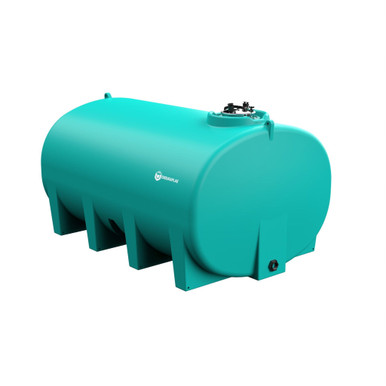
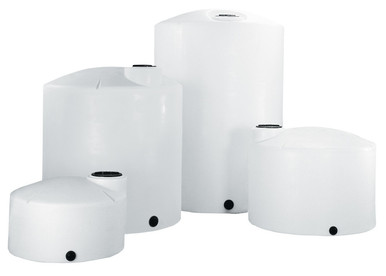
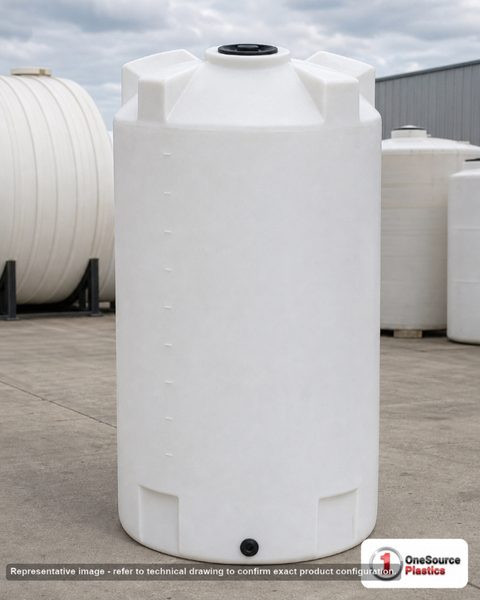
250-gallon white liquid storage tank built for agricultural chemical and fertilizer storage. Manufactured by Norwesco from virgin linear polyethylene (HDPE) rated to handle liquids up to 12.5 pounds per gallon. FDA approved for contact with potable water, ensuring safe storage for drinking water and food-grade liquids.
Specifications at a Glance
Every figure below is pulled straight from the live product record for this exact tank — the same data on the product page, so what you read here and what you buy never disagree.
Standards & Materials
- ASTM D1998 — Standard Specification for Polyethylene Upright Storage Tanks. Governs wall-thickness and hydrostatic design for vertical rotomolded poly tanks of this class.
- FDA 21 CFR 177.1520 — Olefin polymers. The food-contact regulation the FDA-grade resin in this tank is compounded to meet.
- Specific gravity rating 1.5 — the tank is engineered for liquids up to 1.5× the density of water (water is about 8.34 lb/gal). Confirm your fluid’s SG before storage.
Product Overview
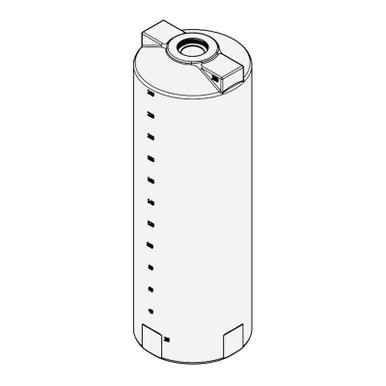
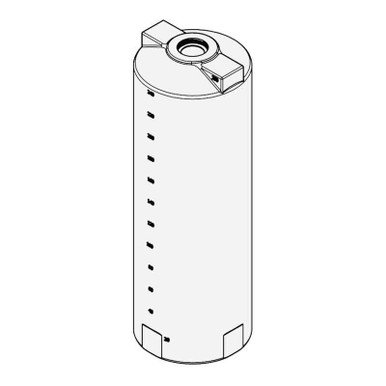
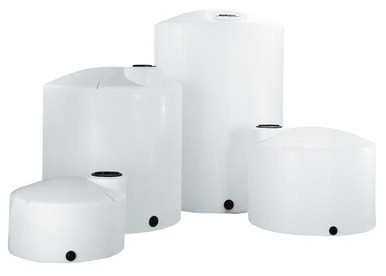
The 250 Gallon Vertical Liquid Storage Tank in translucent white is a tall, space-saving chemical and fertilizer tank, stacking 250 gallons into an 89-inch column on a slim 30-inch base. Its narrow footprint makes it a natural fit for crowded chemical pads and tank rows where every square foot of floor is spoken for.
It is molded as a seamless piece of virgin linear polyethylene with a 1.5 specific gravity rating, suited to dense agricultural and industrial liquids reaching 12.5 pounds per gallon. Thanks to the translucent white wall, the level is visible from ground level with the tank closed, and its reflectivity helps hold the stored chemical's temperature down.
Empty, the tank is a manageable 69 pounds; filled with a 1.5-SG liquid it puts roughly 3,196 pounds onto its small 4.9-square-foot footprint, so a flat, firm base is essential. A factory 2-inch NPT outlet handles discharge and an 8-inch lid provides top access. The tank ships without an inlet, so a bulkhead goes wherever your plumbing layout needs one.
Key Features and Specifications
- 250-gallon capacity — sized for agricultural chemical and fertilizer storage
- Constructed from virgin linear polyethylene (HDPE) with 1.5 specific gravity rating — handles liquids up to 12.5 lbs/gal
- 89" tall x 30" diameter — compact vertical footprint
- 69 lbs empty, approximately 3,196 lbs when full at rated specific gravity
- 2 NPT outlet fitting — factory installed and leak-tested
- 8" lid opening for fill, venting, and interior access
- FDA approved for potable water and food-grade liquid contact
- 3 Year Warranty from Norwesco against manufacturing defects
- Translucent white walls allow visual level monitoring without opening the tank and reflect sunlight to keep contents cooler
- Rated for continuous service up to 120 F / 48 C
- Seamless one-piece rotational molding — no seams, no welds, no leak points
- Manufactured by Norwesco — a leading name in rotomolded polyethylene tanks
- Place on a firm, level surface free of rocks or sharp objects that could damage the tank bottom. Ensure adequate ventilation if stored chemicals produce vapors
- Ships via LTL freight on a pallet — residential delivery with lift gate available
Installation and Setup Guide
This 250-gallon tank is among the tallest, slimmest columns in the lineup — 89 inches of height on a 30-inch base — so its full 1.5-SG load of about 3,196 pounds bears down through under five square feet and the near-seven-and-a-half-foot height makes verticality and base flatness the dominant concerns. A tank this proportion is the least tolerant of a tilted pad of any in this group.
Site Preparation
Set it on a level four-inch concrete pad or a tightly compacted stone bed sized past the 30-inch base, leveled to a quarter inch. The taller and slimmer the column, the more a small base tilt swings the top out of plumb and overloads one edge of the lower wall under the high chemical head. Restrain the upper body to a wall or sturdy frame, since a tank this tall and light is the easiest to knock over.
Placement and Connections
Plumb the discharge off the factory 2-inch outlet at the foot of a tall chemical column and break it with a chemically compatible flexible coupling so the column's movement never loads the bulkhead. The tank arrives with no inlet, leaving you to drill a compatible bulkhead at your preferred fill point. Plumb it with chemical-rated lines and snug the poly threads by hand plus a quarter turn.
Venting
On a column this tall the venting must keep pace with the draw, and the pressure swing concentrates at the 8-inch lid. Keep the relief path open, and for volatile chemistries fit a pressure/vacuum relief vent rated to the chemical; a blocked vent can crimp the upper wall of a slim tank fast during a hard draw-down. Avoid sealing the lid tight against a closed system.
Maintenance and Long-Term Care
A tall, slim 250-gallon chemical tank is serviced for chemical duty, not potable use, and the translucent wall makes monitoring a quick visual from the ground. The routine below watches what a tall column needs most: a dead-level base, compatible fittings, and a correctly rated vent.
Quarterly Inspection Checklist
- Plumb read: Sight the 89-inch column against a true vertical; a lean traces to base settlement and shows soonest at the top.
- Outlet and bulkhead check: Scan the 2-inch outlet and your fitted inlet for seepage, making sure both still match the stored chemistry.
- Base level: Confirm the small footprint pad has not dropped on one side, which a tall tank punishes more than any other shape.
- Vent verification: Check that the 8-inch lid's vent or pressure/vacuum relief is unobstructed and suited to the chemistry stored.
Cleaning
Switching products means decontaminating to the chemical manufacturer's instructions, since a rinse alone leaves residue behind between chemistries. The 2-inch outlet drains the column from the bottom, and the 8-inch lid gives access for inspection under chemical-handling precautions. This is a dedicated chemical tank and should never serve potable water.
UV and Weather Protection
The translucent white wall reflects sunlight to keep the chemical cooler and resists UV via the resin; inspect the sun-facing height each year for chalking. A tall slim wall heats and cools quickly, so the reflective pigment's moderation of thermal cycling is especially valuable here.
Alternatives and Comparisons
This 30-by-89 column holds 250 gallons of chemical in the smallest possible floor area, where a shorter, wider 250-gallon profile would trade that for a more stable stance. Step down to the 200- or 150-gallon verticals for less, or up to the 300-gallon and larger tanks for more. Start by matching the tank's shape to the footprint you have.
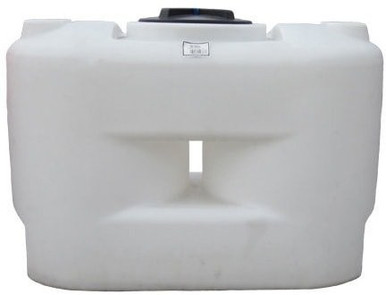
Vertical vs. Horizontal: Vertical tanks use less floor space for the same capacity but require more overhead clearance. If you have height restrictions, consider a horizontal or low-profile tank. Vertical tanks also drain more completely due to gravity — the liquid column above the outlet creates positive pressure all the way to the last few gallons.
Other 250-Gallon Options
Frequently Asked Questions
How long will the 250 Gallon Vertical Liquid Storage Tank - Natural White (30" x 89") last?
On a flat base, within its 1.5 SG rating, and serviced for the chemicals it holds, this tall 250-gallon column runs well past fifteen years. The seamless wall has no weld to come apart; what shortens a slim tank's life is a leaning base or an incompatible chemical, not the polyethylene.
What chemicals can I store in this tank?
Rated 1.5 specific gravity, the tank takes agricultural chemicals, liquid fertilizers, and most industrial solutions to 12.5 pounds per gallon; always cross-check the specific chemical on a polyethylene compatibility chart. Keep fuels, solvents, and anything flammable out of it, and run it as a chemical tank instead of a water tank.
What kind of foundation does a 250-gallon tank need?
For a 250-gallon column loading roughly 3,196 pounds through a slim 30-inch base, use a flat, firm four-inch concrete pad or a tightly compacted stone bed, level to a quarter inch. With this tall a profile, flatness is squarely a safety issue.
Does this tank come with a warranty?
Yes — Norwesco's 3-year warranty handles manufacturing defects under normal use: it covers factory faults, not overloading past 1.5 SG, a tank tipped or set poorly, chemical attack, or impact. Keep proof of purchase and one install photo on file.
Can I install this tank underground?
No. It is meant for above-ground service only — the flat wall cannot take backfill, so burying it crushes the tank and voids the warranty. Any buried application needs a ribbed underground tank rated for soil loads instead.
Buying Considerations
Confirm an 89-inch tank clears your overhead, that the narrow base can sit dead-level since this is the least tip-tolerant shape, and that you can firmly restrain the upper body. Check the chemistry for polyethylene compatibility before assigning the tank to it.
Related Products You May Need
Questions? Call (866) 418-1777 — our team knows these products inside and out and can help you select the right tank for your application.
Recommended Tanks for This Guide
Live pricing, updated automatically · estimate freight to your ZIP.