3000 Gallon 30 Degree Cone Bottom Tank - Natural White (95" x 123"): Complete Buyer's Guide
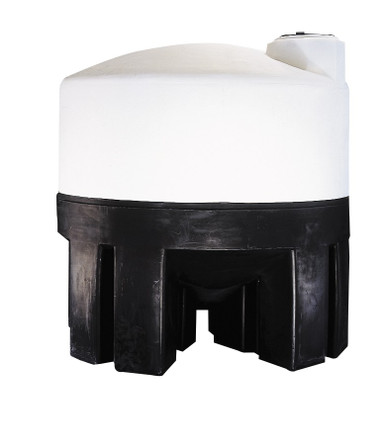
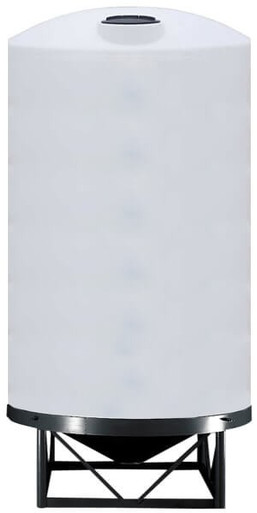
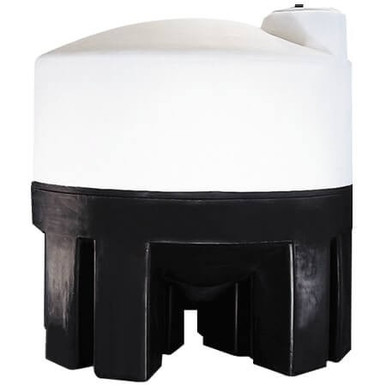
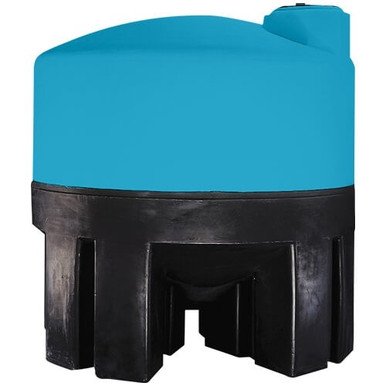
A 3,000-gallon cone-bottom tank built to empty completely — the 30° sloped floor drives every gallon, and every settled solid, down to a single 2-inch outlet at the apex. Standing 123 inches tall once mounted on its required steel stand, this Norwesco vessel is made for mixing and batch work where a clean drain matters. The 1.5-SG wall is rated to handle liquids up to 12.5 pounds per gallon.
Specifications at a Glance
Every figure below is pulled straight from the live product record for this exact tank — the same data on the product page, so what you read here and what you buy never disagree.
Standards & Materials
- ASTM D1998 — Standard Specification for Polyethylene Upright Storage Tanks. Governs wall-thickness and hydrostatic design for vertical rotomolded poly tanks of this class.
- FDA 21 CFR 177.1520 — Olefin polymers. The food-contact regulation the FDA-grade resin in this tank is compounded to meet.
- Specific gravity rating 1.5 — the tank is engineered for liquids up to 1.5× the density of water (water is about 8.34 lb/gal). Confirm your fluid’s SG before storage.
Product Overview
The 3000 Gallon 30 Degree Cone Bottom Tank exists for one reason a flat-bottom tank cannot satisfy: total drainage. The 30-degree cone funnels the entire contents to the centerline outlet, so there is no residual heel, no pooled sediment, and no trapped product when you switch batches. For blending, dosing, and any process where what you put in must all come back out, that geometry is the whole value.
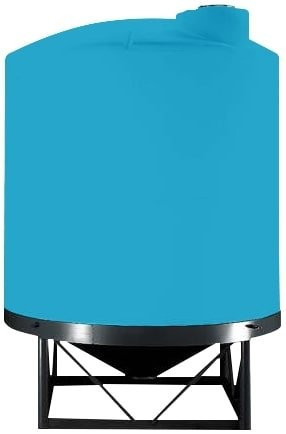
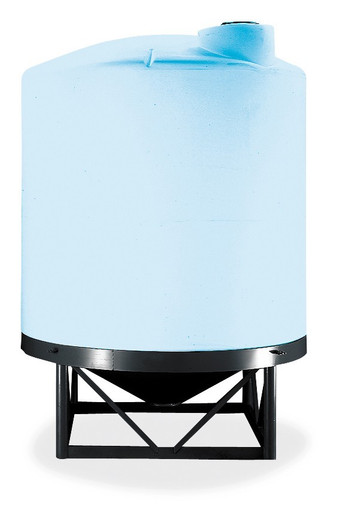
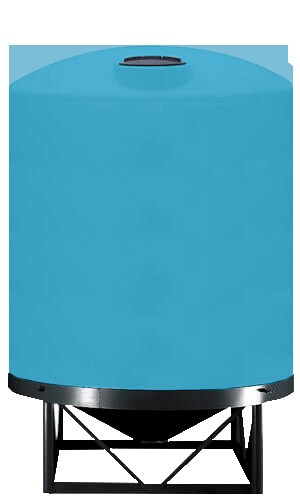
Because the cone replaces the flat floor, this tank cannot stand on its own — it rides in a steel or poly stand that carries the load through the tank's molded support ring, never on the fragile apex. Mounted, it reaches 123 inches, which keeps the outlet high enough to feed a pump or fill a container by gravity. Translucent white walls let you watch the level and the mix through the shell, and reflect sun to limit heat in the contents.
The tank shell is 445 pounds empty. Charged with a 1.5-SG liquid it reaches about 37,975 pounds — nearly nineteen tons that the stand and its footings must carry, not the ground directly. A 2-inch NPT outlet is fitted at the cone tip from the factory, while the 16-inch lid covers filling, agitation, and access. There is no inlet fitting from the factory.
Like every tank in the line it is molded seamlessly, with UV stabilizer in the resin and a 3-year Norwesco defect warranty. Given its mounted height, it travels by dedicated freight that we coordinate with you.
Technical Drawing
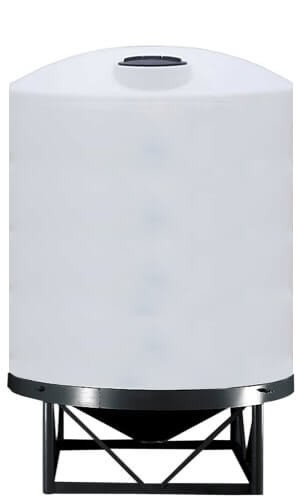
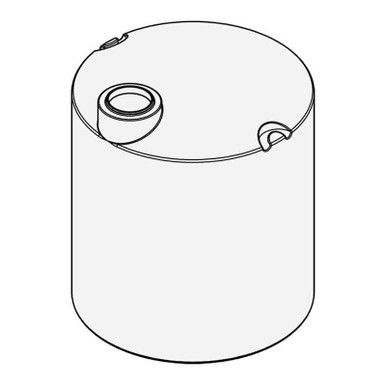
Official Norwesco technical drawing — 3000 Gallon 30 Degree Cone Bottom Tank - Natural White (95" x 123")
Key Features and Specifications
- 3,000-gallon capacity — sized for full-drain mixing and batch processing
- Constructed from virgin linear polyethylene (HDPE) with 1.5 specific gravity rating — handles liquids up to 12.5 lbs/gal
- 123" tall x 95" diameter — compact vertical footprint
- 445 lbs empty, approximately 37,975 lbs when full at rated specific gravity
- 2" NPT outlet fitting — factory installed and leak-tested
- 16" lid opening for fill, venting, and interior access
- FDA approved for potable water and food-grade liquid contact
- 3 Year Warranty from Norwesco against manufacturing defects
- Translucent white walls allow visual level monitoring without opening the tank and reflect sunlight to keep contents cooler
- Rated for continuous service up to 120 F / 48 C
- Seamless one-piece rotational molding — no seams, no welds, no leak points
- Manufactured by Norwesco — a leading name in rotomolded polyethylene tanks
- Must be installed on the manufacturer-supplied or compatible stand rated for the full loaded weight. Never rest a cone bottom tank directly on its apex
- Ships via dedicated freight carrier due to oversized dimensions — contact us for delivery timeline and site access requirements
Installation and Setup Guide
Installing a cone-bottom tank is fundamentally different from installing a vertical: the engineering lives in the stand, not in a pad under the tank. The cone must never bear load on its tip, so the stand and its foundation are the safety-critical elements of the whole job.
Site Preparation
Build a foundation for the stand, not for the tank. The stand's legs concentrate nearly nineteen tons of full load into a few footings, so each footing needs a poured pad designed for that point load — a structural engineer should size them for your soil. Set the stand dead-level so the cone hangs true and drains evenly to the center; a tilted stand leaves product stranded on the high side of the cone and loads the support ring unevenly.
Placement and Connections
Seat the tank fully into the stand's support ring before adding any liquid, and confirm the cone hangs clear with no contact at the apex. Plumb the 2-inch apex outlet with a full-port valve so solids and viscous product clear without bridging, using schedule-80 PVC or stainless and a flex section before rigid pipe. Keep the run short and route it for easy access, since the apex valve is the heart of a drain-clean tank.
Venting
A cone tank empties fast through a large apex outlet, which can pull a hard vacuum if the vent cannot keep pace — and a vacuum will crease the wall before you notice. Match the lid vent to your fastest drain rate, and fit a pressure-vacuum relief vent rated for the vapor on any off-gassing chemical.
Maintenance and Long-Term Care
A cone-bottom tank adds the stand to your inspection list — and the stand carries the load, so it earns first attention. A quarterly check takes in both the tank and the supporting structure.
Quarterly Inspection Checklist
- Stand: Inspect legs, welds or bolts, and footings for corrosion, cracking, or movement; the stand bears the full nineteen-ton load, so its condition is non-negotiable.
- Cone and support ring: Check that the tank sits evenly in the ring and look for stress whitening where the cone meets the support shoulder.
- Apex outlet: Verify the 2-inch valve seals and drains freely with no bridged solids above it.
- Vent: Keep the lid vent open so the wall is never sucked inward during a rapid drain.
Cleaning
The cone's advantage shines at cleanup: crack the apex valve and the tank empties itself nearly completely, leaving almost nothing to flush. Rinse with a solution that neutralizes the previous chemical from the 16-inch lid, let it drain through the cone, and repeat between incompatible products. Contain the spent rinse and dispose of it following the safety data sheet.
UV and Weather Protection
Raised on its stand, the tank shows a tall south wall to the sun — inspect that face yearly for chalking. In severe-sun regions a shade panel protects the shell, and keeping the steel stand painted or galvanized guards the structural element against weather.
Alternatives and Comparisons
The defining comparison is cone versus flat bottom. If your process needs complete drainage and sediment removal, only a cone like this delivers it — a flat-bottom 3,000-gallon vertical always strands a heel above its outlet. The trade is cost and complexity: the cone requires an engineered stand and elevated plumbing the vertical does not. Within cone tanks, a 30-degree cone like this one balances drainage with overall height; a shallower 20-degree cone sits lower but drains thicker product less aggressively, while a steeper cone drains heavy slurries best but stands taller. If you simply need to store, not mix and drain, a flat-bottom vertical is the cheaper, lower, simpler choice.
Frequently Asked Questions
How long will the 3000 Gallon 30 Degree Cone Bottom Tank - Natural White (95" x 123") last?
Expect fifteen to twenty years provided the tank stays at or under 1.5 SG, rides on a sound stand, and holds compatible chemistry. The seamless mold and in-resin UV protection give the shell durability, yet a cone tank's longevity hinges on its stand too — let the structure go and the tank is at risk well before the plastic wears out. The remaining early-failure causes are an overloaded wall, a vacuum from a plugged vent, and chemical attack.
What chemicals can I store in this tank?
At 1.5 SG it suits most liquid fertilizers, ag chemicals, and many acids and bases up to 12.5 pounds per gallon, and the cone makes it especially good for products that settle or need full recovery between batches. While polyethylene shrugs off those, strong oxidizers and many solvents attack it, and flammable fuels are never appropriate. Verify the exact product against a poly compatibility chart, and check its density, before filling.
What kind of foundation does a 3000-gallon tank need?
Different from a flat-bottom tank, the load here travels through the stand, so you build for the stand's legs rather than a slab beneath the tank. A full load is about 37,975 pounds, so each leg footing must be a poured pad engineered for that point load, set dead-level so the cone drains true. Let a structural engineer size the footings for your specific soil.
Does this tank come with a warranty?
Yes — Norwesco warrants the tank three years against material and workmanship defects: molding flaws, pinholes, and factory fitting faults. Coverage stops short of overloading beyond 1.5 SG, chemical attack, apex-bearing the cone, a faulty stand or footing, and impact damage. Retain your invoice and pictures of the completed install to support a claim.
Can I install this tank underground?
No. This is an above-ground, stand-mounted cone tank; its cone geometry and flat upper walls are not built for burial and would fail under soil pressure. The whole point of the cone is gravity drainage above grade. For below-grade storage, use a purpose-built underground cistern.
Buying Considerations
Settle three points before you order this cone tank. First, the stand and its footings — the tank cannot stand alone, so confirm you have a compatible stand and an engineered footing plan for nineteen tons through its legs. Second, the elevated plumbing and access — the apex outlet and the 123-inch lid both need planned, safe access. Third, the liquid and freight — stay at or under 1.5 specific gravity, and expect dedicated freight for this tall unit. Reach out and we will pair the correct stand and arrange delivery.
Related Products You May Need
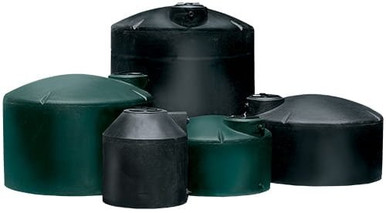
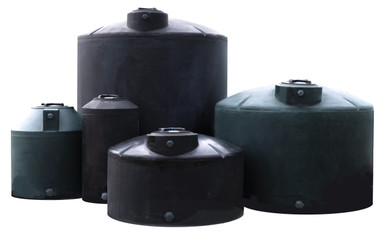
Questions? Call (866) 418-1777 — our team knows these products inside and out and can help you select the right tank for your application.
Recommended Tanks for This Guide
Live pricing, updated automatically · estimate freight to your ZIP.