
Fluid Handling Plastic Tanks - Transport, Leg, IBC, Applicator
Fluid Handling Plastic Tanks — Transport, Leg, IBC, Applicator
OneSource Plastics supplies the agricultural operator, custom applicator, fleet maintenance shop, ground-water hauler, and general industrial fluid-mover with the plastic tanks engineered for transport service: horizontal leg tanks for skid-mount transport, elliptical leg tanks for pickup-trailer and gooseneck deployment, IBC totes for staged-and-shipped chemical inventory, and applicator saddle tanks for sprayer and side-dress application. Five OEM brands — Norwesco, Snyder Industries, Chem-Tainer, Enduraplas, and Bushman — cover the configurations from 14-gallon spot-spray tanks up through 2,635-gallon transport ellipticals.
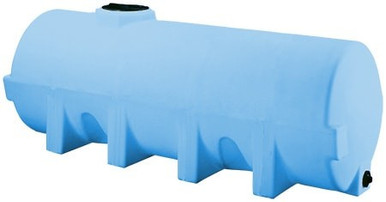
Featured: Norwesco 1025 Gallon HDPE Horizontal Leg Tank — the workhorse 1,025-gallon HDPE leg-tank configuration for skid-mount transport in the most common pickup-trailer and gooseneck-deck footprint range.
1. Fluid handling applications — an overview
Fluid-handling tank duty splits across four families. Transport tanks cover the horizontal leg, elliptical leg, and elliptical cradle configurations sized to the most common pickup-trailer, gooseneck-deck, and dedicated-trailer footprints in the 100-to-3,000-gallon range. IBC totes cover the 220-to-550-gallon stackable intermediate bulk containers that move chemical inventory from manufacturer to distribution to applicator on a single recirculating asset. Applicator saddle tanks mount on tractors and high-clearance sprayers for in-field spray and side-dress application of fertilizer, herbicide, and crop-protection chemistry. Loaf and utility tanks cover the smaller portable configurations used for ground-water hauling, equipment-rinse stations, and dust-suppression spray.
Each family carries distinct fitting layouts, vent specifications, and securement requirements for over-the-road and off-road transport. Transport tanks need flush-mount or sump-bottom discharge and tie-down provisions sized to the loaded weight at the rated SG. Applicator saddle tanks need top-fill ports sized to the bulk-fill connection and bottom-mount discharge to the spray boom. IBC totes need the standard discharge-valve configuration that integrates with industry-standard pump and dispense equipment. The pages below explain the spec discipline, the resin-versus-chemistry compatibility matrix, the federal transportation rules, and the procurement reality of buying transport-class tanks.
2. Why OneSource for fluid handling
Transport-rated geometry across the range. The horizontal leg tank line from Norwesco runs 35, 65, 125, 200, 300, 525, 925, 1025 gallon configurations with a flat-bottom sump and integrated leg supports. The elliptical leg tank line covers 1,035, 2,035, 2,635 gallon transport configurations sized to common gooseneck deck dimensions. The applicator saddle tank line covers 100, 110, 150, 200 gallon footprints for tractor-mount and high-clearance spray applications. The catalog separates skid-transport-only configurations from over-the-road-rated transport tanks; specifiers should confirm the intended use case during the quote conversation so the right tank ships for the right duty cycle.
IBC totes with industry-standard discharge. The Snyder stackable IBC tote line at 220, 275, 550 gallon capacities ships with the standard 2-inch NPT discharge valve, the standard top-fill port, and the standard recovery-and-recycling tracking that lets the asset move through industry-wide IBC-management programs. Cagebuster and Megatainer configurations are available for users who need the cage-removal capability for cleaning-and-inspection cycles.
SG discipline for ag chemistry. Agricultural-and-applicator fluids span a wider SG range than most users expect. Liquid fertilizer urea-ammonium-nitrate at 32% (UAN-32) has SG 1.32 at 60 degrees F. Liquid potash 28-0-0-26S has SG 1.40. Calcium chloride at 36% (used in dust suppression and ice melt) has SG 1.36. Magnesium chloride at 32% has SG 1.30. Anhydrous ammonia in pressurized service is outside the polyethylene tank envelope entirely — it requires steel ASME pressure vessels per 29 CFR 1910.111. The catalog flags the SG rating on every transport tank and the chemical-tank recommender filters by SG plus chemistry plus capacity in one query.
Five-brand discipline. Norwesco, Snyder Industries, Chem-Tainer, Enduraplas, and Bushman cover the legitimate domestic plastic-tank market for transport and applicator service. We do not pad the catalog with off-brand imports.
Pricing transparency. Every product page lists a current price before freight. LTL freight to the destination ZIP is quoted separately through the freight cost estimator or by phone at 866-418-1777. List prices on this site exclude freight; nothing on this catalog ships freight-included by default. Listed at $X is the convention used across the catalog.
3. Tank solutions for fluid handling
The product strip below pulls live inventory across the horizontal leg, elliptical leg, applicator saddle, and IBC tote configurations used in fluid-handling service. Cards refresh from the live BigCommerce catalog so the price, stock status, and image reflect the current state at page load.
Need help between a 925-gallon round-bottom leg and a 1,025-gallon flat-bottom leg, between a 2,035-gallon elliptical and a 2,635-gallon elliptical, or between a 275-gallon Payloader IBC and a 275-gallon Cagebuster? Call 866-418-1777 or open a quote request with the application detail (chemistry, SG, transport platform, fill-and-discharge connections) and the desk routes the recommendation back the same business day.
4. Chemical compatibility for fluid-handling chemistries
Fluid-handling chemistry covers ag fertilizer and crop-protection chemistry on one side, and general industrial transport-fluid chemistry on the other. The pillars below cover the chemistries that drive the largest share of transport-class tank purchases.
- Anhydrous Ammonia
- Sulfuric Acid
- Sodium Hypochlorite
- Calcium Chloride
- Magnesium Chloride
- Urea Ammonium Nitrate (UAN-32)
- Glyphosate
The full chemical compatibility database indexes 500+ chemistries, including the surfactant-and-adjuvant blends used in spray-tank mixing, the calcium-chloride and magnesium-chloride brines used in winter road maintenance and dust suppression, and the urea-and-ammonium-thiosulfate fertilizer blends used in side-dress application.
5. Regulatory considerations for fluid-handling tanks
Transport-class tanks sit at the intersection of federal transportation rules, OSHA worker-safety rules, and state highway and ag-chemistry rules.
49 CFR 173 — DOT hazardous materials packaging. The non-bulk threshold for liquid hazardous materials is 119 gallons. Below 119 gallons per inner packaging, the container is non-bulk and is governed by the non-bulk packaging rules at 49 CFR 173. Above 119 gallons, the container is bulk and falls under DOT 406, DOT 407, or DOT 412 cargo-tank specifications, or under the IBC tote rules at 49 CFR 178.700 series for IBCs in commerce. Stationary plastic transport tanks intended for off-road and farm use can qualify under the agricultural exemption at 49 CFR 173.5 (farm operations) or the materials-of-trade exception at 49 CFR 173.6 (service vehicles up to 440 lb aggregate hazmat). Over-the-road commercial highway transport requires verification of the specific compliance pathway with the carrier and with the state DOT.
49 CFR 172 — Hazmat communication and placards. Transport of hazardous materials in commerce requires shipping papers, package marking, package labeling, and (for placardable quantities) DOT placards on the vehicle. The placard threshold for most agricultural chemistry sits at 1,001 lb gross weight in any single transport unit. Operators moving placardable quantities of fertilizer, herbicide, or other hazmat in IBC totes or transport tanks should confirm the placard requirement against the specific UN number for the chemistry being moved.
29 CFR 1910.111 — Anhydrous ammonia. OSHA regulates anhydrous ammonia storage and handling under 29 CFR 1910.111. Anhydrous ammonia at the working pressure of approximately 250 psig is outside the polyethylene tank envelope entirely; it requires ASME-stamped steel pressure vessels with the full set of NH3-specific safety equipment (excess-flow valves, pressure-relief valves, hydrostatic relief valves on liquid lines, gauge guards). The plastic tanks in this catalog are not used for anhydrous ammonia storage. Aqua ammonia (ammonium hydroxide solution) at atmospheric pressure can use polyethylene with the appropriate vent-and-overpressure protocol.
ASTM D1998 — Polyethylene upright storage tank specification. ASTM D1998 is the canonical specification for polyethylene upright storage tanks. The standard covers wall thickness as a function of SG and tank diameter, the test methods for impact resistance and environmental stress cracking, and the documentation required from the tank manufacturer. Stationary storage tanks in the catalog are built to ASTM D1998. Transport-rated tanks add ASTM D2412 (parallel plate loading) and tie-down provisions sized to the loaded weight at the rated SG.
40 CFR 165 — DOT-EPA agricultural mini-bulk containers. 40 CFR 165 covers the joint DOT-EPA framework for refillable agricultural mini-bulk containers (typically 56 to 120 gallon refillable totes used in the ag-chemistry distribution channel). Refillable containers must be marked, labeled, inspected, and managed per 40 CFR 165 Subpart D. The IBC tote line in this catalog includes the manufacturer documentation needed for ag-chemistry-distribution use; the user verifies the specific chemistry against the EPA-approved label list for the container.
State highway and ag-chemistry overlays sit on top of the federal rules. Maximum gross vehicle weight, axle weight, transport-permit thresholds, and ag-chemistry registration vary by state. The state pillars at our state regulations index link to each state agency for the project location.
6. Field handling and procurement
Resin selection by chemistry. HDPE (1.5 SG, linear polyethylene) covers most ag fertilizer and crop-protection chemistry at ambient temperature. XLPE (1.9 SG, cross-linked polyethylene) handles the higher-SG fertilizer blends (UAN-32, calcium chloride, magnesium chloride) and the borderline crop-protection chemistry where the published HDPE compatibility shows reduced service life. Carbon-black-pigmented HDPE for outdoor-exposure transport tanks gains UV resistance and heat absorption that helps in cold-weather pour-out from a parked transport asset.
Securement and tie-down. Transport tank specification includes the tie-down attachment plan: the tank manufacturer publishes the tie-down strap routing that distributes load across the tank wall without concentrating stress at a single point. Skipping the published tie-down routing voids the manufacturer warranty and accelerates wall fatigue at the strap-contact point. A 925-gallon HDPE leg tank loaded with 925 gallons of UAN-32 weighs 925 gal x 8.34 lb/gal x 1.32 SG = 10,180 pounds of fluid plus 200 pounds of tank weight; the tie-down system must hold that load through the full transport-vibration spectrum.
Vent sizing. Transport tanks emptying through a high-flow discharge (gravity-feed to a spray boom, pumped discharge to a fill nozzle) need the vent sized to admit replacement air at a rate that does not let the tank pull a vacuum and collapse the wall. The manufacturer publishes the vent specification with each tank; under-venting on a high-flow pour-out is a common failure mode that is fully avoidable by following the published vent-port size.
Cleaning between chemistries. Transport tanks moving between herbicide, fertilizer, and crop-protection chemistries need a clean-out protocol matched to the previous-load chemistry. Residual herbicide at the parts-per-million level can damage subsequent fertilizer crops if the rinse-and-flush protocol is not followed. The chemical-tank recommender includes the recommended clean-out protocol per chemistry pair, and the cleaning chemistry (water, water-plus-detergent, water-plus-ammonia, water-plus-bleach) varies with the residue type. Sulfonylurea herbicide residue, for example, requires an alkaline rinse with household ammonia at 1% before the next load is added; failing to follow the alkaline-rinse step on a sulfonylurea-to-fertilizer transition is one of the most common causes of crop-damage liability claims in custom-applicator service.
Procurement cadence and pricing. Standard plastic transport tanks ship from manufacturer warehouses in two to six weeks depending on size, color, and fitting layout. List prices on this site reflect the current OEM published pricing before LTL freight; freight to the destination ZIP is quoted separately. Volume programs for fleet-wide deployments are coordinated through our quote desk.
7. Custom fabrication when stock will not fit
Specialty fluid-handling tank geometries route through our specialty & metal fabrication network. Typical custom builds for the fluid-handling segment: skid-mounted multi-tank transport assemblies for compartmentalized chemistry transport, jacketed transport tanks for cold-weather chemistry that gels below the fluid pour point, alloy and lined-steel transport tanks for chemistries outside the polyolefin envelope, and bespoke applicator-saddle geometries built to fit a specific tractor or implement footprint. Lead times run six to sixteen weeks. The quote desk runs the spec dialogue with the fabricator and stays involved through commissioning.
8. Next steps
Quote the freight. Every product page lists a price before freight. Get the LTL freight quote to your ZIP through the freight cost estimator, or call 866-418-1777 for a phone quote with the SKU plus destination ZIP plus dock-or-residential delivery indication.
Match the chemistry, the SG, and the transport platform. Use the chemical-to-tank recommender to filter by chemistry plus SG plus capacity. Confirm the transport-platform footprint against the published tank dimensions before committing to a configuration.
Open a custom request. If the spec falls outside the stock-tank envelope — multi-compartment transport, jacketed transport, alloy transport, or any geometry built to a custom platform footprint — the custom-fabrication request form routes the project to the right shop and the quote desk follows up the same business day. Include the chemistry, SG, capacity, transport platform, and any tie-down or footprint constraints.