
Automotive Plastic Tanks - DEF, Fuel, and Lube Storage
Automotive Plastic Tanks — DEF, Fuel, and Lube Storage
OneSource Plastics supplies the automotive aftermarket, fleet operator, agricultural shop, and lube-distribution buyer with the plastic tanks built for diesel, diesel exhaust fluid (DEF), gasoline transfer service, motor oil, and used-oil collection. Five OEM brands — Norwesco, Snyder Industries, Chem-Tainer, Enduraplas, and Bushman — cover the full range from 25-gallon compact DEF totes for service vans to 1,000-gallon double-wall waste-oil verticals for quick-lube collection. The catalog separates DEF-specific resin from general fuel-transfer tanks and from diesel storage configurations, so a fleet supervisor specifies by fluid and service class without crossing categories.
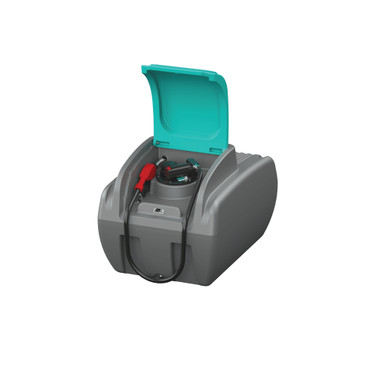
Featured: Enduraplas 100 Gallon Standard Plastic Portable Diesel Fuel Boss Tank with Pump and Fuel Nozzle — the standard 100-gallon Fuel Boss configuration for shop diesel transfer with integrated pump, hose reel, and automatic shut-off nozzle.
1. Automotive applications — an overview
Automotive tank duty splits into four families. Diesel storage and transfer covers the on-site bulk diesel tank at a fleet yard, the portable diesel transfer tank on a pickup truck or service body, and the shop-floor day tank used to fill equipment at the end of a shift. Diesel exhaust fluid (DEF) requires a dedicated UV-stabilized polyethylene tank with food-grade-equivalent surface chemistry to keep the urea solution within ISO 22241 specification; cross-contamination with diesel, oil, or hard-water minerals voids the SCR catalyst on the truck. Motor oil and lubricant storage spans new-oil dispensing tanks for quick-lube and dealership service bays, plus the matching used-oil collection tank that meets 40 CFR 279 management standards. RV and recreational tanks covers fresh, gray, and black water tanks for motorhome and camper applications.
Each family carries distinct resin-and-fitting specifications. DEF tanks must use UV-stabilized polyethylene rated for the urea-water solution and equipped with stainless valves and EPDM gaskets — brass and copper components corrode in DEF service. Diesel transfer tanks ship with grounded fill connections, vent caps sized for the pump flow rate, and fuel-rated hoses. Used-oil tanks require a sealed top with a screened fill funnel and a sloped bottom to keep water and sediment from entering the dispense circuit. The pages below explain the spec discipline, the regulatory framework that governs each tank class, and the procurement routine for getting the right tank to the right shop on the right freight schedule.
2. Why OneSource for automotive
DEF-grade tank discipline. Diesel exhaust fluid is unforgiving. ISO 22241-1 sets the urea purity tolerance at 32.5% +/- 0.7% and lists the maximum allowable concentrations for calcium, sodium, magnesium, iron, copper, zinc, chromium, nickel, aluminum, phosphate, and other contaminants in parts per million. ISO 22241-3 specifies the materials of construction approved for DEF service: stainless steel, polypropylene, polyethylene, polyisobutylene, polyfluoroethylene, and select EPDM and Viton elastomer grades. Brass, copper, zinc, and unalloyed steel are out. Our DEF tank line carries Enduraplas, Snyder, and Norwesco configurations built specifically for DEF service with the correct fittings, vent specifications, and resin chemistry.
Diesel transfer that meets shop reality. Portable diesel transfer tanks live a hard life: bouncing in pickup beds, lifted by forklift, refilled from bulk delivery, and dispensed through 12V or 115V transfer pumps. The Fuel Boss family from Enduraplas integrates the tank, the pump, the hose reel, and the automatic shut-off nozzle into a single skid — the buyer specifies one part number instead of building a transfer cart from components. Capacities run 25, 55, 75, and 100 gallons in narrow, compact, and standard footprints to fit common pickup-bed configurations.
Used oil collection that satisfies 40 CFR 279. The federal used-oil management standard at 40 CFR 279 requires used oil generators (the quick-lube shop, the dealership service bay, the maintenance shop) to use containers and tanks in good condition, labeled "Used Oil," and free of leaks. The Snyder 120, 150, 275, 500, and 1000 gallon vertical double-wall waste-oil tanks satisfy the container condition and labeling requirements out of the box, with integrated secondary containment that catches the full primary volume.
Five-brand discipline. Norwesco, Snyder Industries, Chem-Tainer, Enduraplas, and Bushman cover the legitimate domestic plastic-tank market for automotive applications. We do not pad the catalog with off-brand imports. The five-brand discipline keeps the spec conversation grounded in published OEM technical bulletins.
Pricing transparency. Every product page lists a current price before freight. LTL freight to the destination ZIP is quoted separately through the freight cost estimator or by phone at 866-418-1777. List prices on this site exclude freight; nothing on this catalog ships freight-included by default. Listed at $X is the convention used across the catalog — freight is never included in the list price.
3. Tank solutions for automotive
The product strip below pulls live inventory across DEF, diesel transfer, and waste-oil applications. Cards refresh from the live BigCommerce catalog so the price, stock status, and image reflect the current state at page load.
Need help choosing between a 75-gallon narrow Fuel Boss and a 100-gallon standard, or between a 275-gallon and 500-gallon used-oil vertical? Call 866-418-1777 or open a quote request with the application detail (truck-bed dimension, daily diesel throughput, used-oil generation rate) and the desk routes the recommendation back the same business day.
4. Chemistry compatibility for automotive fluids
Automotive fluids span a narrower chemistry envelope than general industrial chemical processing, but each fluid carries its own resin-and-elastomer constraints. The pillars below cover the chemistries that drive the largest share of automotive tank purchases. Each pillar carries a full compatibility matrix (HDPE / XLPE / PP / PVDF / FRP / 316L / 304 / carbon steel / EPDM / Viton / Buna-N), real-world use cases, OSHA / NFPA / DOT hazard communication, and storage protocol.
- Diesel Engine Exhaust Fluid (DEF)
- Urea Solution
- Ethylene Glycol (Antifreeze)
- Propylene Glycol
- Methanol
- Kerosene
- Jet Fuel JP-8
The full chemical compatibility database indexes 500+ chemistries, including the synthetic-blend lubricants and gear-oil packages used in heavy-duty fleet service.
5. Regulatory considerations for automotive tanks
Automotive tank service touches several distinct federal and state rule sets. The shop owner or fleet supervisor should treat each rule as a checklist item during tank selection rather than as background reading. The wrong tank in the wrong service can put a facility outside compliance from the day it is installed.
49 CFR 173 — DOT hazardous materials packaging. The Department of Transportation regulates the transport of hazardous materials in commerce under 49 CFR 173 and the related sections of Subchapter C. Diesel fuel above 119 gallons in transport requires a hazardous-materials shipping paper, proper labeling, and (for full-container loads) a DOT placard. Portable diesel transfer tanks intended for highway use must meet the DOT 406 / DOT 407 cargo-tank standards for over-the-road transport, or qualify as a non-bulk packaging under 49 CFR 173.5 (farm exemption) or 173.6 (materials of trade exception for service vehicles up to 440 lb aggregate). The Fuel Boss line ships configured for shop and on-farm use; over-the-road commercial highway transport requires verification of the specific DOT compliance pathway with the carrier.
ISO 22241 series — DEF quality and handling. ISO 22241-1 sets the chemistry tolerance for AUS 32 (the international name for 32.5% urea aqueous solution sold in the U.S. as DEF). ISO 22241-2 specifies test methods. ISO 22241-3 lists approved materials of construction for tanks, pumps, and dispensing equipment. ISO 22241-4 covers refilling-interface dimensions. The DEF tanks in this catalog meet the materials portion of ISO 22241-3 for polyethylene tanks with stainless and polypropylene fittings.
40 CFR 279 — Used oil management. The federal used-oil rule applies to anyone who generates more than 25 gallons of used oil per month or stores more than 220 gallons on site. Used-oil containers and tanks must be in good condition, free of visible leaks, and labeled with the words "Used Oil" in clearly visible characters. Aboveground tanks holding more than 1,320 gallons aggregate trigger the SPCC plan requirement at 40 CFR 112. The Snyder vertical double-wall waste-oil tank line at 120, 150, 275, 500, and 1000 gallons is configured for used-oil service with integrated secondary containment.
40 CFR 112 — SPCC oil-spill prevention. Aggregate aboveground oil storage capacity above 1,320 gallons (counting any single container of 55 gallons or larger) triggers a written SPCC plan. The plan must address secondary containment, integrity testing, monthly visual inspections, and personnel training. Used-oil aggregate volume counts against the SPCC threshold in addition to fresh diesel and motor-oil storage.
29 CFR 1910.106 — Flammable liquids in workplaces. OSHA classifies diesel fuel as Class II combustible (flash point 100 to 140 degrees F), which sits outside the strictest indoor-storage limits that apply to Class I flammables. Gasoline and gasoline-blend solvents are Class IB flammable and require either an approved flammable-storage cabinet or storage outside in a tank that meets the 1910.106 distance-from-property-line and electrical-classification requirements. Polyethylene tanks are not approved for Class IB flammable liquid storage; gasoline-storage tanks for shop service use steel construction per NFPA 30 / NFPA 30A.
NFPA 30A — Motor Fuel Dispensing Facilities. NFPA 30A governs the dispensing of motor fuels at retail and fleet sites. Aboveground tanks at a fueling island must satisfy distance-from-buildings, electrical-classification, vent-pipe-termination, and emergency-shutoff requirements. Polyethylene tanks are not used for retail gasoline dispensing; the diesel transfer tanks in this catalog cover shop, farm, and fleet-yard duties that fall outside NFPA 30A retail-station scope.
State-level overlays sit on top of these federal rules; the state regulatory pillar for the project location captures registration triggers, spill-reporting cadence, and any state-specific containment math. Those pillars are linked from our state regulations index.
6. Field handling and procurement
Resin selection by fluid. HDPE (1.5 specific gravity, linear polyethylene) is the standard for diesel, motor oil, and used-oil service at ambient temperature. XLPE (1.9 specific gravity, cross-linked polyethylene) raises the engineering margin where the fluid temperature runs warmer (drained motor oil leaves an engine at 180 to 220 degrees F before cooling) or where impact resistance matters (transport-mounted tanks, outdoor exposure to freeze-thaw cycles). DEF-specific tanks use a UV-stabilized polyethylene formulation with the trace-metal limits and the surface chemistry needed to keep the urea solution inside the ISO 22241-1 envelope.
DEF cross-contamination control. The single most expensive failure mode in DEF storage is cross-contamination from diesel, motor oil, hard water, or any chemical leaving residue inside the tank or the dispense line. Diesel residue at 0.1% by volume in DEF will plug the SCR catalyst on a heavy-duty truck within hours of operation. The DEF tank, the pump, the hose, and the nozzle should all stay dedicated to DEF service from the day they are installed. Mixing DEF with rinse water below 90 degrees F is acceptable only if the water meets ISO 22241-1 deionized-water specification — municipal hard water carries enough calcium, magnesium, and chloride to push the DEF outside specification.
Single-wall versus double-wall. The decision driver for automotive tanks is the SPCC threshold, the local fire-marshal interpretation of NFPA 30 indoor combustible-liquid storage limits, and the 40 CFR 279 used-oil container condition rule. Used-oil tanks above 660 gallons sited indoors or near a floor drain typically run as integrated double-wall configurations to keep a small primary leak from becoming a release event. Diesel storage above the SPCC threshold of 1,320 gallons aggregate is usually sited outdoors in a steel single-wall tank inside a poured-concrete dike, or in a double-wall steel tank with built-in containment.
Capacity sizing. A typical full-service quick-lube generates 5 to 12 gallons of used oil per service event with 30 to 60 service events per day during peak weeks. A 275-gallon double-wall used-oil tank fills every 7 to 10 business days at that throughput; a 500-gallon tank fills every 12 to 18 days. Sizing the tank to the haul-out interval offered by the local recycler is the right starting point — oversized tanks invite long residence time that lets water and sediment settle into the dispense layer.
Procurement cadence and pricing. Standard plastic automotive tanks ship from manufacturer warehouses in two to six weeks depending on size, color, and fitting layout. Fuel Boss configurations with integrated pump and hose reel typically ship in three to five weeks. List prices on this site reflect the current OEM published pricing before LTL freight; freight to the destination ZIP is quoted separately through the freight estimator or by phone. Volume discounts on multi-tank fleet orders are coordinated through our quote desk.
7. Custom fabrication when stock will not fit
Specialty automotive tank geometries route through our specialty & metal fabrication network. Typical custom builds for the automotive segment: jacketed lube-storage tanks for cold-climate dispensing where the oil viscosity at the fill point must stay above 40 SUS, oddly shaped diesel transfer tanks built to fit a non-standard service-body footprint, used-oil tanks with integrated heating elements for biodiesel feedstock collection, and stainless storage tanks for synthetic-base lubricants where polyethylene compatibility data is thin. Lead times run six to sixteen weeks depending on complexity. The quote desk runs the spec dialogue with the fabricator and stays involved through commissioning.
8. Next steps
Quote the freight. Every product page lists a price before freight. Get the LTL freight quote to your ZIP through the freight cost estimator, or call 866-418-1777 for a phone quote with the SKU plus destination ZIP plus dock-or-residential delivery indication.
Match the fluid to the tank. For DEF, specify a UV-stabilized DEF-rated tank with stainless and polypropylene fittings — do not adapt a general-purpose fuel tank. For diesel transfer, the Fuel Boss family covers 25, 55, 75, and 100 gallon footprints with integrated pump and nozzle. For used-oil collection, size the double-wall vertical to a 7-to-14-day haul interval at the shop generation rate.
Open a custom request. If the spec falls outside the stock-tank envelope, the custom-fabrication request form routes the project to the right shop and the quote desk follows up the same business day. Include the fluid, daily throughput, footprint constraints, and any climate or temperature considerations.