105 Gallon Vertical Liquid Storage Tank: Complete Buyer's Guide
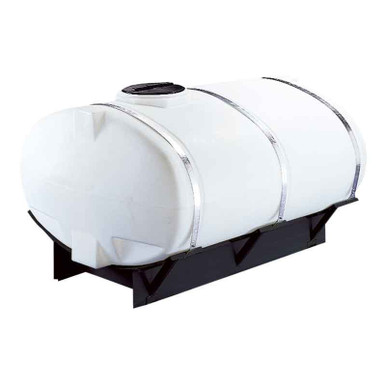
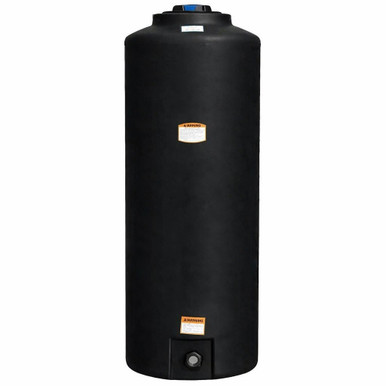
A 105-gallon vertical liquid tank from Norwesco for chemical dosing and day storage, a slim 23-inch column in 1.5-specific-gravity polyethylene with a siphon-tube outlet.
Specifications at a Glance
Every figure below is pulled straight from the live product record for this exact tank — the same data on the product page, so what you read here and what you buy never disagree.
Standards & Materials
- ASTM D1998 — Standard Specification for Polyethylene Upright Storage Tanks. Governs wall-thickness and hydrostatic design for vertical rotomolded poly tanks of this class.
- FDA 21 CFR 177.1520 — Olefin polymers. The food-contact regulation the FDA-grade resin in this tank is compounded to meet.
- Specific gravity rating 1.5 — the tank is engineered for liquids up to 1.5× the density of water (water is about 8.34 lb/gal). Confirm your fluid’s SG before storage.
Product Overview
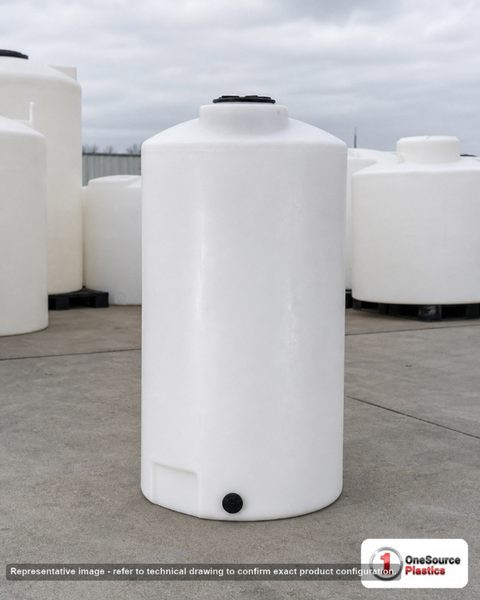
The 105-gallon vertical liquid tank is a benchtop-to-floor-scale chemical reservoir — the size that feeds a single metering pump, mixes a small batch, or holds a day's supply of a concentrate beside the equipment that uses it. It stands 63 inches tall on a slim 23-inch diameter, so it tucks against a wall or beside a skid, and at 38 pounds empty one person sets it in place.
It is molded as one seamless piece of virgin linear polyethylene rated to 1.5 specific gravity, which lets it carry dense chemistry up to 12.5 pounds per gallon — a meaningful margin over a water-grade tank in a footprint this small. The translucent white wall lets you read the level by eye and reflects sun to keep contents cooler, and the resin is FDA-compliant for food-grade liquids.
Full at the rated gravity it weighs about 1,352 pounds, so a firm level floor or pad carries it without special engineering. The outlet is a 2-inch fitting with a 2-inch siphon tube for clean bottom draw, factory-fitted and leak-tested, and the 8-inch lid suits the narrow shell for fill and inspection. Norwesco's 3-year warranty applies.
Technical Drawing
Official Norwesco technical drawing — 105 Gallon Vertical Liquid Storage Tank
Key Features and Specifications
- 105-gallon capacity — sized for agricultural chemical and fertilizer storage
- Constructed from virgin linear polyethylene (HDPE) with 1.5 specific gravity rating — handles liquids up to 12.5 lbs/gal
- 63" tall x 23" diameter — compact vertical footprint
- 38 lbs empty, approximately 1,352 lbs when full at rated specific gravity
- 2" fitting with 2" siphon NPT outlet fitting — factory installed and leak-tested
- 8" lid opening for fill, venting, and interior access
- FDA approved for potable water and food-grade liquid contact
- 3 Year Warranty from Norwesco against manufacturing defects
- Translucent white walls allow visual level monitoring without opening the tank and reflect sunlight to keep contents cooler
- Rated for continuous service up to 120 F / 48 C
- Seamless one-piece rotational molding — no seams, no welds, no leak points
- Manufactured by Norwesco — a leading name in rotomolded polyethylene tanks
- Place on a firm, level surface free of rocks or sharp objects that could damage the tank bottom. Ensure adequate ventilation if stored chemicals produce vapors
- Ships via LTL freight on a pallet — residential delivery with lift gate available
Installation and Setup Guide
A 105-gallon chemical tank is simple to site — its slim base fits almost anywhere — but because the contents are chemical, a little thought about the floor and the ventilation pays off.
Site Preparation
Stand the tank on a level surface of compacted gravel or, indoors, a flat sealed floor that supports the full 23-inch base. At under three-quarters of a ton full it asks nothing of a sound floor; what matters is that it sits flat and that the area can contain a spill if the chemical warrants it — a sealed floor or a small drip tray beneath the tank is cheap insurance with concentrates.
Placement and Connections
A foot of clearance around the tank is enough for service on this size. Plumb the siphon outlet to your metering or transfer pump by the shortest path, and use chemical-rated flexible tubing at the fitting rather than rigid pipe. Match every gasket and valve to the specific chemical — on a small dosing tank the seals see the chemistry constantly.
Venting
If the stored chemical gives off vapor, ventilation is the priority — site the tank where fumes disperse, and fit a vent suited to the chemistry. Even an inert liquid needs a lid vent so the narrow wall does not pull inward when you draw it down.
Maintenance and Long-Term Care
On a small dosing tank, the seals and the chemistry deserve more attention than the rugged polyethylene shell.
Quarterly Inspection Checklist
- Shell: scan the slim wall for distortion or stress whitening — easy to spot through the translucent side.
- Seals and outlet: inspect the siphon-outlet gasket and any inline valve for swelling, hardening, or discoloration that signals chemical attack. Hand-snug only, a quarter turn past finger-tight.
- Spill control: confirm the drip tray or sealed floor beneath the tank is clean and intact.
- Vent: verify the lid vent is clear.
Cleaning and Chemical Changeover
Before changing chemicals, flush the tank per the product manufacturer's instructions and capture the rinsate for proper disposal — never let an incompatible residue meet the next charge. Confirm the new chemical is compatible with the polyethylene and the seals before refilling. On a frequently switched dosing tank, keeping a changeover log avoids dangerous cross-contamination.
UV and Weather Protection
The white wall passes some light, so for a light-sensitive concentrate keep the tank out of direct sun or shade it. Indoors this is a non-issue; outdoors, a shaded spot protects both the tank and the chemistry.
Alternatives and Comparisons
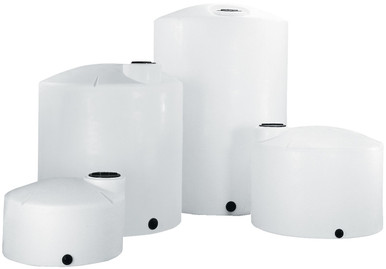
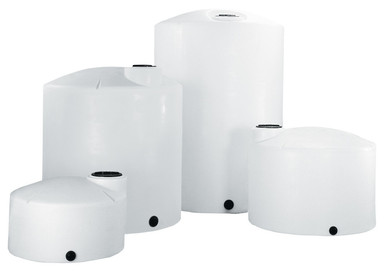
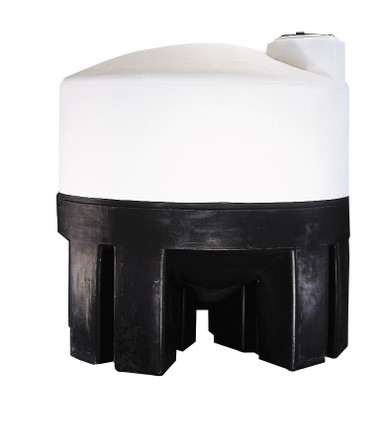
The 105-gallon vertical is a dosing-and-day-tank size. If your process needs the tank to empty completely and self-rinse between small batches, the 100-gallon 15-degree cone-bottom tank drains to the last drop through its apex on a stand. For a touch more capacity in the same slim format, the 150- and 175-gallon verticals step up; for true bulk, look to the 250 and beyond.
Other 105-Gallon Options
Frequently Asked Questions
How long will the 105 Gallon Vertical Liquid Storage Tank last?
Within its 1.5 SG and 120 F ratings and with compatible chemistry, a 105-gallon poly tank will serve well past 15 years. On a small chemical tank, seal compatibility and sun exposure drive real-world life more than the shell, which has no joint to fail.
What chemicals can I store in this tank?
Rated to 1.5 specific gravity, it handles most agricultural chemicals, fertilizers, and industrial solutions within that density, and the resin is FDA-compliant for food-grade liquids. Not for fuels, solvents, or flammables. Verify your specific chemical against a compatibility chart — and confirm your seals — before filling.
What kind of foundation does a 105-gallon tank need?
Full at the rated gravity it weighs about 1,352 pounds, so no engineered slab is required — a level surface of compacted gravel or a flat sealed floor carries it easily. Make sure the slim 23-inch base sits flat, and over a concentrate place the tank on a sealed surface or drip tray for spill control.
Does this tank come with a warranty?
Norwesco's three-year warranty covers manufacturing defects — molding voids, pinholes, and factory fitting flaws. Excluded are overloading, incompatible chemistry, and impact. Keep your receipt for any claim.
Can I install this tank underground?
No. This above-ground tank has walls that are not built to take soil pressure. For any buried installation, use a tank rated for underground service.
Buying Considerations
Confirm three things: a flat, firm spot for the slim base; that your chemical is at or under 1.5 specific gravity and compatible with the polyethylene and seals; and your spill-control plan if the contents are a concentrate. Freight is easy at this size — the tank ships LTL on a pallet, with residential lift-gate delivery available.
Related Products You May Need
Questions? Call (866) 418-1777 — our team knows these products inside and out and can help you select the right tank for your application.
Recommended Tanks for This Guide
Live pricing, updated automatically · estimate freight to your ZIP.