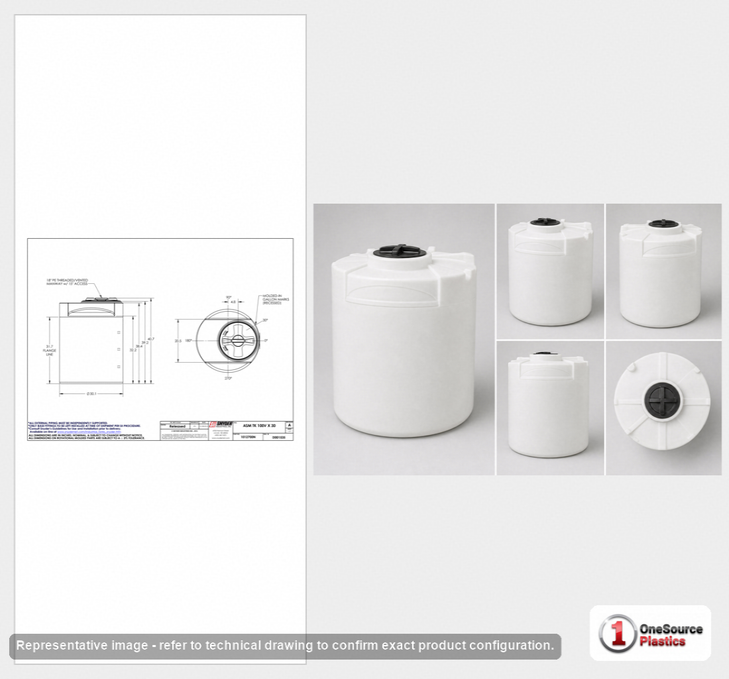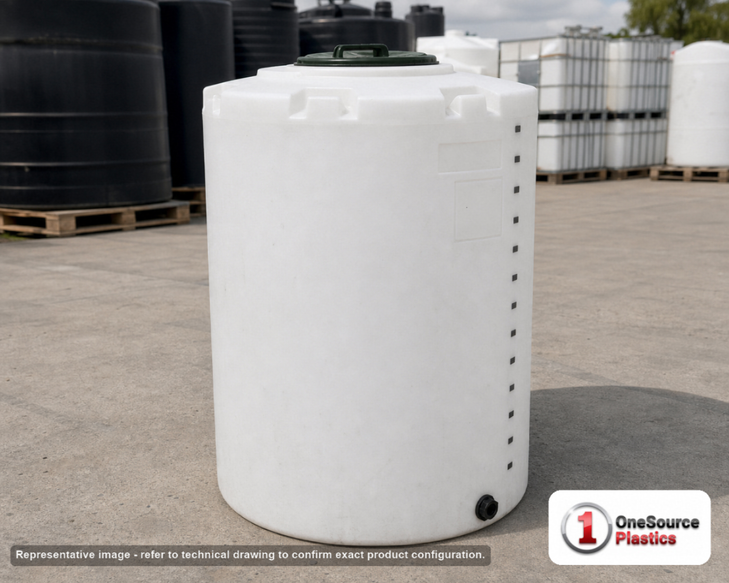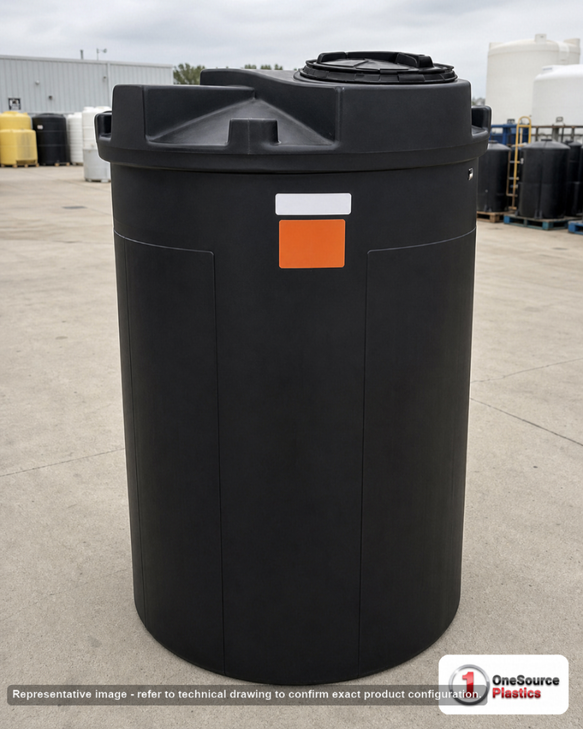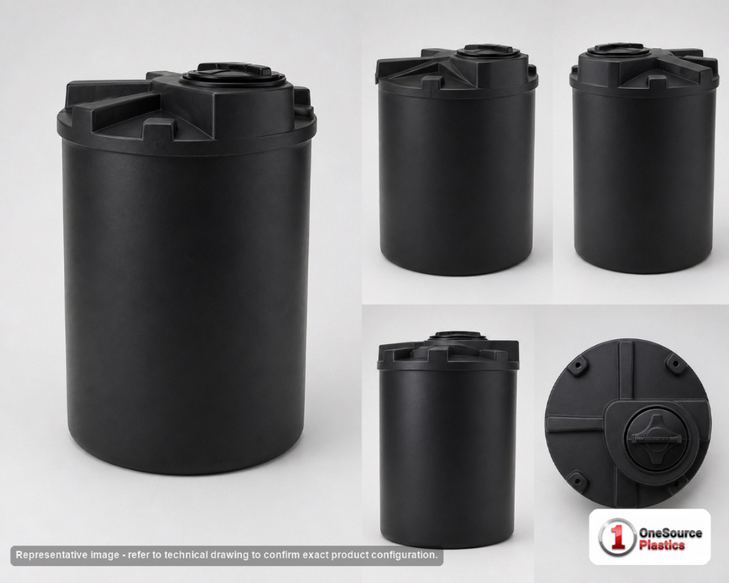
A 100 gallon chemical tank rated for liquids nearly twice as heavy as water
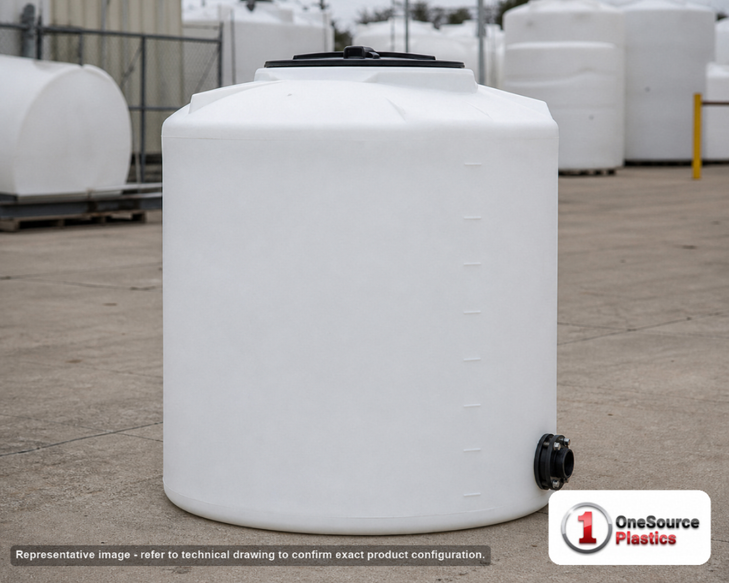
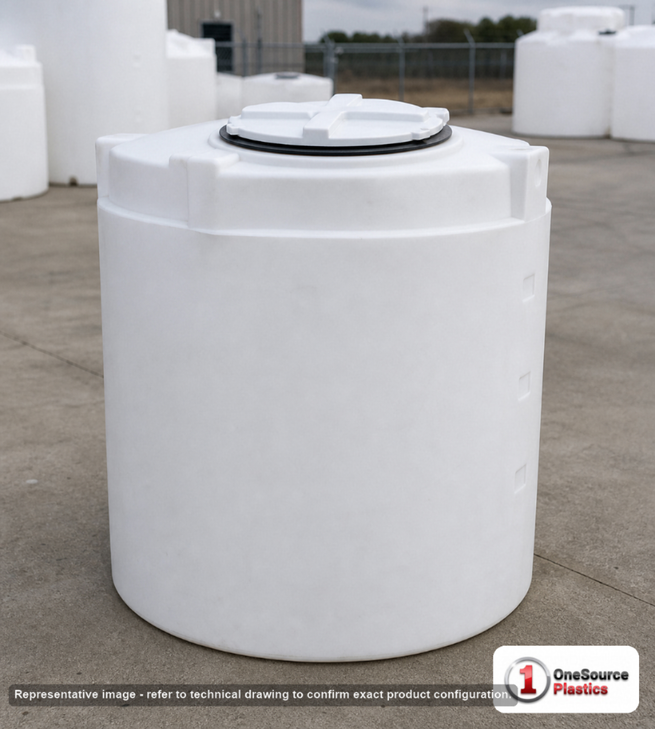
The Snyder 1012700N45 is a 100 gallon vertical chemical storage tank in white high density linear polyethylene, 30 inches in diameter and 41 inches tall, weighing 45 pounds. The number that matters is the 1.9 specific gravity rating: the wall is built for contents up to 1.9 times the density of water, which puts the maximum load at 1,585 pounds of liquid where a water tank of the same size would be designed for 834. That margin is what lets a small tank hold concentrated acids, caustics and treatment chemicals rather than rain. It ships by UPS.
Want it on your site? Get LTL freight to your ZIP, add it to your cart above, or call 866-418-1777 and a tank specialist will confirm the fit.
Reading the rating
Specific gravity is the density of the liquid relative to water. Sulfuric acid, ferric chloride and sodium hydroxide solutions all run well above 1.0, and a tank rated for 1.0 will bulge, creep and eventually split holding them. The 1.9 rating covers nearly every commodity chemical in a treatment plant; check the chemical compatibility database for the resin's resistance to your specific liquid and concentration, which is a separate question from its weight. The 30 by 30 inch footprint fits a chemical feed skid, a mezzanine corner or the back of a pickup, and the tank sizing calculator confirms whether 100 gallons covers your batch or your day tank. For a review of every 100 gallon vertical in this footprint class, the 28 x 43 inch 100 gallon buyers guide and the 23 x 63 inch 100 gallon buyers guide compare the shapes.
The 1012700 mold and its neighbors
Snyder makes this 30 by 41 inch tank in several resin and rating versions from the same mold, plus two near-sizes on a slightly wider base.
| Part | Gallons | Diameter x height | Empty weight |
|---|---|---|---|
| 1012700N45 (this tank) | 100 | 30 x 41 in | 45 lb |
| 1012700N42, XLPE | 100 | 30 x 41 in | 45 lb |
| 1012700N48 | 100 | 30 x 41 in | 45 lb |
| 5690100N42 | 90 | 34 x 41 in | 43 lb |
| 8010000N42 | 110 | 33 x 41 in | 45 lb |
Same mold, same 45 pounds, different resin: the N45 is high density linear polyethylene, the N42 is cross-linked polyethylene, and the choice is made by the chemical, not the size. Cross-linked resin is the answer for the more aggressive oxidizers and for elevated temperature. All of them stand 41 inches tall, so a shelf built for one fits any of them.
Picked the 100 gallon tank? Add it to your cart above; freight is quoted to your ZIP before you pay anything.
Fittings and access
- Outlet: 2 inch, at the bottom of the sidewall.
- Access: 18 inch threaded, vented manway, large enough to drop a mixer or a chemical feed pump suction line through.
- Service limit: 120 F / 48 C.
- Approval listed: resin.
Chemical service is where a level gauge earns its keep, because the tank is white and translucent enough to read in daylight but not in a pump room; the level gauge selection guide covers radar, ultrasonic, hydrostatic and magnetostrictive senders and which chemicals each tolerates. If the liquid needs secondary containment, the Snyder Captor 110 percent containment comparison explains when a double-wall tank replaces a berm.
Day tank duty
A 100 gallon 1.9 SG tank is the classic day tank: it holds one shift or one day of a treatment chemical drawn from a bulk tote, close to the dosing pump, where a spill is small. The tank sizing guide covers how to size a day tank against the feed rate. It is also a batch tank for mixing polymer, a brine tank for a small softener, and a make-up tank on a lab or pilot skid.
Freight for a 100 gallon tank
At 45 pounds and 30 by 30 by 41 inches, this tank ships by UPS rather than freight, which is why it is the fastest tank on this site to get; the freight cost estimator shows the cost to your ZIP. The listed price is before shipping. Unbox it, check the outlet fitting and the manway gasket, and fill it once with water to prove the seals before the first chemical goes in.
Chemicals this resin is rated for, with the fitting and gasket to order
These are the chemicals listed for this tank at the concentrations shown. Each links to the full compatibility page; confirm your exact concentration and temperature there or in the chemical compatibility database before ordering.
- acetic acid (60%, PP/PVC fittings, EPDM gaskets)
- aluminum sulfate (50%, PVC, EPDM)
- calcium chloride (40%, PVC, EPDM)
- DEF (32.5%, 316SS fittings, EPDM)
- ethylene glycol (100%, PVC, EPDM)
- ferric chloride (50%, PVC, EPDM)
- ferric sulfate (60%, PVC, EPDM)
- ferrous sulfate (20%, PVC, EPDM)
- hydrochloric acid (37%, PVC, Viton)
- hydrofluoric acid (48%, PP/PVC, Viton)
- hydrofluosilicic acid (26%, PP/PVC, Viton)
- hydrogen peroxide (50%, PVC, Viton)
- magnesium chloride (30%, PVC, EPDM)
- peracetic acid (30%, 316SS, Aflas)
- phosphoric acid (85%, PVC, Viton)
- polyaluminum chloride (PVC, EPDM)
- potassium carbonate (50%, PVC, EPDM)
- potassium hydroxide (saturated, PVC, EPDM)
- propylene glycol (PP/316SS, EPDM)
- sodium bisulfate (PVC/PP, EPDM)
- sodium bisulfite (PVC/PP, EPDM)
- sodium carbonate (30%, PVC, EPDM)
- sodium hypochlorite (under 16.5%, PVC, Viton)
- sodium thiosulfate (40%, PVC, EPDM)
- sulfuric acid (98%, CPVC, Viton)
- urea solution (50%, PP/PVC, EPDM)
- zinc orthophosphate (PP/316SS, EPDM), and ozonated water (up to 10 PPM, PVC, EPDM). Note that fitting and gasket materials change by chemical - sodium hypochlo
Freight and documents
Ships from: Philippi, WV. LTL freight is quoted to your ZIP with the freight cost estimator or by phone at 866-418-1777. The listed price is before freight.
Technical drawing (PDF) for Snyder Industries 1012700N45.
See this tank
Interactive 3D model with live fill. This tank has an interactive 3D model built to its manufacturer dimensions. Rotate it, and set a fill level to see how much liquid it holds at any height. Open the 3D view on the product photo above. Download the 3D model (GLB).
Product video. Watch the Snyder Industries 100 Gallon HDLPE Vertical Chemical Storage Tank in White video (71 seconds) with dimensions, fittings and shipping notes.
Ready to order?
Add it to your cart at the top of this page, get LTL freight to your ZIP, request a written quote, or call 866-418-1777. The listed price is before freight.