200 Gallon Vertical Liquid Storage Tank - Natural White (30" x 72") #41856: Complete Buyer's Guide
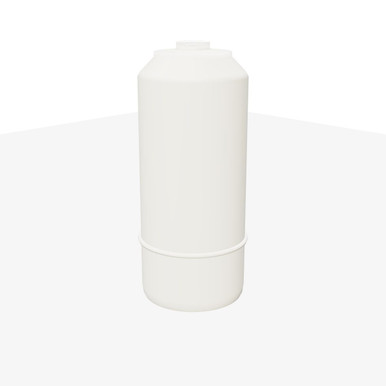
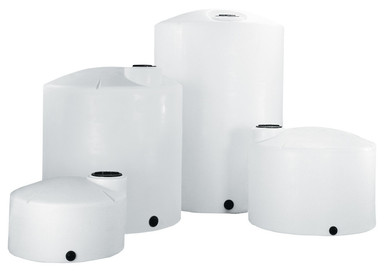
200-gallon white liquid storage tank built for agricultural chemical and fertilizer storage. Manufactured by Norwesco from virgin linear polyethylene (HDPE) rated to handle liquids up to 12.5 pounds per gallon. FDA approved for contact with potable water, ensuring safe storage for drinking water and food-grade liquids.
Specifications at a Glance
Every figure below is pulled straight from the live product record for this exact tank — the same data on the product page, so what you read here and what you buy never disagree.
Standards & Materials
- ASTM D1998 — Standard Specification for Polyethylene Upright Storage Tanks. Governs wall-thickness and hydrostatic design for vertical rotomolded poly tanks of this class.
- FDA 21 CFR 177.1520 — Olefin polymers. The food-contact regulation the FDA-grade resin in this tank is compounded to meet.
- Specific gravity rating 1.5 — the tank is engineered for liquids up to 1.5× the density of water (water is about 8.34 lb/gal). Confirm your fluid’s SG before storage.
Product Overview
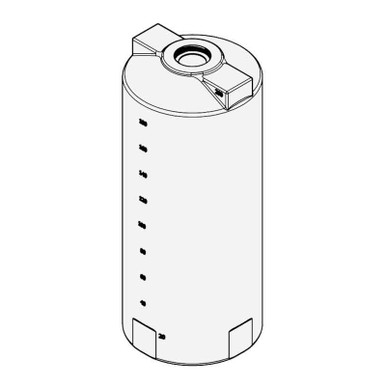
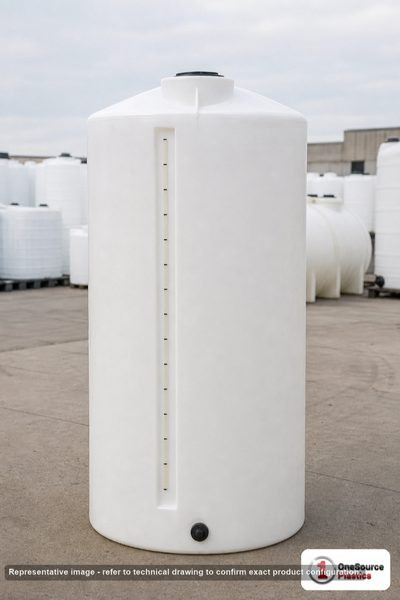
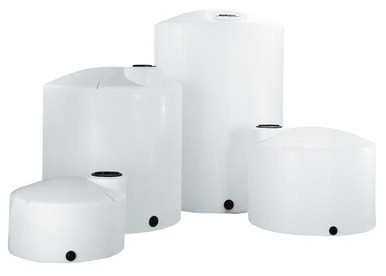
Tank 41856 is a 200 Gallon Vertical Liquid Storage Tank in translucent white, sized as a slim 72-inch column on a 30-inch base for chemical and fertilizer service where vertical space is plentiful and floor space is not. At 200 gallons it makes a practical day tank or a feed reserve in a multi-tank chemical layout.
Molded in a single rotational pass from virgin linear polyethylene and rated to 1.5 specific gravity, it carries the denser liquids of agriculture and industry up to 12.5 pounds per gallon in a seamless wall with no weld to fail. The translucent shell doubles as a built-in sight gauge, so the level is visible from across the pad, and it reflects sun to hold the chemical's temperature down.
This tank weighs 54 pounds empty and roughly 2,556 pounds full with a 1.5-SG liquid, all of it concentrated under a 4.9-square-foot base. It ships with a factory 2-inch NPT outlet and an 8-inch lid; there is no inlet, by design, so you place a bulkhead exactly where your fill plumbing wants it. Like every tank we handle, it is inspected before it ships.
Key Features and Specifications
- 200-gallon capacity — sized for agricultural chemical and fertilizer storage
- Constructed from virgin linear polyethylene (HDPE) with 1.5 specific gravity rating — handles liquids up to 12.5 lbs/gal
- 72" tall x 30" diameter — compact vertical footprint
- 54 lbs empty, approximately 2,556 lbs when full at rated specific gravity
- 2 NPT outlet fitting — factory installed and leak-tested
- 8" lid opening for fill, venting, and interior access
- FDA approved for potable water and food-grade liquid contact
- 3 Year Warranty from Norwesco against manufacturing defects
- Translucent white walls allow visual level monitoring without opening the tank and reflect sunlight to keep contents cooler
- Rated for continuous service up to 120 F / 48 C
- Seamless one-piece rotational molding — no seams, no welds, no leak points
- Manufactured by Norwesco — a leading name in rotomolded polyethylene tanks
- Place on a firm, level surface free of rocks or sharp objects that could damage the tank bottom. Ensure adequate ventilation if stored chemicals produce vapors
- Ships via LTL freight on a pallet — residential delivery with lift gate available
Installation and Setup Guide
With tank 41856 the governing fact is slenderness: a 200-gallon charge stacked into a six-foot column over a 30-inch base means the weight — about 2,556 pounds full — comes down through a small circle, and the height makes the tank top-sensitive to any lean. Treat the base flatness and a tip restraint as the two things you cannot skip, and treat the plumbing as secondary.
Site Preparation
Begin with a true, firm bearing surface a touch larger than the 30-inch base — a four-inch concrete pad is ideal, a tightly compacted stone bed acceptable — leveled to a quarter inch. The reason is mechanical: a column that stands even slightly off-vertical loads one edge of its lower wall, exactly where the chemical head presses hardest, and fatigue starts there. Anchor the upper body to a wall or frame anywhere impact is possible.
Placement and Connections
For discharge, work off the factory 2-inch outlet and break the connection with a chemically compatible flexible coupling so the tank's fill-and-empty movement is absorbed before it reaches the bulkhead. Because no inlet is provided, drill your fill bulkhead at the height your system needs and seal it with a fitting compatible with the chemical. Snug every poly thread by hand, a quarter turn past tight, and keep the wrench away.
Venting
Venting on a tall, narrow chemical tank is unforgiving: the air swing on a fast draw concentrates at the 8-inch lid, and a plugged vent answers with a vacuum that can crimp the upper wall. Keep the relief path clear, and where the chemistry off-gasses or is volatile, fit a pressure/vacuum relief vent rated to that specific chemical instead of a bare screen.
Maintenance and Long-Term Care
Servicing tank 41856 is chemical-tank work, not potable-tank work, and the see-through wall turns most of the inspection into a quick visual from a few feet away. Keep attention on the things a tall, light chemical column actually cares about: a level base, compatible and tight fittings, and a correctly rated vent.
Quarterly Inspection Checklist
- Vertical check: Eye the six-foot column against a true vertical reference; any lean traces back to base settlement and shows soonest at the top.
- Fitting and bulkhead review: Look over the 2-inch outlet and your fill bulkhead for chemical seepage and re-confirm material compatibility with the current product.
- Pad inspection: Make sure the small base has not dropped on one side after rain or frost heave.
- Relief-vent check: Confirm the 8-inch lid vent or pressure/vacuum relief is open and matched to the stored chemistry.
Cleaning
When you change products in this tank, decontaminate to the chemical supplier's procedure rather than trusting a water rinse to clear residue from the wall. The 2-inch bottom outlet empties the column, and the 8-inch lid lets you reach in for inspection under appropriate chemical-handling precautions. It is a dedicated chemical-storage vessel — do not press it into potable-water duty.
UV and Weather Protection
The translucent white resin reflects a share of incoming sunlight and carries a UV stabilizer package, but no stabilizer is permanent; on a sun-exposed column, give the bright face an annual look for chalking. The reflectivity also keeps the slim wall from swinging as far in temperature between midday and night, which is easier on the tank over time.
Alternatives and Comparisons
Tank 41856 is the space-saving column take on 200 gallons of chemical; the broader 35-by-59 version of the same capacity buys stability at the cost of floor area. Smaller jobs suit the 150- and 100-gallon verticals, larger ones the 250- and 300-gallon tanks. Pick the silhouette your pad can accommodate, then the volume.
Vertical vs. Horizontal: Vertical tanks use less floor space for the same capacity but require more overhead clearance. If you have height restrictions, consider a horizontal or low-profile tank. Vertical tanks also drain more completely due to gravity — the liquid column above the outlet creates positive pressure all the way to the last few gallons.
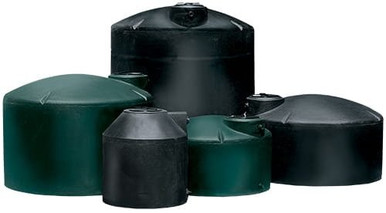
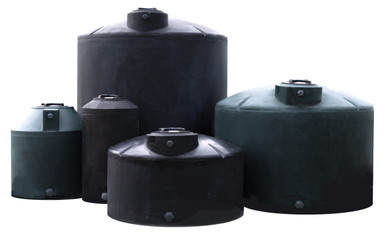
Other 200-Gallon Options
Frequently Asked Questions
How long will the 200 Gallon Vertical Liquid Storage Tank - Natural White (30" x 72") #41856 last?
Given a level base, operation inside the 1.5 SG limit, and decontamination between chemistries, tank 41856 serves well beyond fifteen years. Its one-piece wall cannot delaminate; the realistic life-limiters are a base that lets the column lean or a chemical the resin cannot tolerate, not the passage of time.
What chemicals can I store in this tank?
Its 1.5 specific gravity rating covers agricultural chemicals, liquid fertilizers, and most industrial solutions to 12.5 pounds per gallon — provided you confirm the exact chemical against a polyethylene compatibility chart first. Flammables, fuels, and solvents are out, and this is a chemical tank, not a drinking-water vessel.
What kind of foundation does a 200-gallon tank need?
Loading about 2,556 pounds through a narrow 30-inch base, this column needs a flat, firm pad — four-inch concrete or tightly compacted stone — held level to a quarter inch. The slim profile makes flatness a safety issue, since an out-of-level base lets a tall tank lean.
Does this tank come with a warranty?
Yes — Norwesco's 3-year warranty addresses manufacturing defects under normal use, not overfilling past 1.5 SG, a poor or sloped install, chemical attack, or impact. Retain your receipt and an install photo.
Can I install this tank underground?
No. The flat wall is built for above-ground service and cannot withstand backfill pressure; burying it would collapse the tank and void the warranty. Choose a ribbed underground tank for any below-grade requirement.
Buying Considerations
Verify overhead clearance for a 72-inch tank, a base you can bring flat to a quarter inch, and a means to restrain the upper body where it could be bumped. Above all, confirm your chemical is compatible with polyethylene before designating this as its tank — that check governs everything downstream.
Related Products You May Need
Questions? Call (866) 418-1777 — our team knows these products inside and out and can help you select the right tank for your application.
Recommended Tanks for This Guide
Live pricing, updated automatically · estimate freight to your ZIP.