A 60 gallon heavy duty cone bottom mixing tank in natural white, 30 inches across
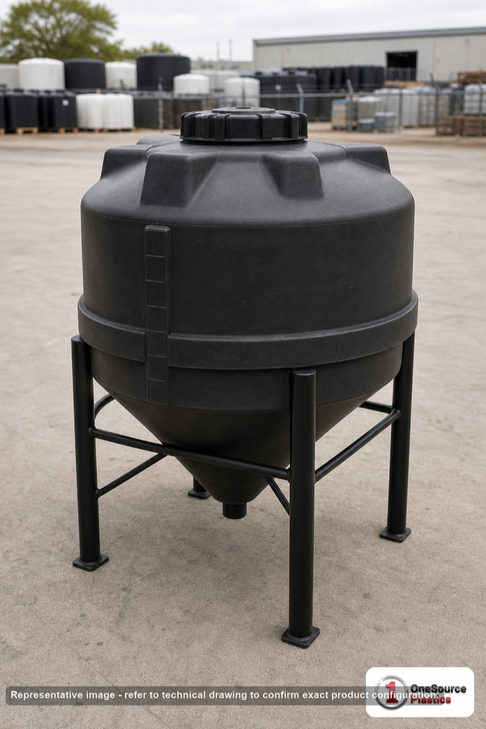
Snyder part number 32419 is a 60 gallon heavy duty cone bottom mixing tank in natural white high density linear polyethylene, 30 inches in diameter and 29 inches tall, weighing 30 lb empty. The wall is rated for liquids up to 1.9 specific gravity, with a service limit of 100 F (37 C). The top is a 20 inch threaded vented manway, wide enough to pour bags in, get a paddle or mixer shaft down, and reach inside to clean. 60 gallons of water weighs about 500 lb; at the full 1.9 rating a batch weighs about 951 lb. Through the natural wall you can see the batch level.
What size batch do you run? Call 866-418-1777 with the liquid and the volume, or get freight to your ZIP and add it to your cart above.
A working size for mixing
Sixty gallons is a common batch size for spray mixes, cleaning and sanitizing solutions, dosing day tanks and small process blends. The cone bottom is why this tank exists: it gathers the batch to a single low point so it drains completely, which means less waste at the end of a run and a clean start for the next mix. The natural wall shows you the level as you fill, which helps when you are measuring ingredients in by volume.
The 1.9 rating covers heavy mixes up to 1.9 times the weight of water: brines, concentrated fertilizer blends and many treatment chemicals, where polyethylene suits them. Check the liquid in our chemical compatibility guide. Mixing tank buyers most often look up urea solution, sodium hypochlorite, propylene glycol and calcium chloride. Natural white lets light through, so for light sensitive liquids the black version is the better buy.
The temperature limit is 100 F, and in a mixing tank that is a real constraint. Some acids and caustics heat as they are diluted, and a batch can climb past the limit even with cold ingredients; tell us the mix if it warms. For fertilizer blends that settle into layers, our note on fertilizer blend stratification covers how to catch it.
What to check before you buy
- Stand. No stand is listed with this part number, and a cone bottom tank needs one to sit level with room under the tip for a valve. Our cone bottom tank stand compatibility matrix covers which stands fit; we can add the right one to your order.
- Outlet. No outlet fitting is listed with this part number. Tell us the valve size and whether a pump draws from it, and we will confirm with Snyder what comes fitted.
- Mixer. If a mixer mounts on the tank, tell us its weight and shaft length before you order so we can check the fit through the 20 inch opening.
- Level. For metered dosing, our level gauge selection guide compares the sensor types.
- Drawing. Snyder's drawing for 32419 is linked under Technical Drawing on this page.
Sizes nearby
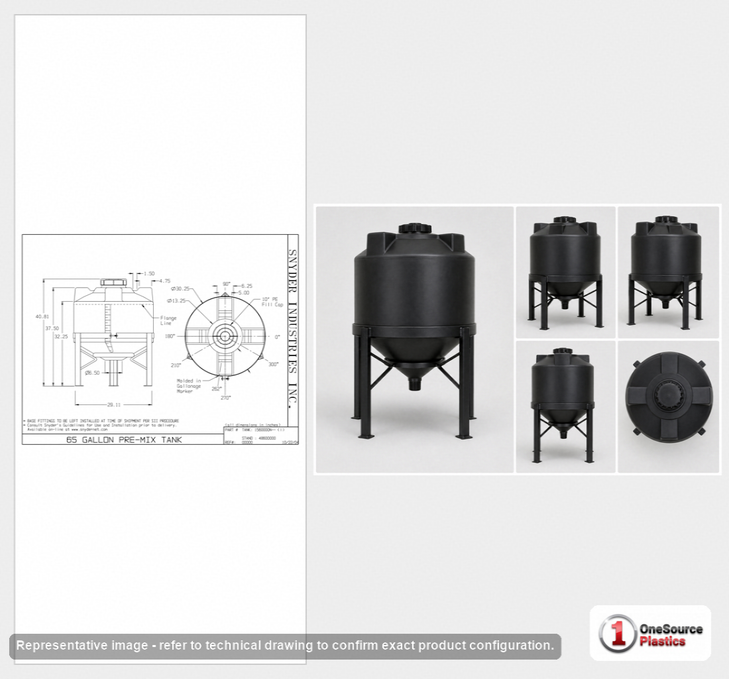
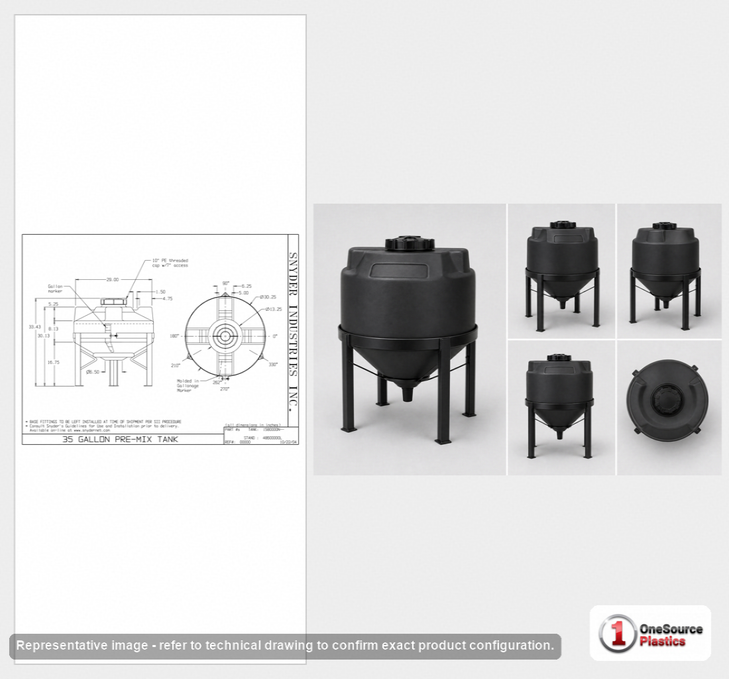
Same tank in black: the 60 gallon black heavy duty cone bottom mixing tank 32419B. Smaller is the 35 gallon heavy duty cone bottom mixing tank 1580000N51; slightly larger, the 65 gallon heavy duty cone bottom mixing tank 1560000N51. Compare each page's dimensions with your stand. The tank sizing calculator and tank sizing guide help choose.
Shipping and receiving
The tank ships at freight class 300 from the nearest of Snyder's plants in Albertville, Alabama, Lincoln, Nebraska and Merced, California, 30 by 30 by 29 inches at 30 lb. Order a stand and fittings with it so they arrive together. On arrival, check the bill of lading against 32419 and look the cone over for damage. Set it in its stand and fill it with water to check for leaks before the first batch.
Ready to order? Add it to your cart at the top of this page, get LTL freight to your ZIP, or call 866-418-1777. The listed price is before freight.
Freight and documents
Ships from: Lincoln, NE; Merced, CA; Albertville, AL. LTL freight is quoted to your ZIP with the freight cost estimator or by phone at 866-418-1777. The listed price is before freight.
Technical drawing (PDF) for Snyder Industries 32419.
See this tank
Interactive 3D model with live fill. This tank has an interactive 3D model built to its manufacturer dimensions. Rotate it, and set a fill level to see how much liquid it holds at any height. Open the 3D view on the product photo above. Download the 3D model (GLB).
Ready to order?
Add it to your cart at the top of this page, get LTL freight to your ZIP, or call 866-418-1777. The listed price is before freight.