1250 Gallon Vertical Liquid Storage Tank: Complete Buyer's Guide
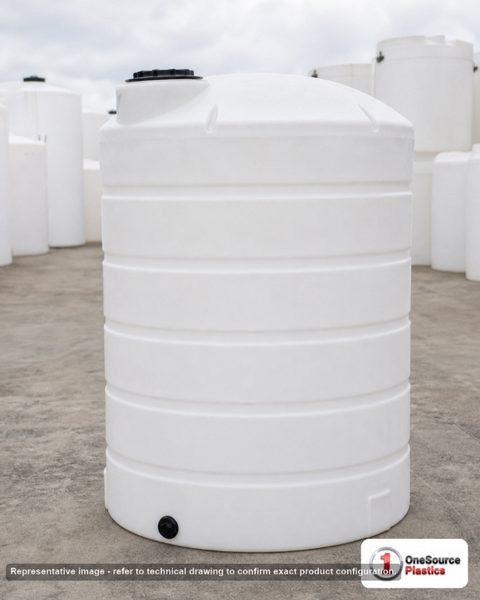
The 1,250-gallon vertical is a step up from the standard thousand-gallon class — a Norwesco bulk liquid tank rated to a 1.5 specific gravity for agricultural chemical and fertilizer storage. It adds a quarter again as much capacity for operations that find a thousand gallons just short of a full cycle.
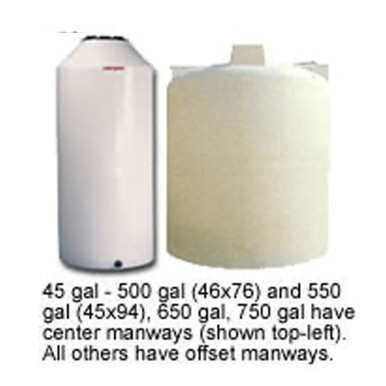
Technical Drawing
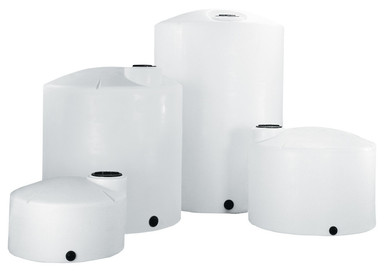
Official Norwesco technical drawing — 1250 Gallon Vertical Liquid Storage Tank
Specifications at a Glance
Every figure below is pulled straight from the live product record for this exact tank — the same data on the product page, so what you read here and what you buy never disagree.
Standards & Materials
- ASTM D1998 — Standard Specification for Polyethylene Upright Storage Tanks. Governs wall-thickness and hydrostatic design for vertical rotomolded poly tanks of this class.
- FDA 21 CFR 177.1520 — Olefin polymers. The food-contact regulation the FDA-grade resin in this tank is compounded to meet.
- Specific gravity rating 1.5 — the tank is engineered for liquids up to 1.5× the density of water (water is about 8.34 lb/gal). Confirm your fluid’s SG before storage.
Installation and Setup Guide
The 1,250-gallon sits in the comfortable mid-bulk range where installation is straightforward but the full load is heavy enough to demand a real foundation. Treat the pad as the project's foundation in every sense.
Site Preparation
Provide a substantial level base — a deep compacted-gravel pad, or better, a concrete slab specified for a full 1,250-gallon load of dense chemical. Level it carefully across the full base; an uneven foundation under a heavy tank concentrates stress and accumulates damage over many fill cycles. Ensure the subgrade is compacted and won't settle differentially, clear all rock and debris, and grade so runoff drains away from the base rather than undermining it.
Placement and Connections
Run the outlet for the shortest practical line to your transfer pump, and fit a flexible coupling in the first foot off the bulkhead. A mid-bulk tank flexes as it fills and empties, and a rigid connection will work the fitting loose or crack it over time. Leave clearance around the tank to reach connections and walk it for inspection, and match valve and fitting materials to the chemical being stored.
Venting
A closed tank must breathe in both directions. Pull product out faster than air can enter and the wall implodes under vacuum; pump it in faster than air can escape and the tank pressurizes. Fit a vent in the lid sized to your fastest fill or draw rate. For agricultural chemistry that off-gasses, use a pressure/vacuum relief vent rated to the vapor rather than an open screen.
Maintenance and Long-Term Care
A mid-bulk chemical tank asks little, but at twelve hundred fifty gallons a neglected problem represents a meaningful volume and a real spill risk. Fold a routine look into your chemical-handling schedule.
Quarterly Inspection Checklist
- Foundation: Verify the pad is still level and the tank hasn't shifted or settled at any edge. Look for erosion, settling, or washout around the base — the most common root cause of stress problems on heavy tanks.
- Wall: Walk the tank looking for bulging, discoloration, or any change in how light passes through the wall, with extra attention to the lower wall where hydrostatic pressure concentrates.
- Fittings: Check the outlet and any inlet for weeping or crystallized residue. Hand-tighten only; polyethylene takes a set under load and over-torquing crushes the threads.
- Vent: Confirm the vent is clear and the screen isn't blocked — a plugged vent is the leading cause of a deformed poly tank.
Cleaning and Changeover
Before switching chemicals, drain and flush per the outgoing product's procedure. The residual volume in a poorly cleaned twelve-hundred-gallon tank is enough to contaminate or react with the next load, so don't shortcut it. Confirm the floor is clear of settled solids through the lid, verify the polyethylene is compatible with the incoming chemistry, and capture rinsate as the chemical's label requires.
UV and Weather
The molded-in UV stabilizers protect the resin for years, but inspect the sun-facing wall annually for chalking or fading. If the tank sits in relentless open sun, a shade structure or a westward wall extends its service life in a hard-UV climate — plan it before the surface starts to degrade.
Alternatives and Comparisons
Twelve hundred fifty gallons sits between the common sizes, so the comparison is about run time and shape:
This versus a standard 1,000-gallon: if a thousand gallons leaves you just short of a full work cycle, the 1,250 adds a useful reserve on a similar foundation footprint — the better choice when refill frequency is the bottleneck rather than floor space.
Vertical versus horizontal at this volume: this vertical uses less floor and drains more completely under its own liquid column. Choose a horizontal tank only if an overhead height limit forces the issue, accepting the larger floor footprint that comes with it.
Other -Gallon Options
Frequently Asked Questions
How long will the 1250 Gallon Vertical Liquid Storage Tank last?
Fifteen to twenty years is realistic with a level base and use within the 1.5-SG and standard temperature ratings. The main life factors on a mid-bulk tank are foundation quality and chemical compatibility; the seamless rotomolded wall has no weld seams to fail, so a non-settling pad and a compatible product carry it to the upper end of the range.
What chemicals can I store in this tank?
Rated to a 1.5 specific gravity, this tank handles agricultural chemicals, liquid fertilizers, herbicides, pesticides, and industrial and treatment solutions up to 12.5 pounds per gallon. It is not for gasoline, diesel, solvents, or any flammable liquid. Polyethylene resists most acids and bases but is attacked by certain hydrocarbons and strong oxidizers — confirm the specific chemical on a compatibility chart before filling.
Does this tank come with a warranty?
Yes — Norwesco backs it with a 3-year warranty against defects in materials and workmanship: factory cracks, pinholes, fitting flaws, and material failures. It does not cover storing a product heavier than the 1.5-SG rating, uneven or improper installation, chemical attack from an incompatible liquid, or impact damage. Keep your receipt and a photo of the level install.
Can I install this tank underground?
No — this is an above-ground vertical and is not engineered to resist soil pressure. Burying it would collapse the cylindrical wall and void the warranty. For below-grade storage, use a purpose-built underground cistern with a reinforced, ribbed wall designed for soil load.
Buying Considerations
Before ordering, confirm three things. Measure your installation space for the tank plus clearance to reach the outlet and lid. Verify your stored product is at or under 1.5 SG — running heavier voids the warranty and risks the wall. And provide a level pad — deep gravel or, better, concrete — that won't settle under a full twelve-hundred-fifty-gallon load. It ships LTL on a pallet; request a liftgate if you're unloading without a dock or forklift.
Related Products You May Need
Questions? Call (866) 418-1777 — our team knows these products inside and out and can help you select the right tank for your application.
Recommended Tanks for This Guide
Live pricing, updated automatically · estimate freight to your ZIP.