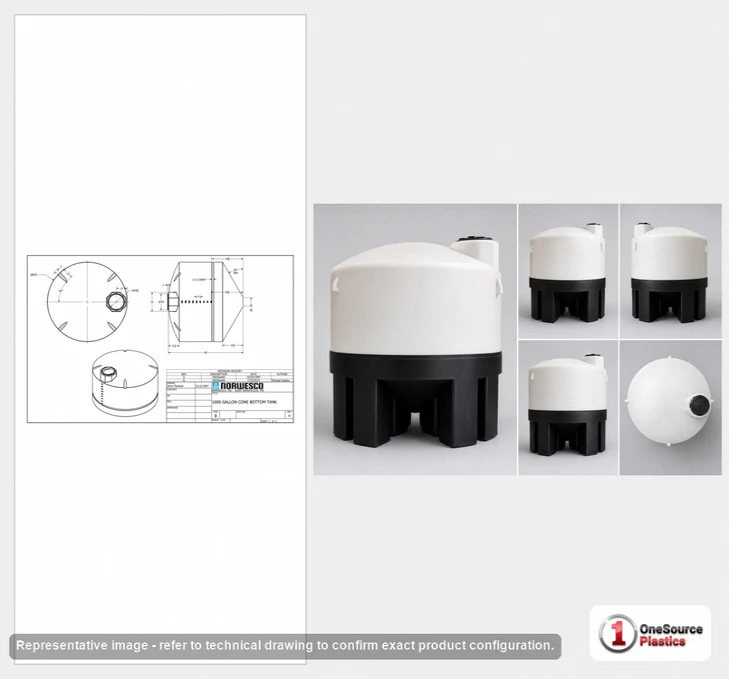
A 1020 gallon heavy duty 15 degree cone bottom tank that drains itself empty
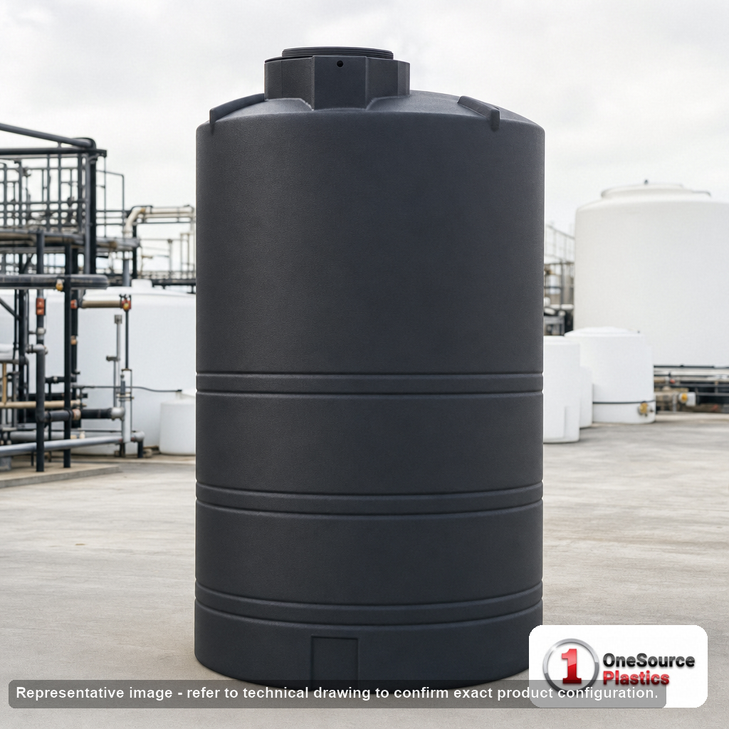
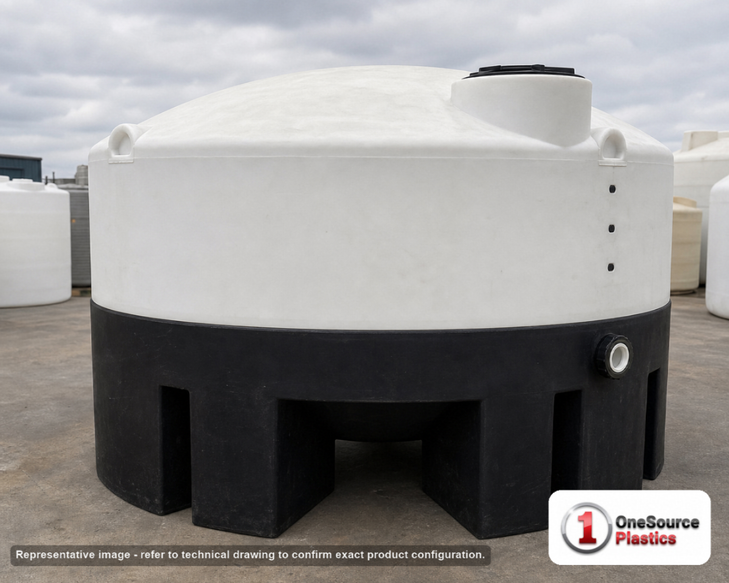
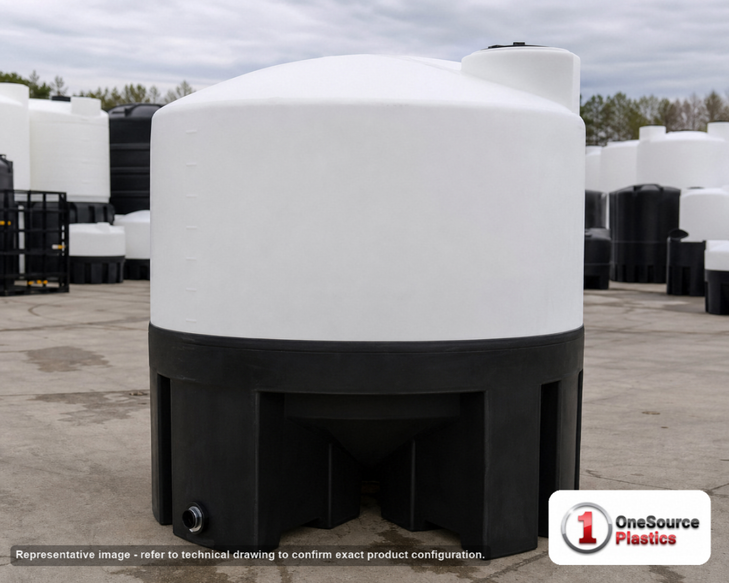
The Norwesco 1020 gallon 15 degree vertical cone bottom tank, part number 44420, is a light blue high density linear polyethylene tank 91 inches in diameter and 53 inches tall, weighing 233 lb empty. A cone bottom tank has no flat base: the floor slopes to a centre outlet so the tank drains completely, with no heel left behind to dilute the next batch or to pump out by hand. The 15 degree cone is the shallow one in Norwesco's range, which is why 1020 gallons sits only 53 inches tall on a 91 inch diameter; it empties fully without the height a steeper cone needs. Because there is no flat base the tank needs its stand, Norwesco part N-64090, which is sold separately. It comes with a 2 inch polypropylene female NPT bulkhead fitting as the outlet and a 16 inch threaded vented manway on top. Norwesco rates it for liquids up to 1.9 specific gravity, which covers water, fertilizer solutions, brines and most common chemicals up to 15.87 lb per gallon; 1020 gallons of water weighs 8507 lb. The resin is FDA compliant per Norwesco, the service limit is 120 F, and Norwesco backs it with a 3 year warranty.
Order the stand with it. Call 866-418-1777 and we put the tank and stand N-64090 on one order, or get freight to your ZIP and add it to your cart above.
Where a shallow cone earns its place
Buy a cone bottom when the tank has to empty completely every time: batch mixing where the next batch must not be contaminated by the last, chemical dosing where every gallon is paid for, fertilizer blending, and any process where sediment has to be drawn off the bottom. The 15 degree cone is the choice when headroom is short; liquids that settle heavy solids drain more reliably from a steeper cone, which is where Norwesco's 30 and 45 degree tanks come in. Our cone bottom buyer's guide to 15, 30 and 45 degree cones works through that decision, the 1020 gallon 15 degree cone bottom tank buyer's guide covers this tank in detail, and the cone bottom stand compatibility matrix confirms which stand goes with which tank.
What goes in it
Water, liquid fertilizer and the treatment and process chemicals that polyethylene handles are the normal loads, and the 1.9 rating covers the heavy ones. Check anything else in our chemical compatibility guide first; the entries for sodium hypochlorite, sulfuric acid, phosphoric acid, potassium hydroxide and urea solution are the ones cone bottom buyers ask about most. Tell us the liquid and the concentration before you order and we will confirm the match. For the volume, use the tank sizing calculator and the tank sizing guide.
Openings, fittings and the stand
- Outlet. A 2 inch polypropylene female NPT bulkhead fitting at the bottom of the cone. Your valve threads straight into it. Fit the valve before the first fill, and support the valve and the first length of pipe so the fitting carries liquid, not hardware.
- Manway. A 16 inch threaded vented manway on top: wide enough to fill from a hose or a pump, drop a float in, and get a hand and a brush inside.
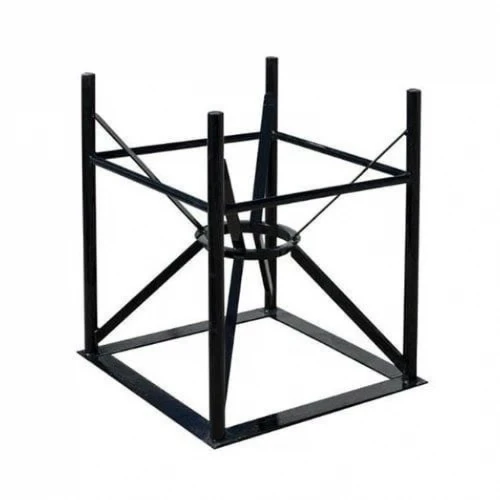
- The stand. Required, sold separately: Norwesco N-64090. Put it on the same order. The stand sets the height of the outlet above the floor, which decides what fits underneath: a valve and a hose, a drum, a pump inlet or a mixer. Measure that equipment before you order.
- Drawing. Norwesco's drawing for this tank, linked under Technical Drawing on this page, shows the cone geometry and the outlet position.
Sizes nearby
The same tank with the standard 1.5 rated wall, for water and lighter liquids: the 1020 gallon 15 degree cone bottom tank in white; the rating swatch above the price switches between the two. One size up in the 15 degree line: the 1320 gallon 15 degree cone bottom tank. The same volume with the steep cone for heavy solids: the 1000 gallon 45 degree cone bottom tank.
Shipping and receiving
The tank ships LTL, 91 by 91 by 53 inches, from Norwesco's Shawnee, Oklahoma or St. Bonifacius, Minnesota plant, whichever is nearer. The listed price is before freight; the freight cost estimator gives the lane cost to your ZIP, or request a written quote for a job that needs paperwork. A stand ordered with the tank travels with it. Set the stand first, level across both diagonals, then lower the tank in and turn it so the outlet points where the pipe will run. At the tailgate, check the part number against 44420 on the bill of lading, look at the cone tip and the outlet boss for transit damage, and fill with water the first time before it carries anything else.
Questions before you order? Call 866-418-1777.
Freight and documents
Ships from: Shawnee, OK. LTL freight is quoted to your ZIP with the freight cost estimator or by phone at 866-418-1777. The listed price is before freight.
Technical drawing (PDF) for Norwesco 44420.
See this tank
Interactive 3D model with live fill. This tank has an interactive 3D model built to its manufacturer dimensions. Rotate it, and set a fill level to see how much liquid it holds at any height. Open the 3D view on the product photo above. Download the 3D model (GLB).
Product video. Watch the Norwesco 1020 Gallon 15 Degree HDPE Vertical Cone Bottom Tank video (67 seconds) with dimensions, fittings and shipping notes.
Ready to order?
Add it to your cart at the top of this page, get LTL freight to your ZIP, request a written quote, or call 866-418-1777. The listed price is before freight.