Tank Truck Unloading Hose Engineering: Composite Wrapped Versus Steel-Braided Versus Stainless Corrugated Metal Selection by Chemistry, Pressure, and Service Life Across Industrial and Agricultural Tank Receiving Operations
The tank truck unloading hose is the temporary connection between the tanker discharge fitting and the tank receiving fitting during a chemistry delivery. The hose carries the chemistry under positive pressure (when the tanker uses pump-off discharge) or under modest vacuum (when the tank uses pump-pull receiving). The hose is in service for 30 to 90 minutes per delivery, then disconnected and stored or rolled up on the tanker. Across hundreds of deliveries per year on a busy chemistry-receiving operation the hose accumulates wear, chemistry exposure, mechanical fatigue, and connection cycle wear that progressively reduce its strength and chemistry-containment integrity.
This article compares the three primary tank truck unloading hose technologies (composite wrapped, steel-braided rubber, and stainless corrugated metal), their chemistry compatibility, pressure ratings, service life, and selection criteria. The discussion is grounded in hose engineering practice, manufacturer compatibility cross-references for the 5-brand catalog of Norwesco, Snyder, Chem-Tainer, Enduraplas, and Bushman, and field experience at chemistry-receiving operations. List pricing on each tank product page; LTL freight quoted to your ZIP via the freight estimator or by phone at 866-418-1777.
1. The Tank Truck Unloading Operation Overview
The tank truck unloading operation establishes the operational context for hose engineering:
- The tanker discharge configuration. A typical chemistry tanker carries 3,000-7,500 gallons in a single compartment or 2-3 compartments with separate valves. The discharge fitting is typically 2-inch, 3-inch, or 4-inch with a flange or quick-connect coupler. The discharge pump is mounted on the tanker (PTO-driven from the truck or independent diesel pump) producing typical 30-60 psi discharge pressure at 80-200 gallons per minute flow rate.
- The receiving tank fitting. The tank receiving fitting is typically 2-inch, 3-inch, or 4-inch matching the tanker discharge. The fitting is on a tee with a check valve or a manual ball valve, leading to the tank inlet line. The fitting may be on the tank top (gravity-feed receiving) or on the tank side (pressure-pump receiving). Tank-top receiving requires the hose to climb from the tanker discharge level up to the tank top.
- The hose deployment routine. The driver pulls the hose from the tanker storage location (typically a hose rack on the side of the tanker or coiled on the deck), uncoils the working length, walks one end to the receiving connection, walks the other end back to the tanker discharge, and connects both ends. The hose may run along the ground for 30-100 feet between connections or may climb a tank-top stair to reach an elevated fitting.
- The pressure cycle profile. The hose sees zero pressure during connection and disconnection. During unloading the pressure ramps up to discharge pressure (30-60 psi typical), holds during the unload, and ramps back to zero at end-of-unload. The pressure cycle counts as one fatigue cycle. Annual cycle count for a busy operation is 200-500 cycles per hose.
- The hose service life expectations. A composite hose in chemistry service typically gives 3-7 years of service. A steel-braided rubber hose in chemistry service typically gives 5-10 years. A stainless corrugated metal hose typically gives 10-20 years. The cost-per-cycle depends on hose initial cost, service life, and replacement frequency.
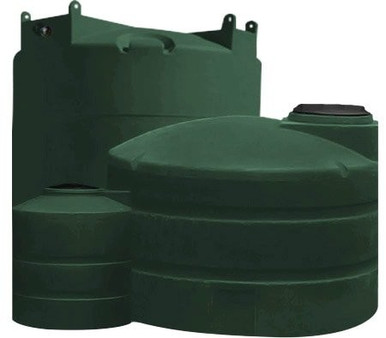
- Reference tank for receiving operations. Reference N-40164 5000 gallon Norwesco vertical as the typical mid-volume chemistry receiving tank where unloading hose engineering applies. The tank receives one or two tanker deliveries per week and the hose is dedicated equipment of the tanker fleet that serves multiple receiving sites.
The unloading operation establishes the duty cycle that drives hose selection. The chemistry, pressure, frequency, and handling demands together determine which technology suits the operation.
2. Composite Wrapped Hose Technology Profile
The composite wrapped hose is the current dominant technology for chemistry-service tanker unloading:
- The construction. A composite hose consists of an inner thermoplastic film (PTFE, polyethylene, or polypropylene depending on chemistry), multiple intermediate layers of plastic film and fabric reinforcement, and an outer abrasion-resistant cover. The inner film provides chemistry containment; the reinforcement layers provide pressure containment; the outer cover provides mechanical protection. The hose is flexible and lightweight relative to steel alternatives.
- Pressure rating. Composite hose pressure ratings vary by manufacturer and construction; typical chemistry-service composite is rated 150-300 psi working pressure with 600-1200 psi burst pressure. The 4-to-1 safety factor between working and burst is standard. The working pressure is well above the typical 30-60 psi tanker discharge pressure.
- Chemistry compatibility breadth. The PTFE-lined composite handles essentially all industrial chemistries including concentrated acids, oxidizers, hydrocarbons, and aqueous chemistry. The PE-lined composite handles a narrower range (typically aqueous chemistry, brine, and dilute acids). The PP-lined composite handles aqueous chemistry and dilute solvents. The lining material is selected for the chemistry; the typical chemistry-service hose is PTFE-lined for breadth.
- Service life and replacement criteria. Composite hoses are inspected at each connection cycle for visible damage. Hoses with kinks, cuts in the outer cover, exposed reinforcement, or any sign of inner liner failure are removed from service. The typical composite hose service life is 3-7 years with regular replacement schedule.
- Cost. A 25-foot 3-inch chemistry-service composite hose with stainless or aluminum end fittings typically costs $400-$1,200 depending on chemistry compatibility and reinforcement specification. The cost-per-cycle over a 5-year, 200-cycle-per-year service life is roughly $0.50-$1.50.
- Tank receiving fitting compatibility. Composite hose end fittings are typically cam-and-groove (Camlock) couplers in 2-inch, 3-inch, or 4-inch sizes. The Camlock coupler mates with the matching adapter on the tank receiving fitting. Camlock connections are quick (30 seconds per end) and require no tools.
Composite hose is the typical chemistry-service tanker hose. The cost, weight, flexibility, and chemistry compatibility profile suits most receiving operations.
3. Steel-Braided Rubber Hose Technology Profile
The steel-braided rubber hose is the legacy technology with continuing service life:
- The construction. A steel-braided rubber hose consists of an inner rubber liner (Buna-N, EPDM, or Viton depending on chemistry), one or two layers of steel wire braid reinforcement, and an outer rubber cover. The construction is the standard industrial-hose pattern and has been in service for many decades.
- Pressure rating. Steel-braided rubber hose pressure ratings are typically 150-400 psi working with 600-1600 psi burst. The pressure capability is generally higher than composite at equivalent diameter, suiting higher-pressure applications.
- Chemistry compatibility narrower than composite. The rubber liner determines chemistry compatibility. Buna-N covers many hydrocarbons and water-service chemistries. EPDM covers hypochlorite, dilute acids, and oxidizing chemistries where Buna-N fails. Viton covers concentrated acids and aromatic solvents. Each liner type covers a specific chemistry range; cross-chemistry use damages the liner.
- Service life and replacement criteria. Steel-braided hose is inspected for visible cuts in the cover, exposed steel braid (which corrodes and weakens), kinks, and any sign of liner damage. The hose is removed from service when any of these conditions appear. Typical service life is 5-10 years with appropriate chemistry matching.
- Cost. A 25-foot 3-inch chemistry-service steel-braided hose with stainless end fittings costs typically $300-$800 depending on liner specification and reinforcement layer count. The cost is somewhat lower than composite at equivalent specification, but the chemistry-compatibility narrower scope can require multiple hoses for a multi-chemistry operation.
- Tank receiving fitting compatibility. Steel-braided hose end fittings are typically Camlock couplers, like composite. The connection workflow is identical.
Steel-braided rubber hose is the right choice for single-chemistry operations where the rubber liner is matched to the chemistry, and where the higher pressure capability is needed. The technology is mature and the cost-per-cycle competitive.
4. Stainless Corrugated Metal Hose Technology Profile
The stainless corrugated metal hose is the premium technology for aggressive chemistry and long service life:
- The construction. A stainless corrugated metal hose consists of an inner corrugated stainless tube (304, 316L, or higher grades) with an outer stainless wire braid for pressure containment. The corrugation provides flexibility (the tube bends without permanent deformation); the braid carries the longitudinal pressure load. The construction has no rubber or polymer components.
- Pressure rating. Stainless corrugated metal hose pressure ratings are typically 200-600 psi working with 800-2400 psi burst. The pressure capability is the highest of the three technologies. The hose handles severe pressure cycling without elastomer fatigue.
- Chemistry compatibility broad. 316L stainless handles essentially all industrial chemistry except a few specific aggressive cases (concentrated hydrochloric acid, hot fluoride compounds, some hot salt solutions). Higher alloys (Hastelloy, Alloy 20) extend the compatibility range. The stainless construction has no chemistry attack on liner material because there is no liner.
- Service life and durability. Stainless corrugated metal hose typical service life is 10-20 years. The failure modes are stainless wire braid corrosion (slow in most chemistries) or corrugation fatigue (from severe cycle counts in extreme bend configurations). The hose tolerates abuse that destroys composite or rubber hoses.
- Cost. A 25-foot 3-inch stainless corrugated metal hose with stainless end fittings costs typically $1,500-$4,000 depending on alloy and construction specification. The initial cost is 3-5x composite or rubber but the long service life produces lower cost-per-cycle for high-duty operations.
- Weight and handling. Stainless metal hose is heavier than composite or rubber by typically 2-3x for equivalent length and diameter. Handling is more demanding; tankers using metal hose typically have powered hose reels rather than manual coiling. The weight matters operationally on routine connect-disconnect work.
- Tank receiving fitting compatibility. Stainless metal hose end fittings are typically welded flanges or threaded couplings. The connection is slower than Camlock (typically 2-5 minutes per end with bolts and gaskets) but the pressure rating supports higher discharge pressures and tighter sealing.
Stainless corrugated metal hose is the right choice for aggressive chemistry, high-pressure operations, or installations where service life over 10 years is operationally important.
5. The Selection Decision Framework
The hose selection follows a structured decision framework:
- Step 1: Chemistry compatibility cut. Identify the chemistries the hose will handle. Cross-check each chemistry against the candidate hose liner or tube material. Eliminate hose technologies that cannot handle the chemistry. For multi-chemistry operations, either select a hose with broad compatibility (PTFE-lined composite or stainless metal) or specify dedicated hoses per chemistry.
- Step 2: Pressure rating cut. Confirm the candidate hose pressure rating exceeds the maximum operating pressure with adequate safety factor (typically 4-to-1 burst-to-working). Most chemistry-service operations use modest pressures and all three technologies meet the requirement; high-pressure applications (above 100 psi continuous) drive selection toward steel-braided or stainless metal.
- Step 3: Service life and cycle count analysis. Estimate the annual cycle count and target service life. For low-cycle operations (50-100 cycles per year) any technology suffices; for high-cycle operations (300-500 cycles per year) the cost-per-cycle analysis often selects composite or stainless metal over rubber for the lower replacement frequency.
- Step 4: Weight and handling assessment. Confirm the hose weight is manageable for the deployment crew. Manual coiling and connection works for composite and rubber up to 4-inch diameter; stainless metal at 3-inch and above typically requires powered hose reels or mechanical handling assistance.
- Step 5: Initial cost and lifecycle cost comparison. Calculate the initial cost and the projected total cost over the planned operational period. Composite is typically lowest initial cost; stainless metal is typically lowest lifecycle cost on high-duty operations; rubber falls in between for matched-chemistry single-product service.
- Step 6: End-fitting and receiving-tank compatibility. Confirm the hose end fittings match the tanker discharge and the tank receiving fittings. Mixed Camlock and flange systems require adapter fittings that add cost and complexity. Standardization on one fitting type across the fleet simplifies operations.
- Reference 2500 gallon tank for procurement scale. Reference N-41524 2500 gallon Norwesco as the smaller chemistry-receiving tank where the same hose engineering applies. The smaller tank typically receives less frequently and may use composite hose dedicated to the operation; larger tank operations may justify the stainless metal investment for the longer service life.
The decision framework produces a defensible selection. The selection is then reviewed periodically against actual operational experience and cost-per-cycle data to refine future procurement.
6. Connection and Disconnection Best Practices
The hose connection and disconnection procedure has direct implications for chemistry release prevention:
- Pre-connection inspection. Before connecting the hose to the tanker discharge or tank receiving fitting, inspect the hose visually along its full length. Check end-fitting seals for damage. Verify the hose pressure rating tag is current and the chemistry-compatibility marking matches the chemistry.
- Connection sequence. Connect the tank-receiving end first (typically the higher elevation), then the tanker-discharge end. The sequence places the hose under gravity hold against the tank receiving fitting before the tanker pressure is available, reducing the risk of disconnect under pressure.
- Camlock arm verification. Camlock couplers are secured by two arms that swing into position to lock. Both arms must be fully seated with the locking pin engaged. A single arm partially seated can release under pressure with chemistry release. Visual verification at every connection is required.
- Slow pressurization. The tanker discharge pump is started at low speed and ramped up to operating speed. Slow pressurization allows the hose to reach equilibrium pressure progressively rather than slamming to full pressure. The slow start reduces shock loading on the hose and the connections.
- Disconnection sequence. At end of unloading the tanker pump is stopped and pressure is allowed to bleed off (typically 30-60 seconds for the residual hose pressure to drop below 5 psi). The tanker-discharge end is disconnected first (lower elevation), then the tank-receiving end. The hose drains into the tanker compartment as it is disconnected, recovering residual chemistry.
- Post-disconnection cleaning. The hose end fittings are wiped clean of chemistry residue with appropriate cleaning material. The hose is allowed to drain fully or is purged with air or nitrogen if the chemistry residue is hazardous. The hose is then coiled or rolled and stored on the tanker for the next delivery.
The connection and disconnection best practices are well-established in tanker operating procedures. The discipline matters because most chemistry release events at tanker unloading operations originate from connection or disconnection errors rather than hose failures.
7. Inspection, Testing, and Replacement Cadence
The hose inspection and testing cadence supports reliable long-term service:
- Pre-use visual inspection at every connection. Before each unloading the hose is inspected end-to-end. Visible damage requires hose removal and replacement before use.
- Quarterly hydrostatic test. Every 3 months the hose is hydrostatic-tested to 1.5x working pressure with water as the test fluid. The hose is held at test pressure for 5 minutes and inspected for leaks, ballooning, or end-fitting movement. Failed tests require hose retirement.
- Annual chemistry compatibility verification. Annually the hose chemistry compatibility tag and the actual chemistry list of the operation are verified to match. Any chemistry change in the operation triggers immediate hose compatibility re-verification.
- End-of-service-life retirement. Each hose has a manufacturer-specified service life (typically 5-10 years for composite and rubber, 15-20 years for stainless metal). The hose is retired at the service-life expiration regardless of apparent condition; aging effects can be subtle and develop in service.
- The post-incident retirement. Any hose involved in a release event, drop, severe kink, or chemistry exposure beyond its rating is retired immediately and not returned to service. The post-incident retirement avoids the case where a damaged hose is returned to service and fails on a subsequent operation.
- Reference 1000 gallon tank for smaller-scale receiving. Reference N-40152 1000 gallon Norwesco vertical as the smaller receiving tank where lighter-duty hose suffices. The 1000 gallon tank typically receives via 2-inch hose with lower flow rate and shorter unload duration; the same inspection cadence applies but with lower hose cost.
The inspection, testing, and replacement cadence is the operational discipline that holds chemistry containment integrity across the hose service life. The cadence is straightforward but requires consistent execution across all hoses in the fleet.
8. The Tank Truck Unloading Hose Conclusion
Tank truck unloading hose engineering balances chemistry compatibility, pressure rating, service life, weight, handling, and cost across the three primary technology choices: composite wrapped, steel-braided rubber, and stainless corrugated metal. The selection is matched to the operational duty cycle; composite is the typical choice for general chemistry-service operations; steel-braided rubber serves matched-chemistry operations with cost sensitivity; stainless metal serves aggressive-chemistry, high-pressure, or long-service-life operations. The connection-disconnection procedure, the inspection cadence, and the chemistry-compatibility discipline are essential to safe and reliable unloading regardless of which hose technology is selected.
OneSource Plastics ships polyethylene tanks across the 5-brand catalog (Norwesco, Snyder, Chem-Tainer, Enduraplas, Bushman) with manufacturer-published receiving fitting specifications that accommodate the hose end-fitting range described here. The hose selection is performed by the customer site engineer with reference to the operational chemistry and the tanker fleet specification. List pricing on each product page; LTL freight to your ZIP via the freight estimator or by phone at 866-418-1777. For related receiving and plumbing engineering see tank plumbing system design and fitting and bulkhead sizing.
Recommended Tanks for This Guide
Live pricing, updated automatically · estimate freight to your ZIP.