
Choosing Dairy Processing Equipment
Choosing Dairy Processing Equipment
Dairy is one of the least forgiving products to process and one of the easiest to scale wrong. Sound equipment decisions early save expensive retrofits later.
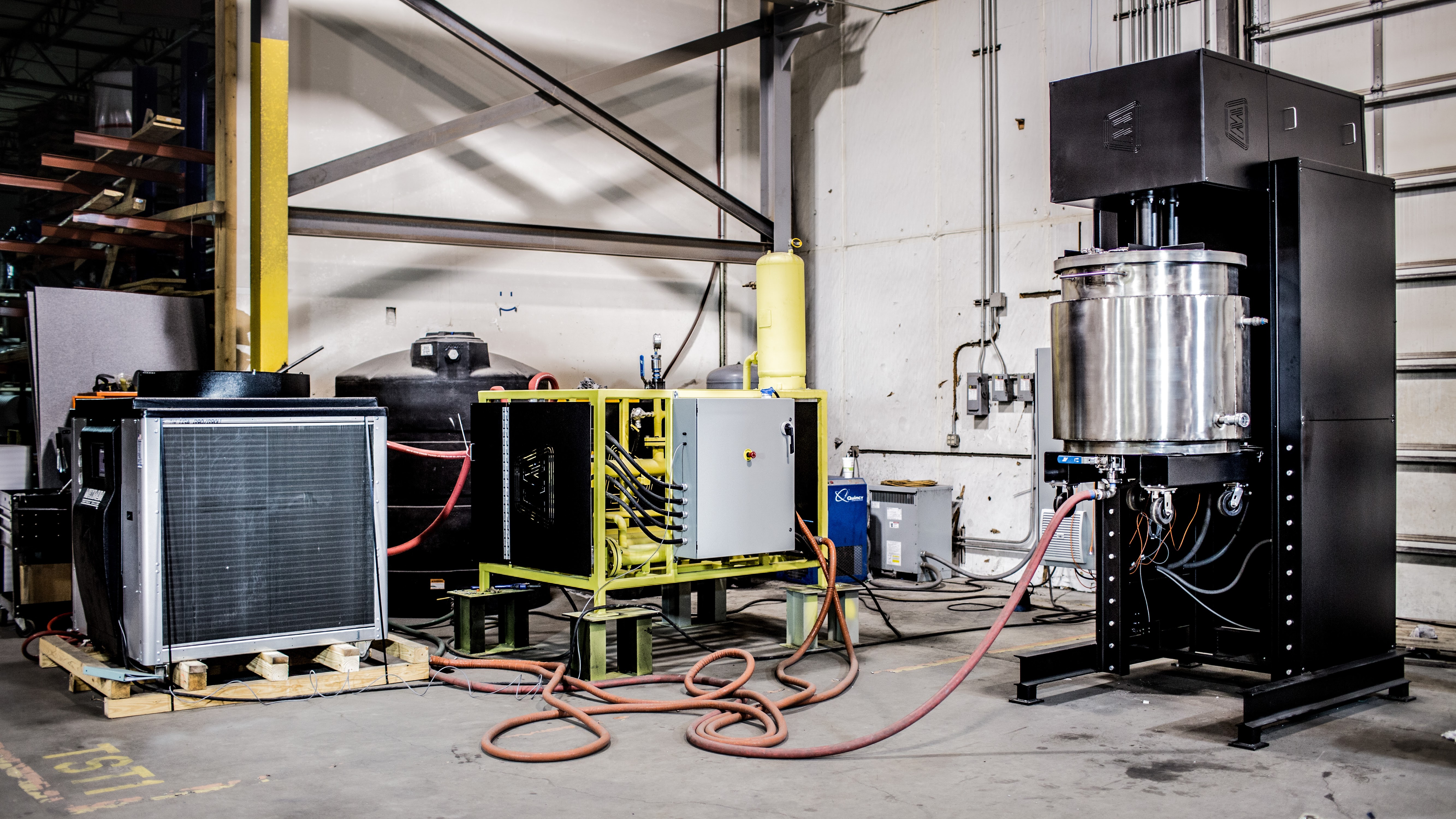
Dairy Is a Sanitary Process First
Milk and dairy products are highly perishable, nutrient-rich, and capable of supporting rapid microbial growth, which is why dairy processing is governed by some of the most demanding hygiene expectations in the food industry. Equipment selection always begins from sanitary design rather than from throughput. A vessel that cannot be reliably cleaned and verified clean has no place in a dairy plant regardless of how cheap or large it is.
The practical baseline is hygienic design aligned with 3-A Sanitary Standards, the cleanability expectations behind FDA regulation, and the structure of a plant's HACCP plan. For fluid milk specifically, processors operate within the pasteurization and handling framework long codified in U.S. dairy practice, which sets expectations for time and temperature, equipment, and record-keeping. The takeaway for equipment buyers is that contact surfaces, welds, finishes, and drainability are not optional features — they are the entry ticket.
This is why a dairy plant cannot be assembled from generic tanks. A vessel may hold the right volume and even carry an attractive price, but if its interior cannot be reached by a spray device, its bottom does not drain completely, or its welds harbor crevices, it cannot be cleaned to standard and therefore cannot be used for product. Sanitary suitability is a gate that must be passed before any other consideration — capacity, throughput, or cost — even enters the conversation.
The Core Tank Types in a Dairy Plant
Most dairy operations are built from a small family of vessel types, each with a defined job:
- Receiving and raw storage (silos) tanks: hold incoming raw milk cold and gently agitated to prevent fat separation before processing.
- Balance tanks: small constant-level vessels that feed a continuous pasteurizer or separator at a steady head, decoupling upstream supply from downstream demand.
- Processing and batch tanks: jacketed, agitated vessels for standardizing, blending, culturing, or batch heat treatment.
- Storage and surge tanks: hold finished or in-process product cold and homogeneous ahead of filling.
Each is built in 316/316L stainless with polished contact surfaces, sloped drainable bottoms, and hygienic fittings, and each is sized to the production rhythm of the plant rather than to a generic catalog volume. The grade matters: 316/316L contains molybdenum that improves resistance to the chlorides present in cleaning chemicals and some dairy soils, and the low-carbon 'L' designation reduces the risk of corrosion-prone carbide formation at welds. In sanitary service where welds are everywhere, that detail directly affects how long a vessel resists pitting and stays cleanable.
Batch Versus Continuous: The Defining Decision
The single biggest equipment decision a dairy operation makes is whether to process in batches or continuously. The right answer depends almost entirely on volume, product mix, and how much flexibility the business needs.
| Factor | Batch Processing | Continuous Processing |
|---|---|---|
| Best volume range | Lower / variable | High / steady |
| Product flexibility | High (easy recipe changes) | Lower (set up per product) |
| Capital cost | Lower to start | Higher up front |
| Labor per unit | Higher | Lower |
| Cleaning frequency | Per batch | Scheduled / between runs |
| Typical use | Startups, specialty, cultured | Fluid milk, large-scale |
A startup making cultured products or small specialty runs is usually better served by jacketed, agitated batch tanks: lower capital, easy recipe changes, and the ability to make many products on the same equipment. A plant running high volumes of a stable product mix benefits from continuous lines built around balance tanks, separators, and continuous heat exchangers, where the per-unit labor and energy costs fall sharply at scale.
It is also worth being honest about the hidden costs of each approach. Batch operation carries higher labor and a cleaning cycle for every batch, which limits how many batches a day a single vessel can turn. Continuous operation lowers per-unit cost but is less forgiving of product changes and demands a more sophisticated control and balancing scheme to keep flow steady. Many mid-size dairies run a hybrid plant — continuous for their core high-volume product and batch for specialty or seasonal lines — which captures the efficiency of continuous processing where volume justifies it while keeping the flexibility of batch where it counts.
Jacketing, Agitation, and Temperature Control
Dairy products must be heated gently and cooled quickly. Jacketed vessels — using a dimple or half-pipe jacket fed with steam, hot water, chilled water, or glycol — provide the controlled, surface-distributed heat transfer that protects the product from scorching and lets a batch be brought down to cold storage temperature promptly after treatment. Agitation keeps the batch uniform in temperature and composition and prevents fat from rising or proteins from settling, but it must be gentle: excessive shear can damage milk fat globules and degrade texture, so low-shear anchors and slow turbines are typical rather than high-speed dispersers.
Clean-In-Place Is Part of the Vessel, Not an Add-On
Dairy soils — protein, fat, and mineral scale — are tenacious and require a disciplined cleaning regime. Clean-in-place systems circulate a programmed sequence of pre-rinse, hot caustic wash to remove protein and fat, acid wash to remove mineral deposits, and a sanitizing final rinse, all without disassembling the vessel. For CIP to validate, the tank must be designed so that spray devices reach every internal surface, the bottom drains completely with no pooling, and there are no dead legs in fittings or outlets where solution cannot flow. Specifying CIP compatibility when the tank is built — spray-ball placement, drainage slope, dead-leg-free valves — is far cheaper than discovering a cleaning blind spot after installation.
Building for the Next Stage
The plants that scale smoothly are the ones whose early equipment choices anticipate growth: contact surfaces and finishes that already meet sanitary expectations, tanks tied together with cleanable hygienic piping, controls that can later be automated for recipe management and CIP sequencing, and physical space left for the balance and surge tanks a continuous line will need. Treating the first tanks as part of a future process train, rather than as standalone equipment, is what lets a dairy operation grow without tearing out and replacing what it already owns.
Cultured and Specialty Dairy Considerations
Many dairy startups grow on cultured products — yogurt, kefir, cheese, cultured creams — rather than fluid milk, and these place specific demands on the tanks. Culturing requires holding a batch at a precise incubation temperature for hours, which makes accurate jacket control and good insulation important so the batch neither overshoots nor drifts. Cheese making adds the need for gentle stirring and controlled cutting of the curd, so cheese vats are built with specialized agitation and sometimes integrated cutting tools rather than a general-purpose mixer. The common thread is that the vessel is matched to the biochemistry of the product: the gentle, precise, hold-and-control requirements of cultured dairy differ markedly from the rapid heat-and-cool duty of fluid milk processing.
Standardization — adjusting the fat and solids content of milk to a target by blending cream, skim, and whole streams — is another tank-centric step. It relies on accurately metered additions and thorough, gentle blending so the finished composition is uniform and on-specification. Whether done by batch in an agitated tank or continuously in line, standardization is where many of a plant's blending and metering vessels earn their keep.
Specifying Tanks That Will Last
Because dairy equipment is a long-lived capital asset, the specification details that seem minor at purchase have outsized consequences over a decade of service. Surface finish determines how readily soils release and how effectively CIP validates; weld quality determines whether crevices form where bacteria can harbor; drainage slope determines whether product and cleaning solution clear completely or pool and stagnate. Hygienic fittings, dead-leg-free valves, and accessible inspection ports make routine verification practical rather than a chore that gets skipped.
A dairy operation that invests in correctly specified, sanitary, jacketed, gently agitated, CIP-ready vessels — sized to today's batches but laid out for tomorrow's continuous line — builds a foundation it can grow on. The plants that struggle are usually the ones that bought generic tanks to save money early and then discovered they could neither clean them to standard nor expand around them. In dairy, getting the tank fundamentals right is the cheapest decision a producer ever makes.
Frequently asked questions
- Should a new dairy startup choose batch or continuous equipment?
- Most startups are better served by jacketed, agitated batch tanks because they cost less up front, allow easy recipe changes, and let one set of equipment make many products. Continuous processing pays off at high, steady volumes where the lower per-unit labor and energy costs justify the larger capital investment. A common path is to start batch and add continuous capacity once a specific product proves out at volume.
- What is a balance tank and why does a dairy line need one?
- A balance tank is a small constant-level vessel that feeds a continuous pasteurizer or separator at a steady head, decoupling the variable upstream supply from the constant downstream demand. It keeps the flow rate and pressure into the heat exchanger stable, which is essential for consistent treatment. Without it, surges and starvation upstream would disrupt the continuous process.
- Why must dairy tanks be designed for clean-in-place from the start?
- Dairy soils such as protein, fat, and mineral scale are tenacious and require a programmed cleaning sequence of pre-rinse, caustic, acid, and sanitizing rinse. For that cycle to validate, the tank must drain completely, expose every surface to the spray device, and have no dead legs where solution cannot flow. Designing in spray-ball placement, drainage slope, and dead-leg-free valves at build time is far cheaper than fixing a cleaning blind spot later.
- Why is gentle agitation important in dairy processing?
- Agitation keeps a batch uniform in temperature and composition and prevents fat from separating or proteins from settling, but excessive shear can rupture milk fat globules and degrade product texture. Dairy vessels therefore use low-shear elements such as anchors and slow turbines rather than high-speed dispersers. The goal is thorough, gentle turnover, not aggressive mixing.
Scope your custom build
Send us your volume, service chemistry, dimensions, and finish or code requirements. We return a full engineering package, firm lead time, and a fixed quote — freight quoted separately to your ZIP.
Request a Custom QuoteCall 866-418-1777