
Spray Ball Coverage & Rotary Wash Heads
Spray Ball Coverage & Rotary Wash Heads
The spray device is where a wash succeeds or fails. Choosing between a static spray ball, a rotary head, and a rotary jet head comes down to one question: how much mechanical energy does your soil demand?
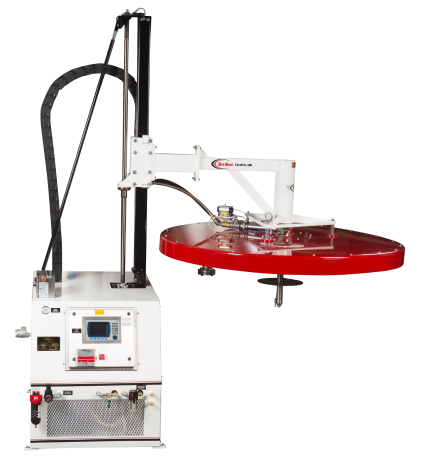
The Job of a Spray Device
Inside a tank, the mechanical force that lifts soil off the walls is delivered by the spray device. Cleaning chemistry and heat soften and dissolve residue, but something must physically apply that solution to every interior surface with enough energy to break the soil loose and carry it to the drain. The spray device is that something. Whether it is a simple fixed ball or a precision rotary jet head, its job is to ensure complete interior coverage — no surface left dry, no shadow left uncleaned — with the right amount of impact for the soil at hand.
Three families of device dominate tank and container washing, and they represent a spectrum of mechanical energy. At one end, the static spray ball floods surfaces gently with a sheeting curtain of solution. In the middle, the rotary spray head adds movement and slightly more directed flow. At the far end, the rotary jet head concentrates flow into high-impact streams that scan the tank in a programmed pattern. Understanding how each works, and what coverage and impact each delivers, is the foundation of choosing the right one.
Static Spray Balls
A static spray ball is a fixed perforated sphere or hemisphere mounted in the top of the tank. Cleaning solution is pumped into it and escapes through a pattern of drilled holes or slots, forming sprays that strike the upper walls and then sheet down the interior as a flooding curtain. There are no moving parts, which makes the static spray ball simple, reliable, and inexpensive to maintain. It is the classic clean-in-place device for sanitary tanks that drain freely and carry light, water-soluble soils.
The static spray ball cleans primarily by the sheeting action of solution flowing down the walls under gravity, supplemented by the direct spray near the top. This works well when the soil is loose or already dissolved by chemistry and heat, but it delivers relatively low mechanical impact. Its effectiveness falls off in large-diameter tanks, where the curtain thins out before it reaches the bottom, and in tanks with internal obstructions that cast shadows the sheeting flow cannot wrap around. Because the spray pattern is fixed, the hole layout must be matched to the tank so that every wall, the underside of the top head, and the area around the outlet are wetted.
Rotary Spray Heads
A rotary spray head adds motion. The flow of cleaning solution drives the head to rotate slowly, sweeping its spray pattern — typically fan sprays or jets — around the tank interior. By moving the spray, a rotary head distributes solution more evenly than a fixed ball and directs more concentrated flow at the walls rather than relying on a flooding curtain. This improves coverage and raises the mechanical energy applied to the surface, making it suitable for moderate soils that a static ball would struggle with.
Rotary spray heads bridge the gap between the gentle flooding of a static ball and the aggressive impingement of a jet head. They cover the tank more thoroughly because the moving spray reaches surfaces and angles a fixed pattern would miss, and they put more energy on each surface because the flow is directed rather than diffused. The trade-off is the introduction of a moving mechanism — bearings and a drive — that must itself be hygienic, cleanable, and maintained. For many general-purpose washing duties with moderate residues, the rotary spray head is a sensible balance of coverage, impact, and simplicity.
Rotary Jet / Impingement Heads
The rotary jet head, also called an impingement head, is the high-energy device. Instead of a continuous spray, it projects concentrated, high-velocity streams from a small number of nozzles, and a geared mechanism rotates and indexes those nozzles so the streams sweep the entire interior in a precise, repeating geometric pattern. Over a full cycle, the jets scan every surface multiple times, each pass blasting soil loose with high mechanical impact.
This impingement action delivers far more energy than sheeting or fan sprays, which is why rotary jet heads handle the most tenacious, dried, baked-on, or oily soils and clean large vessels that no static ball could manage. Critically, because the energy is concentrated in jets rather than spread across a flooding curtain, a jet head achieves full coverage and high impact with significantly less water and chemistry. That efficiency matters at scale, where reduced water, chemical, heating, and effluent costs add up over many cycles. The cost is mechanical complexity: a precision geared head with moving parts that must be cleanable, periodically inspected, and maintained.
Coverage, Impact, Flow, and Pressure
Selecting and sizing a spray device comes down to a few interacting parameters. Coverage and impact are the goals; flow and pressure are the means.
| Device | Mechanical Impact | Coverage Method | Relative Water Use |
|---|---|---|---|
| Static spray ball | Low | Direct spray plus sheeting flow | Higher |
| Rotary spray head | Moderate | Rotating directed sprays | Moderate |
| Rotary jet head | High | Indexed high-velocity jets | Lower |
- Coverage. Every interior surface must be wetted with cleaning solution — walls, top head, bottom, and the shadowed areas behind baffles, agitator shafts, and nozzles. The device must be sized to the tank diameter and depth so its spray or jets reach and overlap everywhere.
- Impact. The mechanical energy striking the surface. Light soils need little impact; tenacious or dried soils need the concentrated impact of a jet head. Matching impact to soil is the core selection decision.
- Flow. The volume of solution the device passes. Static balls and fan-spray heads generally need higher flow to flood the surface; jet heads use less flow but apply it as high-velocity streams.
- Pressure. The pressure at the device drives the spray pattern and, for jet heads, the velocity and impact of the streams. The supply pump must deliver the device's rated flow at its rated pressure, or coverage and impact both fall short.
Matching the Device to the Tank
The right choice flows from the soil, the tank, and the economics. A small, well-drained sanitary tank carrying a light, water-soluble residue is well served by a simple static spray ball: reliable, cheap to maintain, and entirely adequate. A general process tank with moderate soils benefits from the better coverage and higher impact of a rotary spray head. A large vessel, or one with stubborn baked-on, dried, or oily residue, calls for a rotary jet head, whose high-impact indexed jets clean what gentler devices cannot and do so with less water and chemistry despite the higher hardware cost.
Whatever device is chosen, two facts hold. First, the device must be sized to the specific tank so its pattern reaches every surface; an undersized device in an oversized tank leaves the lower walls and far corners uncleaned. Second, the supply pump must meet the device's flow and pressure rating, because a starved spray device cannot deliver its rated coverage or impact. When the device, the sizing, and the pump all match the tank and the soil, the spray device does its job: complete, repeatable interior coverage that lets the chemistry, heat, and time finish the clean.
Shadow Zones and Internal Obstructions
The hardest part of achieving full coverage is not the open walls but the shadow zones — the surfaces that internal features hide from the spray pattern. Every obstruction inside a tank casts a shadow: the area directly behind a baffle, the underside of an agitator hub, the back of nozzles and dip tubes, and the surfaces shielded by a heating coil or a discharge valve. A spray device that wets every open wall can still leave these areas dry, and a dry area is an uncleaned area where soil and microorganisms persist.
Static spray balls are the most vulnerable to shadowing because their sheeting curtain cannot wrap around obstructions; the flooding flow simply runs down the front of a baffle and skips the back. Rotary spray heads improve matters by sweeping the spray from changing angles, reaching some surfaces a fixed pattern misses. Rotary jet heads, with their indexed jets striking from many directions over a full cycle, are best able to reach behind obstructions, though even they need the obstruction to fall within the jet pattern's geometry. Where a tank's internals are complex, the answer is sometimes a higher-energy device, sometimes a second device positioned to cover what the first cannot, and sometimes a hygienic redesign of the internals so they stop casting shadows in the first place.
This is why coverage cannot be assumed from the device's rated diameter alone. A device sized correctly for an empty cylinder may still leave shadows in a tank full of internal hardware. Confirming coverage on the actual installed tank — with its real baffles, agitator, and fittings in place — is the only reliable way to know the spray device truly reaches everywhere.
Frequently asked questions
- What is the difference between a spray ball and a rotary jet head?
- A static spray ball is a fixed perforated device that floods the tank walls with a sheeting curtain of solution and applies relatively low mechanical impact, making it ideal for light soils in well-drained tanks. A rotary jet head uses a geared mechanism to scan high-velocity jets across the interior in a programmed pattern, delivering far higher impact for tenacious soils and large vessels, and it does so with less water and chemistry at the cost of moving parts.
- Do I need a rotary head, or will a static spray ball do?
- It depends on the soil and the tank. A static spray ball is reliable and inexpensive and works well for light, water-soluble soils in smaller, free-draining sanitary tanks. If the soil is tenacious, dried, or oily, or the tank is large, a rotary spray head or rotary jet head provides the additional coverage and impact needed to clean those surfaces reliably.
- How does flow and pressure affect spray device performance?
- Flow is the volume of solution the device passes, and pressure drives the spray pattern and, for jet heads, the velocity and impact of the streams. The supply pump must deliver the device's rated flow at its rated pressure; if it cannot, the spray pattern collapses and parts of the tank go uncleaned. Static balls generally need higher flow to flood surfaces, while jet heads use less flow applied as concentrated high-velocity streams.
- Why do rotary jet heads use less water than spray balls?
- A static spray ball relies on flooding the tank with a continuous sheeting curtain, which spreads its energy thinly and consumes a lot of solution. A rotary jet head concentrates the same cleaning task into high-impact streams that scan the surface in a precise pattern, so it achieves full coverage and high impact with far less water and chemistry. Over many cycles that efficiency reduces water, heating, chemical, and effluent costs.
Scope your custom build
Send us your volume, service chemistry, dimensions, and finish or code requirements. We return a full engineering package, firm lead time, and a fixed quote — freight quoted separately to your ZIP.
Request a Custom QuoteCall 866-418-1777