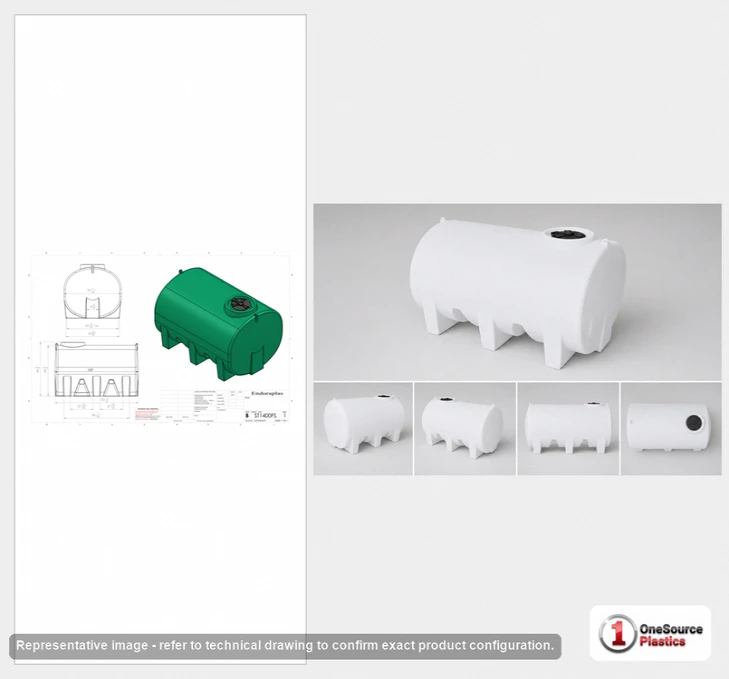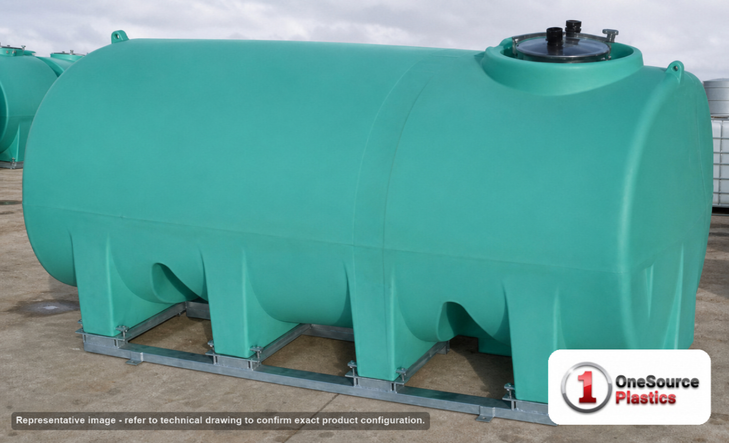
The Enduraplas 1600 Gallon Green Horizontal Sump Bottom Leg Tank arrives mounted in its support frame and built for hauling dense agricultural and industrial liquids over the road. Molded in green polyethylene and rated to a 1.9 specific gravity, it measures 71 inches wide by 130 inches long with a 60-inch height, and its sump bottom drains toward a low point for clean offload. At full water the tank and contents reach 13,344 pounds; loaded to its maximum rated 1.9 SG contents, that figure climbs to 25,354 pounds. That 1.9 SG is the top class available for this size and configuration, so there is no heavier-rated alternative to chase. Before you spec a transport setup, confirm your trailer rating, axle capacity, and the frame and saddle support against the 25,354-pound number. To dial in the right volume for your route and pump, run the numbers through our Tank Sizing Calculator and the Tank Sizing Guide.
Will it work for your liquid and your trailer?
This is a horizontal leg tank with an integrated frame, sized at 1,600 gallons for applicators and haulers moving fertilizer blends, water, and process chemicals between fill points. The 1.9 SG rating is the figure that matters most here: it tells you the wall and frame are engineered to carry liquids far heavier than water, which is why it suits dense fertilizer solutions and the chemical service listed below. No fitting package is specified with this tank, so plan to select your own bulkhead fittings and gaskets to match the liquid you are running, using the materials shown below. If you are blending fertilizer, the physics of fertilizer-blend stratification and thermal layering are worth reading before you run a stratified load off-spec, and our coverage of applicator and leg tanks for fertilizer walks through how these horizontal sump tanks fit a non-roadable trailer scope. Dimensional details are on the technical drawing on this page.
Chemical compatibility
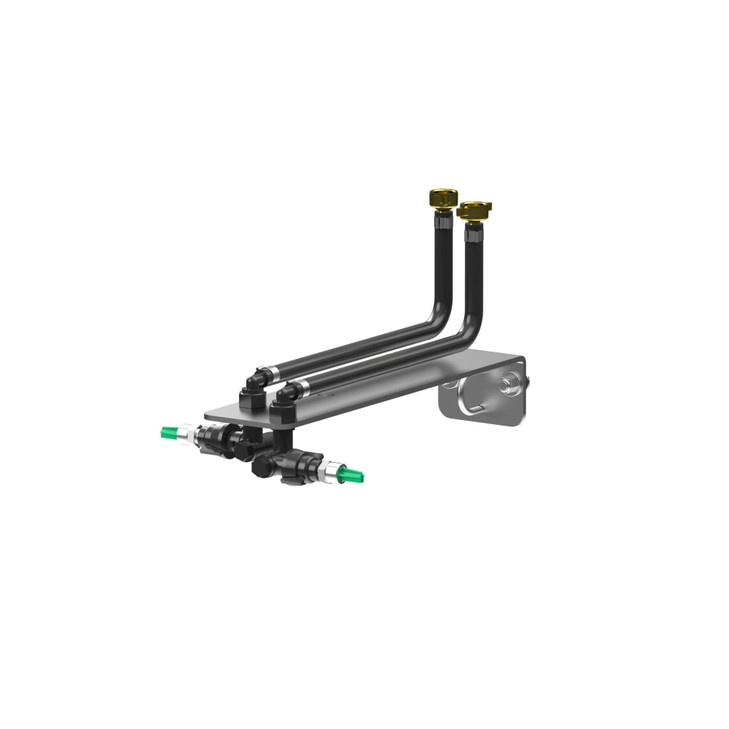
The tank is molded from high-density polyethylene (resin shown as HDLPE?) and rated to a 1.9 specific gravity. Because the resin grade is not fully confirmed, verify HDLPE versus XLPE with us before committing this tank to chemical service. Match your fitting and gasket materials to the chemical you are running. The following are compatible at the concentrations and with the fitting and gasket materials shown, per the OEM chemical-resistance chart, which is concentration- and temperature-specific: Acetic Acid (60%, PP/PVC fittings, EPDM gaskets), Aluminum Sulfate (50%, PVC, EPDM), Calcium Chloride (40%, PVC, EPDM), DEF (32.5%, 316SS, EPDM), Ethylene Glycol (100%, PVC, EPDM), Ferric Chloride (50%, PVC, EPDM), Ferric Sulfate (60%, PVC, EPDM), Ferrous Sulfate (20%, PVC, EPDM), Hydrochloric Acid (37%, PVC, Viton), Hydrofluoric Acid (48%, PP/PVC, Viton), Hydrofluosilicic Acid (26%, PP/PVC, Viton), Hydrogen Peroxide (50%, PVC, Viton), Magnesium Chloride (30%, PVC, EPDM), Peracetic Acid (30%, 316SS, Aflas), Phosphoric Acid (85%, PVC, Viton), Polyaluminum Chloride (PVC, EPDM), Potassium Carbonate (50%, PVC, EPDM), Potassium Hydroxide (saturated, PVC, EPDM), Propylene Glycol (PP/316SS, EPDM), Sodium Bisulfate (PVC/PP, EPDM), Sodium Bisulfite (PVC/PP, EPDM), Sodium Carbonate (30%, PVC, EPDM), Sodium Hypochlorite (under 16.5%, PVC, Viton), Sodium Thiosulfate (40%, PVC, EPDM), Sulfuric Acid (98%, CPVC, Viton), Urea Solution (50%, PP/PVC, EPDM), Zinc Orthophosphate (PP/316SS, EPDM), and Ozonated Water (up to 10 PPM, PVC, EPDM). The concentration ceilings shown are limits, not targets — verify your actual concentration before ordering, especially for sodium hypochlorite under 16.5% and hydrogen peroxide at 50%. Review the full chemical compatibility reference before you buy.
The mistake to avoid
The most common error on a dense-liquid leg tank is treating the 1.9 SG rating as a free pass and ignoring the loaded weight. At 25,354 pounds of maximum rated contents, this tank will overload an undersized trailer long before the tank itself reaches its limit, so the frame, saddles, and axles need to carry that figure, not the lighter full-water weight. The second error is mismatching the gasket and fitting to the chemical. Watch the outliers: Sulfuric Acid at 98% needs CPVC, not PVC; DEF, Peracetic Acid, Propylene Glycol, and Zinc Orthophosphate need 316 stainless or PP rather than PVC; and Peracetic Acid is the only chemical here that calls for an Aflas gasket. The aggressive oxidizers and strong acids want Viton, not EPDM. The wrong elastomer fails fast in service.
This tank ships LTL freight from the Enduraplas plant in Neche, North Dakota, and freight is quoted live to your ZIP code given its size and 13,344-pound full-water weight. Get a freight estimate through our Freight Cost Estimator or call 866-418-1777 to lock in a quote and confirm trailer, frame, and offload requirements before you order.
Freight and documents
Ships from: Neche, ND. LTL freight is quoted to your ZIP with the freight cost estimator or by phone at 866-418-1777. The listed price is before freight.
See this tank
Interactive 3D model with live fill. This tank has an interactive 3D model built to its manufacturer dimensions. Rotate it, and set a fill level to see how much liquid it holds at any height. Open the 3D view on the product photo above. Download the 3D model (GLB).
Ready to order?
Add it to your cart at the top of this page, get LTL freight to your ZIP, request a written quote, or call 866-418-1777. The listed price is before freight.