Tank Weight Calculator: How Much Does a Full Tank Weigh?
How Much Does Your Tank Weigh When Full?
The weight of a full tank determines everything about your installation: foundation type, foundation size, delivery logistics, and whether the floor, deck, or platform you're considering can handle the load. Underestimating tank weight is one of the most expensive mistakes in the industry — it leads to cracked foundations, collapsed platforms, and tanks that slowly settle into soft ground.
The Formula
Full Weight = Empty Tank Weight + (Gallons × 8.34 × Specific Gravity)
That's it. Three numbers multiplied and added to the empty weight. Let's break each piece down.
Empty Tank Weight
This is the weight of the polyethylene tank itself, listed on the product spec sheet. It ranges from about 5 pounds for the smallest tanks to 500+ pounds for 10,000-gallon models. You can also estimate it if you don't have the spec sheet: polyethylene weighs approximately 0.035 pounds per cubic inch, and wall thickness for standard tanks ranges from 0.15 inches (small tanks) to 0.5 inches (large chemical-rated tanks).
8.34 lbs/gallon
This is the weight of one gallon of water at standard temperature. It's the universal reference point for liquid weight calculations. All liquid weights are expressed as a multiple of water's weight through specific gravity.
Specific Gravity (SG)
The ratio of your liquid's density to water. Water = 1.0. A liquid with SG 1.5 is 50% heavier than water. Check your chemical's Safety Data Sheet (SDS) for the exact SG value. If you don't know the SG and can't find it, use the tank's maximum rated SG for planning purposes — this gives you the worst-case weight scenario.
Quick Reference: Full Tank Weights
| Capacity | Water (SG 1.0) | Chemical (SG 1.5) | Heavy (SG 1.9) |
|---|---|---|---|
| 100 gal | 854 lbs | 1,271 lbs | 1,605 lbs |
| 250 gal | 2,105 lbs | 3,148 lbs | 3,982 lbs |
| 500 gal | 4,210 lbs | 6,295 lbs | 7,963 lbs |
| 1,000 gal | 8,390 lbs | 12,560 lbs | 15,896 lbs |
| 2,500 gal | 20,900 lbs | 31,325 lbs | 39,665 lbs |
| 5,000 gal | 41,750 lbs | 62,600 lbs | 79,280 lbs |
| 10,000 gal | 83,450 lbs | 125,150 lbs | 158,510 lbs |
Note: Weights are approximate and include estimated empty tank weight. Exact weights vary by manufacturer and model.
Foundation Pressure Calculations
The weight above only tells half the story. What matters for your foundation is the pressure — weight distributed over the footprint area:
Bearing Pressure (PSF) = Total Weight ÷ Footprint Area (sq ft)
Example: 1,000 Gallon Tank at SG 1.5
- Total weight: ~12,560 lbs
- Typical diameter: 64 inches (5.33 feet)
- Footprint area: π × (5.33/2)² = 22.3 sq ft
- Bearing pressure: 12,560 ÷ 22.3 = 563 PSF
This is well within the capacity of compacted gravel (2,000+ PSF) or concrete (3,000+ PSF). Even bare compacted soil can typically handle this. But a 5,000-gallon tank on a smaller proportional footprint can exceed 1,000 PSF, which starts to stress unprepared ground.
When Weight Surprises People
- Decks and elevated platforms: A 500-gallon water tank weighs over 4,200 lbs — more than most residential decks are engineered to support. Never place a large tank on a deck without verifying the structural capacity.
- Upper floors: A 300-gallon doorway tank of water weighs 2,530 lbs concentrated on a 3-square-foot footprint. That's 843 PSF — well above residential floor design loads (40 PSF typical). Upper-floor water tank installations need structural engineering review.
- Truck beds: A 500-gallon tank of chemical at SG 1.5 weighs 6,295 lbs. Most half-ton trucks are rated for 1,500-2,000 lbs payload. You need a one-ton truck minimum, and probably a trailer.
- Trailers: Don't forget the trailer itself has a weight rating. A 10,000 GVWR trailer with a 2,500 lb empty weight can carry 7,500 lbs of payload — about 900 gallons of water.
Plan for Maximum Weight
Always plan your foundation and logistics for the maximum rated weight, even if you plan to store a lighter liquid initially. Applications change. A water tank today might be a fertilizer tank next year — and fertilizer at SG 1.5 weighs 50% more than water. If your foundation can handle the maximum, you'll never need to rebuild it.
Need help with foundation planning or tank sizing? Call (866) 418-1777.
Understanding Polyethylene Tank Construction
Every polyethylene tank in our catalog is manufactured through rotational molding — a process that creates a seamless, one-piece structure from powdered HDPE resin. The mold rotates on two axes simultaneously while heated, distributing molten resin evenly across all interior surfaces. The result is a tank with no seams, no weld lines, and no potential leak points. This seamless construction is the primary advantage of rotomolded tanks over welded or fabricated alternatives — joints are where tanks fail, and rotomolded tanks have no joints.
The resin itself is not generic plastic. It is a specially formulated compound that includes UV stabilizers (to prevent sun degradation), antioxidants (to prevent thermal degradation during processing and service), and pigments. For potable water applications, the resin meets FDA 21 CFR 177.1520 requirements for food-contact materials. These additives are compounded directly into the resin — not applied as surface coatings — which means the protection extends through the full wall thickness and lasts the life of the tank.
Why Buy from OneSource Plastics?
OneSource Plastics is not just another tank reseller. We are a specialized industrial tank dealer with deep product knowledge, competitive pricing from direct manufacturer relationships, and a commitment to helping you select the right tank for your specific application. Our team handles tank inquiries every day — we know the product lines, the specifications, the common pitfalls, and the solutions.
When you call us, you talk to someone who knows the difference between a 1.5 SG and a 1.9 SG tank, who can explain why a cone bottom is worth the extra cost for your mixing application, and who can tell you exactly what foundation your 2,500-gallon tank needs on your specific soil type. We don't just process orders — we solve liquid storage problems.
Every tank we sell ships with the full manufacturer warranty. We handle freight logistics to all 50 states, and we can coordinate delivery equipment for sites with challenging access. If something goes wrong — a shipping damage claim, a warranty issue, a specification question — we handle it directly. One call to (866) 418-1777 connects you to a real person who can actually help.
Shop Tanks by Size
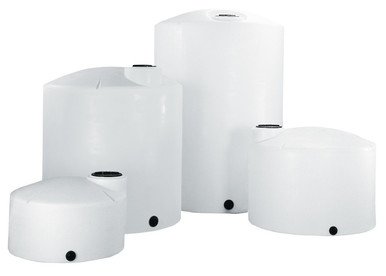
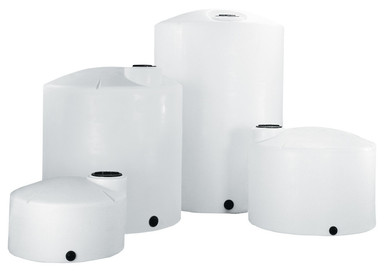
Recommended Tanks for This Guide
Live pricing, updated automatically · estimate freight to your ZIP.