
Steeping & Infusion Vessels
Steeping & Infusion Vessels
Tea and botanical infusion is ancient craft made repeatable. The vessel is what turns a good recipe into the same result, batch after batch.
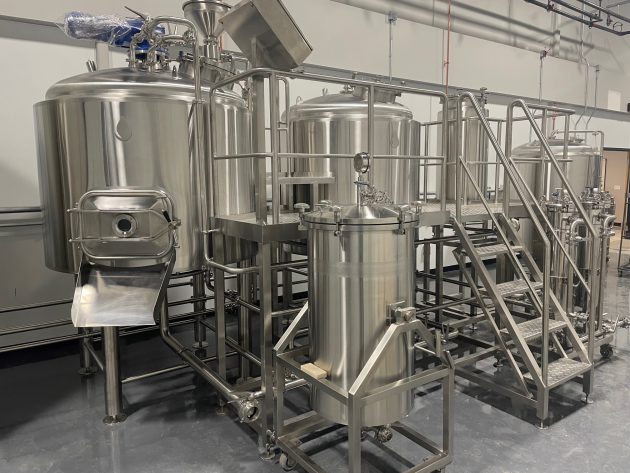
The Job of an Infusion Vessel
Steeping and infusion is the controlled extraction of soluble flavor, color, and active compounds from a solid botanical — tea leaf, herb, spice, or fruit — into a liquid, usually water. At small scale it is a kettle and a strainer. At commercial scale, the goal changes: the vessel must produce the same extraction every time, separate the spent solids cleanly, and do so in equipment that can be cleaned to food-contact standards between batches. The variables that govern the result are temperature, contact time, the ratio of botanical to water, agitation, and how the solids are contained and removed.
Different botanicals demand different conditions, and a flexible vessel earns its keep by holding any of them precisely. Delicate green and white teas extract best at moderate temperatures, where higher heat would pull harsh, astringent compounds. Black teas, many herbs, and roots tolerate or require near-boiling water. Some botanicals release their character quickly; others need an extended steep. The recurring requirement across all of them is repeatability: a vessel that holds temperature steady, distributes it evenly, and contacts the botanical uniformly so that the same recipe yields the same cup. As with coffee, the underlying process is mass transfer — soluble compounds migrate out of the wetted botanical and into the water until the driving concentration gradient flattens — and the vessel's role is to make that migration uniform across the whole charge.
Temperature Control
Temperature is the most influential variable in infusion, affecting both how much is extracted and the flavor balance of what comes out. Commercial infusion vessels are typically jacketed, with a heating medium — steam, hot water, or electric — and often a cooling medium so the same vessel can heat to steeping temperature and then chill the finished infusion to a safe holding temperature quickly. A jacket heats the liquid gently and evenly through the vessel wall, avoiding the localized scorching that a direct heat source can cause, which matters for delicate botanicals where overheating creates off-flavors.
| Botanical type | Typical steeping character | Vessel implication |
|---|---|---|
| Green / white tea | Lower temperature, shorter steep | Precise heat control; avoid overheating |
| Black tea / robust herbs | Hotter water, moderate steep | Reliable heat-up capacity |
| Roots / spices | Hot, often longer steep | Sustained temperature, good agitation |
| Cold/ambient infusion | Cool, long contact | Cooling jacket; hygienic long hold |
Equally important is controlling temperature through the steep and afterward. Once the target extraction is reached, dropping the temperature promptly arrests further extraction and moves the product into a safe, low-microbial-risk holding regime. A jacket that can both heat and cool lets a single vessel manage the full thermal cycle, which is why temperature-controlled, jacketed designs are standard in commercial infusion. Sizing the jacket so the vessel reaches temperature in a reasonable time, and holds it without drift, is part of making batches repeatable rather than time-variable.
Agitation and Botanical Contact
Water that does not move extracts unevenly. A loose botanical bed left static develops channels and stagnant pockets; a contained basket can trap a slug of unmixed water in its center. Gentle agitation keeps fresh solvent moving past the botanical surfaces and keeps the temperature uniform throughout the vessel. The agitation must be gentle, though: aggressive mixing can shred delicate leaf into fines that cloud the infusion and clog strainers, and it can over-extract by exposing too much broken surface area. The art is enough motion for uniform contact, no more.
How the botanical is held shapes both extraction and cleanup. Several approaches are common:
- Internal basket or cage: a perforated or screened removable basket holds the botanical, allowing the whole charge to be lifted out clean at the end of the steep — the simplest path to fast separation and easy cleaning.
- Free steep with strainer outlet: the botanical moves freely in the liquid for maximum contact, and a screened outlet or downstream strainer separates the spent material on transfer.
- Bag or sachet charge: pre-portioned bags give dosing consistency and very clean removal, at the cost of some extraction efficiency.
Basket and strainer mesh sizing is a balance: fine enough to retain the botanical and its fines, open enough not to choke flow or hold liquid that drains poorly. For leaf that breaks down or for ground botanicals, a downstream polishing filtration step removes fines the basket cannot catch. A recirculation loop — gently drawing infused liquid from the vessel and returning it over or through the botanical — is another way to improve contact without aggressive impeller agitation, useful for botanicals too delicate to stir.
Separation, Holding and Downstream Handling
The end of the steep is a decisive moment for quality. Leaving spent botanical in contact with the liquid past the intended endpoint continues extraction, pulling bitter or astringent compounds and drifting the batch away from its target. Prompt, clean separation locks in the profile. A removable basket lifted out at time signals the cleanest stop, while a free steep relies on rapidly transferring the liquid off the solids through a screened outlet. Whichever method is used, the separation should be fast and complete so that the infusion the operator tasted at the endpoint is the infusion that goes into the package.
What happens to the liquid after separation matters just as much. A warm infusion is a hospitable medium for microbial growth, so it should be cooled promptly or moved into its next thermal step without delay; the cooling capability of a jacketed vessel earns its keep here. Many infusions, particularly those destined for bottling, are then chilled or pasteurized and packaged quickly to preserve both safety and the delicate aromatics that define a good tea or botanical extract. Where a bright, sediment-free product is required, a polishing filtration step removes the fine particulate that a basket cannot, and as with any beverage, attention to oxygen pickup during transfer helps protect the aroma and color built during the steep.
Holding and surge between steeping and packaging is a quiet but important part of the system. A buffer or holding tank that keeps the infusion cold, under hygienic conditions, and ideally protected from air lets the steeping operation run on its own cadence while the packaging line runs on its. That decoupling, common throughout beverage processing, smooths production without compromising the quality the infusion vessel worked to create — provided the holding vessel is held to the same sanitary and temperature standards as the steeping vessel itself.
Hygienic Design and Batch Consistency
Infusions are nutrient-bearing liquids often held warm, so hygiene is non-negotiable. Wetted surfaces are food-grade stainless steel, polished smooth, with crevice-free welds, full drainability, sanitary tri-clamp fittings, and a clean-in-place capability so the vessel and its basket can be sanitized between batches. Designing to recognized hygienic principles — the drainability, finish, and crevice-free construction emphasized by 3-A Sanitary Standards and FDA food-contact guidance — prevents the residue buildup and biofilm that would otherwise carry flavor or microbial contamination from one batch into the next. The basket is a particular cleaning concern, since perforated surfaces trap spent material; designs that allow the basket to be removed and cleaned, or that present its surfaces fully to the CIP spray, protect against carryover.
Ultimately, batch consistency is the product of controlling every variable at once: a precise, even temperature; uniform but gentle agitation; consistent botanical dosing and contact; and a clean separation that leaves no spent material behind. Documenting and holding each of those parameters — weighing the botanical charge, timing the steep, logging the temperature profile — turns infusion from a craft judged by taste into a process judged by numbers. A vessel built to lock those variables down is what lets a producer scale a tea or botanical recipe from sample to production and trust that batch number five hundred tastes like batch number one. The same principle that governs coffee extraction and beverage processing more broadly applies here in miniature: the equipment does not improve the recipe, but a well-designed vessel removes the variability that would otherwise stand between a good recipe and a good product, every single batch. That reliability is what allows a small-batch infusion to grow into a branded line without the flavor wandering from one production run to the next, and it is the reason commercial infusion is built around purpose-designed, temperature-controlled, fully cleanable vessels rather than scaled-up versions of a kitchen pot.
Frequently asked questions
- Why are commercial infusion vessels jacketed?
- A jacket heats and often cools the liquid gently and evenly through the vessel wall, avoiding the localized scorching a direct heat source can cause. This matters because temperature is the most influential variable in infusion, and even heating produces more consistent extraction. A jacket that can also cool lets one vessel both reach steeping temperature and then quickly chill the finished infusion to a safe holding temperature.
- How does agitation affect tea and botanical steeping?
- Gentle agitation keeps fresh water moving past the botanical and keeps temperature uniform, which prevents the channeling and stagnant zones that cause uneven extraction. It must stay gentle, however, because aggressive mixing shreds delicate leaf into fines that cloud the infusion and clog strainers, and it can over-extract by exposing too much broken surface area.
- What is the best way to hold the botanical in an infusion vessel?
- An internal perforated basket is the simplest approach because the whole charge can be lifted out clean at the end of the steep, making separation and cleaning fast. Free steeping with a screened outlet maximizes contact but needs careful straining, while pre-portioned bags give the cleanest removal and best dosing consistency at some cost to extraction efficiency. The right choice depends on the botanical and throughput.
- How do infusion vessels deliver batch-to-batch consistency?
- Consistency comes from controlling every variable at once: a precise and evenly distributed temperature, uniform but gentle agitation, consistent botanical dosing and contact, and a clean separation that leaves no spent material behind. Hygienic, fully cleanable construction prevents residue from carrying over between batches, so a recipe proven at small scale reproduces reliably in production.
Scope your custom build
Send us your volume, service chemistry, dimensions, and finish or code requirements. We return a full engineering package, firm lead time, and a fixed quote — freight quoted separately to your ZIP.
Request a Custom QuoteCall 866-418-1777