A 1175 gallon underground cistern for rainwater, well water and reserve storage
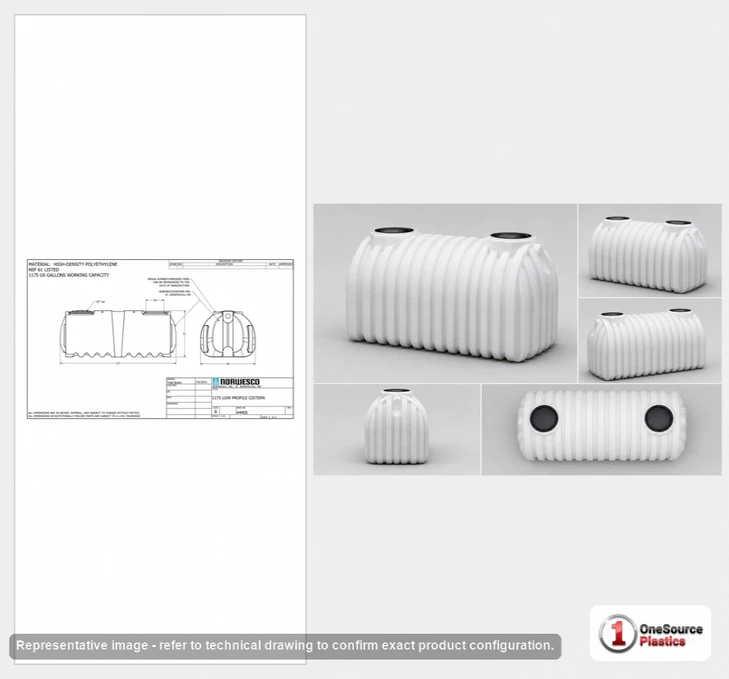
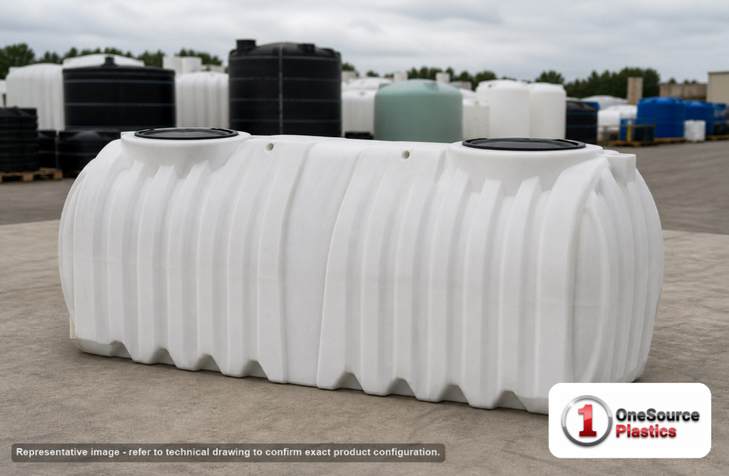
The Norwesco 1175 gallon underground water storage cistern, part number 44405, is a low profile polyethylene tank made to be buried: 127 inches long, 60 inches wide and 51 inches tall, weighing 329 lb empty. The ribbed body is rated for liquids up to 1.9 specific gravity, which is 15.87 lb per gallon, so the shell is well above what water asks of it; full of water it holds about 9800 lb. The service limit is 130 F. The resin is FDA compliant per Norwesco, which is what you want for a drinking water or rainwater cistern, and Norwesco backs the tank with a 5 year warranty. Access is a 20 inch lid, and the tank has two manholes so a riser or extension can be fitted to each one to bring the openings up to grade. White polyethylene makes the inside easy to see when the lid is off.
Sizing a cistern? Call 866-418-1777 with the burial depth you are planning, or get freight to your ZIP and add it to your cart above.
Where a 1175 gallon cistern fits
This is the tank for a house on rainwater, a cabin on a hauled water supply, a well with a slow recovery that needs a buffer, or an irrigation reserve where nothing may show above ground. At 51 inches tall it goes into a shallow excavation, which keeps the digging and the backfill manageable and matters where rock or the water table is close to the surface. The 1175 and 1200 gallon tanks sit at the point where a single tank still comes off a truck with a small machine; above that, buried storage is usually two tanks piped together. Rainwater users size on roof area and the longest dry spell, and our tank sizing calculator and tank sizing guide do that arithmetic. If the cistern is part of a reuse system, industrial water reuse tank topology shows how buried storage sits in a train; if it is a fire reserve for a remote property, read fire water reservoir tank design for rural and remote sites first.
Openings, risers and what to check before you buy
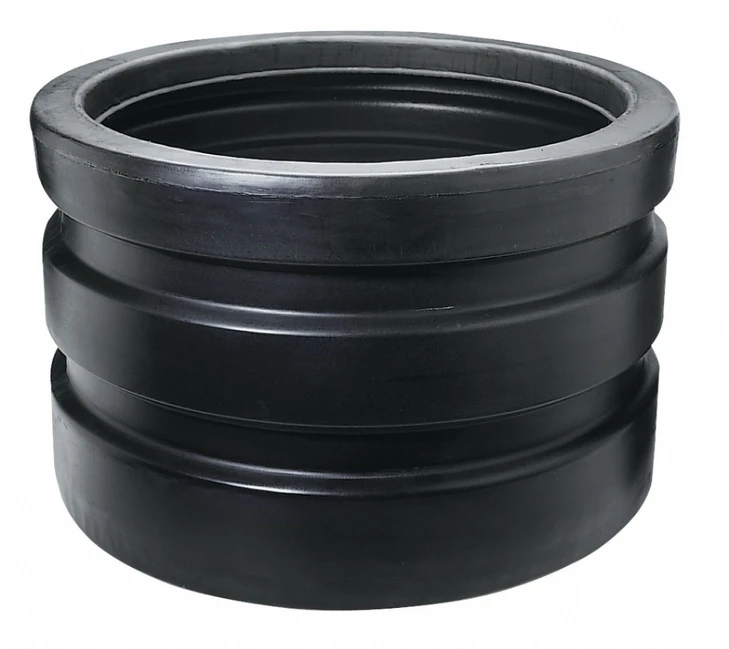
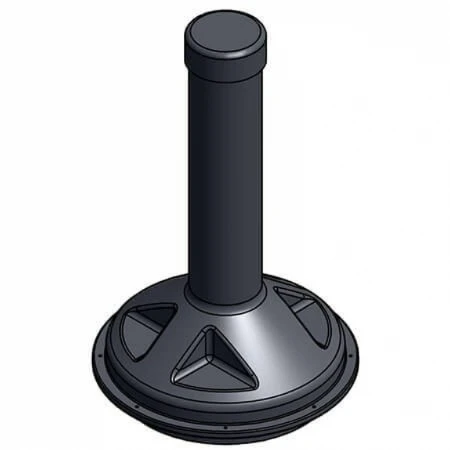
- Access. A 20 inch lid on each of two manholes. Norwesco makes risers and extensions for them, ordered two at a time, one per manhole: a 6 inch extension (N-63832), a 15 inch extension (N-63833), a 24 inch extension (N-63834), a 23 inch riser with a 12 inch lid (N-63831) and a 36 inch riser with a 6 inch lid (N-63830). Pick the one that brings the lid to grade at your burial depth and put it on the same order.
- Inlet, outlet and vent. No fittings come installed. Tell us where the inlet, the outlet and the vent go and what size, and we quote the bulkhead fittings with the tank, or your installer fits them on site. A buried tank still needs a vent above grade.
- Burial. Follow Norwesco's installation instructions for the excavation, the bedding and the backfill. The universal rules: set the tank on a level bed with no rocks under it, fill it with water in stages as you backfill so the walls are supported from both sides, and keep vehicles off the area unless the installation was designed for traffic. Where groundwater is high, ask us before you order; an empty buried tank in saturated ground wants to float.
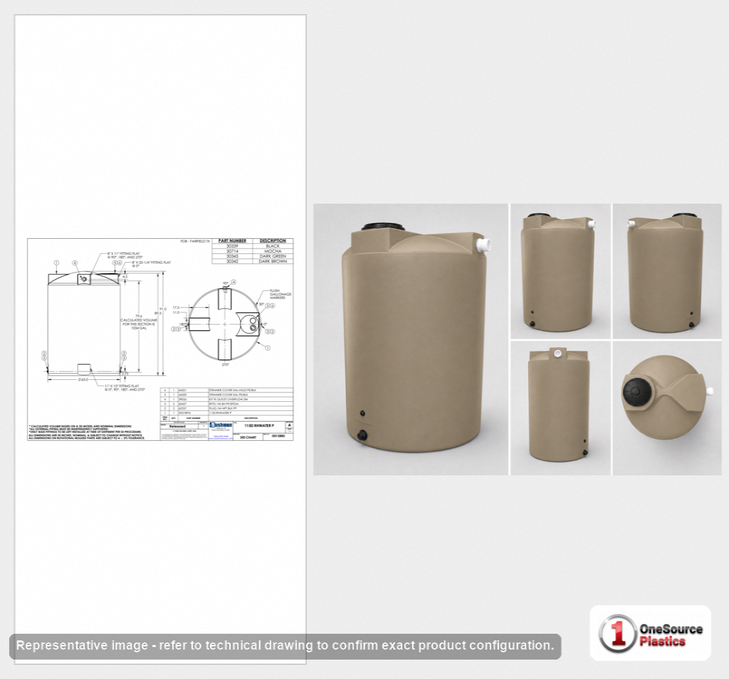
- Drawing. Norwesco's drawing for this tank is linked under Technical Drawing on this page and shows the manhole positions and the rib layout.
Sizes nearby
A taller tank of nearly the same volume with a shorter footprint: the 1200 gallon underground cistern. One size down: the 825 gallon underground cistern. Each page carries its own dimensions, and the choice between them is usually the excavation you can dig rather than the gallons.
Shipping and receiving
The tank ships LTL, 329 lb on a 127 inch long pallet position, from the nearest of the seven Norwesco plants that build it: Griffin, Georgia; Hanford, California; Lancaster, Ohio; Shawnee, Oklahoma; St. Bonifacius, Minnesota; Tooele, Utah; and Washougal, Washington. The listed price is before freight; the freight cost estimator gives the lane cost to your ZIP, or request a written quote for a job that needs paperwork. At the tailgate, check 44405 against the bill of lading and look along the ribs for transit damage before signing. Before it goes in the ground, fill it with water and check it for leaks on the surface, where a problem is cheap to fix; our guide to hydrostatic testing for new tank acceptance gives the fill and hold routine.
Questions before you order? Call 866-418-1777.
Freight and documents
Ships from: Marked Tree, AR; Hanford, CA; St. Bonifacius, MN; Lancaster, OH; Shawnee, OK; Tooele, UT; Washougal, WA; Philippi, WV. LTL freight is quoted to your ZIP with the freight cost estimator or by phone at 866-418-1777. The listed price is before freight.
Technical drawing (PDF) for Norwesco 44405.
See this tank
Product video. Watch the Norwesco 1175 Gallon Underground Water Storage Cistern Tank video (74 seconds) with dimensions, fittings and shipping notes.
Ready to order?
Add it to your cart at the top of this page, get LTL freight to your ZIP, request a written quote, or call 866-418-1777. The listed price is before freight.