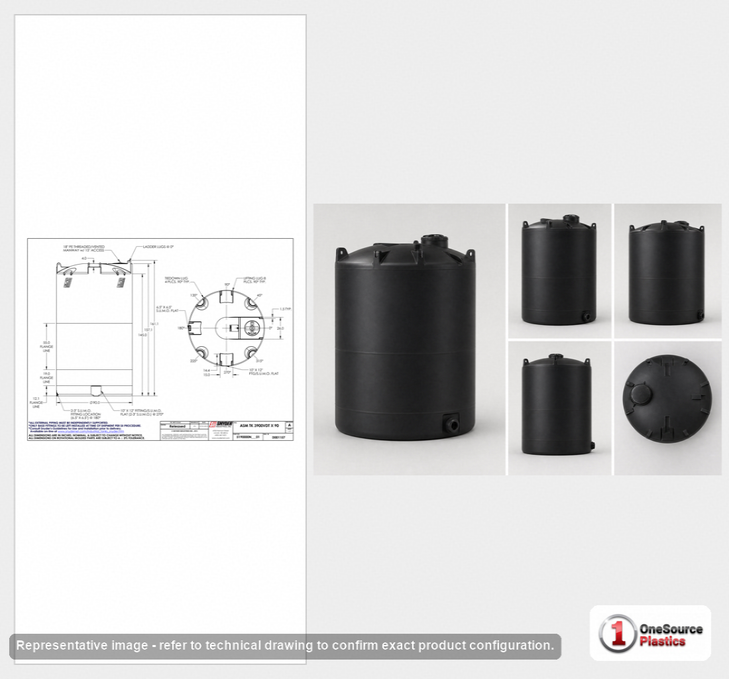
Cross-linked wall, 1.5 rating, four thousand gallons
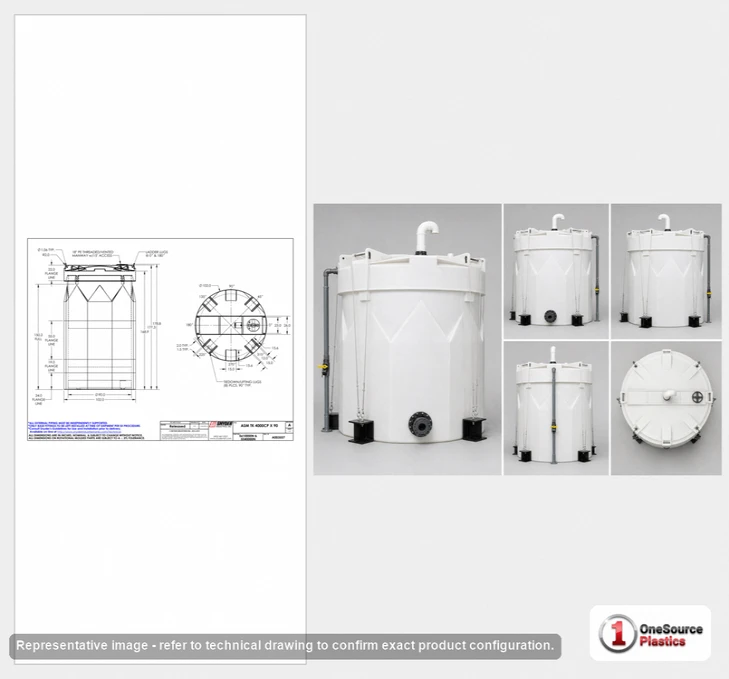
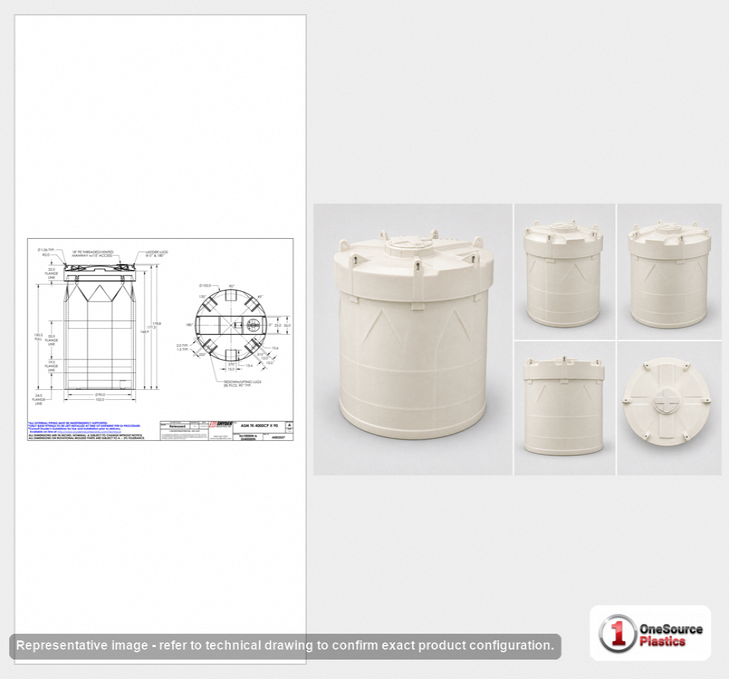
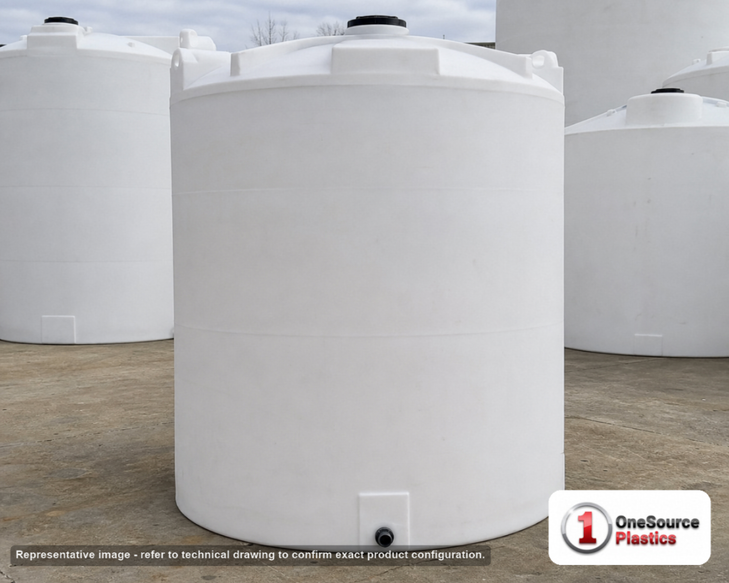
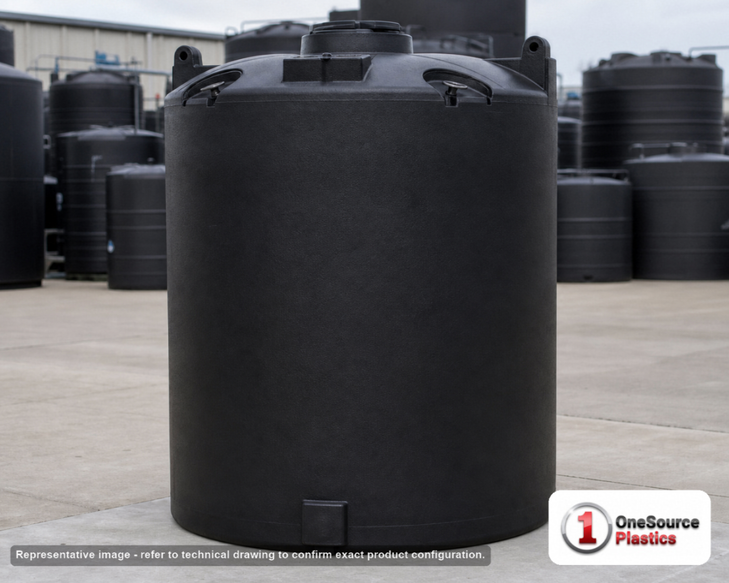
This is the lightest of the four thousand gallon listings on this shell and the one whose sheet pairs a cross-linked wall with the lower of the two ratings. The Snyder 5610000N46 is a 4000 gallon double wall tank, named by the maker as an ASTM XLPE Black double wall tank, and the name words are repeated as a name only. The material field reads crosslinked linear polyethylene and the colour field reads black. The shell is listed at 102 inches long by 102 inches wide by 178 inches tall and 2,400 pounds empty. One capacity, one set of overall dimensions, one empty weight and one rating are published for the whole assembly: there is no separate inner tank figure, no separate outer containment figure, no annulus dimension and no containment percentage on this sheet, so none appears on this page. The wall is rated at a specific gravity of 1.5, and the sheet gives 33,360 pounds for 4,000 gallons of water at 8.34 pounds per gallon with 50,040 pounds of maximum contents. The only opening is an 18 inch threaded vented manway; the outlet field reads "1 Manway / Lid", an opening and not a pipe size, and the inlet field is empty. The service limit is 140 F / 60 C, the warranty is a 3 Year Warranty, and freight is LTL at class 250 with no NMFC number out of Lincoln, Nebraska.
Two ways to buy. Add it to your cart above with freight quoted to your ZIP, or request a written quote for a job that needs paperwork.
Warm water and dilute solution duty on a contained base
Think about who actually buys this combination, because it is a specific one. A plant that stores something close to water in density but runs it warm: clean-in-place and wash-down supply in food, beverage and dairy work, heated rinse water, boiler and cooling tower make-up, dilute treatment solution at a water or wastewater works, laundry and industrial wash service, and process water holding in a bay that gets hot under a steel roof. For all of those, the two numbers on this sheet are exactly the right pair. The service limit is 140 F / 60 C, which is the higher of the two limits carried in this shell. The rating is a specific gravity of 1.5, carrying 50,040 pounds of maximum contents against 33,360 pounds of plain water at 8.34 pounds per gallon, which is margin over water rather than margin over something much heavier. Warm and light is a narrower specification than it sounds, and it is what this listing is written for. The consequence at the lighter rating is 2,400 pounds empty instead of the heavier figure other listings on this 178 inch shell carry, and that is a genuine operational difference rather than a paper one. Less mass to lift off the trailer means less equipment, a shorter window in the yard and fewer people standing around on the day, which on a site with no dock is the difference between a delivery you schedule and a delivery you plan a week for. What does not change is the load on the ground. The pad is set by the liquid, and 33,360 pounds of water on an eight and a half foot square wants a flat, continuous, level surface under the whole 102 inch footprint, never two rails and never packing at one corner. Black is the last field worth naming: it keeps daylight off the contents and takes away any prospect of reading a level through the wall, so on this tank the level instrument is part of the specification rather than a nice extra. Before you settle on 4,000 gallons, be honest about the usable volume, because a contained tank does not give you the nameplate figure once thermal expansion, chemistry and density are accounted for; the Captor double wall freeboard sizing guide works that through properly. Then check your own turnover and drop quantity in the tank sizing calculator and take the freeboard discipline from the tank sizing guide.
The lighter listing in a shell that also comes heavier
| Part | Name on the sheet | Gallons | Size and empty weight |
|---|---|---|---|
| 5610000N46 | this tank, ASTM XLPE Black, rated 1.5, listed to 140 F / 60 C | 4000 | 102 x 102 x 178 in, 2,400 lb |
| 5610000N40 | ASTM XLPE, same listed weight | 4000 | 102 x 102 x 178 in, 2,400 lb |
| 5610000N42 | ASTM XLPE, heavier listing | 4000 | 102 x 102 x 178 in, 3,200 lb |
| 5610000N30 | Sulfuric Acid, heavier listing | 4000 | 102 x 102 x 178 in, 3,200 lb |
| 5600000N30 | Sulfuric Acid Captor, one capacity step down | 3500 | 102 x 102 x 158 in, 2,500 lb |
| 5620000N30 | Sulfuric Acid, one capacity step up | 4500 | 102 x 102 x 197 in, 3,800 lb |
This tank and 5610000N40 are the 2,400 pound listings in the group; 5610000N42 and 5610000N30 are listed at 3,200 pounds on the identical shell. The sheet gives both figures without explaining either, and inventing an explanation would be worse than leaving the question where it belongs, which is with the product you are storing. Send us the name and strength of that product and we will confirm which listing matches it before anything is quoted. Notice one thing about the lighter pair, though, because it is a real advantage: on a 4,000 gallon vessel the empty weight is what your yard has to handle, while the load on the pad is set by the water either way. Choosing the lighter listing where the duty allows it makes the day of delivery easier without changing a single thing about the civil work. The two capacity rows work the way they do across this whole family, in height alone. Twenty inches shorter takes you to 3,500 gallons at 2,500 pounds; nineteen inches taller takes you to 4,500 at 3,800. The 102 inch square never moves, so the pad you pour serves any of the three and the decision is made with a tape measure held up to the roof steel and a calendar showing how often you want a truck.
Torn between two rows? Call 866-418-1777 with the liquid and the ceiling height, or ask for a quote on both and compare the freight.
Pump suction on the lightest of the four thousands
- The suction path: one opening is published and no outlet dimension is given, so the pump arrangement is specified with us rather than inferred. The usual configuration on a tank like this is a suction line dropped through the manway to a pump standing beside the vessel, with its foot set clear of the bottom so that settled material stays put instead of going straight into the strainer.
- Warm duty at the pump: the sheet lists 140 F / 60 C, so if the product runs anywhere near that figure, seals, gasket material and valve seats are chosen against temperature as well as chemistry. Say so at order time; a warm-service weep almost always starts at a fitting, not at the wall.
- Prime and stop level: set the low level cut-out with the pump, and mark your working stop level. With a black wall and one opening, no operator is going to see the level from the floor.
- The outlet field: it reads "1 Manway / Lid" and the inlet field is empty, which names an opening and not a pipe size. No outlet dimension, thread, flange or valve is published on this sheet, so none is claimed here. Tell us the duty, the temperature and the line size and we will confirm what this part number carries.
- The manway: 18 inches, threaded and vented, and the only opening on the sheet. At 178 inches it needs a fixed ladder, a platform and a fall protection arrangement designed with the installation rather than carried out on the day.
- The vent: part of the manway and never to be blanked. A warm headspace moves more air for a given change in level, and the wall is what pays for a restricted path on a fast fill.
- Structure: this shell lists ladder lugs and 4 flange lines; no lifting lug count is published.
- The space between the walls: no monitoring port, gauge or alarm is published on this sheet. That arrangement is specified separately and inspected on a written schedule.
- Limits: 140 F / 60 C, a specific gravity rating of 1.5, and a 3 Year Warranty. That is everything the sheet publishes about service.
Give us the product and the working temperature together, and the wetted parts get chosen once, properly, against the duty you actually run.
Wash, rinse and make-up service between deliveries
The pairing of a higher service limit with the lighter rating points this tank at warm, water-like work at bulk quantity: clean-in-place and sanitation make-up in food, beverage and dairy plants, heated rinse and wash-down supply, laundry and vehicle wash installations, boiler house and cooling tower make-up, dilute solution holding at treatment works, and process water storage on manufacturing lines that run hot. It is also a sensible vessel for a second product on a site that already runs something larger, holding the warm stream at the point it is used rather than piping it across a building. The containment is the reason it is bought rather than a plain tank, and the containment is only as good as your record of it, so put the space between the walls on a fixed inspection schedule and write the dates down. Before you commit the capacity, work through the Captor double wall freeboard sizing guide, because a warm product expands and the volume you can actually use is not the number on the nameplate. Then check the quantity you take per drop and the interval you want between drops in the tank sizing calculator, with the freeboard rules from the tank sizing guide. Fewer, larger drops usually mean a better bulk chemical cost per gallon, and that is the number that decides most purchases at this size.
The lightest four thousand gallon shipment on this sheet
Lincoln, Nebraska is the plant named on this sheet and no ship-from state field is published, so that is all we will claim about origin. Freight is LTL at class 250 with no NMFC number, and the shipping load is 102 by 102 by 178 inches at 2,400 pounds. Price the lane to your ZIP with the freight cost estimator; the listed price is before freight. The sheet gives no crane rating, no rigging plan, no permit and no escort requirement, so none is stated here; tell us what can reach the position and what can be got into the yard and we will plan the delivery against that. Of the four thousand gallon listings this is one of the lighter shipments, which usually means one machine and one shorter road closure at your end, but the envelope is identical to every other row in the shell, so measure the route for a load close to fifteen feet tall and eight and a half feet square regardless. Take it under the base, never by the manway. Set it on the cured, level surface in its final position, check it is plumb in two directions while it is empty, then fill with clean water and hold the 33,360 pound load while you read the manway seal, the whole base line and the pad. Drain it, let it dry, open the space between the walls and record what you saw with the date on the shell. Log the part number and the first fill date in the maintenance record the day it lands, because this tank will outlast everyone who signed for it. The first fill is the only cheap time to find a problem, so do it in daylight with someone watching the base.
Freight and documents
Ships from: Lincoln, NE. LTL freight is quoted to your ZIP with the freight cost estimator or by phone at 866-418-1777. The listed price is before freight.
Technical drawing (PDF) for Snyder Industries 5610000N46.
See this tank
Interactive 3D model with live fill. This tank has an interactive 3D model built to its manufacturer dimensions. Rotate it, and set a fill level to see how much liquid it holds at any height. Open the 3D view on the product photo above. Download the 3D model (GLB).
Ready to order?
Add it to your cart at the top of this page, get LTL freight to your ZIP, request a written quote, or call 866-418-1777. The listed price is before freight.