A ninety-two inch containment tray, twenty-two inches deep
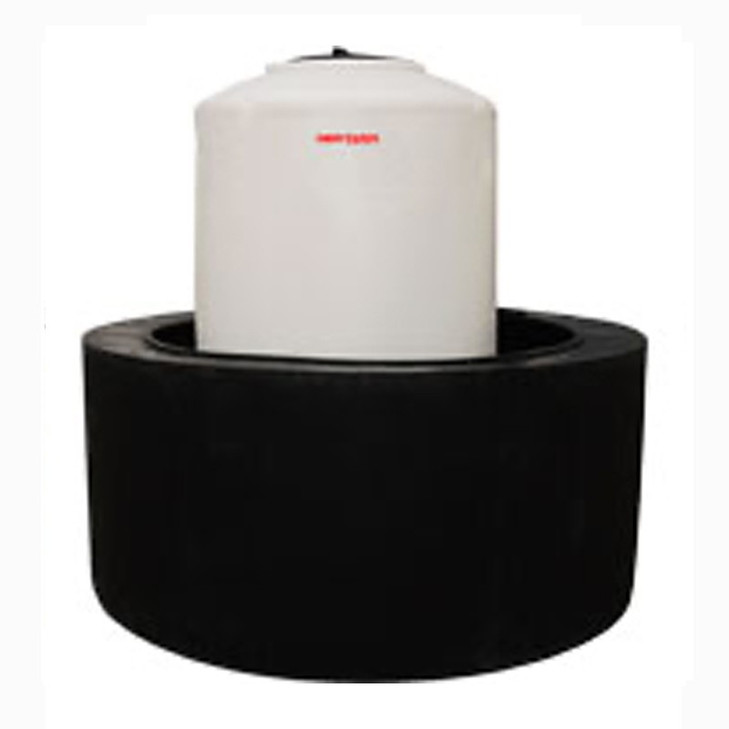
The Snyder SII-1006200N97801 is a 590 gallon plastic containment tray, moulded in black high density linear polyethylene and listed at 92 inches long, 92 inches wide and 22 inches tall, at 175 pounds empty. It is a tray, not a tank: an open moulded basin that something else stands in, with no lid, no manway, no outlet, no inlet and no fitting of any kind on its sheet, and this page claims none of them. Its application field reads Catch Basin. The capacity figure the sheet gives is 590 gallons, and against that it gives 4,921 pounds for 590 gallons of water at 8.34 pounds per gallon with 9,349 pounds of max contents at its specific gravity rating of 1.9. No containment percentage, no code status and no regulatory conclusion is asserted anywhere on this page, because none is on the sheet; what your installation needs is decided by your own requirement against the vessel you are putting in the tray. The service limit is 120 F / 48 C. There is no warranty term on the sheet. Freight is LTL under NMFC 156600-02, out of Marked Tree, Arkansas.
Price it in one step. Freight to your ZIP shows in seconds; add the 590 gallon tank to your cart above, or call 866-418-1777 if the site has a question in it.
The slab under it, and what stands in it
A tray is a floor product, and the floor is where the thinking starts. Ninety-two inches square is a shade under eight feet in each direction, which is a serious piece of real estate in a plant room and a modest one in a yard, and the whole of it has to be supported. Set the tray on a flat, continuous, level surface with nothing under it that can point-load the base: no stray bolt head, no broken slab edge, no timber that will rot out in a season. The tray itself is only 175 pounds, so the empty item is easy to place, and then the arithmetic changes completely. Into the tray goes a vessel, and that vessel plus its contents plus the tray plus anything the tray is holding all bear on the same square of floor. The sheet's own figures for the tray are 4,921 pounds of water and 9,349 pounds at the rating, and the tank standing in it has its own numbers on top of that; add them honestly before you decide the floor is adequate, because the mistake is nearly always made by considering the tank and the tray separately. Depth is the number that decides whether a tray does its job, and this one is 22 inches. That depth against the 92 inch plan is what gives the tray its volume, and the useful volume in practice is always less than the plan suggests, because the footprint of whatever stands in the tray occupies part of it. Work it out for your own arrangement rather than reading the nameplate as the answer, and put your own requirement and your own vessel through the tank sizing calculator and the tank sizing guide so the sizing is a calculation and not a hope. Two practical points follow from the depth. First, 22 inches is a step over, not a walk over: plan how an operator gets to the valve, the fitting or the gauge on the vessel inside the tray, and plan it before the tray is in position rather than after somebody has climbed in. Second, an open tray outdoors collects rain, and rain occupies the volume you bought for something else. Either it is under cover, or somebody owns a written routine for emptying it and checking what came out. That routine is the difference between a tray that works and a tray that is full of water on the day it is needed.
Two trays, five hundred and ninety and four hundred and eighty-five
| Part | Gallons | Length x width x height | Empty weight |
|---|---|---|---|
| SII-1006200N97801 (this tray, black, rated 1.9) | 590 | 92 x 92 x 22 in | 175 lb |
| SII-6270000B88204 (smaller plan, deeper, with wrap) | 485 | 66 x 66 x 30 in | 314 lb |
Two trays that reach roughly comparable volumes by opposite routes, and the choice between them is a room-shape decision rather than a capacity one. This tray is wide and shallow: 92 inches square and 22 inches deep. SII-6270000B88204 is narrow and deep: 66 inches square and 30 inches tall, at 314 pounds against this tray's 175. Twenty-six inches narrower in each direction is a lot of floor back in a tight plant room, and that is its argument. The counter-argument is everything that follows from depth. A 30 inch wall is a serious climb for an operator who has to reach a valve inside it, it is more of an obstacle to a hose or a hand truck, and a deeper tray with a smaller plan holds proportionally more rainwater per square foot of open mouth outdoors. The wide, shallow shape here is easier to step into, easier to see the bottom of from a standing position, easier to sweep and pump out, and it takes a wider vessel: 92 inches of plan accepts a footprint that would not physically fit inside 66. So the honest way to choose is to measure the base of the thing that is going into the tray first, add working clearance all the way round, and only then look at the volume column. A tray that a vessel does not fit inside is not a smaller tray, it is the wrong purchase.
Settled on the 590 gallon tank? Freight to your ZIP and add to cart above; a written quote is one click away for the paperwork.
No drain, no fitting and no lid on this sheet
- Drain: this sheet publishes no outlet, no drain and no bulkhead, and none is claimed here. In practice that is often the right answer for a containment product, because an unattended drain is a hole in the thing you bought, but it does mean somebody has to own the job of getting rainwater or a spill back out. Decide whether that is a pump, a vacuum truck or a fitted valve, and decide it before the tray is delivered.
- Fittings generally: no inlet, no threaded boss, no coupling and no gauge appears on the sheet. If you need a fitting in this tray, ask us before ordering; that is a specification question and not an accessory to be added on site with a hole saw.
- Cover: no lid and no manway is published, and none is claimed. It is an open tray, and that is what makes it work as a catch basin and what exposes it to weather.
- The floor of the tray: the inside base is the working surface, so keep it clear of anything that concentrates a load in one spot, and set the vessel inside it on a bearing arrangement appropriate to that vessel rather than directly on a sharp foot.
- Inspection: the whole value of a containment product is knowing it is empty, intact and clear. Look at the inside base, the corners and the wall on a written schedule, and write the date down. A tray nobody inspects is a tray nobody can rely on.
- Limits: 120 F / 48 C, a specific gravity rating of 1.9, and no warranty term on this sheet. That is all it publishes.
Tell us what is going in the tray and what the tray is standing on when you order. Those two facts decide more about whether this is the right part than the capacity figure does.
Where a tray goes under a tank, a tote or a drum rack
A 92 inch square tray is bought to go underneath something: a vertical storage tank at a treatment plant or a process line, a tote or an intermediate bulk container at a dosing station, a rack of drums in a store room, a pump skid or a transfer point where the drips happen, a dispensing bench, or a mixing station where the mess is predictable and occasional. It also earns its keep as a plain catch basin in a wash bay, under a filling point, or beneath equipment that leaks a little by design. The black moulding is the sensible colour for a product that spends its life on a floor collecting marks. What a tray does not do is decide your obligations for you. Whether an arrangement is adequate for your site is a question about your vessel, your contents and the rules that apply to you, and this page makes no claim about any of them; bring the numbers and the requirement and we will talk about the part that fits.
Ninety-two inches square on a truck out of Arkansas
This tray is moulded at Marked Tree, Arkansas, and the sheet lists Arkansas as the state it ships from, which is a short lane through the mid-South and a planned one to the coasts. The freight class is LTL under NMFC 156600-02, and it ships at 92 by 92 by 22 inches. Price the lane to your ZIP with the freight cost estimator; the listed price is before freight. The weight is trivial at 175 pounds and the dimensions are not: a shade under eight feet square is an awkward flat object on a trailer and an awkward flat object in a corridor. Measure the doorway, the turn at the end of it and the route to the final position before the truck is booked, because this is the sort of item that arrives easily and then stops at a doorway. Two people can carry it, but four hands on an eight foot panel in a wind is a poor idea outdoors, so take it flat and keep it flat. Set it in its final position first and put the vessel in afterwards, never the reverse. Then check it once with a hose: run clean water into the empty tray, watch where it sits, and confirm the floor under it is as level as you assumed. That five minute check is what tells you whether the tray will hold what it is meant to hold, or send it quietly to the low corner of the room. Note the pad height and the outlet height on the site plan while the tape is out; the next pipe run will need both.
Freight and documents
Ships from: Marked Tree, AR. LTL freight is quoted to your ZIP with the freight cost estimator or by phone at 866-418-1777. The listed price is before freight.
Technical drawing (PDF) for Snyder Industries 1006200N97801.
See this tank
Product video. Watch the Snyder Industries 590 Gallon Plastic Containment Tray video (71 seconds) with dimensions, fittings and shipping notes.
Ready to order?
Add it to your cart at the top of this page, get LTL freight to your ZIP, request a written quote, or call 866-418-1777. The listed price is before freight.