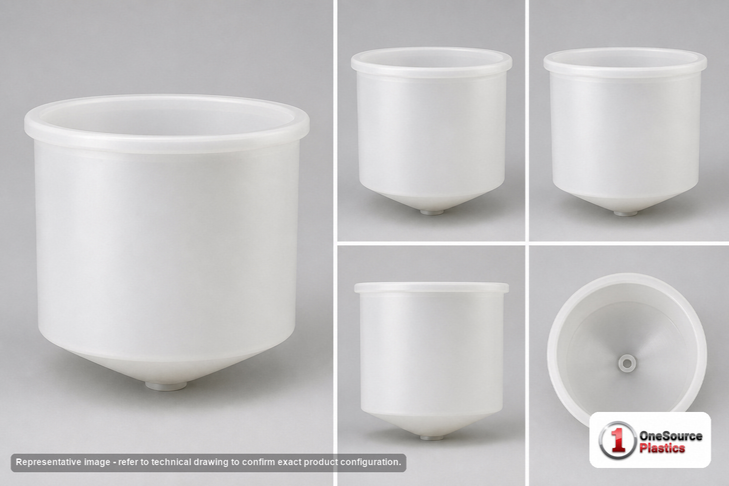
The Chem-Tainer 75 Gallon 30-Degree Open Top Cone Bottom Tank (SKU TC3024CA) is a polyethylene cone-bottom tank built for full-drain chemical service where you cannot afford a residual heel. It holds 75 gallons in a 30 in. x 30 in. footprint and stands just 24 in. tall, so it sits low, wide, and stable, with the open-top rim at a height that makes manual fill, mixing, and inspection straightforward. The 30-degree cone bottom keeps solids moving toward the outlet instead of settling on a flat floor, and the 2.0 specific gravity rating puts this tank near the top of the polyethylene density range, rated for genuinely heavy chemistries rather than just water-weight contents.
Will it work for your application
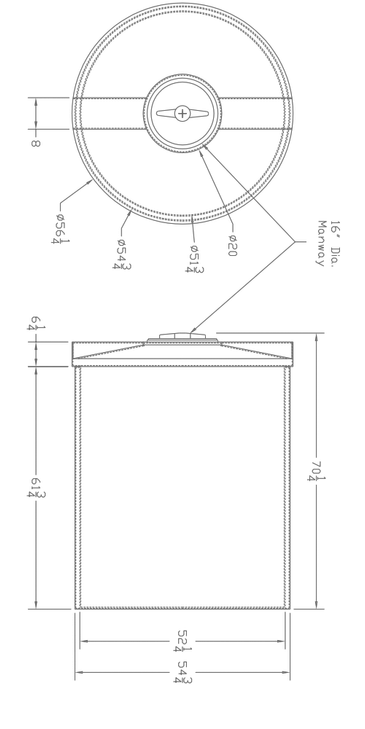
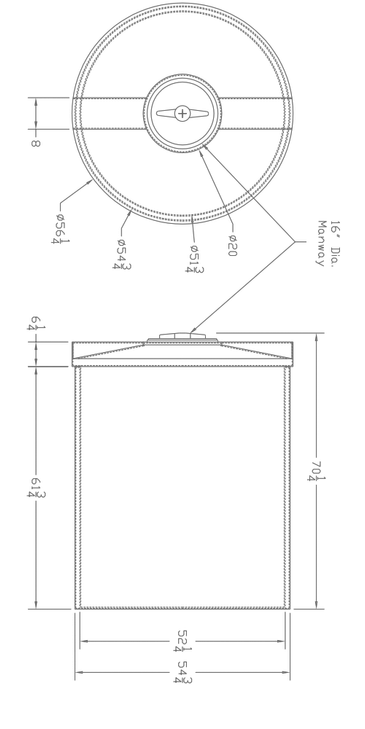
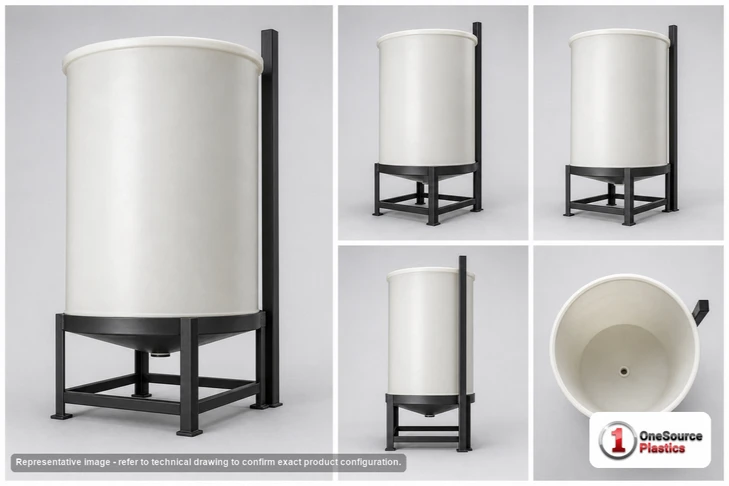
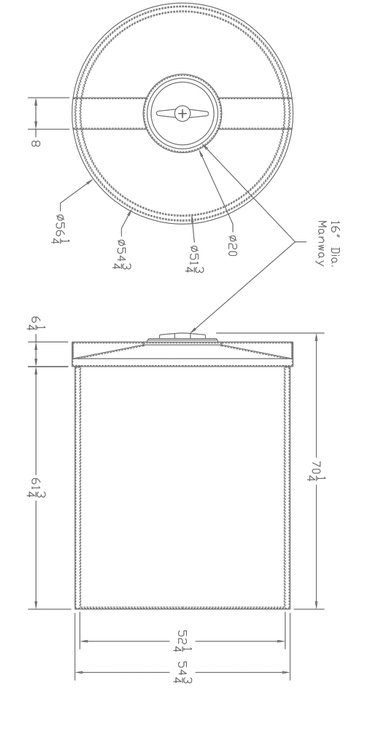
Filled with water, this tank carries about 626 lb; at its 2.0 SG rating it is engineered to support up to 1,251 lb of contents. That works out to roughly 16.7 lb per gallon, so check your concentrated solution's density against that ceiling before you fill. The 30 in. x 30 in. footprint sets your stand or containment dimensions, and the 24 in. height keeps fill and access at a workable level. Because this is an open top cone bottom design, plan for a support stand or cone-bottom skirt to hold the tank upright and route the cone outlet to your drain or pump. See the technical drawing on this page for the cone geometry and outlet position before you build the stand. If you are weighing this 30-degree cone against a steeper 45-degree, our 30 vs 45 cone-bottom drainage comparison walks through residual heel and solids handling; the Tank Sizing Calculator and Tank Sizing Guide help confirm 75 gallons fits your batch volume.
Chemical compatibility
This tank is molded from polyethylene and carries a 2.0 specific gravity rating. The exact resin designation is unconfirmed in our data, so confirm whether it is HDLPE or XLPE with us before placing it into chemical service, since polyethylene grades differ in their chemical resistance. Resistance also depends on the fittings and gaskets you choose: EPDM is the default gasket here, but aggressive oxidizers and strong acids step up to Viton, and peracetic acid uniquely needs Aflas. Note too that DEF and peracetic acid call for 316 stainless fittings rather than plastic, so budget metal nozzles for those two services. Per the Chem-Tainer chemical-resistance chart, which is concentration- and temperature-specific, the following are compatible with this polyethylene tank at the listed concentrations:
- Acetic Acid (60%) — PP/PVC fittings, EPDM gasket
- Aluminum Sulfate (50%) — PVC fittings, EPDM gasket
- Calcium Chloride (40%) — PVC fittings, EPDM gasket
- DEF (32.5%) — 316SS fittings, EPDM gasket
- Ethylene Glycol (100%) — PVC fittings, EPDM gasket
- Ferric Chloride (50%) — PVC fittings, EPDM gasket
- Ferric Sulfate (60%) — PVC fittings, EPDM gasket
- Ferrous Sulfate (20%) — PVC fittings, EPDM gasket
- Hydrochloric Acid (37%) — PVC fittings, Viton gasket
- Hydrofluoric Acid (48%) — PP/PVC fittings, Viton gasket
- Hydrofluosilicic Acid (26%) — PP/PVC fittings, Viton gasket
- Hydrogen Peroxide (50%) — PVC fittings, Viton gasket
- Magnesium Chloride (30%) — PVC fittings, EPDM gasket
- Peracetic Acid (30%) — 316SS fittings, Aflas gasket
- Phosphoric Acid (85%) — PVC fittings, Viton gasket
- Polyaluminum Chloride — PVC fittings, EPDM gasket
- Potassium Carbonate (50%) — PVC fittings, EPDM gasket
- Potassium Hydroxide (saturated) — PVC fittings, EPDM gasket
- Propylene Glycol — PP/316SS fittings, EPDM gasket
- Sodium Bisulfate — PVC/PP fittings, EPDM gasket
- Sodium Bisulfite — PVC/PP fittings, EPDM gasket
- Sodium Carbonate (30%) — PVC fittings, EPDM gasket
- Sodium Hypochlorite (under 16.5%) — PVC fittings, Viton gasket
- Sodium Thiosulfate (40%) — PVC fittings, EPDM gasket
- Sulfuric Acid (98%) — CPVC fittings, Viton gasket
- Urea Solution (50%) — PP/PVC fittings, EPDM gasket
- Zinc Orthophosphate — PP/316SS fittings, EPDM gasket
- Ozonated Water (up to 10 PPM) — PVC fittings, EPDM gasket
Match the fitting and gasket material to your specific chemical from the list above, and verify your exact concentration and temperature against the full Chemical Compatibility Database, since resistance is concentration- and temperature-specific.
The mistake to avoid
The most common error on a cone-bottom chemical tank is mismatching the gasket. Notice that the aggressive oxidizers and strong acids on this list (sodium hypochlorite, hydrogen peroxide, hydrochloric, phosphoric, and sulfuric acid) call for Viton rather than EPDM, and peracetic acid needs Aflas. EPDM that is fine for sulfate solutions will degrade fast in those services. The second mistake is plumbing the cone outlet before confirming the resin: if your chemistry is borderline, confirm HDLPE versus XLPE with us first. Planning your top penetrations on an open-top tank also matters; our fitting placement strategy guide covers vent, fill, and drain layout to avoid cross-contamination.
This open top cone bottom tank ships LTL freight from West Babylon, NY, with the rate quoted live to your ZIP code. Get your number from the Freight Cost Estimator or call us at 866-418-1777 and we will quote the freight and confirm fitting, gasket, and resin choices for your chemical before you order.
Freight and documents
Ships from: Merced, CA; West Babylon, NY. LTL freight is quoted to your ZIP with the freight cost estimator or by phone at 866-418-1777. The listed price is before freight.
Technical drawing (PDF) for Chem-Tainer TC3024CA.
See this tank
Interactive 3D model with live fill. This tank has an interactive 3D model built to its manufacturer dimensions. Rotate it, and set a fill level to see how much liquid it holds at any height. Open the 3D view on the product photo above. Download the 3D model (GLB).
Product video. Watch the Chem-Tainer 75 Gallon 30 Degree Plastic Vertical Open Top Cone Bottom Tank video (57 seconds) with dimensions, fittings and shipping notes.
Ready to order?
Add it to your cart at the top of this page, get LTL freight to your ZIP, request a written quote, or call 866-418-1777. The listed price is before freight.