
Brewhouse Sizing: BBL & Cellar Turns
Brewhouse Sizing: BBL & Cellar Turns
Buy a brewhouse too small and you cap your growth; too large and you waste capital on idle steel. The math that gets it right is mostly about turns.
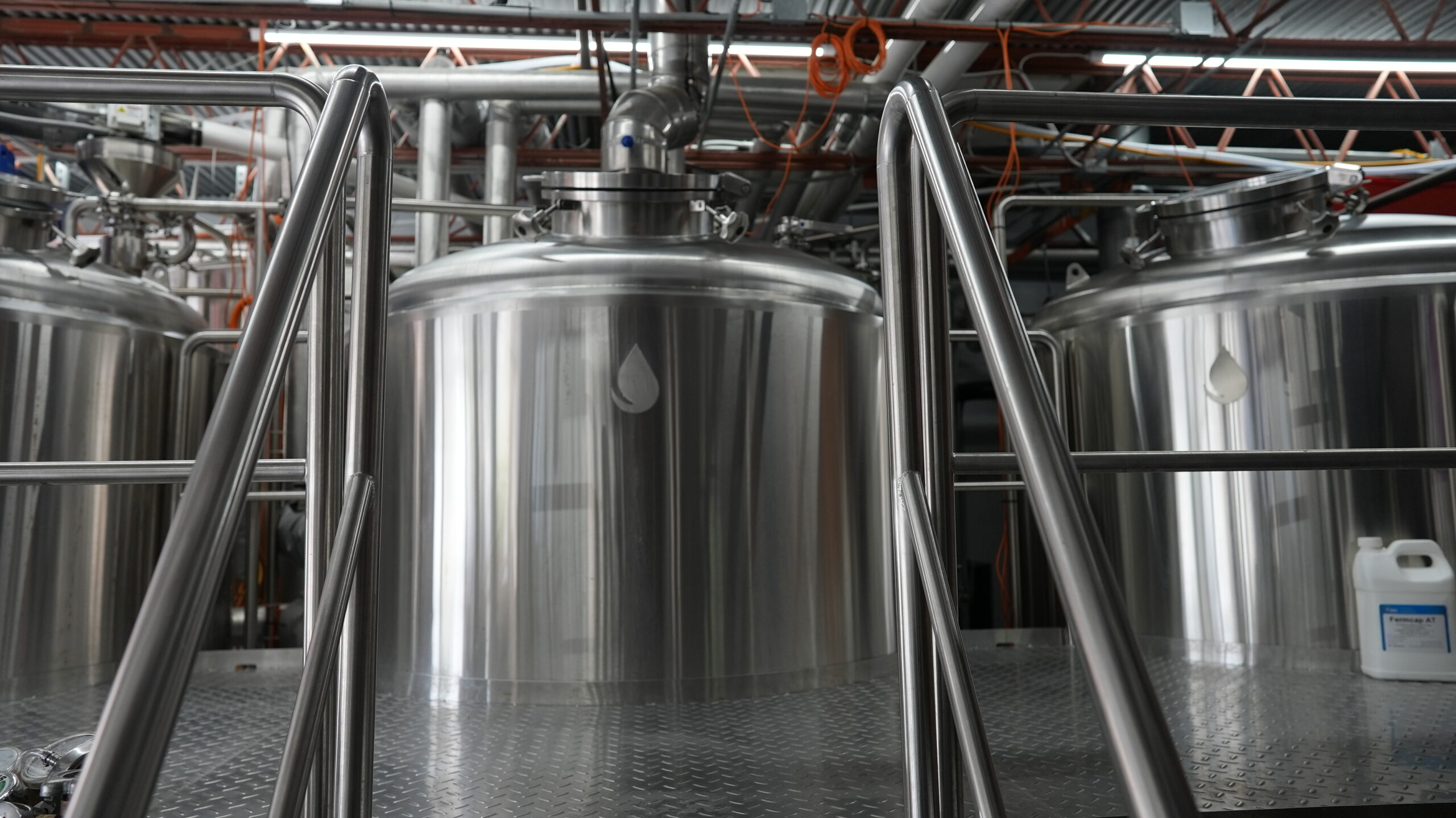
Start With the Barrel
Almost every brewhouse sizing decision is denominated in barrels. A US beer barrel (BBL) is 31 US gallons. Brewhouse capacity is described by the working volume of the brew kettle — a 10 BBL system, a 20 BBL system, and so on — which sets how much wort one brew (one turn) produces. The fermentation cellar is sized in the same unit, but the relationship between the two is where most planning errors happen.
The critical mistake is treating the brewhouse size as the whole answer. The brewhouse is only the hot-side production engine; the cellar is where capacity actually lives. A small brewhouse that runs many turns can fill a very large cellar, and that is usually the right architecture for a growing producer.
Working Volume vs Nominal Volume
When a vessel is described as 20 BBL, clarify whether that is the working (brewhouse) volume or the total vessel volume. Fermenters in particular are built oversized relative to their fill: a 20 BBL fermenter typically has 25 to 30 percent of extra headspace to contain krausen and foam during active fermentation. Filling a fermenter to its brim invites blow-off losses and messy overflows.
Turns: The Real Capacity Driver
A turn is one complete brew through the brewhouse. Annual capacity is not set by tank size alone — it is set by how many turns the brewhouse can complete in the time available. The governing relationship is straightforward:
Annual capacity (BBL) = brewhouse size × turns per day × brewing days per year
A 10 BBL brewhouse doing three turns a day, 250 days a year, produces 7,500 BBL annually — far more than a single 100 BBL tank suggests at a glance. Turns per day are limited by brew length (mash, lauter, boil, whirlpool, knockout, and cleanup), which for a single-vessel or two-vessel brewhouse runs several hours. Adding hot-side vessels (a separate mash/lauter tun and a separate kettle/whirlpool) lets one crew overlap steps and push more turns per day.
Matching Cellar Capacity to the Brewhouse
Each turn fills fermentation tanks, and those tanks are occupied for the entire fermentation-plus-conditioning cycle — commonly two to four weeks depending on style. While the brewhouse can turn over in hours, a fermenter is tied up for weeks. That mismatch is why the cellar must be sized as a multiple of the brewhouse.
The accepted rule of thumb is a brewhouse-to-cellar ratio between roughly 1:6 and 1:8. In other words, a brewhouse should be backed by six to eight times its volume in fermentation capacity to keep the hot side productive without being bottlenecked by tanks that are still occupied.
| Ratio | Implication | Best fit |
|---|---|---|
| 1:4 | Cellar limits the brewhouse; turns get blocked | Conservative starter footprint |
| 1:6 | Balanced; brewhouse rarely waits on tanks | Typical production target |
| 1:8 | Cellar-led; supports long-conditioning styles and growth | Lagers, mixed portfolios, expansion |
The ratio shifts with product mix. Lagers and other long-conditioning products occupy tanks longer, pushing the ratio toward 1:8. A portfolio of fast-turning styles can live closer to 1:6. Double-batching — running two brews into one fermenter on the same day — effectively raises the ratio per tank and is a common technique for filling larger fermenters from a smaller brewhouse.
Planning for Growth
The most expensive sizing error is one that forces a full brewhouse replacement two years in. Several design choices preserve headroom for growth without overspending on day one:
- Right-size the brewhouse for turns, not peak demand. A modest brewhouse that can add turns scales further than an oversized one that sits idle.
- Buy floor space and utilities ahead of tanks. Glycol chiller capacity, electrical service, drains, and floor area are far harder to add later than another fermenter.
- Standardize fermenter size. A consistent tank size simplifies scheduling, CIP, and double-batching, and keeps the cellar flexible.
- Plan the glycol system for the full cellar, not the current tank count. Chiller and glycol-loop sizing should anticipate the eventual tank population so cooling never becomes the bottleneck.
Putting the Numbers Together
- Set a realistic annual volume target and a few years of growth beyond it.
- Choose a brewhouse size and the turns-per-day it can sustain with your crew and brew length.
- Confirm brewhouse size times turns times brewing days meets the target with margin.
- Size the cellar at six to eight times the brewhouse, weighted toward 1:8 for long-conditioning styles.
- Size glycol, electrical, drains, and floor space for the full eventual cellar, not the starting tank count.
Done in that order, sizing becomes a capacity-planning exercise rather than a guess about tank dimensions. The brewhouse sets the rhythm, turns set the output, and the cellar — sized as a deliberate multiple — keeps the whole system from choking on its own success.
Frequently asked questions
- What exactly is a barrel (BBL) in brewing?
- A US beer barrel, abbreviated BBL, is 31 US gallons. Brewhouse and cellar capacities are described in barrels, so a 20 BBL brewhouse produces 20 barrels of wort per turn. Always confirm whether a stated BBL figure is working volume or total vessel volume, since fermenters are built oversized to hold foam during active fermentation.
- What is a good brewhouse-to-cellar ratio?
- A common target is between 1:6 and 1:8, meaning the fermentation cellar holds six to eight times the brewhouse volume. The ratio leans toward 1:8 for long-conditioning styles like lagers that occupy tanks for weeks, and can sit closer to 1:6 for fast-turning portfolios. The goal is to keep the brewhouse productive without it waiting on tanks that are still full.
- How do turns affect brewing capacity?
- Turns are the real capacity driver. Annual output equals brewhouse size times turns per day times brewing days per year, so a small brewhouse running many turns can out-produce a larger one running few. Adding hot-side vessels and shortening brew length lets a crew complete more turns per day, which is often cheaper than buying a bigger system.
- How should I plan a brewhouse for future growth?
- Right-size the brewhouse for the turns you can sustain rather than for peak demand, and buy floor space, glycol capacity, electrical service, and drains ahead of the tanks themselves, since those are hard to add later. Standardizing fermenter size keeps scheduling and CIP simple, and sizing the glycol system for the full eventual cellar prevents cooling from becoming the hidden bottleneck.
Scope your custom build
Send us your volume, service chemistry, dimensions, and finish or code requirements. We return a full engineering package, firm lead time, and a fixed quote — freight quoted separately to your ZIP.
Request a Custom QuoteCall 866-418-1777