
Cylindro-Conical Fermenter Design
Cylindro-Conical Fermenter Design
The cylindro-conical fermenter is the workhorse of the modern cellar. One vessel ferments, cold-crashes, carbonates, and harvests yeast without a single transfer.
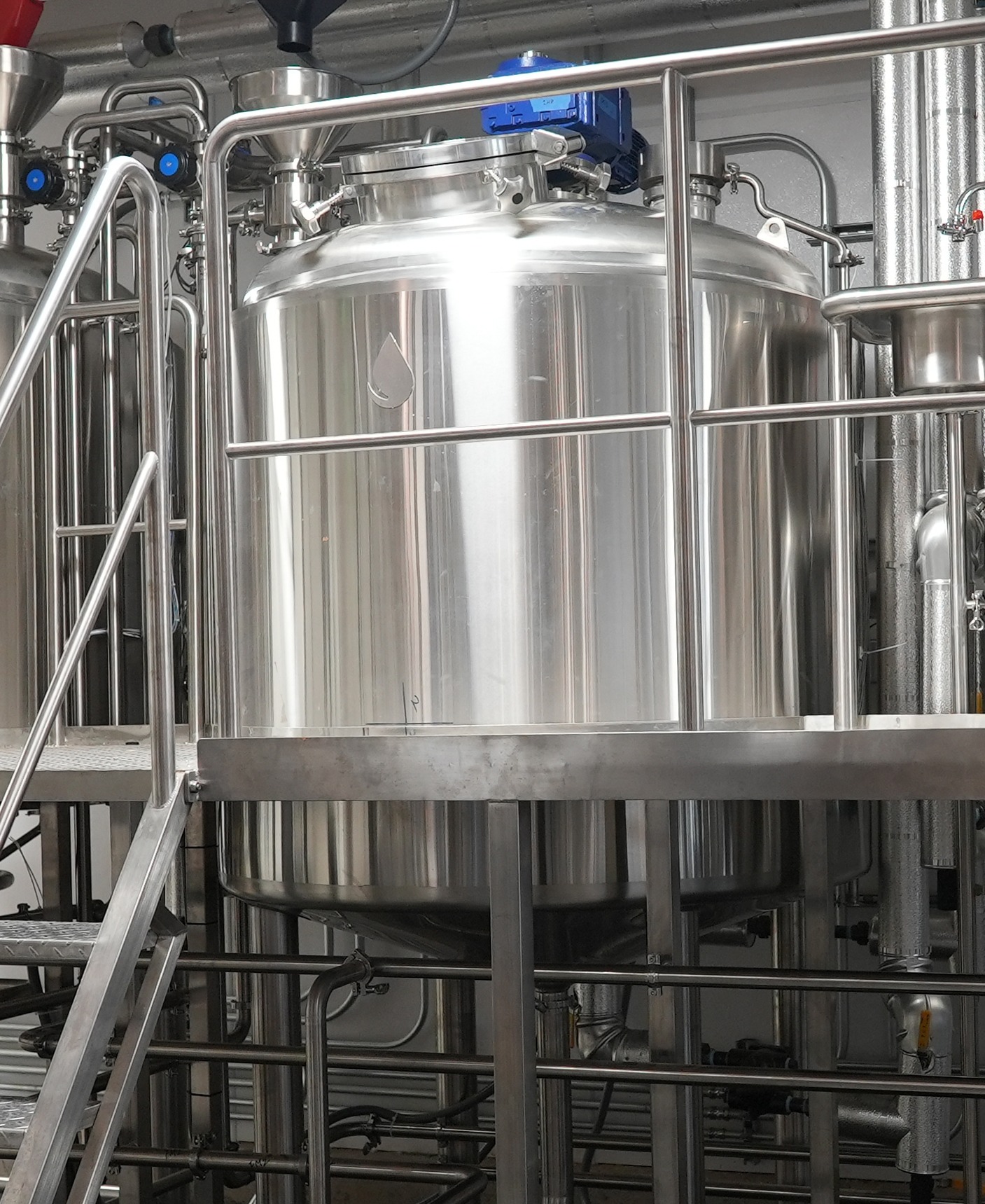
What a Cylindro-Conical Vessel Does
A cylindro-conical vessel (CCV), commonly called a unitank, combines a vertical cylindrical body with a conical bottom. The geometry is deceptively simple but it lets a single tank perform every step of the cellar process: active fermentation, yeast collection in the cone, cold-crashing to drop solids, and in many designs natural or forced carbonation under pressure. Because the product never leaves the vessel between fermentation and conditioning, oxygen pickup and contamination risk are minimized — two of the largest threats to flavor stability.
The defining feature is the cone. As fermentation winds down, yeast flocculates and settles into the narrow apex, where it can be drawn off through a bottom dump valve. This self-collecting behavior is the reason the unitank displaced older open and shallow-bottom fermenters in commercial cellars.
Cone Angle: 60° vs 72°
Cone angle is measured as the included angle of the cone walls. The two common choices are roughly 60° and 72° (some builders specify the half-angle, so always confirm the convention). A steeper cone — closer to 60° from horizontal — encourages yeast and trub to slide cleanly to the apex, improving harvest and reducing the chance of compacted, autolyzing yeast clinging to the wall. A shallower cone reduces overall vessel height, which matters in cellars with low ceilings or when stacking tanks under a mezzanine.
Glycol Jacket Zones and Temperature Control
Fermentation is exothermic, and yeast metabolism is exquisitely sensitive to temperature. The CCV controls heat with dimple or half-pipe cooling jackets welded to the exterior and circulated with a propylene-glycol/water mixture. Most production fermenters use at least two independently controlled jacket zones: one wrapping the cylinder where the bulk of the active ferment generates heat, and one on the cone to chill settled yeast and support cold-crashing.
Independent zones matter because the cone and the body have very different thermal duties. During active fermentation the body needs steady cooling to hold the set point; during cold-crash the cone zone drives solids out of suspension. A single-zone jacket forces a compromise and tends to leave the cone warmer than ideal, slowing yeast settling.
| Element | Function | Why it matters |
|---|---|---|
| Cylinder jacket zone | Removes fermentation heat from the body | Holds the temperature that shapes ester and flavor profile |
| Cone jacket zone | Chills settled solids; supports cold-crash | Speeds yeast and trub settling for clarity |
| Insulation cladding | Outer skin over the jackets | Reduces glycol load and condensation on the shell |
Yeast Harvest, Blow-Off, and Sampling
The cone terminates in a bottom assembly that typically includes a racking arm and a dump (harvest) valve. Yeast is cropped from the very bottom; clarified product is later drawn through the racking arm positioned above the settled bed. A dedicated sample valve — often a sanitary aseptic design — lets the cellar pull gravity and pH readings without opening the vessel.
During vigorous primary fermentation, krausen and carbon dioxide must escape. A blow-off arm or a spunding valve handles this. A spunding (pressure-relief) valve is the bridge between simple fermentation and natural carbonation: by holding back-pressure late in fermentation, the cellar can carbonate the product naturally from residual sugar rather than injecting gas later.
Pressure Rating for Carbonation
A vessel intended to hold carbonation pressure is no longer just a tank — it is a pressure-bearing component. Unitanks designed for spunding or serving carry a rated maximum allowable working pressure, commonly in the range of around 15 psi, with full-vacuum capability so the shell is not crushed during cold-crash or CIP draining. Vessels operating above the regulatory threshold for pressure vessels fall under ASME BPVC Section VIII, and many builders rate the shell accordingly even when operated below the stamp threshold. Always confirm the working and vacuum ratings before applying spunding pressure.
CIP, Spray Balls, and Hygienic Design
Single-vessel processing only works if the tank can be cleaned thoroughly between batches. A CIP (clean-in-place) spray ball mounted at the top distributes caustic and acid solutions across the entire interior, including the cone. The interior is built to sanitary principles — smooth welds, no horizontal ledges, full drainability to the cone apex — so cleaning solution sheets down every surface and drains completely. Surface finish is typically a mechanical polish in the range of 32 Ra or finer on contact surfaces, consistent with hygienic process practice, so soils and biofilm have no place to anchor.
Welds are TIG-welded with an argon back-purge to prevent oxidation (sugaring) on the product side, then ground and polished flush. The same hygienic logic governs every fitting: tri-clamp connections rather than threaded fittings, which eliminate threads as a harbor for spoilage organisms.
How It All Works Together in One Batch
- Wort or must is filled into the sanitized vessel and pitched with yeast.
- The cylinder jacket zone holds the fermentation temperature; CO2 escapes via blow-off or is captured for carbonation.
- As fermentation completes, yeast flocculates and slides down the cone.
- Yeast is harvested through the bottom dump valve for repitching or disposal.
- The cone zone chills the vessel for cold-crash, dropping remaining solids for clarity.
- A spunding valve holds pressure for natural carbonation, or gas is added; clarified product is racked off.
- The empty vessel is cleaned in place and made ready for the next batch.
Understood as a system, the cylindro-conical fermenter is an engineered compromise between fermentation biology, heat transfer, hygienic design, and pressure safety. Specifying one well means matching cone angle to harvest goals and headroom, sizing glycol zones to the heat load, and rating the shell honestly for the pressures it will actually see.
Frequently asked questions
- Why is the cone angle on a fermenter so important?
- The cone angle controls how cleanly yeast and trub settle to the bottom for harvest. A steeper cone (closer to 60 degrees from horizontal) lets solids slide to the apex and drain fully, improving yeast collection and reducing autolysis. A shallower cone lowers the overall tank height for cellars with limited ceiling space but settles solids less aggressively.
- What is a spunding valve and why does a unitank need one?
- A spunding valve is an adjustable pressure-relief device that holds back-pressure inside a sealed fermenter. By trapping CO2 produced late in fermentation, it lets the cellar carbonate the product naturally from residual sugar rather than injecting gas later. It also protects the vessel from over-pressurization, so a correctly sized one is a safety component, not just a process tool.
- Does a fermenter need to be an ASME pressure vessel?
- It depends on the operating pressure. Vessels that hold carbonation or spunding pressure above the regulatory threshold fall under ASME BPVC Section VIII and require code design and stamping. Many fermenters operate below that threshold but are still built with a rated maximum working pressure and full-vacuum protection, so always confirm both the pressure and vacuum ratings before applying any pressure.
- Why are two separate glycol jacket zones better than one?
- The cone and the cylindrical body have different thermal jobs. The body needs steady cooling to remove fermentation heat and hold the flavor-defining set point, while the cone needs aggressive chilling to cold-crash and settle solids. Independent zones let each region run at its own temperature; a single-zone jacket forces a compromise that usually leaves the cone too warm for efficient settling.
Scope your custom build
Send us your volume, service chemistry, dimensions, and finish or code requirements. We return a full engineering package, firm lead time, and a fixed quote — freight quoted separately to your ZIP.
Request a Custom QuoteCall 866-418-1777