
Glycol Jacket Cooling for Fermentation
Glycol Jacket Cooling for Fermentation
Fermentation temperature is the single biggest lever a cellar has over flavor. Glycol jacket cooling is how that lever gets pulled, degree by degree.
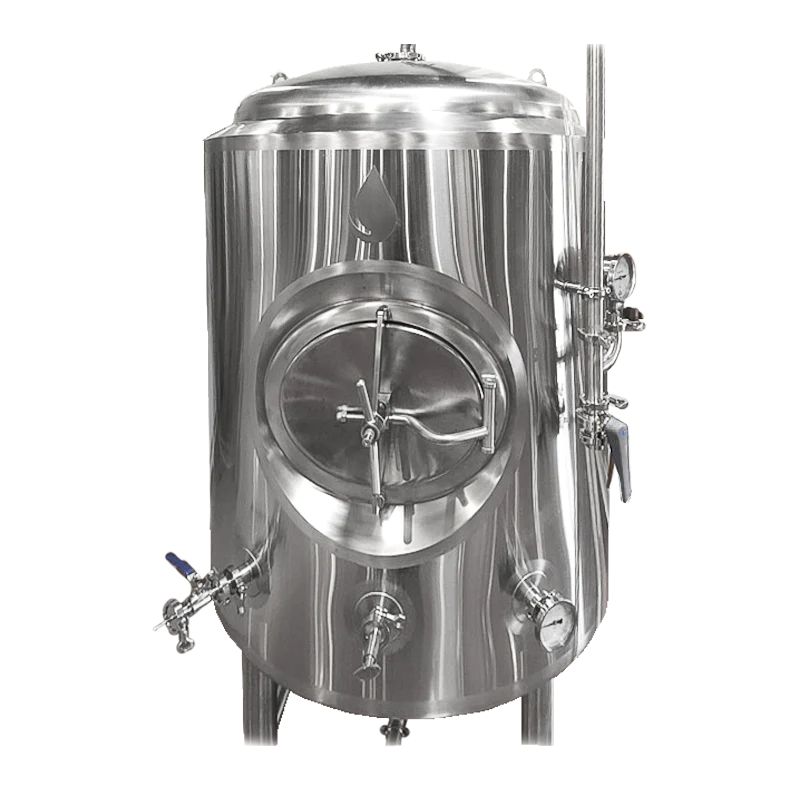
Why Temperature Drives Flavor
Yeast is a living organism, and its metabolism shifts dramatically with temperature. Warmer fermentations push yeast to produce more esters and fusel alcohols, brighter and sometimes harsher flavors; cooler fermentations yield cleaner, crisper profiles. The same yeast strain can make two very different products depending on a few degrees of control. That is why temperature control is not a comfort feature — it is the primary process variable in the cellar.
Fermentation is also strongly exothermic. A vigorous ferment generates real heat, and without active cooling the vessel temperature climbs well above the pitching set point. Left uncontrolled, that runaway warmth produces off-flavors and inconsistent batches. The job of the cooling system is to remove that heat fast enough to hold the chosen set point steady.
How Glycol Jacket Cooling Works
Rather than chilling water directly — which would freeze in the lines and offer no safety margin — cellars circulate a propylene-glycol/water mixture. Propylene glycol is food-safe and depresses the freezing point so the loop can run below 32°F without ice damage. The glycol is chilled centrally and pumped to jackets welded onto each vessel.
Dimple Jackets and Cooling Zones
The most common jacket style is the dimple (or laser-dimpled) jacket: an outer skin spot-welded to the tank shell with a pattern of dimples that creates a turbulent flow channel for the glycol. Turbulence improves heat transfer between the glycol and the vessel wall. An alternative is the half-pipe jacket, a coiled channel welded to the shell, which handles higher pressures and is common on larger vessels.
Production fermenters use multiple independently valved zones — typically one on the cylindrical body and one on the cone. Independent control lets the body hold a steady fermentation temperature while the cone is chilled separately to settle yeast and drive cold-crashing. Insulation cladding over the jackets reduces ambient heat gain and prevents condensation from running down the shell.
| Jacket type | How it works | Typical use |
|---|---|---|
| Dimple jacket | Dimpled outer skin creates turbulent flow channels | Most fermenters and brite tanks |
| Half-pipe jacket | Welded coil channel; higher pressure tolerance | Larger vessels, higher glycol pressure |
| Plate (panel) jacket | Welded plate forming a continuous cavity | Specialty and pressure applications |
Sizing the Glycol Chiller
The chiller is the heart of the system, and undersizing it quietly limits the whole cellar. Chiller capacity must cover the sum of three loads: the peak heat of all tanks fermenting at once, the heavy short-term demand of cold-crashing tanks, and the ambient heat leaking in through cladding and piping. Cold-crash is often the spike that catches planners off guard, because it asks the chiller to remove a large amount of heat quickly while normal fermentation continues elsewhere.
A glycol reservoir (buffer tank) smooths demand by storing chilled glycol, so the chiller does not short-cycle and can ride out brief peaks. Loop design — pump head, pipe sizing, and balancing valves — ensures every tank gets adequate glycol flow even when many zones call for cooling at once. Without proper balancing, the tanks nearest the chiller starve the ones farthest away.
PID Temperature Control
Each jacket zone is controlled by a temperature sensor on the tank and a solenoid valve on the glycol supply. A PID (proportional-integral-derivative) controller compares the measured tank temperature to the set point and modulates the valve to hold it. PID control is preferred over simple on/off control because it anticipates and damps overshoot, holding temperature within a tight band rather than swinging above and below the target.
Good control means the cellar can program a fermentation profile: hold a primary temperature, then ramp up for a diacetyl rest, then ramp down for cold-crash — all automatically. That repeatability is what turns a recipe into a consistent product batch after batch.
Cold-Crash and Conditioning
Cold-crashing is the deliberate chilling of a finished ferment, often toward 32 to 34°F, to drop yeast and haze out of suspension and clarify the product. It places the largest transient demand on the glycol system because the entire vessel mass must be pulled down quickly. Properly zoned tanks crash from the cone outward, accelerating settling. Cold-crash also illustrates why vacuum protection matters: chilling a sealed tank shrinks the gas inside and can pull a damaging vacuum on the shell if no vacuum breaker is fitted.
Designing the Whole System
- Estimate peak fermentation heat load across all tanks that will ferment simultaneously.
- Add cold-crash demand and ambient heat gain to set the chiller capacity.
- Specify zoned dimple or half-pipe jackets with independent body and cone control.
- Include a glycol reservoir and balance the loop so every tank gets adequate flow.
- Control each zone with PID and program fermentation profiles for repeatability.
Treated as a complete thermal system — chiller, reservoir, balanced loop, zoned jackets, and PID control — glycol cooling gives the cellar precise, repeatable command over the variable that matters most. Get the chiller sizing and zoning right, and temperature stops being a risk and becomes a recipe parameter.
Frequently asked questions
- Why use glycol instead of plain chilled water for cooling tanks?
- A propylene-glycol/water mixture can run below the freezing point of water without forming ice in the lines, which is essential for cold-crashing toward 32 degrees Fahrenheit. Propylene glycol is also food-safe, so a leak does not pose the same contamination risk as other antifreezes. Plain water would freeze and offer no safety margin for low-temperature work.
- How is a glycol chiller sized for a cellar?
- Chiller capacity must cover the combined peak heat of all tanks fermenting at once, the large transient load from cold-crashing, and ambient heat gain through cladding and piping. Cold-crash is usually the spike that drives the requirement, since it demands rapid heat removal while other tanks keep fermenting. A glycol reservoir is added to buffer short peaks and prevent the chiller from short-cycling.
- What is a dimple jacket and why is it used?
- A dimple jacket is an outer skin spot-welded to the tank with a dimpled pattern that forms turbulent flow channels for the glycol, which improves heat transfer to the vessel wall. It is the most common jacket style on fermenters and brite tanks. Larger or higher-pressure vessels sometimes use half-pipe jackets, which are welded coil channels that tolerate more pressure.
- Why does cold-crashing require vacuum protection?
- Chilling a sealed tank rapidly cools and shrinks the gas inside, which can pull a strong vacuum on the shell. Without a vacuum breaker, that suction can collapse or implode the vessel. Any tank that will be cold-crashed while sealed must be rated for vacuum and fitted with proper vacuum protection.
Scope your custom build
Send us your volume, service chemistry, dimensions, and finish or code requirements. We return a full engineering package, firm lead time, and a fixed quote — freight quoted separately to your ZIP.
Request a Custom QuoteCall 866-418-1777