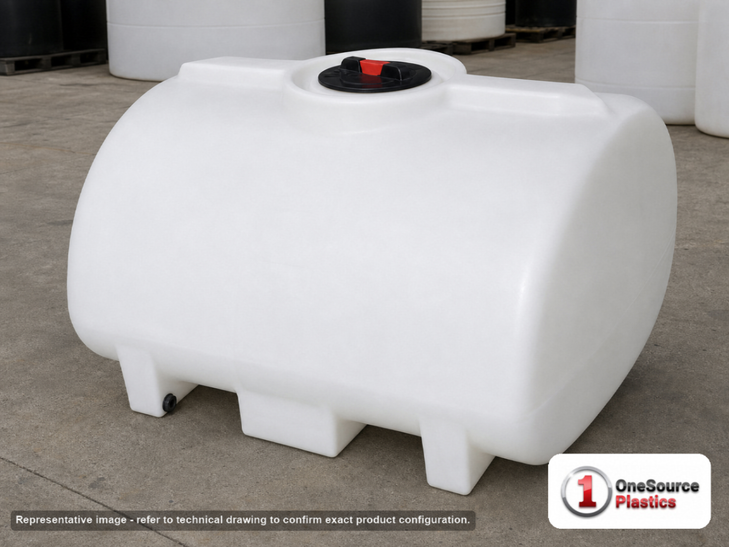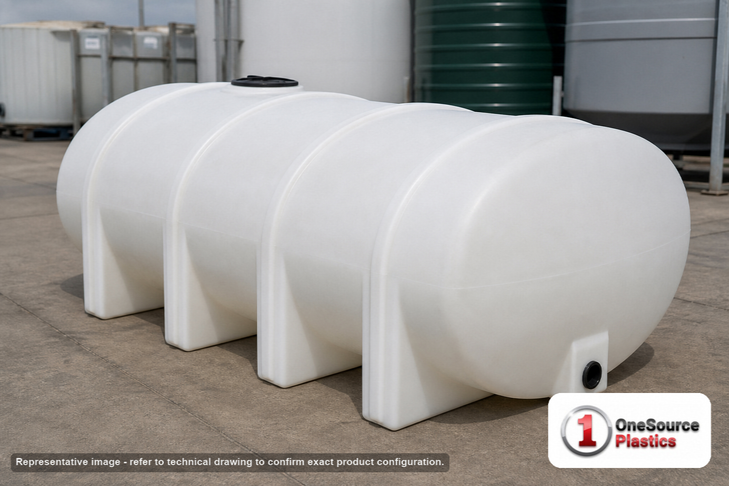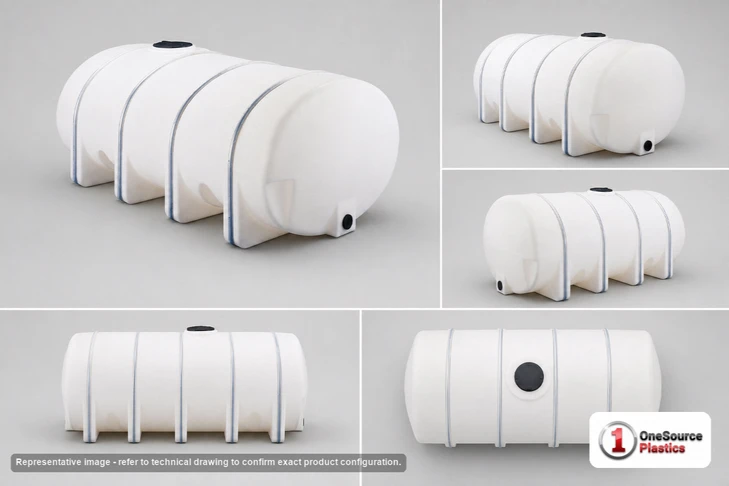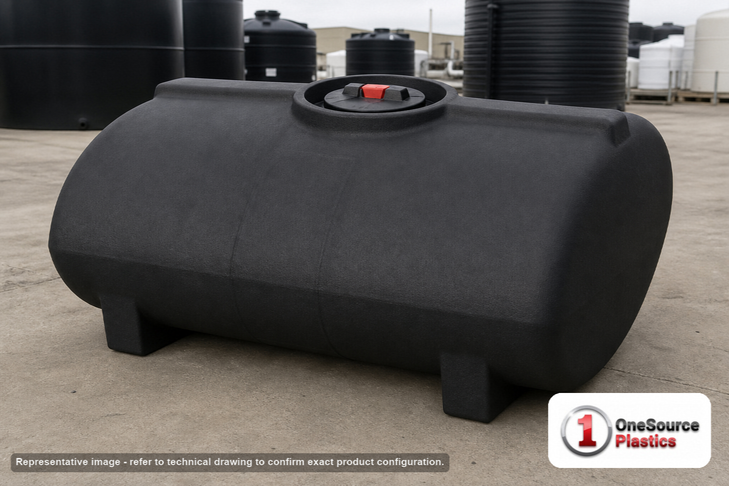
The Enduraplas 100 Gallon Black Horizontal Sump Bottom Leg Tank is a low-slung polyethylene haul tank built for moving liquid on a skid, trailer, or pickup bed. At 27 inches tall on a 41 x 46 inch footprint, it carries 100 gallons in a sump-bottom horizontal design. The 1.9 specific gravity rating and the polyethylene resin grade are the two facts that decide what you can safely haul in it - more on that below.
Will it work for your job?
This is a 100 gallon horizontal tank measuring 46 inches long, 41 inches wide, and 27 inches tall, molded from polyethylene in black. Full of plain water it carries roughly 834 lbs, and the tank is rated to hold contents weighing up to 1,585 lbs - that headroom is what lets it run heavier-than-water fluids at the full 1.9 specific gravity rating. Match your fluid's specific gravity against that 1.9 number before you fill: water is 1.0, but many fertilizers, brines, and acids run heavier, and the gallons you can safely load drop as density climbs. The horizontal leg-tank form factor sits flat and low for transport stability; size your application against the Tank Sizing Calculator and the Tank Sizing Guide if you are deciding between this and another 100 gallon tank. Fitting and outlet configuration is not specified in our current data - confirm port size and placement with us before you plumb it.
Chemical compatibility
This tank is molded in polyethylene with a 1.9 specific gravity rating, which is what makes it a candidate for heavier chemical service rather than plain water alone. The resin grade reads as HDLPE but is not yet confirmed - confirm HDLPE versus XLPE (cross-linked) with us before putting any chemical in this tank, because the two resins behave very differently against aggressive media. Per the manufacturer chemical-resistance data, this tank handles the following at the noted concentrations, each with the recommended fitting and gasket materials (compatibility is always concentration- and temperature-specific, so verify against the OEM chart for your exact conditions):
- Acetic Acid 60% - PP/PVC fittings, EPDM gaskets
- Aluminum Sulfate 50% - PVC fittings, EPDM gaskets
- Calcium Chloride 40% - PVC fittings, EPDM gaskets
- DEF 32.5% - 316SS fittings, EPDM gaskets
- Ethylene Glycol 100% - PVC fittings, EPDM gaskets
- Ferric Chloride 50% - PVC fittings, EPDM gaskets
- Ferric Sulfate 60% - PVC fittings, EPDM gaskets
- Ferrous Sulfate 20% - PVC fittings, EPDM gaskets
- Hydrochloric Acid 37% - PVC fittings, Viton gaskets
- Hydrofluoric Acid 48% - PP/PVC fittings, Viton gaskets
- Hydrofluosilicic Acid 26% - PP/PVC fittings, Viton gaskets
- Hydrogen Peroxide 50% - PVC fittings, Viton gaskets
- Magnesium Chloride 30% - PVC fittings, EPDM gaskets
- Peracetic Acid 30% - 316SS fittings, Aflas gaskets
- Phosphoric Acid 85% - PVC fittings, Viton gaskets
- Polyaluminum Chloride - PVC fittings, EPDM gaskets
- Potassium Carbonate 50% - PVC fittings, EPDM gaskets
- Potassium Hydroxide saturated - PVC fittings, EPDM gaskets
- Propylene Glycol - PP/316SS fittings, EPDM gaskets
- Sodium Bisulfate - PVC/PP fittings, EPDM gaskets
- Sodium Bisulfite - PVC/PP fittings, EPDM gaskets
- Sodium Carbonate 30% - PVC fittings, EPDM gaskets
- Sodium Hypochlorite under 16.5% - PVC fittings, Viton gaskets
- Sodium Thiosulfate 40% - PVC fittings, EPDM gaskets
- Sulfuric Acid 98% - CPVC fittings, Viton gaskets
- Urea Solution 50% - PP/PVC fittings, EPDM gaskets
- Zinc Orthophosphate - PP/316SS fittings, EPDM gaskets
- Ozonated Water up to 10 PPM - PVC fittings, EPDM gaskets (no dedicated reference page yet - call to confirm)
Note the gasket call-outs: oxidizers like sodium hypochlorite, hydrogen peroxide, and the strong acids want Viton or Aflas, not EPDM - using the wrong elastomer is the most common field mistake on a chemical leg tank. DEF and peracetic acid both want 316 stainless fittings rather than plastic. Start with the full chemical compatibility reference for any fluid you do not see above, and call us if your chemical is not listed.
The mistake to avoid
The single most common error on a 1.9 SG tank is treating it like a water tank. The 1.9 rating means the wall is built for heavy fluids, but you still have to do the density math: a fluid at 1.5 SG hits the tank far harder than water, and the 1,585 lb content limit is your ceiling, not the 834 lb water figure. Confirm your fluid's specific gravity, confirm the resin (HDLPE vs XLPE) for chemical use, and match fitting and gasket materials from the chart above - those three checks prevent nearly every premature failure on a transport leg tank.
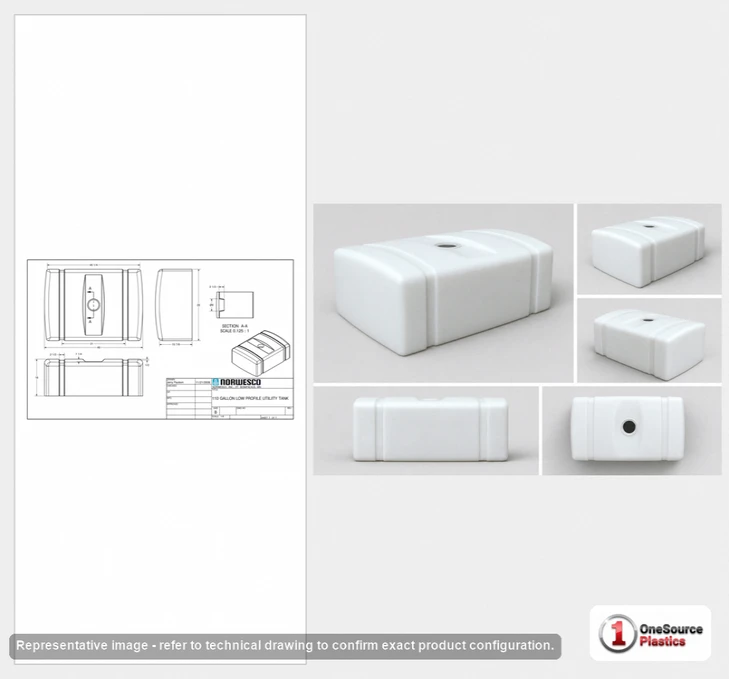
This tank ships LTL freight from the Enduraplas plant in Neche, ND, quoted live to your ZIP. Because it ships from a single origin on a compact 27 in tall, 41 x 46 in footprint, freight scales predictably with distance from North Dakota - get an exact number with the Freight Cost Estimator or call 866-418-1777. For build and fleet-use context, see our guides on applicator and leg tanks for fertilizer, portable utility tanks and DOT classification for farm fleet use, and fertilizer-blend tank stratification. You can also review dimensions on the technical drawing on this page.
Freight and documents
Ships from: Neche, ND. LTL freight is quoted to your ZIP with the freight cost estimator or by phone at 866-418-1777. The listed price is before freight.
Technical drawing (PDF) for Enduraplas THD00100B.
See this tank
Interactive 3D model with live fill. This tank has an interactive 3D model built to its manufacturer dimensions. Rotate it, and set a fill level to see how much liquid it holds at any height. Open the 3D view on the product photo above. Download the 3D model (GLB).
Product video. Watch the Enduraplas 100 Gallon Black Horizontal Sump Bottom Leg Tank video (60 seconds) with dimensions, fittings and shipping notes.
Ready to order?
Add it to your cart at the top of this page, get LTL freight to your ZIP, or call 866-418-1777. The listed price is before freight.