Norwesco Loaf-Style Portable Utility Tanks: 49 CFR 173.5 Agricultural Exemption and DOT Classification for Farm Fleet Use
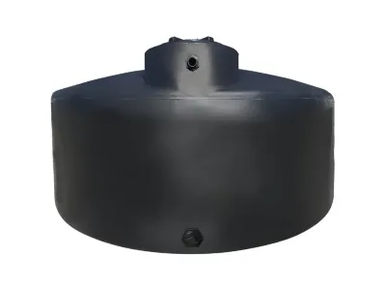
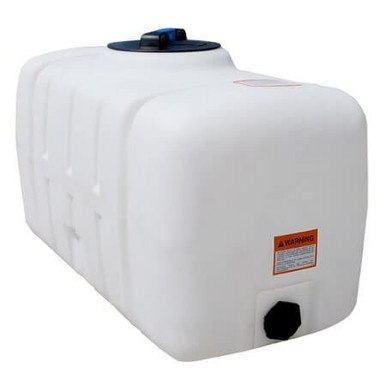
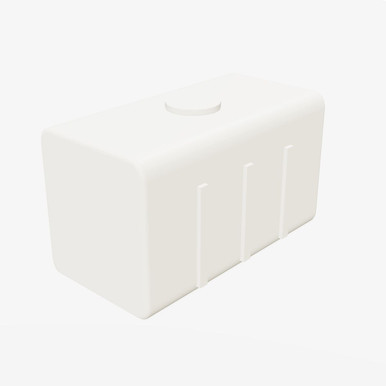
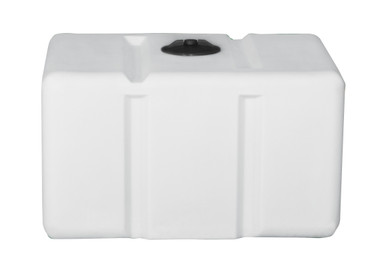
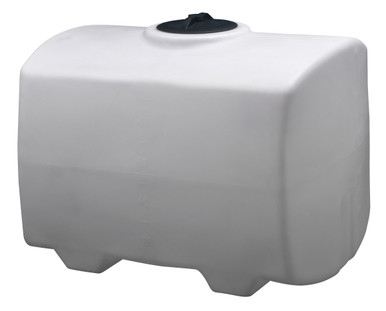
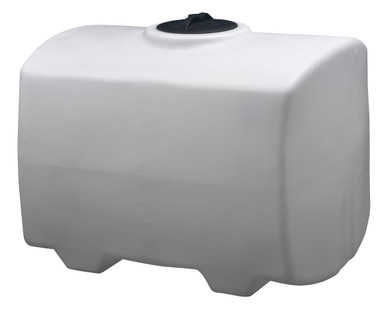
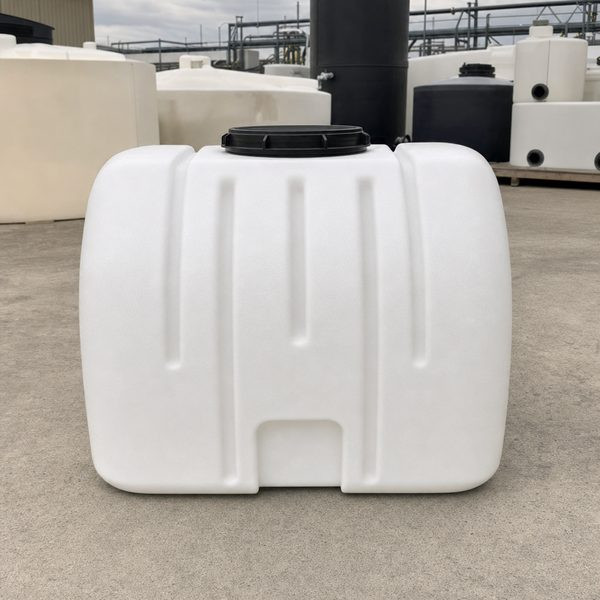
The loaf-style portable utility tank is a workhorse on American farms. The shape — a low, oblong tank with rounded ends, designed to nest into a pickup bed or a flatbed trailer — has been around for decades. The Norwesco Loaf line covers capacities from 50 gallons to 1,050 gallons, in white and black HDPE pigmentation, with a footprint that fits the cargo bed of common farm vehicles. For agricultural operations moving water, fertilizer solution, herbicide mix, or similar materials between a bulk loading point and a field, the Loaf is an obvious tool. The DOT classification question — what regulatory regime governs the moving Loaf when it is on a public highway — is where many farmers and ag retailers get confused. This walkthrough explains the 49 CFR 173.5 agricultural exemption, when it applies, what 49 CFR 173.32 says about portable-tank construction standards, and how to specify Loaf-style tanks for compliance with the federal regime.
The framework for hazmat transportation in the U.S. is the Hazardous Materials Regulations (HMR) under 49 CFR Parts 100-185, administered by the Pipeline and Hazardous Materials Safety Administration (PHMSA), a part of the U.S. Department of Transportation. The HMR governs the offering and transport of hazardous materials in commerce, including the packaging, labeling, marking, placarding, and shipping-paper requirements. Agricultural materials in commercial transport are subject to the HMR like any other hazardous material — but Congress and DOT have built specific carve-outs for agricultural operations that recognize the operational realities of farm transport.
49 CFR 173.5 Agricultural Operations Exemption
49 CFR 173.5 provides the agricultural operations exemption. The rule allows the use of MC 306 and DOT 406 cargo tank motor vehicles, and DOT 57 portable tanks, to transport certain agricultural materials between a bulk loading facility and a farm (or between farms) under specific conditions. The exemption is targeted: it applies to liquid soil pesticide fumigants and to "Pesticides, liquid, toxic, flammable, n.o.s., flash point not less than 23 degrees C, 6.1, UN2903, PG II" specifically, and to similar listed agricultural chemistries. The transportation must be:
- Exclusively for agricultural operations
- By a private motor carrier
- Between a bulk loading facility and a farm, or between farms
- Not exceeding 150 miles between the loading facility and the farm
- Not more than five days for intermediate stops for temporary storage
The 150-mile limit is the operational ceiling. A farmer moving herbicide mix from the ag retailer to the field within 150 miles of the retailer's bulk loading station, on a private (non-commercial) basis, in an authorized container type, falls within the exemption. A farmer moving the same chemistry on a 200-mile route, or doing it as a commercial-for-hire operation, does not.
The "private motor carrier" qualifier is important. Under 49 CFR 390.5, a "private motor carrier" means a person who transports property by commercial motor vehicle for the purpose of furthering a commercial enterprise of which the person is the owner or operator and who is not a for-hire carrier. The farmer moving his own chemistry to his own field qualifies as a private motor carrier. The custom-applicator company moving chemistry on contract to multiple farms is a for-hire carrier and the 173.5 exemption does NOT apply.
49 CFR 173.32 Portable Tank Construction Standards
49 CFR 173.32 sets construction and use requirements for portable tanks transporting hazardous materials. The rule references DOT-specification portable tank designs (DOT 51, DOT 56, DOT 57, DOT 60) and IM (international) portable tank specifications (IM 101, IM 102) and IMO (International Maritime Organization) portable tanks. Each spec defines the construction standard, pressure rating, capacity range, and materials of construction. DOT 57 portable tanks (the spec specifically called out in 173.5) are the spec applicable to agricultural-exemption use.
The Norwesco Loaf-style tanks are NOT DOT-spec portable tanks. They are non-bulk packaging or, depending on capacity, intermediate-bulk-container alternatives. Norwesco Loaf tanks are appropriate for non-regulated agricultural water transport (water on the farm, between fields, between water-source and irrigation use), for non-hazardous fertilizer-solution transport on the farm, and for other non-hazmat agricultural use. They are NOT appropriate for hazardous-material transport under any DOT regulatory pathway including 173.5 — a Loaf is not a DOT 57 portable tank and therefore does not qualify for the 173.5 ag exemption when the chemistry is regulated.
What This Means in Practice
Norwesco Loaf tanks are the right tool for:
- Hauling water on the farm (livestock water, irrigation supplemental water, dust suppression water)
- Hauling diluted fertilizer solutions that are NOT classified as hazardous materials under 49 CFR (most NPK fertilizer solutions, urea solutions, calcium nitrate solutions in agricultural concentrations)
- Hauling DEF (diesel exhaust fluid) on a farm — DEF is not a hazardous material under DOT classification
- Hauling diesel for on-farm use, subject to the small-quantity exemptions for farm fuel transport
- Off-road on-farm transport that does not enter the public highway system at all
Loaf tanks are NOT the right tool for:
- Pesticide concentrate transport on a public highway (this requires a DOT-spec portable tank or other DOT-authorized package)
- Anhydrous ammonia transport (specific pressure-vessel requirements apply, polyethylene is not authorized)
- Petroleum product transport beyond on-farm use exemptions (gasoline, jet fuel, kerosene transport)
- Class 8 acid or caustic transport (different package authorizations apply)
Norwesco Loaf Catalog at OneSource
The OneSource Plastics catalog includes the full Norwesco Loaf range across sizes appropriate to different farm-fleet vehicle classes:
Pickup Bed Class (50-100 Gallons)
- Norwesco 50 Gallon Plastic Portable Loaf Utility Tank in White (MPN 44962, listed at $258.99) — fits short-bed pickup. Dimensions accommodate ATV utility-bed installations.
- Norwesco 50 Gallon Portable Loaf Utility Tank in White (38 inch) (MPN 42341, listed at $278.99) — narrower variant for ATV and utility-vehicle bed.
- Norwesco 100 Gallon Plastic Portable Loaf Utility Tank in White (MPN 44963, listed at $398.99) — standard pickup-bed scale. Fits in most full-size pickup beds with the tailgate up.
- Norwesco 100 Gallon Plastic Portable Loaf Utility Tank in Black (MPN 45345, listed at $402.86) — black pigmentation reduces UV degradation on outdoor-stored chemistry, and is preferred where fluid temperature should be elevated (livestock water in cold conditions where tank-water freeze prevention helps).
- Norwesco 100 Gallon Portable Loaf Utility Tank in White (41 inch) (MPN 43611, listed at $398.99) — narrower 41-inch variant for narrower truck beds.
Flatbed Trailer Class (200-500 Gallons)
- Norwesco 200 Gallon Plastic Portable Loaf Utility Tank in White (MPN 43612, listed at $578.99) — flatbed-trailer scale tank.
- Norwesco 300 Gallon Plastic Portable Loaf Utility Tank in White (MPN 43613, listed at $848.99) — larger flatbed-trailer Loaf.
- Norwesco 500 Gallon Portable Loaf Utility Tank in White (MPN 43843, listed at $1,189.99) — high-capacity portable for full-size trailer applications.
- Norwesco 500 Gallon Black Loaf Tank (MPN 43843B, listed at $1,329.00) — black pigmentation 500-gallon variant.
Heavy Trailer Class (1,050 Gallons)
- Norwesco 1050 Gallon Plastic Portable Loaf Utility Tank in White (MPN 44936, listed at $2,677.60) — heavy-trailer-scale Loaf, common for high-volume farm water transport and livestock water hauling.
- Norwesco 1050 Gallon Plastic Portable Loaf Utility Tank in Black (MPN 42306, listed at $3,000.86) — black pigmentation 1,050-gallon variant.
Securing the Tank for Highway Transport
A loaded Loaf at 1,050 gallons of water weighs about 8,750 pounds (1,050 gallons x 8.34 lb/gal water). On a flatbed trailer, that load must be secured per Federal Motor Carrier Safety Regulations (FMCSR) at 49 CFR 393.100-393.136 — the cargo-securement standard. The basic rule: the cargo must be restrained against forward, rearward, sideways, and vertical movement under braking, acceleration, and turning.
For Loaf tanks, common securement practice:
- Use the molded-in tie-down lugs on the tank (Norwesco Loafs have integrated tie-down points molded into the tank wall at the corners)
- Apply ratchet straps or chains rated for the load weight, anchored to the trailer deck D-rings or stake-pocket anchors
- For tanks above 500 gallons, use four straps minimum (one each direction) sized so the aggregate working load limit is at least 50% of the tank-plus-cargo weight in each direction
- Inspect the straps before each haul; replace any strap with cuts, fraying, or rust
- Apply chocks or wedges fore and aft of the tank to prevent rolling motion under braking
For pickup-bed Loafs (50-100 gallon), strap to the bed-mounted anchor points or to the bed-rail tie-down hooks. Do NOT rely on tank weight alone to keep the tank in the bed — under hard braking a 100-gallon water load can slide forward and impact the cab.
Fitting Configuration
Norwesco Loaf tanks ship with standard fitting configurations: a top fill cap (typically 4-inch or 5-inch threaded cap) and one or more bottom drain bulkheads (typically 1.5-inch or 2-inch). The standard configurations cover most agricultural applications. For specialized configurations (additional bulkheads, custom fitting locations, vent installations), Norwesco offers field-installable bulkhead kits and the OneSource technical team can specify fitting kits for non-standard requirements.
For an ag-fleet application that uses the Loaf for multiple chemistries (water on Monday, fertilizer solution on Tuesday, herbicide mix on Wednesday), the tank should be thoroughly rinsed between chemistries. Cross-contamination of trace pesticide residue into water for livestock or potable use is a regulatory and operator-safety failure mode. The smaller tank-volume bulk drain is the design choice that minimizes residual heel and supports cleaner chemistry-to-chemistry transitions.
UV and Outdoor Storage
Loaf tanks are typically stored outdoors when not in use, often partially loaded with residual liquid. UV exposure over the tank service life drives the polyethylene degradation envelope. Norwesco's HDPE includes UV stabilizer additive package; in moderate-UV climates the tank delivers 10-15+ years of service before UV-induced wall embrittlement becomes operational. In high-UV environments (Texas Panhandle, Arizona, California Central Valley, New Mexico), service life is shorter — plan for 7-10 years.
To extend service life, store the Loaf under cover (barn, lean-to, shade structure) when possible, drain residual liquid completely between uses where chemistry permits, and inspect the tank exterior annually for chalking (UV-induced surface degradation that appears as a faint white powder) or for stress whitening at the corners (potential cracking precursor).
Cleaning and Decontamination
For chemistry-to-chemistry transitions on the same Loaf:
- Drain the tank completely. Rinse with water until rinse water runs clear.
- For pesticide-to-water transitions, apply a triple-rinse or a chemical decontamination wash per the pesticide label. Pesticide labels typically include a triple-rinse procedure that meets the EPA decontamination standard.
- For water-to-fertilizer transitions, a single thorough rinse is sufficient.
- For inter-pesticide transitions (one herbicide to another), follow the more aggressive of the two product labels' decontamination procedures.
- Do not reuse rinsate as field-applied product unless the pesticide label permits this.
- Dispose of contaminated rinsate per state pesticide-disposal regulations (typically a permitted ag-chemical disposal facility or land-application of dilute rinsate at agronomic rate).
Bulk Loading Facility Coordination
For the 173.5 ag exemption to apply, the loading point must be a "bulk loading facility" — typically the ag retailer's pesticide-mixing station or fertilizer-loading dock. The retailer is the offeror under HMR for any chemistry that they load into the farmer's container, and the retailer carries a portion of the regulatory burden for ensuring the chemistry, the container, and the transport meet the exemption conditions. Most ag retailers are familiar with the 173.5 framework and can coordinate the loading documentation, pre-load container inspection, and shipping-paper preparation.
For non-regulated chemistry (water, non-hazardous fertilizer), there is no HMR offeror burden and the loading is a routine commercial transaction. The Norwesco Loaf is the right container for the broad range of non-regulated agricultural materials moving from the retailer to the farm.
State-Level Regulations
Beyond federal HMR, several states regulate aspects of agricultural pesticide transport beyond the federal floor. California's Department of Pesticide Regulation, Texas Department of Agriculture, and other state ag departments have label-specific transport conditions for restricted-use pesticides. Always verify state-level requirements at the chemistry-specific level before relying solely on the federal 173.5 framework.
For state-level OSSF and water-tank regulatory references that intersect with farm operations, see the OneSource state-regulations pillars: Texas, California, Iowa, Nebraska. For chemistry-specific compatibility on agricultural-product storage in HDPE Loaf or vertical tanks, see the urea solution storage page and the ammonium sulfate storage page.
Specifying the Right Loaf for Your Operation
Considerations for selecting the right Norwesco Loaf model:
- Available vehicle: pickup bed (50-100 gal), flatbed trailer (200-500 gal), heavy trailer (1,050 gal). Match the tank to the largest vehicle you have.
- Daily volume need: how much chemistry are you moving per trip? Size to match operational reality without oversize freight cost penalty.
- Single-chemistry vs multi-chemistry use: dedicated tanks per chemistry simplify decontamination but cost more capital. Multi-chemistry tanks need rigorous decontamination protocols.
- UV climate: high-UV regions favor white pigmentation for thermal management; cold-climate regions may favor black for freeze-prevention solar gain.
- Storage location: covered storage extends service life; uncovered storage is acceptable but plan for shorter service life.
- Ownership cycle: short-cycle operations (lease the tank for one season) tolerate cost-economic models; multi-year operations justify the upgrade to higher-capacity or specialty configurations.
For pricing, freight, and configuration on Norwesco Loaf tanks across the OneSource catalog, contact OneSource Plastics at 866-418-1777. For LTL freight quoting on Loaf delivery to your farm or ag retailer location, use the freight estimator.
Recommended Tanks for This Guide
Live pricing, updated automatically · estimate freight to your ZIP.