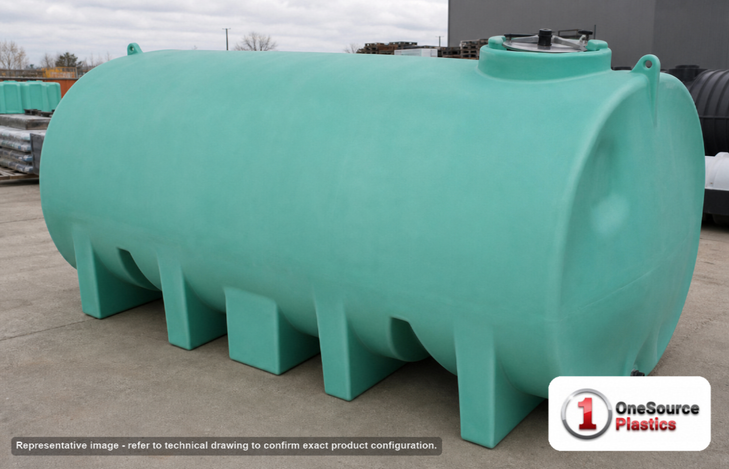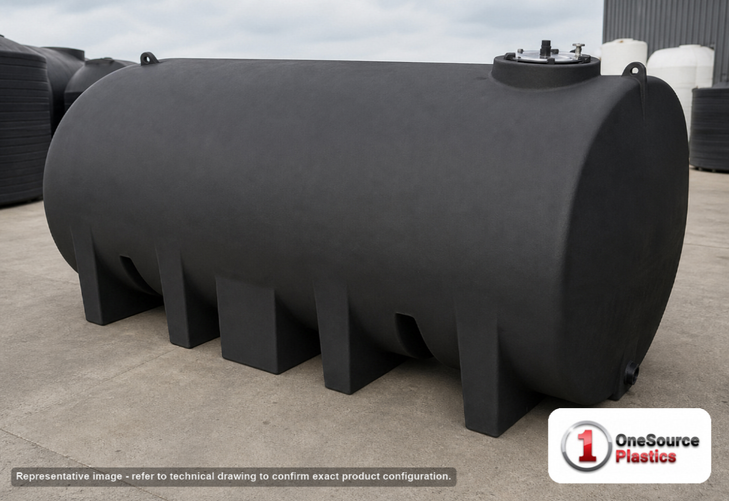
The Enduraplas 4500 Gallon Black Horizontal Leg Tank is a heavy-haul poly tank built to move dense, high-density loads down the field road. It holds 4,500 gallons, measures 179 inches long by 95 inches wide by 84 inches tall, and rides on a molded leg base. The black polyethylene shell carries a 1.9 specific gravity rating, which is at or near the top of the poly range and is the whole point of this tank: it lets you haul liquids far denser than water to full volume without exceeding the shell's design density. If you have been searching for an Enduraplas horizontal leg tank in black, this is the full-size haul tank in that line.
Will it work for your load?
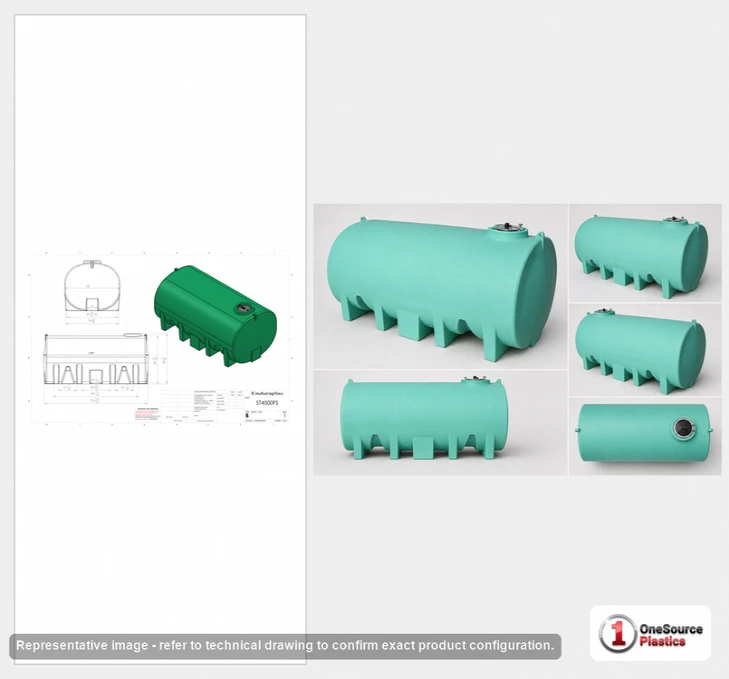
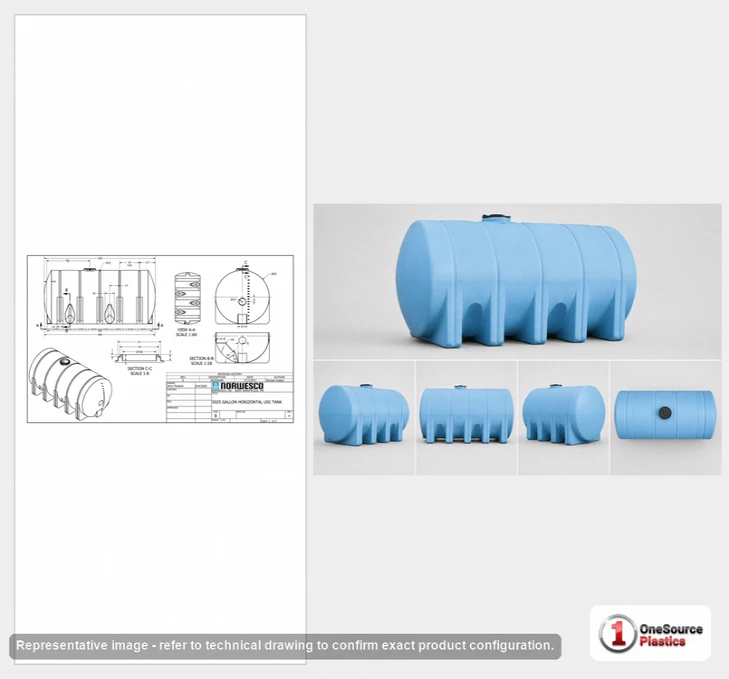
Start with weight, because that is where leg tanks catch people. Filled with plain water, this tank carries roughly 37,530 pounds of contents; at its full 1.9 SG rating, the maximum rated contents weight is 71,307 pounds. That headroom is what makes it the high-density choice in the line - you can run dense fertilizer blends, brines like calcium and magnesium chloride, and heavy acids to volume rather than topping out early on weight. There is no heavier-rated poly step-up needed for typical ag and water-treatment densities; 1.9 SG already sits at the top end. The number also drives everything downstream - your trailer or skid rating, axle capacity, tie-down points, and the ground you park it on. Run your fill volume against the load before you spec a trailer using the Tank Sizing Calculator, and walk through the Tank Sizing Guide if you are matching a tank to a delivery route or applicator setup. The footprint is 95.0 x 179.0 inches, so confirm your trailer deck supports the full length before you commit, and see the technical drawing on this page for fitting locations and leg geometry.
Chemical compatibility
This is a high-density poly shell rated to 1.9 specific gravity, sized for dense agricultural and water-treatment chemistries, not just water. The tank resin is listed as HDLPE but is not fully confirmed - confirm HDLPE versus XLPE with us before you commit it to chemical service, because the resin determines what it will hold long-term. Compatibility below comes from the OEM chemical-resistance chart and is concentration- and temperature-specific; verify your exact concentration and operating temperature against that chart before you fill.
Common chemistries this shell is rated to handle, with the fitting and gasket materials each requires:
- Acetic Acid (60%) - PP/PVC fittings, EPDM gaskets
- Aluminum Sulfate (50%) - PVC fittings, EPDM gaskets
- Calcium Chloride (40%) - PVC fittings, EPDM gaskets
- DEF (32.5%) - 316SS fittings, EPDM gaskets
- Ethylene Glycol (100%) - PVC fittings, EPDM gaskets
- Ferric Chloride (50%) - PVC fittings, EPDM gaskets
- Ferric Sulfate (60%) - PVC fittings, EPDM gaskets
- Ferrous Sulfate (20%) - PVC fittings, EPDM gaskets
- Hydrochloric Acid (37%) - PVC fittings, Viton gaskets
- Hydrofluoric Acid (48%) - PP/PVC fittings, Viton gaskets
- Hydrofluosilicic Acid (26%) - PP/PVC fittings, Viton gaskets
- Hydrogen Peroxide (50%) - PVC fittings, Viton gaskets
- Magnesium Chloride (30%) - PVC fittings, EPDM gaskets
- Peracetic Acid (30%) - 316SS fittings, Aflas gaskets
- Phosphoric Acid (85%) - PVC fittings, Viton gaskets
- Polyaluminum Chloride - PVC fittings, EPDM gaskets
- Potassium Carbonate (50%) - PVC fittings, EPDM gaskets
- Potassium Hydroxide (saturated) - PVC fittings, EPDM gaskets
- Propylene Glycol - PP/316SS fittings, EPDM gaskets
- Sodium Bisulfate - PVC/PP fittings, EPDM gaskets
- Sodium Bisulfite - PVC/PP fittings, EPDM gaskets
- Sodium Carbonate (30%) - PVC fittings, EPDM gaskets
- Sodium Hypochlorite (<16.5%) - PVC fittings, Viton gaskets
- Sodium Thiosulfate (40%) - PVC fittings, EPDM gaskets
- Sulfuric Acid (98%) - CPVC fittings, Viton gaskets
- Urea Solution (50%) - PP/PVC fittings, EPDM gaskets
- Zinc Orthophosphate - PP/316SS fittings, EPDM gaskets
- Ozonated Water (up to 10 PPM) - PVC fittings, EPDM gaskets
The single most common mistake on a tank like this is matching the gasket to the chemical, not just the fitting. Notice how the oxidizers and strong acids above - hydrochloric, phosphoric, sulfuric, hydrogen peroxide, sodium hypochlorite - call for Viton or CPVC, while the salts and glycols run on EPDM. Get that wrong and the fitting holds while the gasket fails. Watch the outliers, too: DEF and peracetic acid both break the PVC pattern and require 316SS metal fittings, and peracetic is the only chemistry here that needs Aflas rather than Viton or EPDM. Tell us your chemical and concentration and we will spec the fitting-and-gasket bundle to match - those are specified on order, not shipped with the bare tank. Full concentration and temperature limits live on the chemical compatibility reference.
Freight and ordering
This tank ships LTL freight from the Enduraplas plant in Neche, ND, quoted live to your ZIP - on a tank this size and weight, freight is a real line item, so get a number before you plan the install. Use the Freight Cost Estimator for a freight quote to your address, or call 866-418-1777 and we will work out the carrier, accessorial needs, and offload for a tank this heavy. If you are spec'ing this for a fertilizer or applicator program, our guides on applicator and leg tanks for fertilizer and fertilizer-blend tank stratification cover the field details that catch people off-spec.
Freight and documents
Ships from: Neche, ND. LTL freight is quoted to your ZIP with the freight cost estimator or by phone at 866-418-1777. The listed price is before freight.
See this tank
Interactive 3D model with live fill. This tank has an interactive 3D model built to its manufacturer dimensions. Rotate it, and set a fill level to see how much liquid it holds at any height. Open the 3D view on the product photo above. Download the 3D model (GLB).
Product video. Watch the Enduraplas 4500 Gallon Black Horizontal Leg Tank video (67 seconds) with dimensions, fittings and shipping notes.
Ready to order?
Add it to your cart at the top of this page, get LTL freight to your ZIP, request a written quote, or call 866-418-1777. The listed price is before freight.