Six thousand five hundred gallons on a ten foot circle
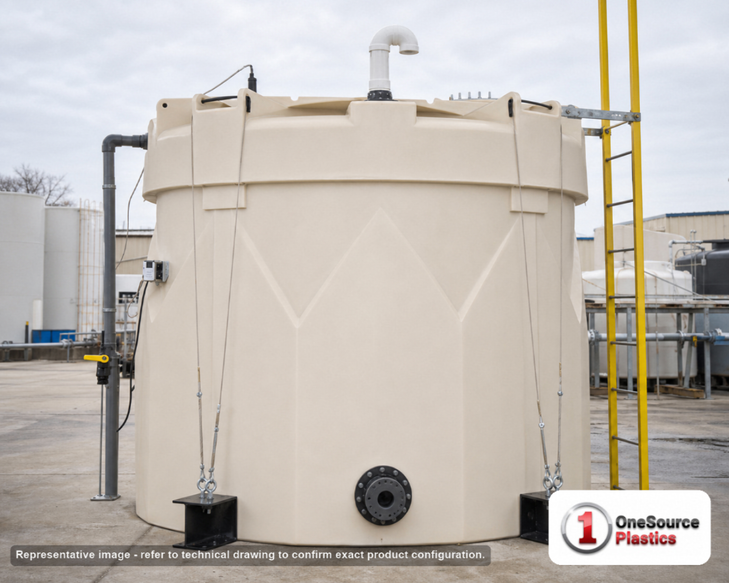
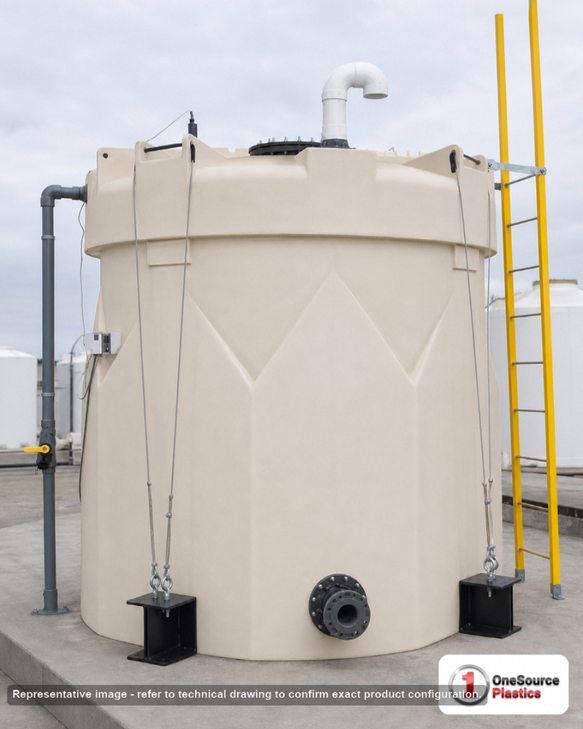
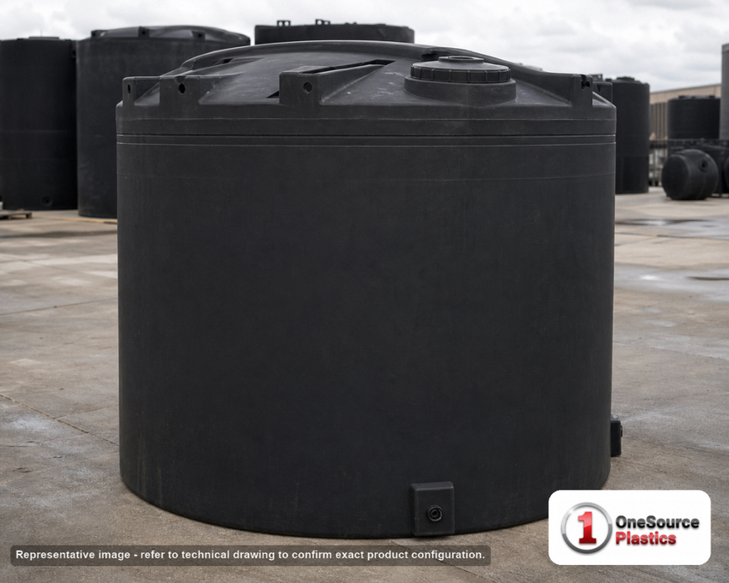
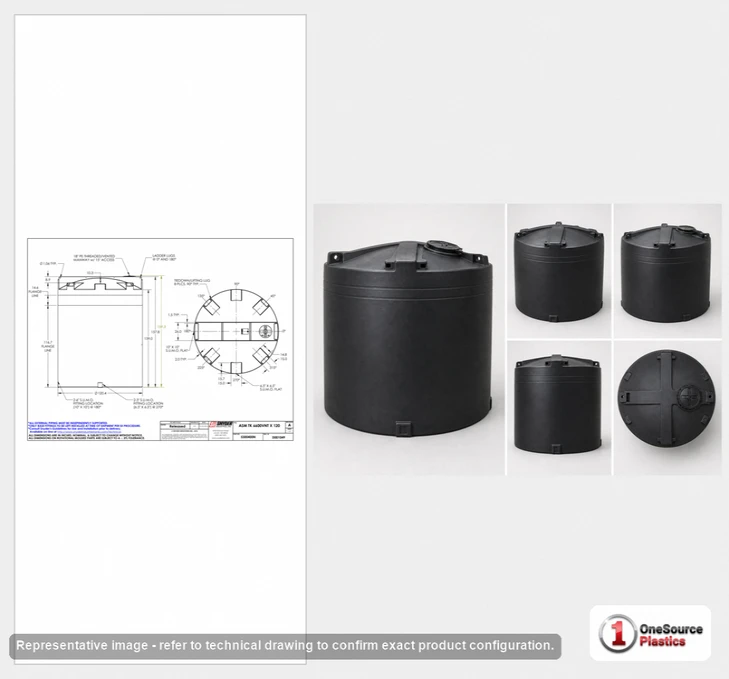
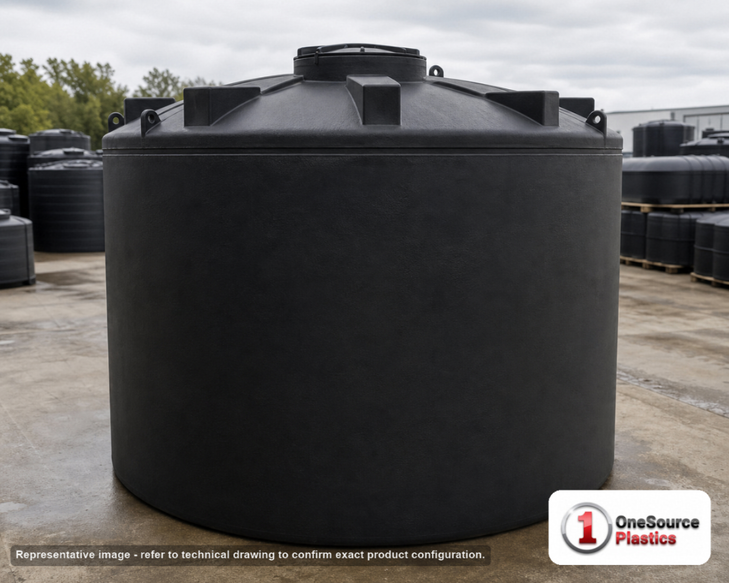
Ten feet across and over sixteen feet tall is the shape of this one. The Snyder 5670000N30 is a 6,500 gallon double wall tank that Snyder names Sulfuric Acid; we use the maker's name and nothing else, because the sheet publishes no concentration, no acid strength and no compatibility statement. The shell is opaque white high density linear polyethylene, 120 inches long by 120 inches wide by 199 inches tall, 5,300 pounds empty. The sheet gives one capacity, one set of overall dimensions, one empty weight and one rating for the whole assembly, with no separate inner tank figure, no separate outer containment figure, no annulus dimension and no containment percentage on it, so none is stated here. The wall is rated at a specific gravity of 1.9, and the sheet gives 54,210 pounds for 6,500 gallons of water at 8.34 pounds per gallon with 102,999 pounds of max contents. The published opening is an 18 inch threaded vented manway; the outlet field reads "1 Manway / Lid", an opening rather than a pipe size, and the inlet field is blank. The service limit is 120 F / 48 C and the warranty is a 3 Year Warranty, with no maintenance interval published. The ship mode is LTL at class 250 with no NMFC number, moulded at Lincoln, Nebraska.
One tank or a train of them? A single 6500 gallon tank goes straight to the cart above; for several, request a written quote with freight to your ZIP.
The 120 inch plan, one step below the 142s
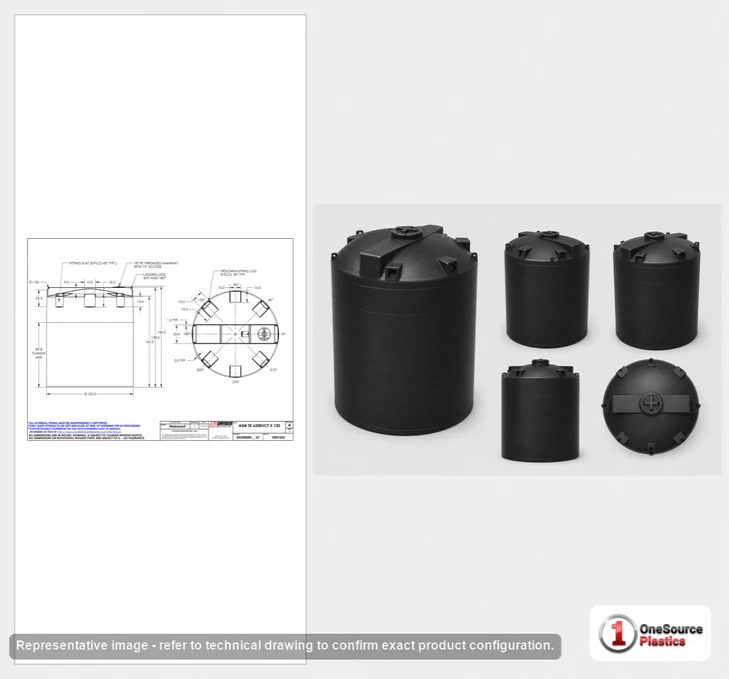
This tank is the largest vessel in its family that still stands on a 120 inch plan, and that is the reason to buy it rather than anything to do with the gallons. The sheet's own neighbour above is an 8,700 gallon on a 142 inch square at 197 inches and 5,000 pounds: more volume, and a footprint nearly two feet wider in both directions. If your pad, your bund apron, your equipment yard or the gap between two existing structures is set at ten feet, that 142 inch tank is not a size upgrade, it is a civil works project. This one takes the same duty to 6,500 gallons by standing 199 inches tall on the plan you already have. Below it on the same 120 inch plan the sheet publishes a 5,500 gallon at 172 inches and 3,200 pounds, which is the same trade running the other way: less height, same ground, a smaller vessel. So the honest way to read this family is that the 120 inch plan gives you two heights and the 142 inch plan starts a different pad conversation altogether. Decide which plan your site can carry first, then pick the height. The pad is where the money is. One hundred and ninety-nine inches of vessel on a 120 inch square carries 54,210 pounds of water, or 102,999 pounds at the published 1.9 rating, concentrated on a hundred square feet of ground. That is a designed slab on designed subgrade rather than a yard surface that happens to look level, and the concrete pad sizing guide for above ground polyethylene tanks sets out the framework and where its boundary lies. Get it specified and cured before the tank is scheduled. Then be honest about volume: on a contained tank the usable capacity is not the nameplate figure, which the Captor double wall freeboard sizing guide works through, and your own consumption and drop size belong in the tank sizing calculator alongside the tank sizing guide.
Three 6,500s, a 5,500 and an 8,700
| Part | Gallons | Plan | Height | Empty weight |
|---|---|---|---|---|
| 5670000N30 (this tank, named Sulfuric Acid) | 6,500 | 120 x 120 in | 199 in | 5,300 lb |
| 5670000N40 (named ASTM XLPE) | 6,500 | 120 x 120 in | 199 in | 4,000 lb |
| 5670000N42 (named ASTM XLPE, same name, heavier) | 6,500 | 120 x 120 in | 199 in | 5,300 lb |
| 5670000N46 (named ASTM XLPE Black) | 6,500 | 120 x 120 in | 199 in | 4,000 lb |
| 5660000N40 (same plan, shorter, named ASTM XLPE) | 5,500 | 120 x 120 in | 172 in | 3,200 lb |
| 1006400N46 (wider plan, named ASTM XLPE Black) | 8,700 | 142 x 142 in | 197 in | 5,000 lb |
Four part numbers share this 120 by 120 by 199 inch shell, and the sheet gives two of them the same name at different empty weights: 5670000N40 at 4,000 pounds and 5670000N42 at 5,300. The practical consequence is simple: these are not interchangeable part numbers on paper, so order against the number on your drawing or your spares list, and tell us the product and the strength so the listing can be confirmed before anything is quoted. The last row is the one that changes the project rather than the tank. An 8,700 gallon on the 142 inch plan is two feet wider in each direction than everything above it, which means a different pad, a different approach and a different set of clearances, and it stands slightly shorter than this tank while doing it. Sites often reach for it because the number is bigger, then discover the ground work was the real purchase. Read the two plans as two separate decisions and price the civil work for each before you compare the tanks.
Other makers in the running? 866-418-1777 will compare them honestly; Norwesco, Snyder, Chem-Tainer, Enduraplas and Bushman are all here, or price freight on this one.
The manway, the vent, and the blank inlet field
- The vent: the 18 inch manway is listed as threaded and vented, and that path is what protects the wall while a bulk delivery pushes air out and while a pump draws 6,500 gallons down. Keep it clear, look at it every time the manway is open, and never blank it or restrict it to hold anything back.
- The manway: 18 inches is the only opening this sheet publishes, so it is the fill route, the inspection route and the cleaning route at once. It is wide enough to work a lance properly and to get a real look at the wall, which is the point of specifying access on a vessel this size.
- Reaching it: the manway is at 199 inches, over sixteen feet up. That is a fixed ladder or platform, a fall protection arrangement, and a fill connection brought to ground level so a driver never climbs. Design all three with the tank rather than after it.
- The inlet field: blank on this sheet. The outlet field reads "1 Manway / Lid", which names an opening rather than a pipe size, so no outlet dimension, thread, bulkhead, flange or valve is published or claimed here. Tell us the duty, the line size and the pump and we will confirm what this part number carries.
- The space between the walls: no monitoring port, gauge or alarm is published on this sheet. How that space is watched and recorded is specified separately, and at this volume it is worth a written procedure.
- Structure: the sheet publishes no lifting lugs, no ladder lugs and no flange lines on this part number.
- Limits: 120 F / 48 C, a specific gravity rating of 1.9, and a 3 Year Warranty. No maintenance interval is published.
Tell us the product when you order. Every wetted part is chosen against the chemistry, and on a contained vessel the fitting is the only route out that the second wall does nothing about.
Mid-size programmes on sites without a twelve foot pad
Six thousand five hundred contained gallons is the working size for plants that take bulk deliveries but do not have the yard of a large industrial site: municipal water and wastewater treatment, food and beverage processing at scale, metal finishing and surface treatment, mining and aggregate reagent storage, pulp and paper, power plant water chemistry, and chemical distribution depots holding a working stock between bulk arrivals. The ten foot plan is what gets it onto sites where the 142 inch tanks simply will not fit without moving something, and it still holds enough to make a full truck drop worthwhile, which is where the bulk chemical cost per gallon is won. Where a site is building its own spill prevention paperwork around contained bulk storage, our Captor double wall spill planning walkthrough is the place to start; nothing on this page is a claim that any particular rule is met by this part number. Keep a clear walking route right round the tank once it is set, because the side nobody can reach is the side nobody inspects.
Five thousand three hundred pounds and a cured slab
Lincoln, Nebraska is the plant on this sheet and Nebraska the only ship-from state. The ship mode reads LTL at class 250 with no NMFC number, and the shipping dimensions are 120 by 120 by 199 inches at 5,300 pounds. Price your own lane with the freight cost estimator; the listed price is before freight. Everything at the receiving end has to be ready before the truck is booked: the pad poured and cured, the approach clear, the lifting equipment arranged with enough reach for a vessel over sixteen feet tall, and the route across the site walked for overhead lines and soft ground. Lift under the base by the arrangement the rigger specifies and never by the manway. Set it plumb, confirm the whole 120 inch footprint is bearing evenly, and leave the connections until the tank has been checked in position. Fill it with clean water, hold that 54,210 pound load, and read the manway seal, the full base line and the slab under it in good light. Drain it, let it dry, open the space between the walls and record what you saw and the date. Write the part number and that first inspection date on the shell in paint marker where the next person will find it, because on a tank with a ten year working life the paperwork is the first thing to go missing. Put the tank's part number on the maintenance log the day it lands; five years on, nobody remembers which shell it is.
Freight and documents
Ships from: Lincoln, NE. LTL freight is quoted to your ZIP with the freight cost estimator or by phone at 866-418-1777. The listed price is before freight.
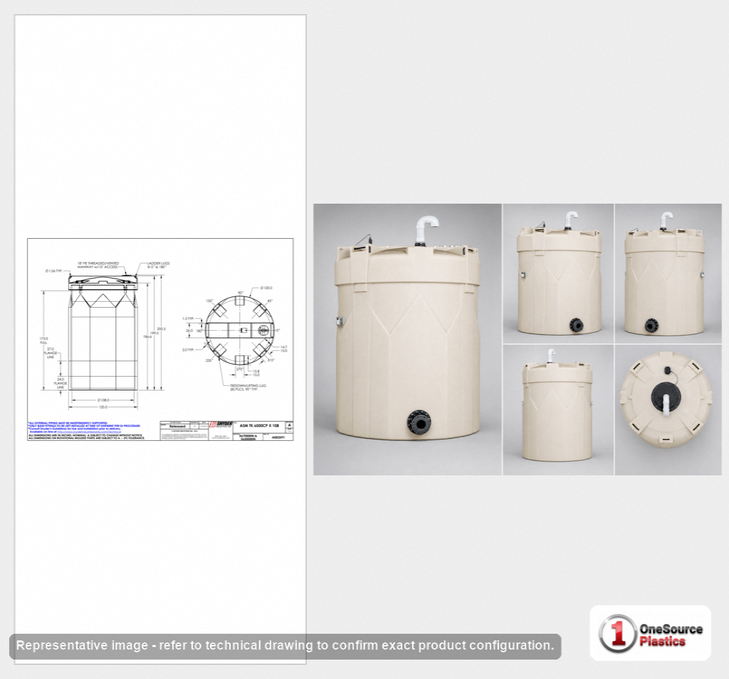
Technical drawing (PDF) for Snyder Industries 5670000N30.
See this tank
Interactive 3D model with live fill. This tank has an interactive 3D model built to its manufacturer dimensions. Rotate it, and set a fill level to see how much liquid it holds at any height. Open the 3D view on the product photo above. Download the 3D model (GLB).
Ready to order?
Add it to your cart at the top of this page, get LTL freight to your ZIP, request a written quote, or call 866-418-1777. The listed price is before freight.