6,600 gallons rated 1.9, thirteen feet two inches tall
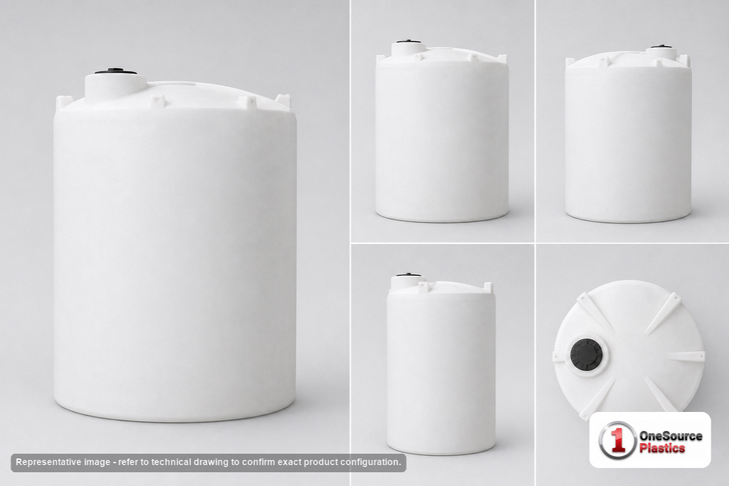
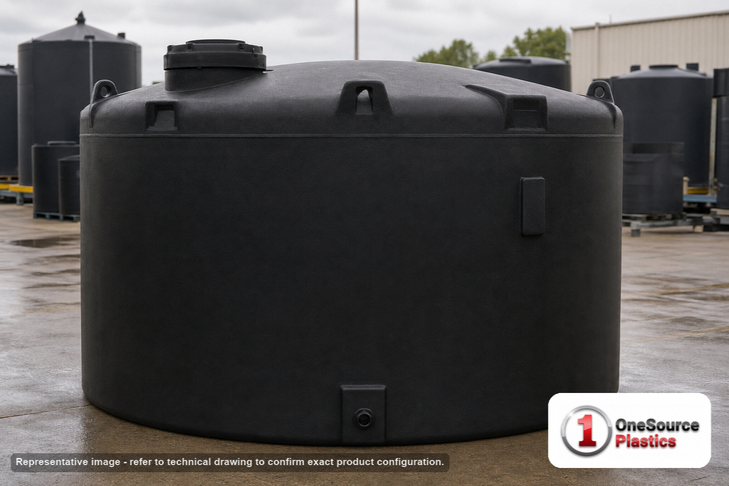
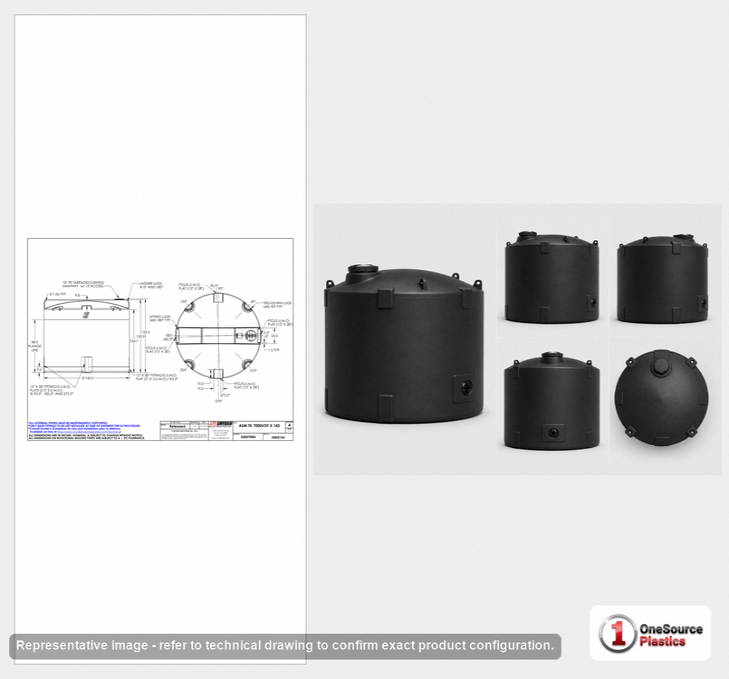
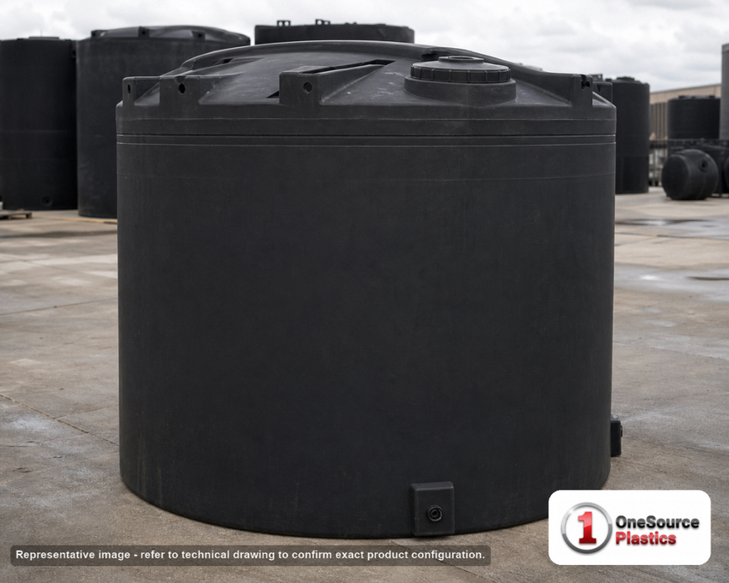
The Snyder 5300400N48 is the heavy-duty wall in the 6,600 gallon shell: 120 inches across, 158 inches tall, 2,100 pounds empty, black cross-linked polyethylene molded in Chowchilla, California. Its sheet rates the wall for a specific gravity of 1.9, which reads as 104,584 pounds of maximum contents against 55,044 pounds for plain water at 8.34 pounds per gallon. The listed top opening is an 18 inch threaded, vented manway; eight lifting lugs, ladder lugs and two flange lines are molded in; the outlet field reads 1 Manway / Lid, giving no bottom fitting size, so the draw-off is specified at order. Freight is class 300, the warranty is 3 year, and the service limit is 140 F / 60 C.
Want it on the pad this month? Check freight to your ZIP, add it to your cart above, and 866-418-1777 will confirm the ship date.
The duty: 6,600 gallons of dense liquid on a ten foot circle
This is the middle of the range in every dimension that matters, which is exactly why it gets bought. At 158 inches it is taller than the low wide tanks and shorter than the fifteen and sixteen foot shells, so it clears most chemical building roofs while still standing on a 120 inch circle that fits an existing pad. At the 1.9 rating on this sheet it takes a dense liquid: 104,584 pounds of allowed contents, where 6,600 gallons of plain water is 55,044 pounds. The plants that order it are Central Valley water and wastewater systems dosing a heavy coagulant or an acid, food processors with a dense cleaning chemistry, packing houses and ag chemical operations, and plating shops with a process solution they want in one vessel rather than two. The delivery is a tanker onto a pad with the hose run up a fixed ladder set on the molded ladder lugs to a manway a little over thirteen feet up, and it is over in an hour. Everything under it is concrete and bolts: the whole load bears on the 120 inch circle because a rotationally molded floor carries on its floor and nothing else, so the slab is engineered to the concrete pad sizing guide, level, in full contact, inside a berm where the liquid is regulated. Empty at 2,100 pounds it is banded to structure or slab anchors before the first fill, with the bands checked after the first windy week and at the end of the first summer, since a black shell in California sun grows a little every day. Black also passes no light to the liquid and hides the level, so the gauge is a sender. Run the draw rate and the delivery interval through the tank sizing calculator before settling on 6,600 gallons, and take the reserve and freeboard from the tank sizing guide.
The 5300400 shell, and the 6,500 and 6,900 beside it
| Part | Gallons | Diameter x height | Empty weight |
|---|---|---|---|
| 5300400N48 (this tank, black, rated 1.9) | 6,600 | 120 x 158 in | 2,100 lb |
| 5300400N42 (black) | 6,600 | 120 x 158 in | 2,100 lb |
| 5300400N46 (black, lighter wall) | 6,600 | 120 x 158 in | 1,900 lb |
| 5300400N40 (black, lighter wall) | 6,600 | 120 x 158 in | 1,900 lb |
| 7140000N33 (black, shorter) | 6,500 | 120 x 153 in | 1,450 lb |
| 7140000C26 (more volume, shorter) | 6,900 | 120 x 153 in | 1,300 lb |
All four parts in this shell hold 6,600 gallons at 120 by 158 inches, and the listed weights sort the walls: 2,100 pounds heavy-duty, 1,900 pounds lighter, each rated as its own sheet says. Take this one when the liquid is dense enough to need the wall and leave the 5300400N46 for everything the lighter rating already covers. The two neighbours are interesting because both are shorter on the same base: the 7140000N33 holds 6,500 gallons at 153 inches and the 7140000C26 holds 6,900 at the same height, so if five inches of roof is the whole argument, the family next door may be the better buy. If instead the argument is density, it is not, and this page is where the decision lands.
Which wall for your chemical? Call 866-418-1777 with the name and the concentration, or send a quote request and we will pick the row.
Suction from thirteen feet of liquid
- Suction: the outlet field on this sheet reads 1 Manway / Lid and lists no bottom fitting size, so nothing is assumed. Specify the liquid, the flow and the pipe material at order and the bulkhead, gasket and bolting are matched to the duty, with a flexible connector to hard pipe and the first valve on its own support off the pad.
- Prime: 158 inches of dense liquid is a strong flooded suction, and the whole of it is wasted if the pump sits above the outlet or at the far end of a long suction run. Below the outlet, close, and short.
- Low level: wire the low-level cutout to stop the pump, and set it where the sender still reads well rather than at the very bottom, because a dense liquid is the worst thing in the plant to run a pump dry on.
- Access: 18 inch threaded, vented manway, 158 inches up, with ladder lugs molded into the shell for a fixed ladder and rail. Fill down a dip tube to the floor, and vent outdoors, sized to the delivery pump, on any liquid that fumes.
- Service limit: 140 F / 60 C.
Two flange lines are molded in for side piping, and the eight lifting lugs are for rigging only. Any penetration into a wall rated for 104,584 pounds of contents is a properly cut, properly gasketed job with the right hardware, not a field improvisation on a Friday. After that the routine is short: manway closed between deliveries so vapor stays in and rain stays out, the single liquid named in paint on the shell, the band of wall above the liquid line checked with a light at every opening, and each delivery logged with its date and strength so a reading that drifts can be traced to the load rather than guessed at.
Central Valley plants that dose heavy
Municipal water and wastewater systems with a dense coagulant or acid feed, food processors and packing houses with heavy cleaning chemistry, ag chemical operations storing concentrate, and platers with a process solution that wants one vessel. Before a dense or aggressive liquid goes into any single wall tank, the cross-linking and chemistry duty article is the read that matters, because it draws the line between duties that need cross-linked polyethylene and duties that do not. Water sits well inside this rating, but a fire reserve answers to its own sizing discipline and its own freeze protection, which the fire water reservoir design guide sets out in full.
Chowchilla, class 300, and a 2,100 pound set
Molded in Chowchilla, California and shipped as class 300 freight as the sheet lists it, NMFC blank, this is the tank with the short lane if your plant is anywhere in the Valley or on the West Coast, and the freight cost estimator will price that lane to your ZIP with the listed price read as before freight. On the deck it is 120 inches across and 158 inches long, a permitted load but a manageable one. Standing it up is a crane or a large loader with slings under the body and the molded lifting lugs used as they are intended, never a strap through the manway, and the bands go on before the crane leaves. Fill it with water to the manway, hold it, and have someone walk the pad edge and every fitting before it is drained and dried for the duty liquid. Do the whole set in daylight with the plant's own operator present, because the person who will live with this tank should be the one who watched it go down. Walk the base after the first hard rain; a pad that shifts shows it at the edge first.
Freight and documents
Ships from: Chowchilla, CA. LTL freight is quoted to your ZIP with the freight cost estimator or by phone at 866-418-1777. The listed price is before freight.
Technical drawing (PDF) for Snyder Industries 5300400N48.
See this tank
Interactive 3D model with live fill. This tank has an interactive 3D model built to its manufacturer dimensions. Rotate it, and set a fill level to see how much liquid it holds at any height. Open the 3D view on the product photo above. Download the 3D model (GLB).
Ready to order?
Add it to your cart at the top of this page, get LTL freight to your ZIP, request a written quote, or call 866-418-1777. The listed price is before freight.