Cone Bottom vs Flat Bottom Tanks: Complete Comparison
The bottom of your tank determines how completely it drains, how it sits, what it costs, and what applications it handles well. Cone bottoms and flat bottoms serve different needs — choosing wrong means either wasting money on features you don't need or compromising on drainage you do need.
This is one of the most common questions we get from customers. The answer depends on your specific application, budget, site constraints, and future needs. Let's break down the differences so you can make an informed decision rather than guessing.
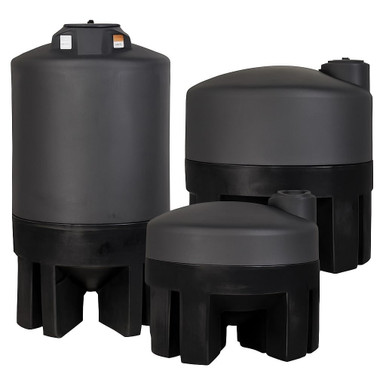
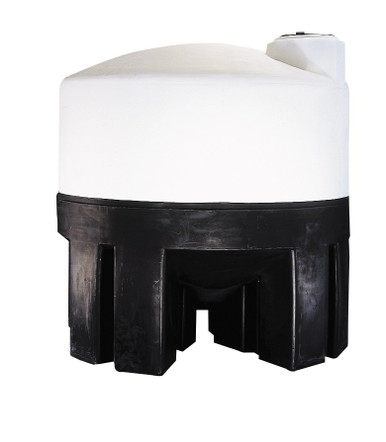
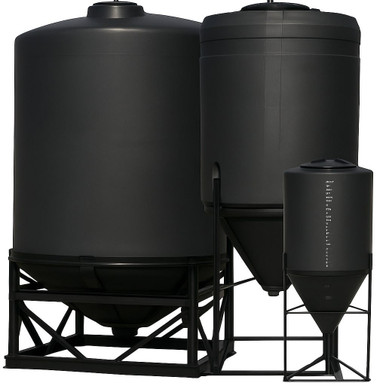
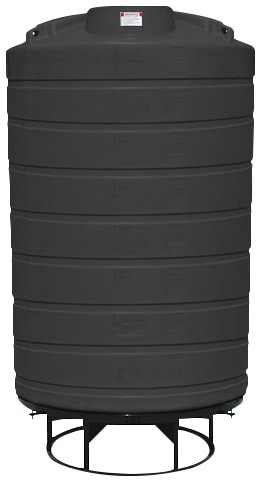
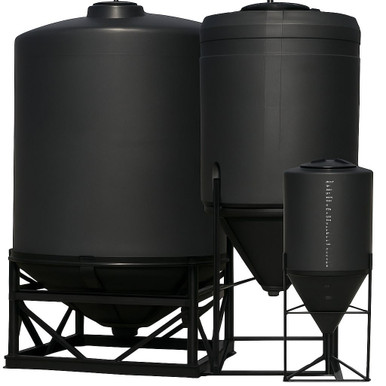
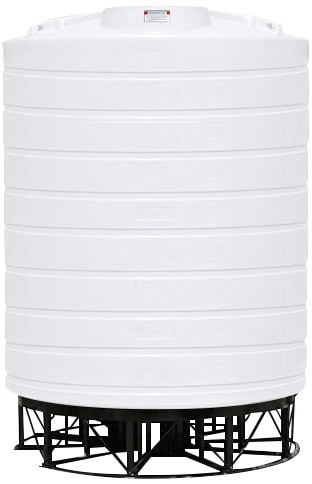
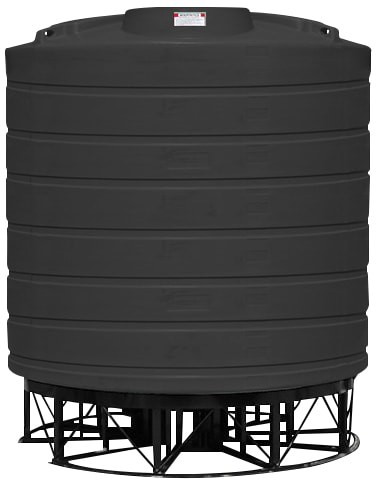
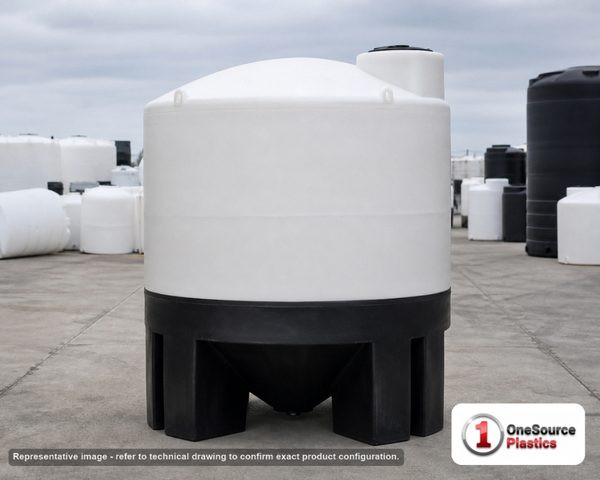
Cone Bottom Tanks
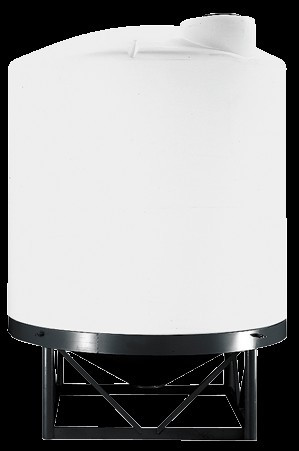
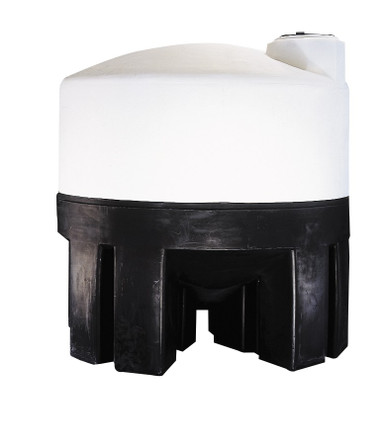
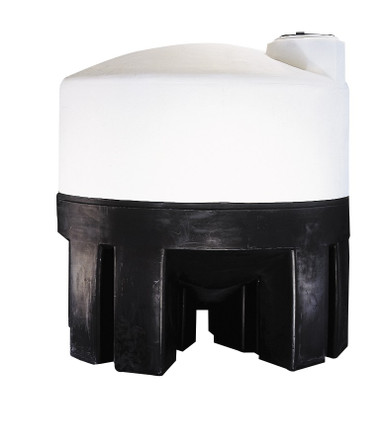
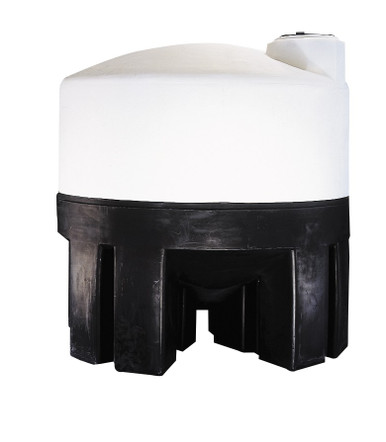
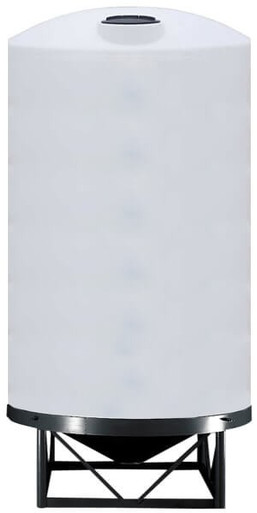
Tanks with a conical bottom that channels all liquid to a center drain point. Available in 15°, 30°, and 45° cone angles. Steeper cones drain faster and more completely.
Advantages
- Complete drainage — no dead volume at the bottom
- Prevents cross-contamination between batches
- Natural sediment collection at the drain point
- Gravity-powered drainage without pumping
- Ideal for mixing and batch processing
Disadvantages
- Requires a stand (additional cost and height)
- Higher total installed cost
- Taller overall height (tank + stand + cone)
- Fewer standard sizes compared to flat-bottom
- Stand must be properly engineered for the load
Best For
Chemical mixing, batch processing, fermentation, any application requiring complete drainage or batch isolation.
Shop Cone Bottom Tanks
Flat Bottom Tanks
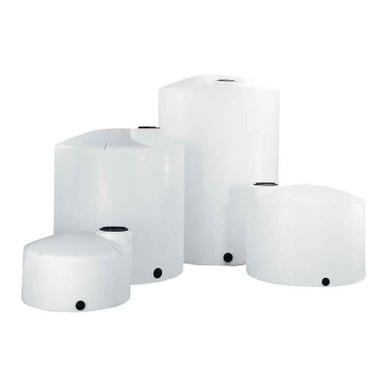
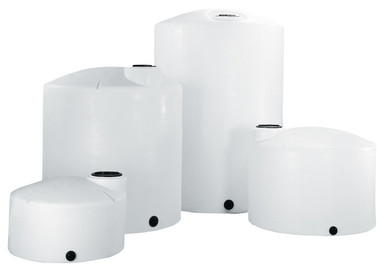
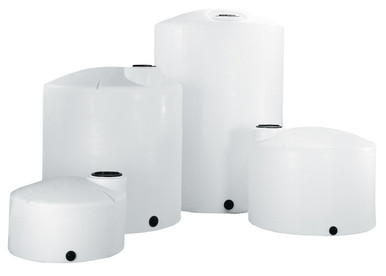
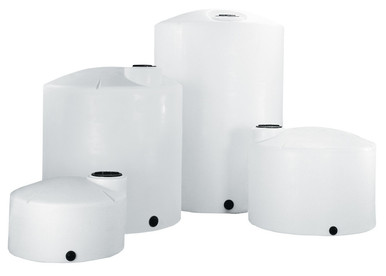
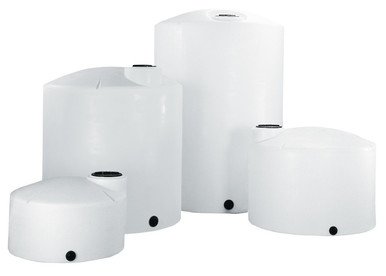
Tanks with a flat base that sit directly on a pad or foundation. The standard configuration for general-purpose liquid storage.
Advantages
- Lower cost — no stand required
- Simpler installation — set on a pad and plumb
- Shorter overall height for the same capacity
- More standard sizes available
- Lower center of gravity for wind resistance
Disadvantages
- Cannot drain completely — 1-3% dead volume at the bottom
- Sediment accumulates at the bottom
- Requires a pump or siphon to remove last liquid
- Not ideal for batch processing where cross-contamination matters
Best For
General-purpose storage, water reserves, long-term chemical inventory, any application where complete drainage isn't critical.
Shop Flat Bottom Tanks
Side-by-Side Comparison
| Feature | Cone Bottom Tanks | Flat Bottom Tanks |
|---|---|---|
| Cost | $$$ | $$ |
| Durability | Excellent | Excellent |
| Weight | Medium | Lighter |
| Chemical Resistance | Excellent | Excellent |
| UV Resistance | Good | Good |
| Installation Ease | Complex | Easy |
| Maintenance | Easy | Easy |
Our Recommendation
For most residential and agricultural applications, the value proposition is clear — but every installation has unique requirements. If you are unsure which option is right for your specific situation, call us at (866) 418-1777. We'll ask about your application, site conditions, and budget, then recommend the best option with specific product suggestions.
Frequently Asked Questions
Can I switch later if I choose wrong?
Above-ground tanks can be replaced, but it means buying a new tank and paying for removal of the old one. Underground tanks are much harder to replace. Take the time to choose correctly now — the cost of research is zero, the cost of replacing a tank is significant.
Is the more expensive option always better?
No. The best option is the one that matches your actual requirements — not the one with the highest rating in every category. Paying for chemical resistance you don't need or UV protection on an indoor tank wastes money that could go toward a larger capacity or better accessories.
How do I know which specifications matter for my application?
Focus on three things: specific gravity rating (must match or exceed your liquid's density), chemical compatibility (verify against the compatibility chart), and physical dimensions (must fit your space with clearance for maintenance). Everything else — color, fitting configuration, lid size — is secondary and can usually be customized or adapted.
Understanding Polyethylene Tank Construction
Every polyethylene tank in our catalog is manufactured through rotational molding — a process that creates a seamless, one-piece structure from powdered HDPE resin. The mold rotates on two axes simultaneously while heated, distributing molten resin evenly across all interior surfaces. The result is a tank with no seams, no weld lines, and no potential leak points. This seamless construction is the primary advantage of rotomolded tanks over welded or fabricated alternatives — joints are where tanks fail, and rotomolded tanks have no joints.
The resin itself is not generic plastic. It is a specially formulated compound that includes UV stabilizers (to prevent sun degradation), antioxidants (to prevent thermal degradation during processing and service), and pigments. For potable water applications, the resin meets FDA 21 CFR 177.1520 requirements for food-contact materials. These additives are compounded directly into the resin — not applied as surface coatings — which means the protection extends through the full wall thickness and lasts the life of the tank.
Why Buy from OneSource Plastics?
OneSource Plastics is not just another tank reseller. We are a specialized industrial tank dealer with deep product knowledge, competitive pricing from direct manufacturer relationships, and a commitment to helping you select the right tank for your specific application. Our team handles tank inquiries every day — we know the product lines, the specifications, the common pitfalls, and the solutions.
When you call us, you talk to someone who knows the difference between a 1.5 SG and a 1.9 SG tank, who can explain why a cone bottom is worth the extra cost for your mixing application, and who can tell you exactly what foundation your 2,500-gallon tank needs on your specific soil type. We don't just process orders — we solve liquid storage problems.
Every tank we sell ships with the full manufacturer warranty. We handle freight logistics to all 50 states, and we can coordinate delivery equipment for sites with challenging access. If something goes wrong — a shipping damage claim, a warranty issue, a specification question — we handle it directly. One call to (866) 418-1777 connects you to a real person who can actually help.
Recommended Tanks for This Guide
Live pricing, updated automatically · estimate freight to your ZIP.