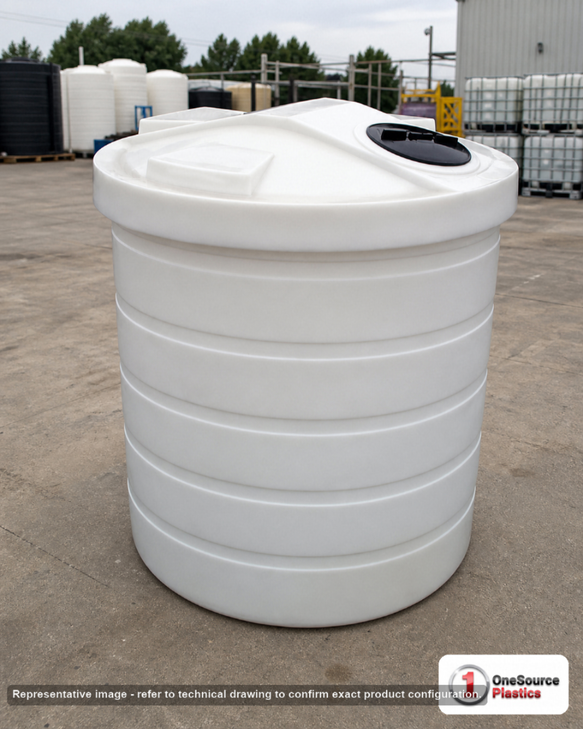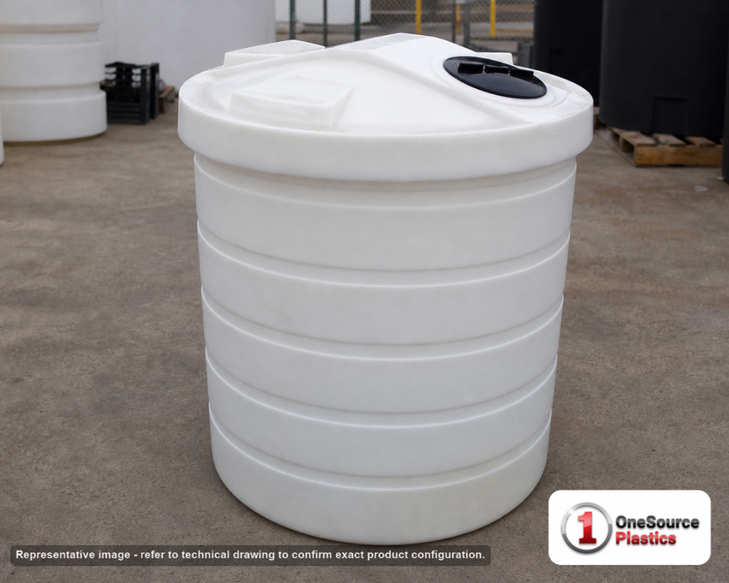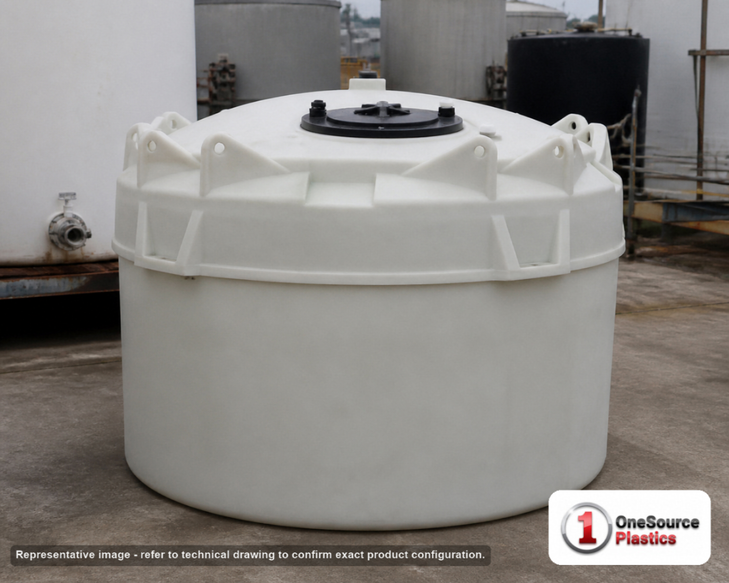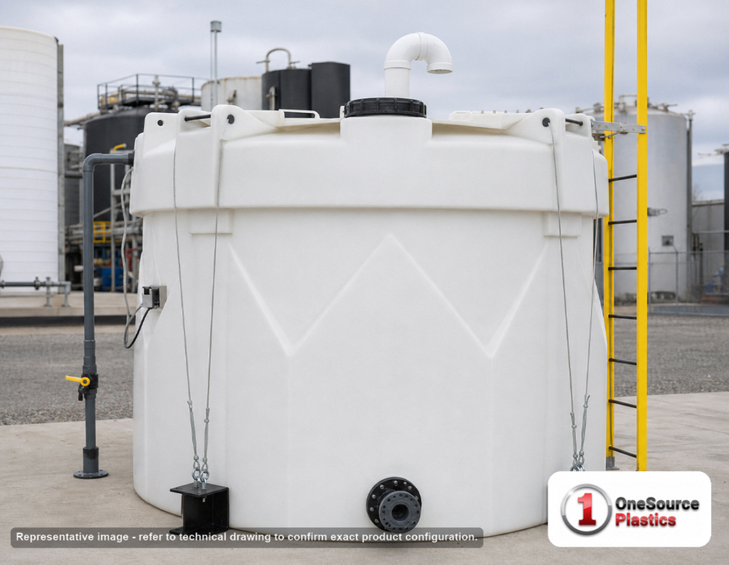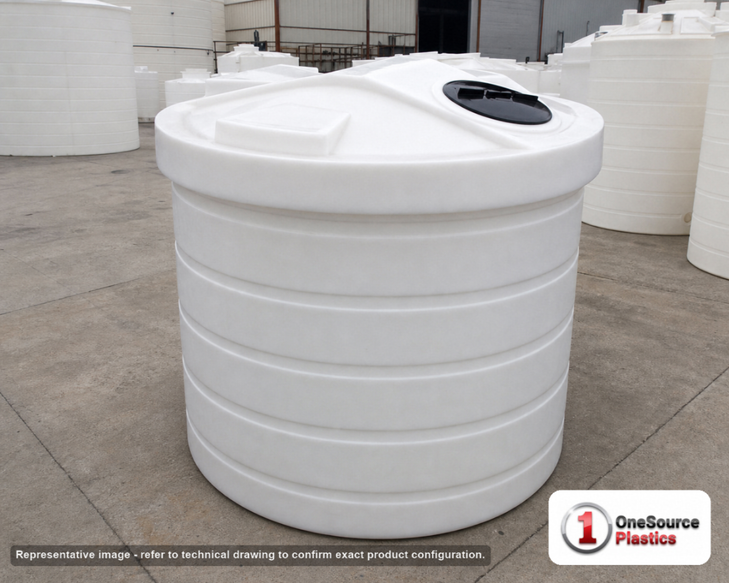
The Chem-Tainer 1000 Gallon Vertical Double Wall Liquid Chemical Storage Tank (SKU TC7485DC) is built for one job: holding aggressive liquids with secondary containment already engineered in. This polyethylene tank carries a 1.9 specific gravity rating, stands 85 inches tall on a 74 x 74-inch footprint, and integrates an inner primary tank inside an outer wall so a leak from the primary is captured without a separate berm. If you are sizing a double wall tank for an SPCC site or a chemical loadout area where the floor cannot become the containment, this is the configuration to start from.
Will it work for your chemical and your weight?
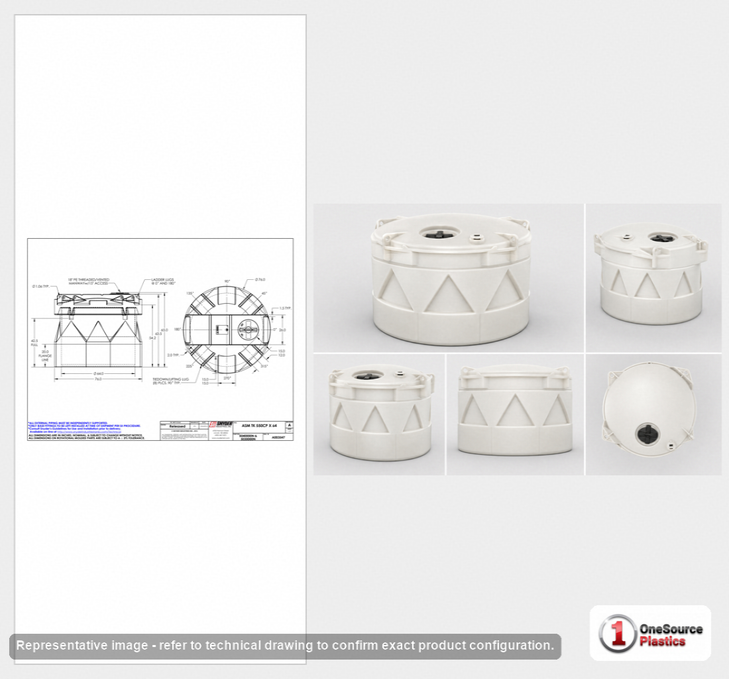
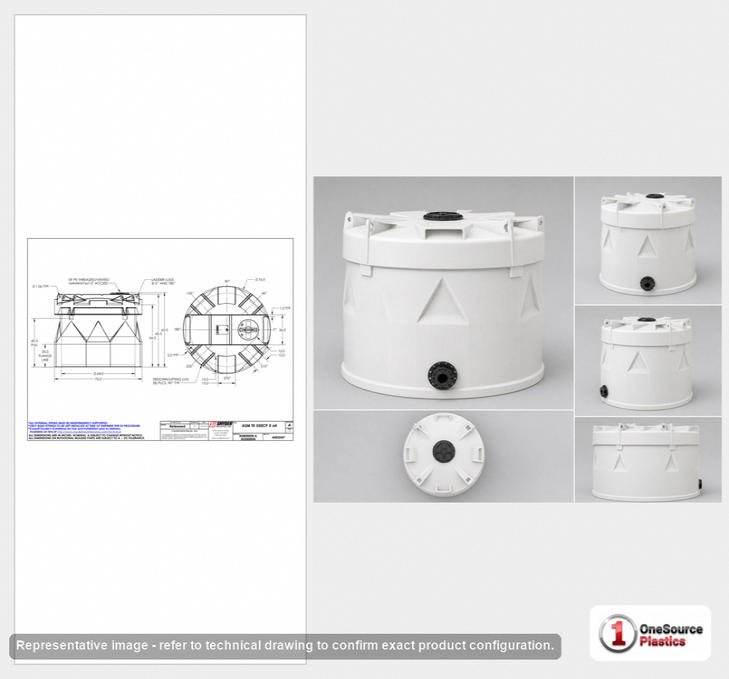
The 1.9 SG rating is the number that matters most. A full load of water in this 1000 gallon vessel runs roughly 8,340 lb, but at the tank's maximum rated content density the contents can reach 15,846 lb. That headroom is what lets it carry dense chemicals such as concentrated acids without exceeding the wall's design. Confirm your chemical's actual specific gravity against that 1.9 ceiling before you fill - a fluid heavier than 1.9 SG belongs in a higher-rated tank, and our team can spec one if you call 866-418-1777. Use the Tank Sizing Calculator and the Tank Sizing Guide to match volume and weight to your pad and anchoring. There is no preset bulkhead schedule in our data for this vertical storage tank, so fittings are configured per order - specify size and location at quote, and see the technical drawing on this page for the inner/outer wall geometry.
Chemical compatibility
This is an HDLPE-grade polyethylene double wall tank rated to 1.9 specific gravity. The resin grade is flagged HDLPE? in our data, so confirm HDLPE versus XLPE with us before committing it to chemical service - that single distinction changes which fluids the wall will tolerate over the long run, and it matters most for oxidizers like sodium hypochlorite, hydrogen peroxide, peracetic acid, and ozonated water, where resin grade most affects service life. Treat the entries below as provisional until that confirmation is in hand. Always match fitting and gasket materials to the chemical; the right plastic tank with the wrong gasket still fails at the bulkhead.
Chemicals this tank handles, with the fitting and gasket materials to pair, drawn from the OEM chemical-resistance chart (concentration- and temperature-specific - verify your exact service conditions):
- Acetic Acid (60%) - PP/PVC fittings, EPDM gaskets
- Aluminum Sulfate (50%) - PVC fittings, EPDM gaskets
- Calcium Chloride (40%) - PVC fittings, EPDM gaskets
- DEF (32.5%) - 316SS fittings, EPDM gaskets
- Ethylene Glycol (100%) - PVC fittings, EPDM gaskets
- Ferric Chloride (50%) - PVC fittings, EPDM gaskets
- Ferric Sulfate (60%) - PVC fittings, EPDM gaskets
- Ferrous Sulfate (20%) - PVC fittings, EPDM gaskets
- Hydrochloric Acid (37%) - PVC fittings, Viton gaskets
- Hydrofluoric Acid (48%) - PP/PVC fittings, Viton gaskets
- Hydrofluosilicic Acid (26%) - PP/PVC fittings, Viton gaskets
- Hydrogen Peroxide (50%) - PVC fittings, Viton gaskets
- Magnesium Chloride (30%) - PVC fittings, EPDM gaskets
- Peracetic Acid (30%) - 316SS fittings, Aflas gaskets
- Phosphoric Acid (85%) - PVC fittings, Viton gaskets
- Polyaluminum Chloride - PVC fittings, EPDM gaskets
- Potassium Carbonate (50%) - PVC fittings, EPDM gaskets
- Potassium Hydroxide (saturated) - PVC fittings, EPDM gaskets
- Propylene Glycol - PP/316SS fittings, EPDM gaskets
- Sodium Bisulfate - PVC/PP fittings, EPDM gaskets
- Sodium Bisulfite - PVC/PP fittings, EPDM gaskets
- Sodium Carbonate (30%) - PVC fittings, EPDM gaskets
- Sodium Hypochlorite (<16.5%) - PVC fittings, Viton gaskets
- Sodium Thiosulfate (40%) - PVC fittings, EPDM gaskets
- Sulfuric Acid (98%) - CPVC fittings, Viton gaskets
- Urea Solution (50%) - PP/PVC fittings, EPDM gaskets
- Zinc Orthophosphate - PP/316SS fittings, EPDM gaskets
- Ozonated Water (up to 10 PPM) - PVC fittings, EPDM gaskets
For the full picture across every fluid and concentration, work through our Chemical Compatibility Database before you specify fittings.
The mistake to avoid
The most common error on a double wall chemical tank is treating the SG rating and the gasket as afterthoughts, and defaulting every fitting to PVC. A 1.9 SG tank does not make every dense chemical safe - it sets the density ceiling, and the gasket material is what actually seals against the chemical at each bulkhead. Several fluids here break the PVC-and-EPDM default and need a fitting upgrade: sulfuric acid (98%) requires CPVC bodies with Viton gaskets, hydrofluoric (48%) and hydrofluosilicic (26%) acids need PP or PVC with Viton, and DEF (32.5%) and peracetic acid (30%) call for 316 stainless - peracetic acid with an Aflas gasket. Spec the wrong elastomer or the wrong fitting body on any of these and you get a weeping bulkhead on a tank that is otherwise perfect. On top of that, a double wall tank is your last line of defense, not your only one. Pair it with proper level monitoring and overfill protection - our guides on level gauge selection for chemical service and spillover redundancy engineering walk through alarm and cutoff architecture, and the SPCC 40 CFR 112 compliance walkthrough covers where double wall containment fits into your plan.
This 1000 gallon vertical double wall storage tank ships LTL freight from the Merced, California plant, quoted live to your ZIP. Get a real number with our Freight Cost Estimator or call 866-418-1777 and we will quote it for you. Comparing sizes? Our Snyder vs Norwesco vs Chem-Tainer vertical storage tank comparison shows how the double wall vertical lines stack up.
Freight and documents
Ships from: Merced, CA. LTL freight is quoted to your ZIP with the freight cost estimator or by phone at 866-418-1777. The listed price is before freight.
Technical drawing (PDF) for Chem-Tainer TC7485DC.
See this tank
Interactive 3D model with live fill. This tank has an interactive 3D model built to its manufacturer dimensions. Rotate it, and set a fill level to see how much liquid it holds at any height. Open the 3D view on the product photo above. Download the 3D model (GLB).
Product video. Watch the Chem-Tainer 1000 Gallon Plastic Vertical Double Wall Liquid Chemical Storage Tank video (59 seconds) with dimensions, fittings and shipping notes.
Ready to order?
Add it to your cart at the top of this page, get LTL freight to your ZIP, request a written quote, or call 866-418-1777. The listed price is before freight.