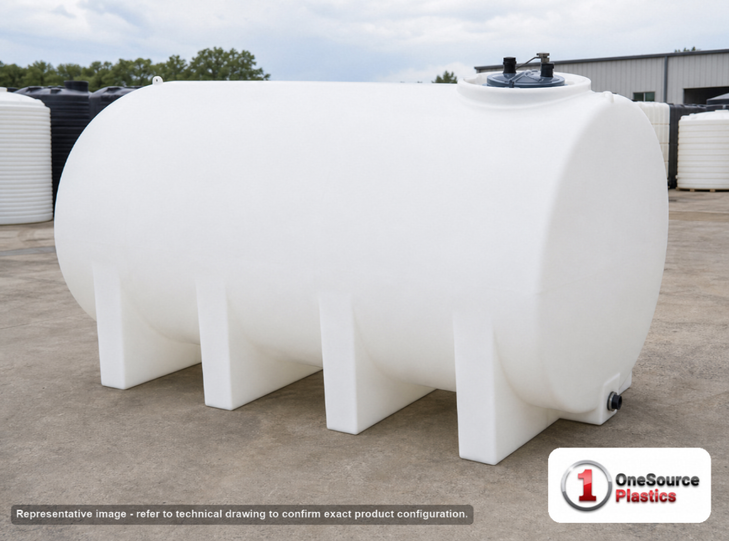
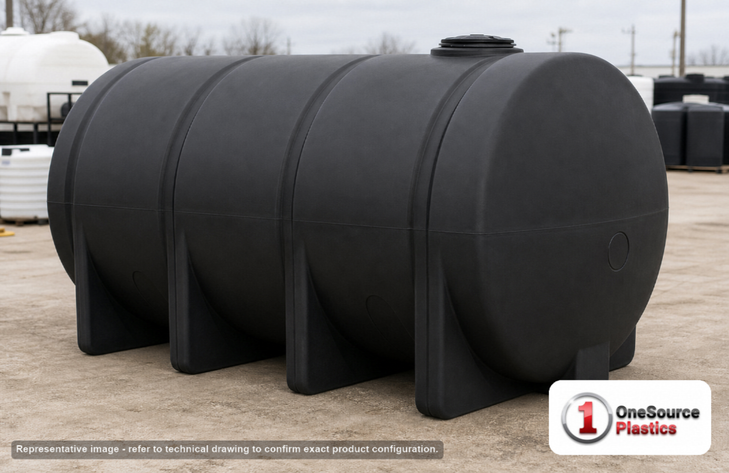
The Enduraplas 3000 Gallon Yellow Horizontal Leg Tank (THF03000Y) is a polyethylene horizontal leg tank built to move liquid fertilizer, water, and chemical loads across the field and down farm roads.It rides on integrated legs with an 87 in.x 130 in.footprint, stands 90 in.tall, and is rated to a specific gravity of 1.9, the high end of the leg-tank range.That 1.9 rating is the number that matters most here: it is why this tank can carry dense fertilizer blends and heavy chemicals that a 1.9 SG tank cannot.Buyers shopping Enduraplas horizontal leg tanks in the 3000-gallon class are usually matching a tank to a nurse-and-haul program, and this one sits at the top of the density range.
Will it work for your job?
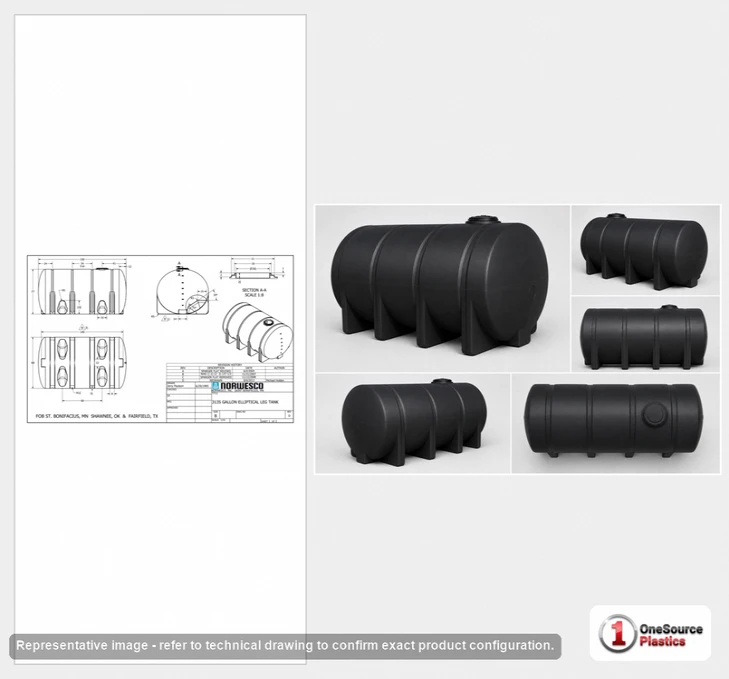
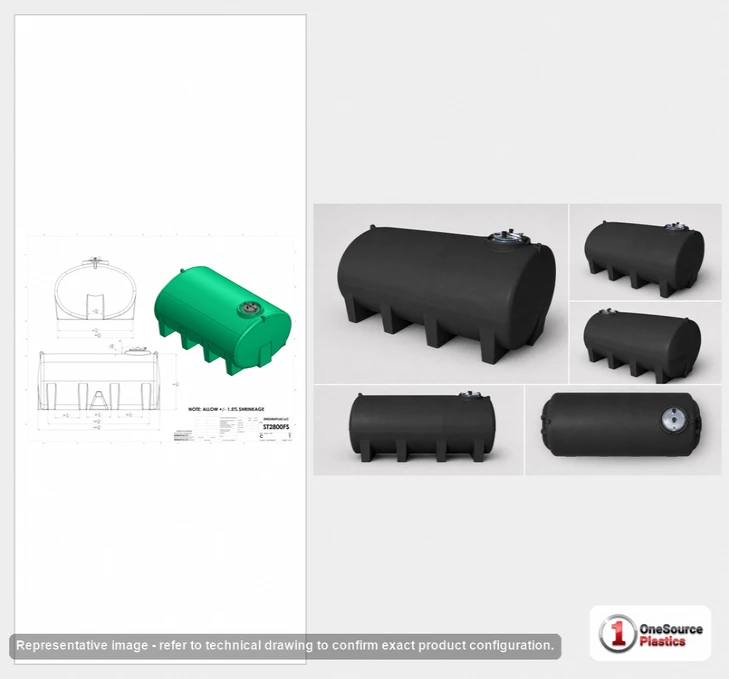
At 3000 gallons, plain water fills this tank to roughly 25,020 lb.Because the polyethylene is rated to 1.9 SG, the maximum rated contents weight climbs to 47,538 lb when you load a fluid up to that density.Size your load to the fluid you are actually hauling, not to gallons alone: a 3000-gallon tank of water and a 3000-gallon tank of a 1.9 SG blend are two very different weights to tow and to support.Connect that 47,538 lb rated number to two things at once.First, your trailer, axle, and hitch ratings.Second, your freight lane, because this tank ships from a single plant in Neche, ND, on LTL quoted live to your ZIP.The full 90 in.height, 87 in.width, and 130 in.length give you the standing dimensions for shed clearance and frame layout; cross-check them against the technical drawing on this page before you build a skid.Run your fluid and gallons through our Tank Sizing Calculator, and if you are matching this to a fertilizer or applicator program, the Tank Sizing Guide and our write-up on applicator and leg tanks for fertilizer walk through the DOT non-roadable trailer scope that governs how these tanks travel.
Chemical compatibility
This tank is molded from high-density polyethylene rated to 1.9 specific gravity, but the resin record on this unit is marked HDLPE with an open question.Confirm HDLPE versus XLPE construction before you commit it to chemical service, because crosslinked polyethylene resists certain oxidizers and acids differently, and on a 1.9 SG haul tank destined for strong acids and oxidizers that distinction changes service life.Fitting and gasket choices below come from the OEM chemical-resistance chart, which is concentration- and temperature-specific, so match the fitting and gasket material to your exact chemical and concentration and verify against the chart before ordering hardware.Two limits deserve special attention: Sodium Hypochlorite is capped at under 16.5% concentration, and Sulfuric Acid at 98% requires CPVC fittings (not PVC) with Viton gaskets, so do not order PVC hardware for concentrated sulfuric service.Compatible chemicals on this tank include Acetic Acid (60%, PP/PVC fittings, EPDM gaskets), Aluminum Sulfate (50%, PVC, EPDM), Calcium Chloride (40%, PVC, EPDM), DEF (32.5%, 316SS, EPDM), Ethylene Glycol (100%, PVC, EPDM), Ferric Chloride (50%, PVC, EPDM), Ferric Sulfate (60%, PVC, EPDM), Ferrous Sulfate (20%, PVC, EPDM), Hydrochloric Acid (37%, PVC, Viton), Hydrofluoric Acid (48%, PP/PVC, Viton), Hydrofluosilicic Acid (26%, PP/PVC, Viton), Hydrogen Peroxide (50%, PVC, Viton), Magnesium Chloride (30%, PVC, EPDM), Peracetic Acid (30%, 316SS, Aflas), Phosphoric Acid (85%, PVC, Viton), Polyaluminum Chloride (PVC, EPDM), Potassium Carbonate (50%, PVC, EPDM), Potassium Hydroxide (saturated, PVC, EPDM), Propylene Glycol (PP/316SS, EPDM), Sodium Bisulfate (PVC/PP, EPDM), Sodium Bisulfite (PVC/PP, EPDM), Sodium Carbonate (30%, PVC, EPDM), Sodium Hypochlorite (under 16.5%, PVC, Viton), Sodium Thiosulfate (40%, PVC, EPDM), Sulfuric Acid (98%, CPVC, Viton), Urea Solution (50%, PP/PVC, EPDM), Zinc Orthophosphate (PP/316SS, EPDM), and Ozonated Water (up to 10 PPM, PVC, EPDM).Concentrations and ratings are tied to the OEM chart, which is concentration- and temperature-specific, so review the full chemical compatibility reference for your service conditions.
The mistake to avoid
The most common error on a haul tank this size is towing a dense load on a trailer rated only for water.The 1.9 SG rating tells you the tank can hold the density, but it does not size your axles, hitch, or road classification, and 1.9 is the ceiling here, so there is no denser-rated leg tank to step up to.With heavy blends and salting-out-prone fertilizers, also plan your mixing and verification, since a stratified tank can run a spreader off-spec; our guide on fertilizer-blend tank stratification covers field-verification methods.For portable and farm-fleet use, the 49 CFR 173.5 agricultural exemption overview explains how these utility tanks are classified on the road.Outlet and fitting configuration is confirmed at order, so we will match hardware to your service before the tank ships.
This horizontal leg tank ships LTL freight from the Enduraplas plant in Neche, ND, quoted live to your ZIP code.Get a freight quote to your ZIP in seconds with our Freight Cost Estimator, or call 866-418-1777 and we will quote the haul and confirm fitting and gasket selection for your chemical before you order.
Freight and documents
Ships from: Neche, ND. LTL freight is quoted to your ZIP with the freight cost estimator or by phone at 866-418-1777. The listed price is before freight.
See this tank
Interactive 3D model with live fill. This tank has an interactive 3D model built to its manufacturer dimensions. Rotate it, and set a fill level to see how much liquid it holds at any height. Open the 3D view on the product photo above. Download the 3D model (GLB).
Ready to order?
Add it to your cart at the top of this page, get LTL freight to your ZIP, request a written quote, or call 866-418-1777. The listed price is before freight.