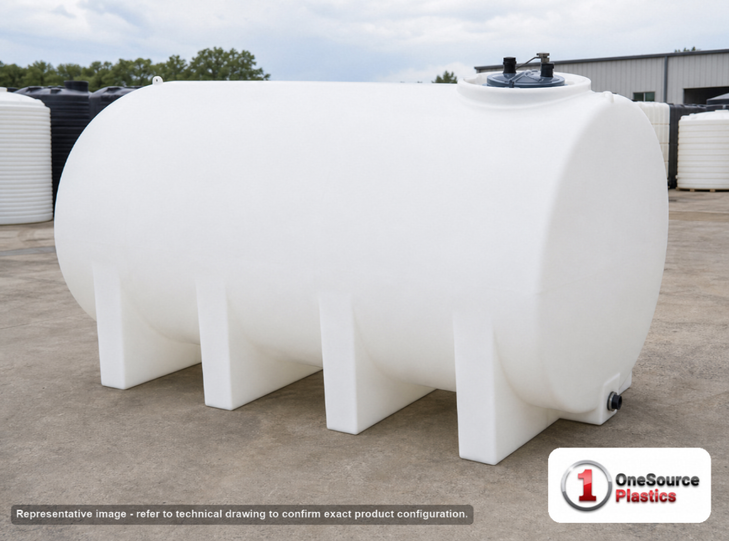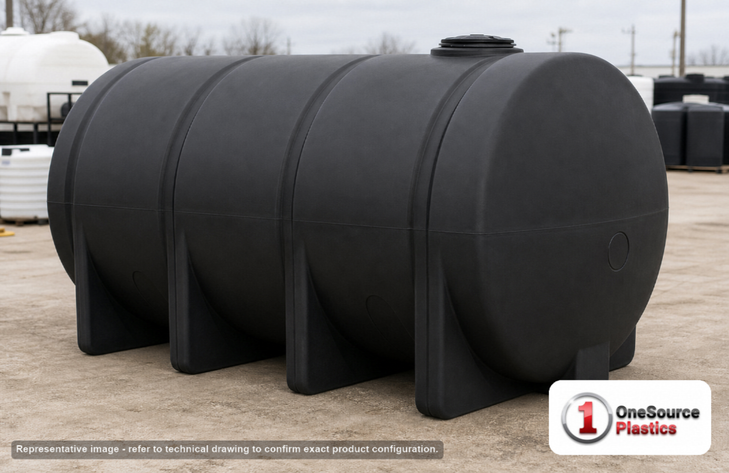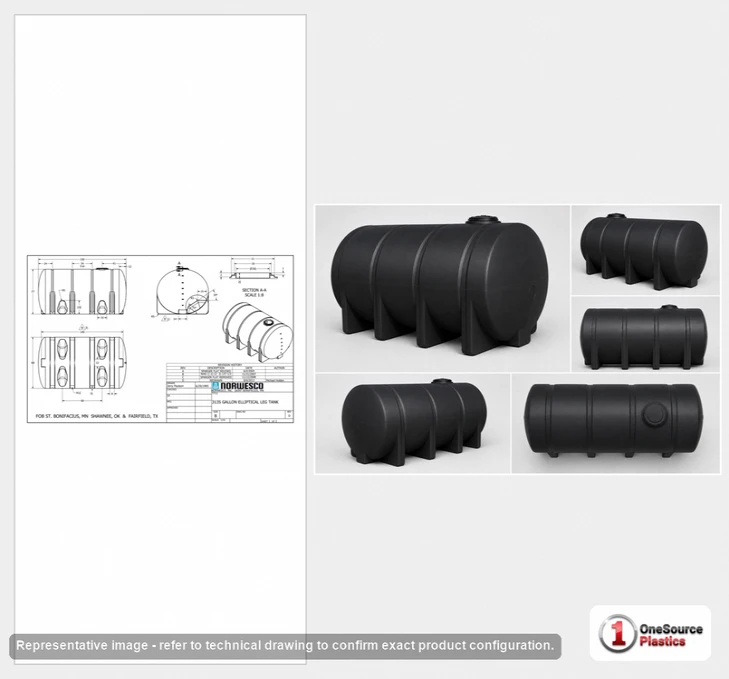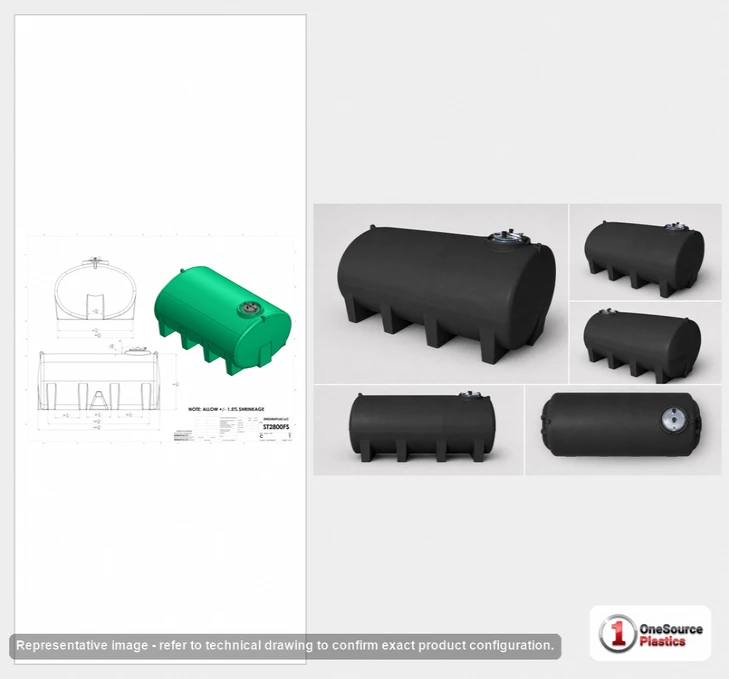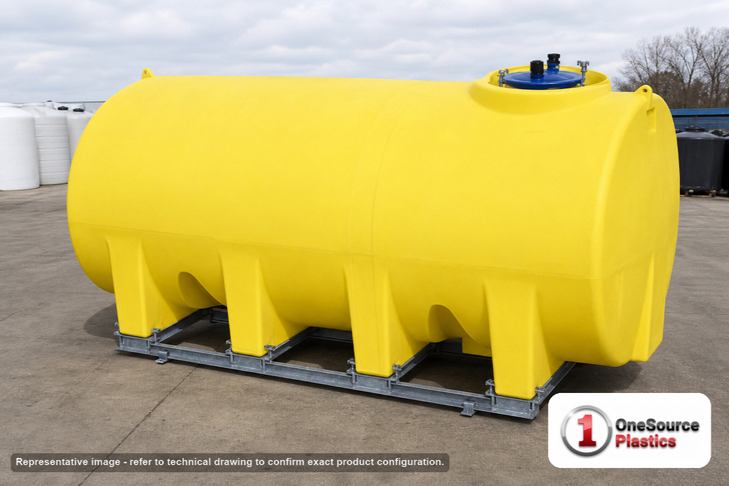
The Enduraplas 3000 Gallon Yellow Horizontal Sump Bottom Leg Tank ships with its own steel frame and is built for over-the-road and stationary haul duty where you need volume on a footprint that loads onto a trailer or sits low against a yard pad.The body holds 3,000 gallons of polyethylene-molded capacity, measures 130 inches long by 87 inches wide by 94 inches tall, and rides on a sump-bottom design that drains toward the outlet so you empty it clean.With a 1.9 specific gravity rating, this is the heaviest SG rating offered on this tank, and that rating is the reason it handles the dense agricultural and water-treatment liquids that a standard 1.9 SG horizontal leg tank cannot.
Will it work for your load?
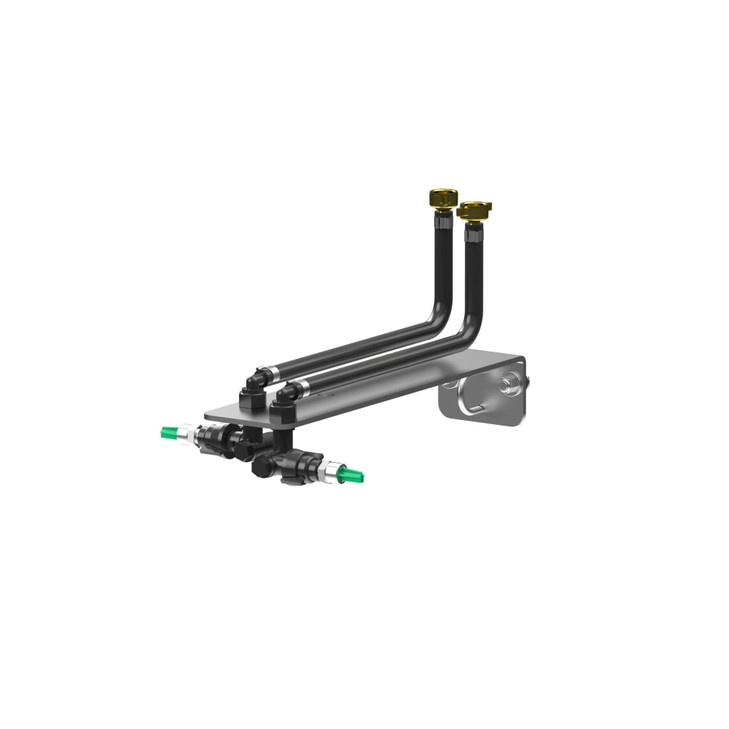
Plan around weight, not just gallons.Filled with plain water, this tank carries roughly 25,020 pounds; at its maximum rated contents weight it reaches 47,538 pounds.Those numbers govern your trailer rating, axle placement, and the pad or skid the frame sits on far more than the tank's empty dimensions do.Run your target liquid through the Tank Sizing Calculator and read the Tank Sizing Guide before you commit, because a 3,000-gallon horizontal tank loaded with a heavy fertilizer blend can put you over a non-roadable trailer limit fast.The 87 x 130 inch footprint is what determines whether it clears your trailer deck and your fill station.One gap to close before you order: the actual outlet size and fitting positions are not yet listed for this SKU, so confirm the fitting layout with us so the tank matches your plumbing and your chemical.
Chemical compatibility
The tank resin is reported as high-density linear polyethylene (HDLPE) but is not yet confirmed, so verify HDLPE versus cross-linked (XLPE) construction with us before putting any chemical into service, since the two resins resist different chemistries.The tank carries a 1.9 specific gravity rating, which is what lets it hold dense chemistries and is the ceiling SG for this body, so you are not weight-limited the way a lighter tank would be on heavy acids and brines.Compatibility is always concentration- and temperature-specific, so check the named chemistry, not the SG number.
Confirmed compatible chemistries for this tank include acetic acid (60%, PP/PVC fittings, EPDM gaskets), aluminum sulfate (50%, PVC, EPDM), calcium chloride (40%, PVC, EPDM), DEF (32.5%, 316SS fittings, EPDM), ethylene glycol (100%, PVC, EPDM), ferric chloride (50%, PVC, EPDM), hydrochloric acid (37%, PVC fittings, Viton gaskets), hydrofluoric acid (48%, PP/PVC, Viton), hydrogen peroxide (50%, PVC, Viton), magnesium chloride (30%, PVC, EPDM), peracetic acid (30%, 316SS, Aflas), phosphoric acid (85%, PVC, Viton), potassium hydroxide (saturated, PVC, EPDM), sodium hypochlorite (under 16.5%, PVC, Viton), sulfuric acid (98%, CPVC fittings, Viton gaskets), and urea solution (50%, PP/PVC, EPDM).It is also rated for ferric sulfate (60%, PVC, EPDM), ferrous sulfate (20%, PVC, EPDM), hydrofluosilicic acid (26%, PP/PVC, Viton), polyaluminum chloride (PVC, EPDM), potassium carbonate (50%, PVC, EPDM), propylene glycol (PP/316SS, EPDM), sodium bisulfate (PVC/PP, EPDM), sodium bisulfite (PVC/PP, EPDM), sodium carbonate (30%, PVC, EPDM), sodium thiosulfate (40%, PVC, EPDM), and zinc orthophosphate (PP/316SS, EPDM).Ozonated water is rated only up to 10 PPM (PVC, EPDM); because ozone is an oxidizer, that low concentration cap is the limit, which is why it stands apart from the linked chemistries above.Match the fitting and gasket material listed for your chemical exactly, and review the full chemical compatibility reference, which is concentration- and temperature-specific, before ordering.
The mistake to avoid
The most common error on a tank like this is matching the fitting and gasket to convenience instead of to the chemical.The compatibility data calls for Viton on hydrochloric, phosphoric, hydrogen peroxide, sodium hypochlorite, and sulfuric acid, Aflas on peracetic acid, and EPDM on the salts and glycols; running an EPDM gasket on a Viton-rated acid is how a tank that is otherwise rated fails at the fitting.Watch the metal-fitting outliers too: DEF (32.5%) and peracetic acid both call for 316SS fittings, not PVC, which is easy to miss when most chemistries on this list run PVC.The second mistake is assuming the 1.9 SG rating means any chemical is fine, it does not, so always check the named chemistry and its concentration against the listed compatibility data, not the SG number alone.Finally, remember the sump bottom is the low point where dense, salting-out blends and brines settle, so before the spreader runs off-spec, work through the fertilizer-blend stratification field guide linked below and plan to draw and verify from that sump.
This tank ships LTL freight from Neche, ND, palletized on its frame, with the rate quoted live to your ZIP code.Get your number from the Freight Cost Estimator or call 866-418-1777 and we will quote it for you.For agricultural haul and non-roadable trailer setups, the leg-tank fertilizer and NRT scope guide, the portable utility tank DOT classification guide, and the fertilizer-blend stratification field guide are worth reading before you fill.
Freight and documents
Ships from: Neche, ND. LTL freight is quoted to your ZIP with the freight cost estimator or by phone at 866-418-1777. The listed price is before freight.
See this tank
Interactive 3D model with live fill. This tank has an interactive 3D model built to its manufacturer dimensions. Rotate it, and set a fill level to see how much liquid it holds at any height. Open the 3D view on the product photo above. Download the 3D model (GLB).
Ready to order?
Add it to your cart at the top of this page, get LTL freight to your ZIP, request a written quote, or call 866-418-1777. The listed price is before freight.