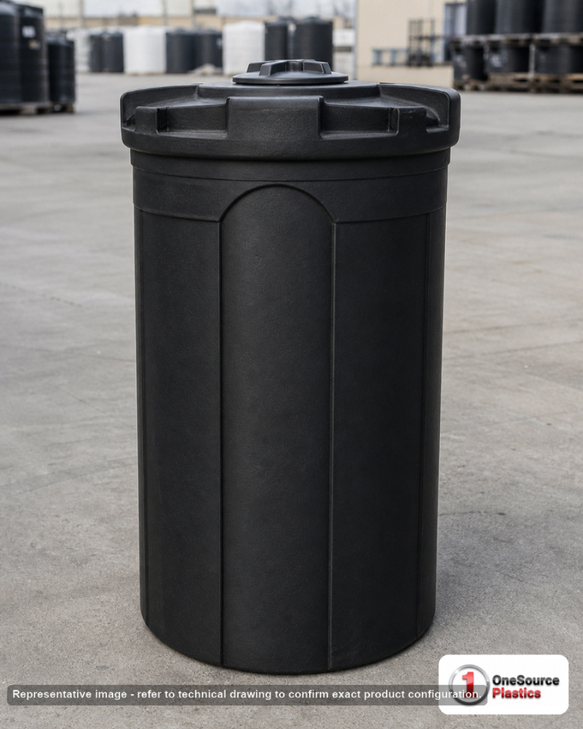
A hundred and twenty gallons, 23 inches tall, 315 pounds empty
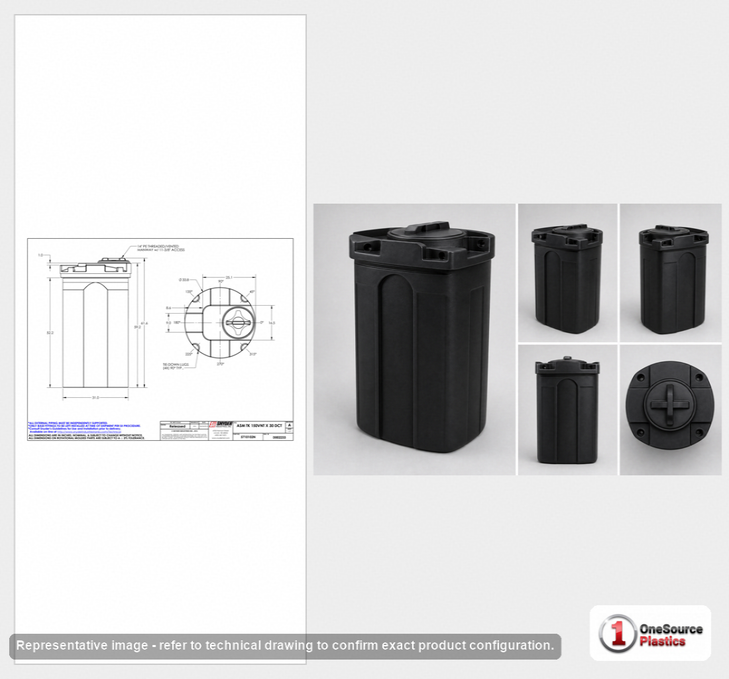
The Snyder 6984000B51320 is a 120 gallon 304 stainless steel Supertainer IBC tote tank in silver, listed at 42 inches long, 48 inches wide and 23.25 inches tall, and 315 pounds empty. It is the smallest and the shortest steel Supertainer on its own sheet, and both of those are the point of it. The sheet gives 1,001 pounds for 120 gallons of water at 8.34 pounds per gallon, and that is the only load figure published: there is no specific gravity rating, no maximum operating temperature and no warranty term, so this page claims none. The vessel is steel, not plastic, and no resin, cross-link or wall-rating wording is applied to it. The published fittings are a 2 inch access port, a 2 inch 316 stainless ball valve and a 22 inch vented manway, with no drain, no sump, no gauge, no sight glass and no stacking, lifting, pressure or transport rating on the sheet. Freight class 125, LTL, shipping from Michigan.
One tank or a train of them? A single 120 gallon tank goes straight to the cart above; for several, request a written quote with freight to your ZIP.
The smallest steel Supertainer and the job that justifies it
A hundred and twenty gallons in stainless steel is a deliberate purchase and it is worth being clear about when it is the right one. Nobody buys this vessel because it is cheap per gallon, because it is not: the plan, the structure and most of the fabrication are the same as on the bigger Supertainers, which is why it still weighs 315 pounds empty while holding far less. It is bought when the product in it is worth more than the vessel and the quantity is genuinely small. That describes a pharmaceutical intermediate, an active ingredient, a fragrance concentrate, a fine chemical, a catalyst, a pilot batch of something not yet in full production, a reference or retention quantity, and any material where the cost of contamination or of a failed batch dwarfs the cost of the container. It also describes the opposite case: a material so aggressive that the wall has to be steel regardless of how little of it there is. The 23.25 inch height is the second reason this part exists. It is the vessel that goes under things, into small rooms, inside a booth or a cabinet, onto a bench scale, or into a vehicle where the load has to stay below a line. On the same 42 by 48 inch plan as its bigger siblings, it gives up volume and buys clearance, and if clearance is what your building actually has a shortage of, that is a good trade. Size it against the batch rather than the habit: run your real quantity and frequency through the tank sizing calculator, and take the headspace from the tank sizing guide. Weight is still a real consideration at 315 pounds empty and 1,001 pounds full of water, especially if this tote is going onto a bench, a scale or a mezzanine rather than a floor. Where the tote feeds a metering operation, and small high-value vessels usually do, design the installation with the pump skid design guide. And where the argument is still drums against totes, the container against tank guide is the place to settle it, because at this volume a drum is a genuine alternative in a way it stops being once the vessel gets much larger.
Two steel 120s and two plastic 120s on this sheet
| Part | Gallons | Material as the sheet names it | Length x width x height | Empty weight |
|---|---|---|---|---|
| 6984000B51320 (this tote) | 120 | 304 stainless steel | 42 x 48 x 23.25 in | 315 lb |
| 6984000B51305 (identical figures) | 120 | 304 stainless steel | 42 x 48 x 23.25 in | 315 lb |
| SII-6660015B97202 (plastic, stackable) | 120 | HDPE plastic | 46 x 45 x 34 in | 187 lb |
| SII-6660015B97204 (plastic, stackable) | 120 | HDPE plastic | 45 x 45 x 36 in | 212.3 lb |
| 6984000B51306 (steel, larger) | 165 | 304 stainless steel | 42 x 48 x 26.25 in | 326 lb |
Four of these five hold 120 gallons in four different envelopes, which makes this an unusually instructive table. Two are steel and two are plastic, and the sheet names them that way, so this page does too. The two steel 120s share every published figure and the sheet offers no reason why there are two part numbers; order the one your drawing or your fleet names and ask us to confirm against the part if nothing does. The plastic pair are a genuinely different proposition. SII-6660015B97202 puts 120 gallons on a 46 by 45 inch plan at 34 inches tall and 187 pounds, and SII-6660015B97204 puts the same volume on a 45 inch square at 36 inches tall and 212.3 pounds. Both are lighter empty than either steel tote by a wide margin, and both are taller and wider on the plan. That is the shape cost of the material, and where the duty is undemanding and the empty weight matters, those rows deserve a look. The last row is the argument against buying small at all. The 165 gallon steel Supertainer holds forty five more gallons for three more inches of height and eleven more pounds, on the identical plan. Per gallon it is plainly the better buy. Choose the 120 anyway when the clearance under an obstruction, the capacity of a bench or a scale, or the quantity of a valuable material is what is deciding, and choose the 165 whenever none of those is binding. Being clear-eyed about that is worth more than a table of gallons per pound.
Other makers in the running? 866-418-1777 will compare them honestly; Norwesco, Snyder, Chem-Tainer, Enduraplas and Bushman are all here, or price freight on this one.
Drawing the last of 120 gallons through one valve
- The discharge: one 2 inch 316 stainless ball valve, and on a 23.25 inch vessel it sits very low with very little liquid standing above it. Gravity does almost nothing for you at the end of a transfer here, so if getting every usable gallon out matters, and with a valuable product it always does, plan on a pump or plan on raising the tote.
- Raising it: a stand or a rack turns this into a workable gravity vessel and it has to carry 1,001 pounds when the tote is full of water. That is a structural item, sized and specified, not a couple of pallets.
- The drain path: no sump and no separate low drain is published, so the ball valve is the whole bottom route and what stays behind is what the vessel floor holds. On a high value product that residue is worth rinsing and recovering rather than writing off.
- The inlet: a 2 inch access port. On a small vessel holding something expensive, filling through a closed port rather than an open manway is usually the right habit.
- The top: a 22 inch vented manway on a vessel under two feet tall. That is a very large opening relative to the vessel, which is exactly what you want for verifying a clean, recovering residue and inspecting the interior without equipment. The vent is the air path; keep it clear.
- Not published: no level gauge, no sight glass, no dip tube, no specific gravity rating, no maximum service temperature and no warranty term.
Tell us the product when you order so the seat and the gasket are chosen for it, and check the liquid first against our chemical compatibility reference. Where the material is a regulated waste rather than a product, the guide to secondary containment for hazardous waste tank systems covers the leak detection options and the inspection cadence that apply to it.
Lab scale, pilot plant and high value product in small quantity
A hundred and twenty gallons of stainless steel goes into pharmaceutical and biotechnology intermediate handling, laboratory and pilot plant work, active ingredient and catalyst storage, flavor and fragrance concentrate holding, electronics and precision cleaning chemistry, reference and retention quantities, and contract manufacturing where a customer's material arrives in small lots and must be accounted for exactly. In all of those the vessel is a piece of equipment rather than packaging, and it earns its cost by being cleanable, inspectable and traceable through hundreds of cycles. Treat it that way from the start. Give it a serial, keep a log of what it held and how it was cleaned, and photograph the interior through the manway when it is new, because on this kind of duty the question that eventually gets asked is not whether the vessel worked but whether anyone can prove what was in it.
The shortest shipment on the sheet, still class 125
The sheet gives Michigan as the shipping state and lists no plant town, so none is named here. The move is LTL at freight class 125, the sheet carries no NMFC number, and the shipping size is listed at 42 inches long, 48 inches wide and 23 inches high against the tote's own 23.25 inch height. Price the lane to your ZIP with the freight cost estimator; the listed price is before freight. Under two feet of shipping height is the easiest thing in this family to receive: it goes through any door, rides in a van, fits under a low canopy and slides into places a taller shipment will not. What it is not is light. Three hundred and fifteen pounds is a forklift, a pallet truck or a lift gate, arranged before the truck is booked, and the load comes off under the base rather than by the manway or the valve. Once it is placed, level it, fill it with clean water and hold that 1,001 pound load while you read the manway seal, the access port and the valve joint with a torch. Cycle the valve fully open and fully shut against the water, then drain and dry it. Before anything valuable goes in, do a dry run of your recovery procedure with clean water: drain it, tip nothing, and see for yourself how much stays behind, because on this vessel that figure is a cost you will pay on every batch and it is far better to know it than to discover it. Put the tank's part number on the maintenance log the day it lands; five years on, nobody remembers which shell it is.
Freight and documents
Ships from: Marked Tree, AR; Merced, CA; Lincoln, NE. LTL freight is quoted to your ZIP with the freight cost estimator or by phone at 866-418-1777. The listed price is before freight.
Technical drawing (PDF) for Snyder Industries 6984000B51320.
Ready to order?
Add it to your cart at the top of this page, get LTL freight to your ZIP, request a written quote, or call 866-418-1777. The listed price is before freight.