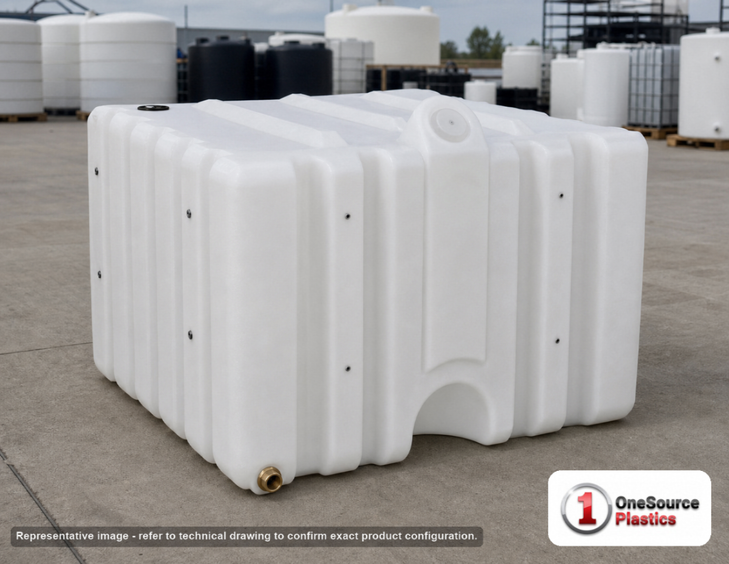
One hundred and twenty gallons in a 45 inch square
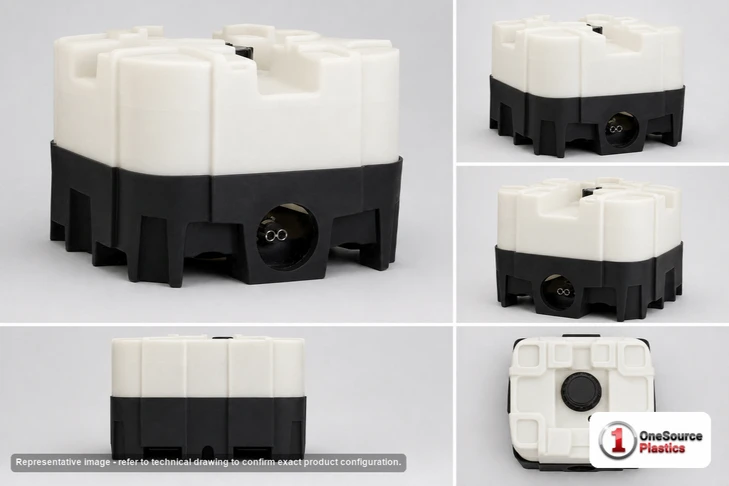
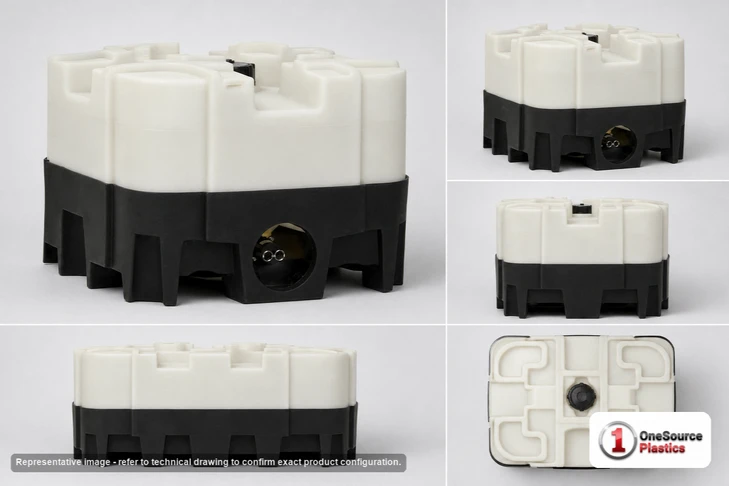
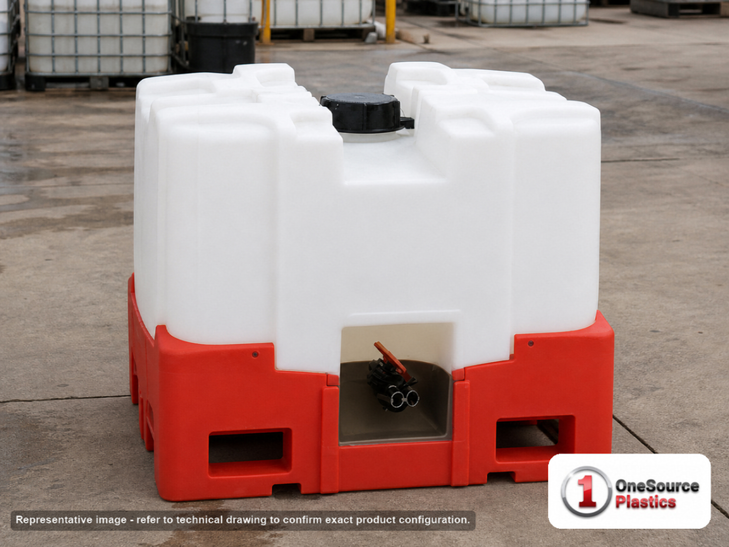
Square in plan and 36 inches tall, the Snyder SII-6660015B97204 is a 120 gallon stackable IBC tote tank in white high density polyethylene, listed 45 inches long, 45 inches wide and 36 inches high at 212 pounds empty. The inlet is listed as a 2 inch bung, the outlet as a 2 inch ball valve, and the lid as a 6 inch threaded vented lid. The wall is rated at a specific gravity of 1.9, with 1,001 pounds for 120 gallons of water at 8.34 pounds per gallon and 1,902 pounds of max contents. The service limit is 120 F / 48 C. Stackable is in the name and no stacking load is published anywhere on the sheet; there is no cage, no integral pallet, no fork pocket and no warranty term on it either, and this page claims none of them.
Is this the right 120 gallon tank? Call 866-418-1777 with the liquid, the site and the ceiling height, or get freight to your ZIP and add it to your cart above.
The freight lane for a 212 pound tote out of Nebraska
Lincoln, Nebraska is the plant and Nebraska is the shipping state on the sheet, which for a 212 pound container is most of the freight story. The class field gives LTL, a mode rather than a number, under NMFC 156600-04, and the shipping size is listed at 45 inches long by 45 inches wide by 36 inches high: exactly the tank, a perfect square in plan, three feet tall. A square shipment is the easy kind. It takes a single pallet position, it blocks cleanly against other freight without a corner sticking out to be caught, and it stacks in a trailer the same way whichever face is forward. If you are buying more than one, ask us how they lay out on a shipment before assuming each one costs the same to move. At the other end the plan does the same work in the building. Forty-five inches square goes into a rack bay either way round, so nobody has to remember which face the valve is on when the tote comes back from a wash, and a floor position marked out for one of these is a floor position for any of them. Thirty-six inches of height keeps the lid at a comfortable working level and keeps the tote under every shutter, beam and mezzanine you are likely to meet. The bearing surface has to carry the whole 45 inch square flat and level: rack beams sized for the plan, a solid deck, a slab. Not two pallets, not one with a soft board under a corner. Full of water the sheet gives 1,001 pounds and at the rating 1,902 pounds, and that is worth checking against the rack's own rating before anything goes up. The name says stackable and the sheet publishes no stacking load, so this page gives you no permission to stack: get that condition in writing for this part number before a tote goes on top of anything. With no cage, no pallet and no fork pocket published, handling is from underneath, on something that supports the base. Before settling on 120 gallons, put the turnover through the tank sizing calculator, take the freeboard from the tank sizing guide, and read the container versus tank guide for the honest view of when this tier is the right one.
The 45 inch square 120 against its 46 inch twin
| Part | Gallons | Length x width x height | Empty weight |
|---|---|---|---|
| SII-6660015B97204 (this tote, bung inlet) | 120 | 45 x 45 x 36 in | 212 lb |
| SII-6660015B97202 (plastic tote, bulkhead inlet) | 120 | 46 x 45 x 34 in | 187 lb |
| 6984000B51305 (304 stainless steel supertainer) | 120 | 42 x 48 x 23.25 in | 315 lb |
| 6984000B51320 (304 stainless steel supertainer) | 120 | 42 x 48 x 23.25 in | 315 lb |
| 6984000B51306 (304 stainless steel supertainer) | 165 | 42 x 48 x 26.25 in | 326 lb |
The first two rows are the same rated volume in two builds and the table rewards a close look. This tote is a true 45 inch square at 36 inches tall and 212 pounds. SII-6660015B97202 is 46 by 45 inches, 34 inches tall and 187 pounds, so it is lower, lighter and very slightly rectangular. Two things should decide between them. The first is the plan: a square tote goes into a rack bay in either orientation and a rectangular one has a right way round, which sounds trivial until a forklift driver on a night shift meets it. The second is the inlet, and here the sheets differ plainly. This tote's inlet is listed as a 2 inch bung; the other's is listed as a 2 inch polypropylene female NPT bulkhead fitting. A bung suits a site that fills from a drum pump, a wand or a coupling taken on and off, and it is one less permanent connection to maintain on a container that gets washed. A bulkhead fitting suits a fixed, plumbed, closed fill. Neither is better; they are answers to different filling habits, and the sheet says nothing beyond that, so neither do we. The last three rows are stainless steel supertainers, not plastic: 6984000B51305 and 6984000B51320 both at 120 gallons, 42 by 48 by 23.25 inches and 315 pounds, and 6984000B51306 at 165 gallons, 26.25 inches tall and 326 pounds. They are named as 304 stainless steel and no polyethylene, resin or specific gravity statement is made about any of them on this page.
Comparing across brands too? Call 866-418-1777; we carry Norwesco, Snyder, Chem-Tainer, Enduraplas and Bushman and will say which one fits, or price the freight first.
Six inches of lid, a 2 inch bung and a ball valve
- The lid: a 6 inch threaded vented lid at 36 inches, which is a comfortable working height from the floor. Six inches takes a hose, a wand and a dip tube and does not take an arm, so decide how this tote gets washed out before you decide what goes into it.
- The vent: the lid is listed as vented, and that path is what lets air in while product runs out of the valve. Keep it clear and unobstructed; a covered vent on a container being drawn down is the beginning of most avoidable damage.
- The inlet: a 2 inch bung, as the sheet gives it. That suits a drum pump, a wand or a coupling that comes on and off, and it leaves fewer permanent penetrations to look after on a tote that is emptied, washed and refilled on a cycle.
- The outlet: a 2 inch ball valve. Fit a flexible connector directly after it and carry the hose, the meter or the filling gun on their own bracket off the rack or the wall, never on the tote. The valve boss holds liquid, not hardware.
- Draw-down: with the outlet at the base of a 36 inch body, gravity into a drum works at the start and runs out of head at the end. A stand under the tote, or a pump below the valve, is how the last of it comes out at a usable rate.
- Limits: the service limit is 120 F / 48 C and the specific gravity rating is 1.9. No warranty term and no stacking load appears on this sheet, and this page asserts neither.
Tell us the liquid when you order and the valve seat, the gasket and the bung seal are chosen for it rather than left generic. Where the product is regulated, what goes under the tote is a separate purchase and a separate argument: the secondary containment guide for hazardous waste tank systems covers the options and the inspection cadence, and the contained polyethylene versus steel comparison puts a contained vessel against the steel route on the points that decide it.
Decanting, dosing and the drum shelf it clears
A 120 gallon tote is bought by operations that want bulk pricing without bulk inventory: a small plating or finishing line, a laboratory or pilot plant, a beverage or food plant with a short-dated ingredient, a vehicle wash running a speciality product slowly, a utility dosing a small treatment stream, a distributor filling jugs and pails from one container instead of wrestling drums. The visible win is usually the floor. One tote in a marked position replaces a row of drums leaning against a wall, and the drums are what leak, roll, rust at the chime and get topped up with the wrong product because nobody can read the label from the aisle. The less visible win is the closed fill and the single valve: fewer open pours means less spillage, less exposure and fewer part-used containers nobody wants to own. Whether this tier or a larger one is right for your site comes down to annual volume, turnover, hazard class and floor space, which is exactly the calculation in the drum versus tote versus bulk tank break-even analysis.
Rated liquids and the fittings to order with them
The resin carries a rating for each liquid below at the concentration shown, and each line names the wetted fitting and gasket to specify. Confirm the service you actually run on the chemical page or in the chemical compatibility database before ordering.
- acetic acid (60%, PP/PVC fittings, EPDM gaskets)
- aluminum sulfate (50%, PVC, EPDM)
- calcium chloride (40%, PVC, EPDM)
- DEF (32.5%, 316SS fittings, EPDM)
- ethylene glycol (100%, PVC, EPDM)
- ferric chloride (50%, PVC, EPDM)
- ferric sulfate (60%, PVC, EPDM)
- ferrous sulfate (20%, PVC, EPDM)
- hydrochloric acid (37%, PVC fittings, Viton gaskets)
- hydrofluoric acid (48%, PP/PVC, Viton)
- hydrofluosilicic acid (26%, PP/PVC, Viton)
- hydrogen peroxide (50%, PVC, Viton)
- magnesium chloride (30%, PVC, EPDM)
- peracetic acid (30%, 316SS, Aflas)
- phosphoric acid (85%, PVC, Viton)
- polyaluminum chloride (PVC, EPDM)
- potassium carbonate (50%, PVC, EPDM)
- potassium hydroxide (saturated, PVC, EPDM)
- propylene glycol (PP/316SS, EPDM)
- sodium bisulfate (PVC/PP, EPDM)
- sodium bisulfite (PVC/PP, EPDM)
- sodium carbonate (30%, PVC, EPDM)
- sodium hypochlorite (under 16.5%, PVC, Viton)
- sodium thiosulfate (40%, PVC, EPDM)
- sulfuric acid (98%, CPVC fittings, Viton gaskets)
- urea solution (50%, PP/PVC, EPDM)
- zinc orthophosphate (PP/316SS, EPDM), and ozonated water (up to 10 PPM, PVC, EPDM). Note the gasket changes: Viton for hydrochloric, hydrofluoric, peroxide, ph
Two hundred and twelve pounds, and the pallet under it
Moulded at Lincoln, Nebraska, with Nebraska given as the shipping state. Freight is listed as LTL, a mode rather than a numeric class, under NMFC 156600-04, and the shipping size is 45 inches long by 45 inches wide by 36 inches high, which is the tank itself on a square pallet plan. Price the lane to your ZIP with the freight cost estimator, and note that the listed price is before freight. Two hundred and twelve pounds is a pallet jack or forks under the base at both ends; do not take it by the lid, the valve or the bung, and do not sling it around the body. Set it in its final position before a single line is connected, then fill with clean water on the level and hold the 1,001 pound load while you read the bung, the ball valve and the lid seal. Drain it through the valve to prove the arrangement empties properly. Then label it with the product name and the in-service date before the first delivery arrives, because a tote nobody can identify from across the aisle is the one that gets topped up from the wrong drum. Write the fill date on the manway with a paint marker; it answers the first question anyone asks about a tank.
Freight and documents
Ships from: Lincoln, NE. LTL freight is quoted to your ZIP with the freight cost estimator or by phone at 866-418-1777. The listed price is before freight.
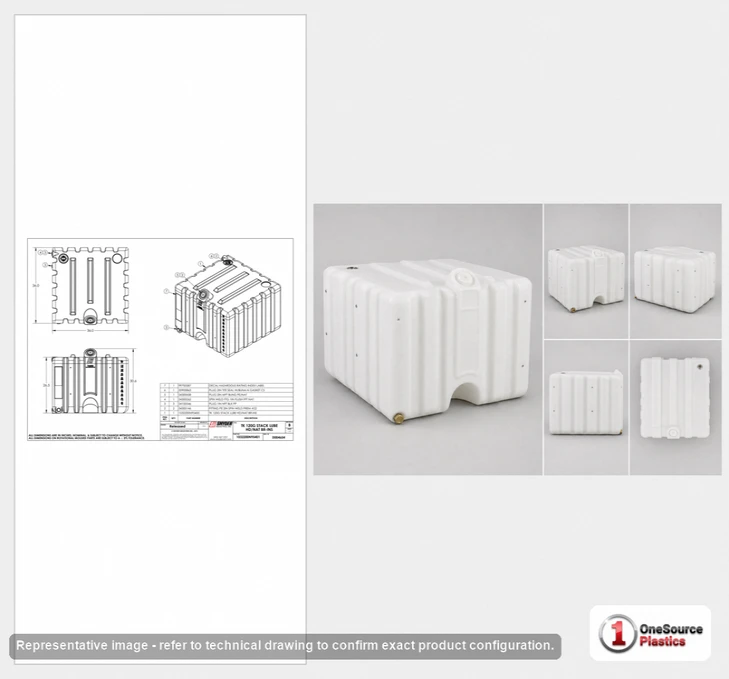
Technical drawing (PDF) for Snyder Industries 6660015B97204.
See this tank
Product video. Watch the Snyder Industries 120 Gallon HDPE Stackable IBC Tote Tank video (67 seconds) with dimensions, fittings and shipping notes.
Ready to order?
Add it to your cart at the top of this page, get LTL freight to your ZIP, request a written quote, or call 866-418-1777. The listed price is before freight.